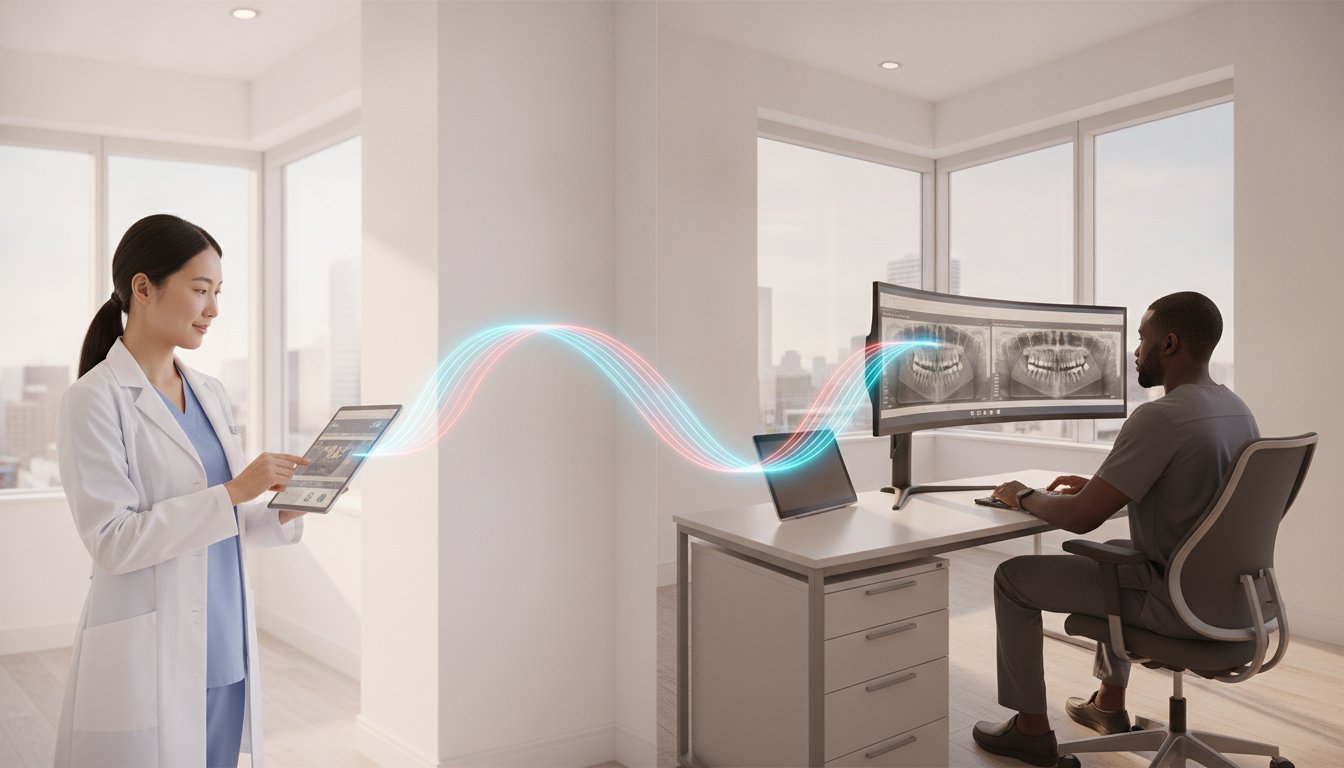
Did you know that 44.2% of endodontists report receiving inadequate referral letters more than 30% of the time? This persistent breakdown in dental specialist referral communication isn’t just a minor administrative hurdle; it’s a primary driver of the 27.7% of patients who switch providers due to poor communication. You’ve likely felt the stress of playing phone tag or discovering that a patient “fell through the cracks” after leaving your chair. It’s frustrating to manage a practice when the information loop feels like a series of dead ends.
We understand that your professional standing depends on the continuity of care you provide. This guide will show you how to eliminate fragmented workflows and build a high-reliability referral network using modern digital systems. We’ll examine the 2026 regulatory shifts, such as Medicare’s mandatory “closed-loop” documentation and new state-level teledentistry codes. You’ll learn how to standardize clinical documentation across offices and use automated tracking to ensure every patient reaches the specialist’s office with their data intact. It’s time to replace operational resistance with the confidence of a standardized system.
Key Takeaways
- Master the 2026 Medicare “closed-loop” requirements to ensure your dental specialist referral communication meets new auditable standards for clinical continuity.
- Eliminate diagnostic delays by standardizing the transfer of CBCT scans, X-rays, and digital impressions within a single, secure workflow.
- Identify the specific “leaks” in your referral pipeline that cause patients to abandon treatment after leaving the general practitioner’s office.
- Bridge the communication gap for diverse patient populations by utilizing automated follow-ups and instructions available in 15 different languages.
- Transition from manual “phone tag” to a high-utility dashboard that tracks referral status and specialist feedback in real-time.
The Crisis of Fragmented Dental Specialist Referral Communication
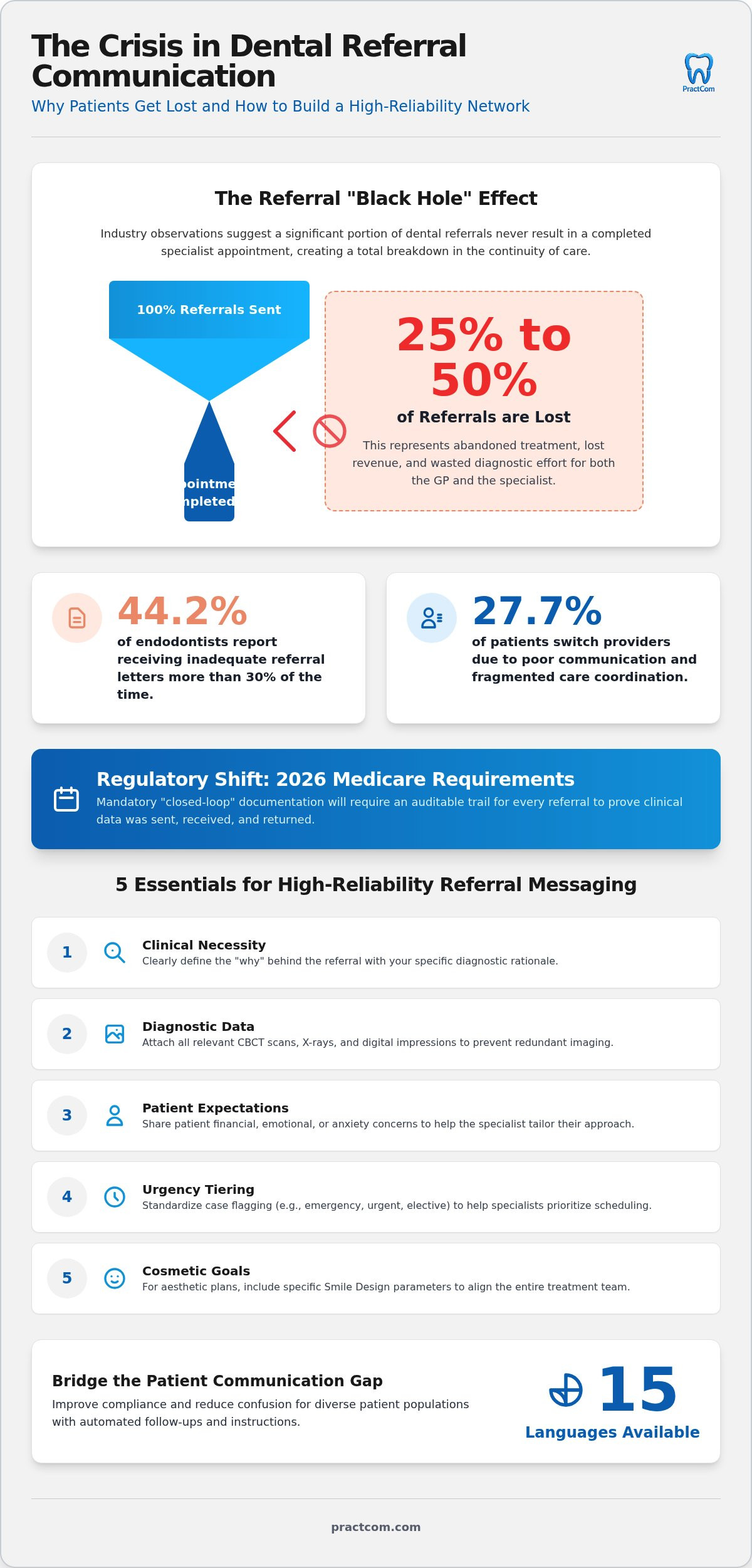
Modern dental specialist referral communication is the secure, bidirectional exchange of high-resolution clinical data and precise patient instructions between providers. When this exchange fails, your practice experiences the “Black Hole” effect. Industry observations suggest that between 25% and 50% of dental referrals never result in a completed specialist appointment. This isn’t just an administrative lapse; it represents a total breakdown in the continuity of care that leaves patients feeling abandoned and clinicians left in the dark.
The economic consequences are severe for both the general practitioner and the specialist. Every uncompleted referral represents lost revenue and wasted diagnostic effort. Beyond the billable treatment, there’s the invisible drain of “phone tag” and manual faxing. These legacy methods consume hours of staff time every week, pulling your team away from active patient care to chase missing X-rays or verify if a patient ever called the other office. While the rise of teledentistry in referral communication provides new avenues for consultation, a systematic digital workflow is required to truly close the loop and protect your practice’s productivity.
The Failure of the Traditional Paper Referral Pad
Physical referral slips are a weak link in your clinical chain. They’re easily lost in a patient’s car or buried under household mail, which leads to immediate treatment abandonment. Once a patient walks out your door with a piece of paper, you lose all visibility into their progress. You can’t track if they’ve scheduled or if the specialist has received the necessary diagnostic data. Furthermore, unencrypted faxes and physical paper trails carry significant security risks, as they lack the robust access controls and encryption required in a modern digital environment.
Regulatory and Liability Risks of Poor Communication
Fragmented communication doesn’t just hurt your bottom line; it creates a legal vulnerability. HIPAA mandates secure provider-to-provider data transfer, and relying on outdated, unsearchable methods can lead to compliance failures. If a patient suffers an adverse outcome because a specialist lacked critical clinical history, the referring GP may face professional liability claims due to a failure in care coordination. For the 2026 performance year, Medicare now requires documented “closed-loop” referrals under the MIPS program. You need a centralized, auditable trail for every referral to prove that clinical documentation was sent, received, and returned to the referring provider.
The 5 Essential Elements of High-Reliability Referral Messaging
To move beyond fragmented care, your dental specialist referral communication must be built on a foundation of high-reliability data. It isn’t enough to simply state the tooth number; you need a system that ensures the specialist arrives at the consult with the same clinical clarity you have. This systematic approach reduces the psychological burden on your staff and ensures patient safety in dental referrals by eliminating the assumptions that lead to clinical errors.
- Clinical Necessity: Clearly define the clinical “why” behind the referral. Whether it’s a persistent periapical radiolucency or a complex prosthetic requirement, the specialist needs your specific diagnostic rationale to begin their assessment.
- Diagnostic Data: Ensure all CBCT scans, X-rays, and digital impressions are attached at the point of origin. This prevents the specialist from having to “play detective” or retake images, which saves the patient time and reduces radiation exposure.
- Patient Expectations: Note any specific financial or emotional concerns. If a patient is highly anxious about surgery or has specific budget constraints, sharing this information allows the specialist to tailor their chairside approach.
- Urgency Tiering: Standardize how you flag cases. Differentiating between an “emergency” pulpitis case and an “elective” cosmetic consult ensures the specialist’s team can prioritize their schedule effectively.
- Cosmetic Goals: Include any specific Smile Design parameters if the referral is part of a larger aesthetic plan.
Standardizing the GP-to-Specialist Handoff
Consistency is the enemy of error. By using a digital template for every handoff, you create a predictable environment for the specialist’s office. This should include a summary of any cosmetic goals or “Smile Design” plans you’ve already discussed with the patient. When the specialist understands your long-term vision, they can align their treatment with your restorative goals. This level of coordination acts as a stabilizing force in your professional network, making you a preferred partner for top-tier specialists. You can easily standardize your referral workflow to ensure these details are never missed.
The Role of Digital Informed Consent in Referrals
The referral process itself is a clinical step that requires documented patient understanding. Patients need to know why they’re being referred and the potential risks of non-compliance. Using digital informed consent forms at the point of referral serves two purposes: it educates the patient and provides a robust audit trail for risk management. Linking these forms to specific specialist procedures ensures the patient is fully prepared for the next stage of their care. This proactive approach alleviates the anxiety of practitioners regarding documentation and compliance. You can learn more about our digital informed consent forms and how they integrate into a comprehensive communication suite.
Closing the Loop: Real-Time Treatment Tracking and Feedback
The true measure of effective dental specialist referral communication is not just the initial handoff, but the successful completion of the feedback loop. When a specialist updates the referring GP upon treatment completion, it ensures clinical continuity and psychological security for the patient. Without this step, the GP is often left wondering if the endodontic treatment or implant surgery ever occurred. Following the ADA guidelines on referral communication is essential for maintaining professional standards and ensuring no patient is lost in the administrative gap.
The feedback loop serves as a pre-emptive strike against administrative failure. If a specialist fails to report back, the referring dentist cannot confidently proceed with the restorative phase of treatment. This delay doesn’t just frustrate the patient; it disrupts the entire practice schedule. A systematic feedback mechanism ensures that the GP receives auditable proof of completion, which is a critical documentation requirement for the 2026 performance year under MIPS. This moves your practice from a state of operational disorganization to one of systematic control.
Leveraging Practice Performance Dashboards
A Practice Performance Dashboard transforms anecdotal evidence into actionable data. It allows you to visualize exactly how many patients actually attend their specialist consults versus those who drop off after leaving your chair. You can identify which specialists in your network have the highest patient follow-through rates and who provides the most timely clinical feedback. By tracking the exact timeline from referral generation to treatment completion, you can refine your network to include only the most efficient partners. This data-driven oversight strengthens your referral network and provides the pragmatic justification needed for making long-term professional partnerships.
Automating Provider-to-Provider Updates
Wasted time playing phone tag between offices is a primary pain point for modern clinical teams. Automating the “Consultation Completed” notification eliminates this friction entirely and removes the need for periodic “check-in” phone calls. When a specialist’s office completes a consult or treatment, a secure notification should automatically update the GP’s clinical workflow. This includes sharing post-treatment notes and diagnostic updates back to the referring office without the need for unencrypted emails or faxes. By mastering dental referral management software in 2026, you can ensure that clinical data flows seamlessly between providers, creating a comprehensive ecosystem where no detail is left to chance.
Improving Patient Compliance Through Multi-Language Education
Clinical excellence means little if the patient never makes it to the specialist’s chair. Language barriers represent a significant obstacle in modern dental specialist referral communication, often leading to disproportionate treatment abandonment among non-English speaking populations. When a patient doesn’t fully grasp the “why” or the “how” of a referral, their anxiety increases and their compliance drops. Research from Resonate AI in 2026 indicates that 27.7% of patients report switching dentists because of poor communication. By providing education in a patient’s native tongue, you move from the resistance of a confusing manual process to the confidence of a standardized, inclusive system.
Automated SMS and email follow-ups act as a pre-emptive strike against patient forgetfulness. These reminders keep the referral top of mind without requiring your front-desk team to make manual, time-consuming calls. Providing clear “what to expect” instructions before the consultation reduces the psychological friction associated with visiting a new office. This level of administrative warmth positions your practice as a stabilizing force in the patient’s healthcare journey. It ensures they feel supported rather than just processed, which is essential for maintaining a high-reliability referral network.
The Psychology of the Referral Follow-up
The window between the GP visit and the specialist appointment is where most attrition occurs. Using automated reminders to prompt patients to schedule their visit ensures the urgency of the treatment isn’t lost to daily distractions. You can further build trust by sharing digital “meet the specialist” content. This humanizes the referral and creates an immediate bond of shared professional experience before the patient even arrives. For a deeper look at building these clinical relationships, see The Dental Patient Experience: A 2026 Guide to Clinical Communication and Trust.
Bridging the Communication Gap with Multi-Language Support
Truly informed consent requires that the patient understands every detail in their preferred language. Sending referral slips and instructions in the patient’s native language via text or email eliminates the risk of clinical jargon being lost in translation. Our platform supports 15 languages, ensuring that informed consent is accurate and legally robust. This systematic oversight reduces the volume of emergency calls and administrative friction caused by simple misunderstandings. It also provides the regulatory reassurance you need to protect your reputation in a diverse clinical environment. You can implement multi-language referral support today to ensure every patient receives the care they need regardless of their primary language.
Implementing a Systematic Referral Workflow with PractCom
Moving from clinical theory to operational reality requires a structured implementation plan. Transforming your dental specialist referral communication from a manual burden into a digital asset is a strategic shift that provides immediate psychological security for your team. By following a standardized four-step process, you can eliminate the operational disorganization that leads to treatment abandonment and administrative burnout.
- Step 1: Audit for “Leaks.” Review your records from the last quarter to identify exactly where patients stalled. Use your current data to find the gap between referrals sent and appointments completed.
- Step 2: Digitize Clinical Templates. Replace the paper pad with digital templates that require specific diagnostic data. This ensures every referral includes the necessary CBCT scans and X-rays before it leaves your office.
- Step 3: Staff Calibration. Train your administrative team on the Referral Management System. When your staff understands how to track outgoing cases in real-time, they can act as a stabilizing force rather than a bottleneck.
- Step 4: Launch Automated Follow-Ups. Activate the automated SMS and email sequences. This keeps the specialist visit top of mind for the patient without requiring manual intervention from your front desk.
Why PractCom is the Specialized Communication Solution
PractCom functions as a guardian of your practice’s reputation by integrating referral tracking with a comprehensive post-treatment library. This creates a seamless transition where patients receive instructions and consent forms in a dedicated portal. By centralizing all specialist-related documents, you provide a level of administrative warmth that sets your practice apart. This system eliminates the resistance of manual tasks and replaces it with the confidence of a standardized workflow. You can start your free trial to see the Referral Management System in action and experience the reduction in operational friction firsthand.
Scaling with DSOs and Multi-Location Practices
Large organizations face the unique challenge of maintaining consistency across multiple sites. PractCom allows DSOs to standardize referral communication by using centralized dashboards to manage specialist circles at scale. This oversight ensures that every location follows the same high-reliability protocols, which is essential for regulatory reassurance and liability reduction. By using a single, tech-savvy platform, multi-location practices can monitor performance across the entire group, identifying which regions or offices require additional support. If you are managing a larger organization, explore our tailored solutions at PractCom for DSOs to see how we help you scale clinical excellence.
Future-Proofing Your Clinical Referral Network
Securing the continuity of patient care is no longer just a clinical preference; it’s a regulatory necessity in the 2026 landscape. Transitioning to a high-reliability model for dental specialist referral communication ensures that no patient is left behind and no diagnostic data is lost. By closing the loop with real-time feedback and addressing diverse needs through multi-language support, you protect both your clinical reputation and your practice’s revenue. You don’t have to manage these operational stresses alone.
PractCom provides the tools you need to move from administrative disorganization to systematic control. With a library of 80+ post-treatment instructions, digital consent forms in 15 languages, and a dedicated referral management and tracking dashboard, we act as your reliable professional ally. This system doesn’t just manage tasks; it functions as a guardian of your legal standing and patient trust. You can take the first step toward a more organized, protective, and forward-thinking practice today.
Eliminate referral “black holes” and start your free trial today to experience the confidence of a standardized communication ecosystem.
Frequently Asked Questions
How does digital referral management reduce dental practice liability?
Digital systems reduce liability by creating a centralized, auditable trail for every patient handoff. Standardized documentation ensures that all necessary clinical data is shared securely and received by the specialist. This verifiable record protects your practice against claims of failed care coordination or lost information. It provides the regulatory reassurance you need to confirm that you’ve met your professional obligations for clinical continuity.
What clinical data should always be included in a specialist referral?
High-reliability referrals must include the specific tooth number, a clear diagnostic “why,” and high-resolution imaging such as CBCT scans or digital impressions. Including the patient’s cosmetic goals or Smile Design parameters is also essential for restorative alignment. Effective dental specialist referral communication also notes emotional or financial concerns, allowing the specialist to provide a more empathetic and personalized patient experience.
Can I send referral instructions to patients in languages other than English?
Yes, providing instructions in a patient’s native tongue is a critical step in reducing treatment abandonment. PractCom supports 15 different languages for all documents, including referral slips and post-treatment education. You can send these materials via SMS or email, ensuring that informed consent is truly “informed.” This inclusive approach bridges the communication gap and reduces administrative friction in diverse clinical settings.
How do automated follow-ups improve dental referral completion rates?
Automated follow-ups act as a pre-emptive strike against the “Black Hole” effect where referrals are simply forgotten. By sending timely reminders via text or email, you keep the specialist visit top of mind for the patient without requiring manual effort from your staff. This systematic nudge increases appointment compliance and ensures that the clinical urgency you identified in the chair isn’t lost to daily distractions.
What is the difference between a PMS and a dedicated referral management system?
A Practice Management Software (PMS) primarily handles internal operations like billing and scheduling. In contrast, a dedicated referral management system focuses on the external feedback loop between the GP and the specialist. It provides specialized tools such as multi-language support, secure file sharing for large imaging data, and real-time tracking dashboards. This specialization replaces operational disorganization with a high-utility ecosystem designed for inter-office coordination.
Is PractCom HIPAA compliant for sharing CBCT and X-ray files?
The platform is built with technical precision to meet all HIPAA requirements for secure provider-to-provider data transfer. Every file, from high-resolution CBCT scans to digital impressions, is encrypted during transit and at rest. This gives practitioners the confidence that they are sharing sensitive diagnostic data within a secure, compliant environment. It functions as a guardian of your reputation and your patient’s privacy.
How do I track if a patient actually visited the specialist I referred them to?
You can monitor patient progress through a centralized Practice Performance Dashboard that tracks referral outflow in real-time. When a specialist updates the system after a consultation or treatment, you receive an automated notification. This closes the feedback loop immediately, eliminating the need for your front-desk team to play phone tag or send manual “check-in” faxes to the specialist’s office.
What happens if a patient ignores their dental referral slip?
When a patient ignores a physical slip, they often fall through the cracks, leading to treatment abandonment and increased clinical risk. A digital system prevents this by triggering automated reminders and providing “what to expect” content in the patient’s native language. These interventions address the psychological barriers to care, moving the patient from a state of hesitation to the confidence of a scheduled appointment.

Article by
Cary Ganz DDS
Dr. Cary H. Ganz is a dentist, prosthodontist, entrepreneur, lecturer, and author with more than 50 years of experience in clinical dentistry and dental technology. Throughout his career, he has combined hands-on patient care with a deep understanding of how technology can improve dental practice operations, communication, documentation, and patient outcomes.
In addition to his clinical background, Dr. Ganz has held significant leadership roles in the dental technology industry, including Past Owner and Vice President of Clinical Affairs at DEXIS Digital Radiography and Past Vice President of Clinical Affairs at Denticon Practice Management Software. His business experience includes product development, clinical strategy, dental software innovation, practice management solutions, and educating dental professionals on the effective use of technology in modern dentistry.
Today, Dr. Ganz continues to focus on creating practical technology solutions for dental practices, including PractCom, a comprehensive dental practice communication platform designed to improve patient communication, documentation, compliance support, referrals, and overall practice efficiency. His work reflects a career-long commitment to helping dentists deliver better care while making their practices more organized, efficient, and protected.
No responses yet