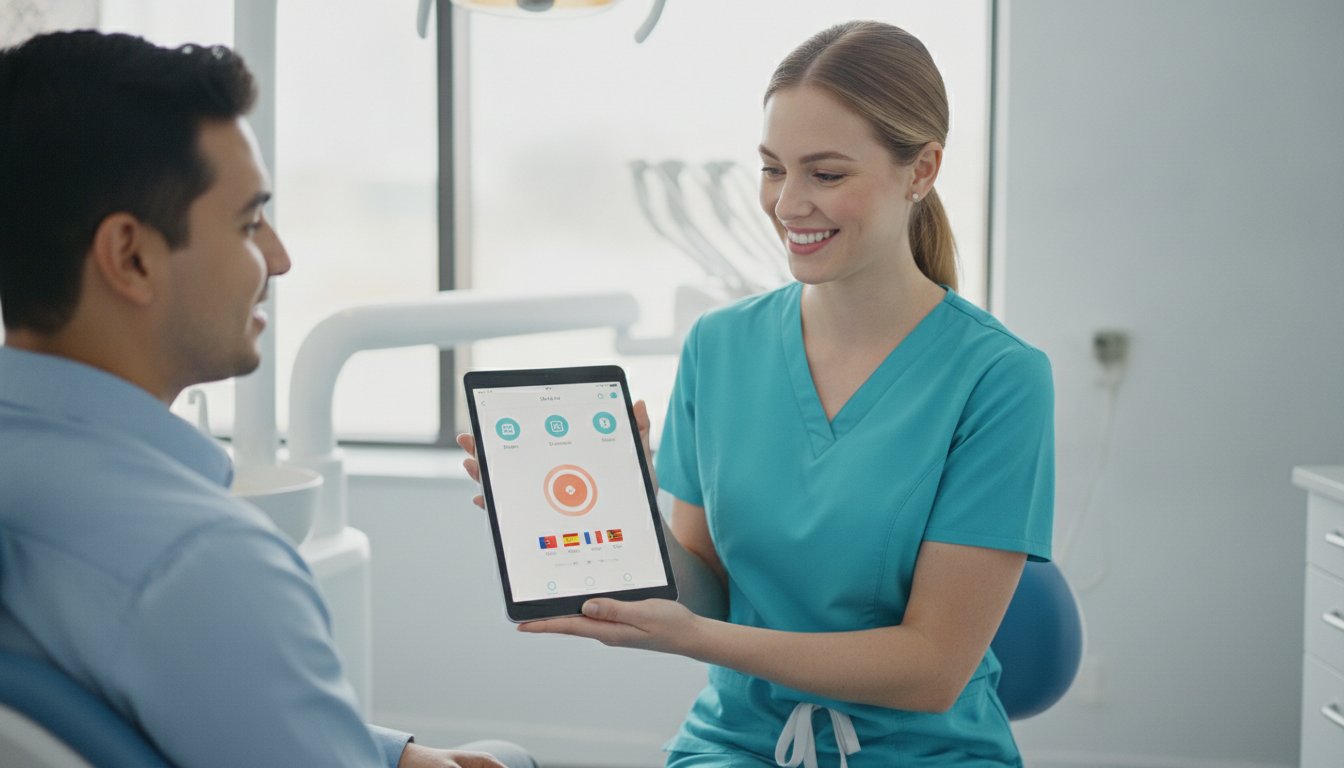
Language concordance is a clinical requirement, not an administrative luxury. If you’ve ever felt the clinical anxiety of a patient nodding “yes” to informed consent while their eyes signal total confusion, you know that dental patient education for non-english speakers is essential for modern practice safety. You’re likely exhausted by the operational resistance caused by phone-based translation services that waste chair time and still leave room for error.
We understand the pressure of maintaining a high-volume practice while ensuring every patient leaves with a clear path to healing. This 2026 guide promises to show you how to eliminate language barriers, reduce clinical risk, and improve patient compliance through automated multi-language communication. We’ll explore how to replace manual, fragmented workflows with standardized clinical instructions in 15 languages using a library of over 80 templates. By the end of this article, you’ll see how a systematic approach to communication reduces your liability through better documentation and finally puts an end to the endless cycle of follow-up calls caused by simple misunderstandings.
Key Takeaways
- Understand why language concordance is a clinical requirement that reduces emergency visits and prevents preventable post-operative complications.
- Learn how standardized dental patient education for non-english speakers improves medication adherence and home care through professionally localized clinical instructions.
- Identify the hidden operational costs and legal risks associated with relying on expensive phone-based translation services or non-clinical staff for instructions.
- Discover a structured process for integrating multi-language support into your existing intake and referral workflows to eliminate administrative friction.
- Explore how to deploy a library of 80+ specialty-specific templates in 15 languages via automated text, email, or physical print for immediate patient access.
Beyond the Language Barrier: The Clinical Stakes of Dental Patient Education
Language concordance in dentistry is the state where the provider and patient communicate using the same primary language. It’s a clinical variable as critical as sterile technique or diagnostic accuracy. When dental patient education for non-english speakers is neglected, the “lost in translation” effect leads to tangible harm. Patients don’t just forget instructions; they misunderstand them. This results in higher rates of emergency visits for preventable issues like dry sockets or uncontrolled post-operative bleeding. Verbal instructions alone often fail up to 80% of the time with non-English speakers because the cognitive load of translating medical terms in real-time is exhausting.
Receiving care in a native language builds immediate trust and reduces the cortisol spike associated with clinical procedures. Without this linguistic bridge, the patient remains in a state of high-stress resistance. This anxiety further impairs their health literacy and their ability to follow complex home-care regimens. Providing professional instructions in a patient’s native language isn’t just a courtesy. It’s a stabilizing force that ensures the clinical work you perform in the chair isn’t undone by poor care at home.
Identifying Limited English Proficiency (LEP) Risks
Patients with Limited English Proficiency face a significantly higher risk of post-extraction infections and complications. When a patient doesn’t understand the “no straw” rule or the importance of specific salt-water rinses, the clinical outcome is compromised. This isn’t a patient failure; it’s a communication gap. You also lose valuable chair time when staff members attempt to “act out” or mime complex instructions. It’s an inefficient use of professional resources that often leads to missed follow-up appointments because the patient didn’t grasp the necessity of the secondary visit. Standardizing this process eliminates the guesswork and ensures every patient receives the same high level of care.
The Legal Necessity of Informed Consent in Multiple Languages
A signature on an English-language form provides little protection if the patient cannot demonstrate understanding of the risks and alternatives. True informed consent is a process of mutual understanding, not just a signed piece of paper. To meet national regulatory requirements and minimize liability, you must provide documentation that the patient actually understands. Transitioning to a system that offers standardized clinical documentation in the patient’s primary language ensures that the authorization is both ethically sound and legally defensible. This move from manual, fragmented tasks to a systematic approach provides the psychological security your practice needs to operate in a high-pressure, diverse environment.
Why Multi-Language Support is the Gold Standard for Compliance
Effective dental patient education for non-english speakers requires more than a simple word-for-word translation. There is a critical distinction between basic translation and clinical localization. While translation changes the language, localization ensures the clinical intent, cultural nuances, and medical terminology are accurately preserved for the patient’s specific context. Providing localized instructions leads to better outcomes because it eliminates the ambiguity that often surrounds complex medication schedules and post-operative home care routines. When patients receive instructions in their primary language, they’re far more likely to adhere to protocols, which directly reduces the volume of confused follow-up calls to your front desk.
Reducing the “Anxiety Gap” is especially vital for patients undergoing surgical procedures. Fear often stems from a lack of understanding. By providing professional, native-language resources, you bridge this gap and position your practice as a stabilizing force in their care. This level of attention builds long-term trust that extends beyond the individual patient. In many communities, word-of-mouth referrals are the primary driver of growth; delivering a high standard of care in a patient’s native tongue turns a clinical necessity into a powerful practice builder.
The Science of Compliance in Native Languages
Research consistently shows that information retention is significantly higher when patients engage with materials in their first language. Academic studies, such as the Training to Care for Limited English Proficient Patients report from Harvard, emphasize that proper resources are essential for clinical safety. To reinforce these protocols, automated SMS follow-ups serve as a persistent reminder in the patient’s pocket. This systematic approach ensures that the critical instructions you provide in the chair aren’t forgotten the moment the patient leaves. You can learn more about streamlining this process in our guide to automated dental post-op instructions.
Standardizing the Patient Experience Across All Demographics
Consistency is the hallmark of a professional reputation. Every patient deserves the same high-quality education, regardless of the language they speak. By using a standardized library of 80 specialty-specific templates, you ensure that your clinical standards remain uniform across your entire patient base. This level of oversight protects your practice from the risks of ad-hoc translations and prevents documentation gaps that could lead to liability issues. Establishing this baseline of communication is a core component of the dental patient experience. If you’re ready to see how a standardized system can reduce operational friction, you might want to explore our multi-language template library today.
Evaluating Solutions: From Translation Services to Digital Instruction Libraries
Many practices rely on over-the-phone (OPI) or video remote interpreting (VRI) to manage dental patient education for non-english speakers. While these services provide immediate assistance, they carry significant hidden costs. You pay for every minute of connection time, often while your clinical team sits idle waiting for a translator to become available. This creates a bottleneck in your workflow that reduces daily patient volume and increases operational stress. Beyond the direct expense, relying on family members or non-clinical staff as ad-hoc translators introduces a high degree of clinical risk. Family members often lack the technical vocabulary to explain complex procedures; pulling a bilingual assistant away from the chair disrupts the entire schedule and hurts your bottom line.
Generic online translation tools are equally problematic for a professional setting. These platforms often fail to grasp the nuance of clinical instructions, potentially turning a “do not rinse” command into something far less clear or even contradictory. To maintain professional standards, you need a pre-translated, professional clinical library that supports the 15 most common languages. This ensures your instructions are accurate, culturally localized, and legally defensible every single time you hit send.
Manual vs. Automated Translation Workflows
A manual workflow requires your team to find, translate, and verify instructions for every individual case. This is an inconsistent process that invites human error and documentation gaps. In contrast, an automated system delivers verified content in seconds, ensuring your clinical protocols are followed precisely by every patient demographic. This standardization protects your reputation and provides the psychological security of knowing your documentation is complete. A Clinical Instruction Library is the most scalable solution for modern DSOs.
Digital vs. Paper: Delivering Education Where It Sticks
Modern patients are mobile-first. Delivering instructions via SMS ensures the information is always in their pocket, which is especially important for patients who may not use desktop computers regularly. However, physical document printing remains a necessary backup for older demographics or those with limited digital access. Having both options allows you to meet patients exactly where they are without compromising on the quality of care. Transitioning to these automated delivery methods is a key step in Optimizing Dental Practice Workflow: The 2026 Guide to Clinical Efficiency. By removing the resistance of manual translation, you free your staff to focus on high-value clinical tasks and revenue-generating procedures.
Implementing a Frictionless Multi-Language Workflow in Your Practice
Establishing a systematic approach to dental patient education for non-english speakers begins with a clear audit of your local demographics. You can’t solve a problem you haven’t quantified. Start by reviewing your patient data to identify the primary non-English languages spoken in your community. Once identified, you can prioritize which templates to deploy first. Integrating language selection into your digital intake forms ensures that every subsequent communication, from appointment reminders to complex post-operative instructions, is delivered in the patient’s native tongue. This proactive step eliminates the friction of manual translation during the appointment, allowing your clinical team to focus entirely on the procedure.
The final step in this frictionless workflow is automating post-op delivery immediately upon procedure completion. When a treatment is marked as finished in your system, the corresponding instruction set should trigger automatically. This removes the reliance on human memory and ensures the patient receives their instructions while the information is still fresh and relevant. This speed reduces the anxiety patients feel once the anesthesia wears off and they return home.
Integrating Language Selection into the Clinical Workflow
Tagging patient profiles with language preferences creates a “set it and forget it” environment for your staff. This automation is vital for referral management. When sending a patient with limited English proficiency to a specialist, your referral notes should automatically include their language preference. This ensures the specialist is prepared, maintaining a high standard of care across the entire referral network. Aligning your front-desk and clinical teams on this protocol ensures no patient falls through the cracks, protecting your professional reputation and reducing legal anxiety.
Visual Aids: The Universal Language of Dentistry
Visual aids serve as a powerful supplement to written instructions. While text provides the legal and clinical detail, visual tools provide immediate clarity. Using visual aids as part of your dental patient education for non-english speakers ensures that even the most complex clinical concepts are understood. Smile design tools allow you to show cosmetic outcomes without the need for complex verbal explanations. A patient can see their “before and after” transformation instantly, which bypasses the language barrier and builds immediate excitement for the treatment plan. Tooth loss charts and visual diagrams of post-extraction care act as universal signals. These tools reduce patient anxiety by providing a clear, non-verbal roadmap for their healing journey.
A standardized workflow doesn’t just improve care; it safeguards your practice’s time and resources. By moving away from ad-hoc solutions, you create a scalable system that grows with your community. If you’re ready to eliminate the operational resistance of manual translation, start your free trial of PractCom’s multi-language platform today.

PractCom: Standardizing Patient Care Across 15 Languages
PractCom is designed to bridge the gap between high-level clinical care and the administrative realities of a diverse patient base. By providing a comprehensive library of over 80 post-treatment templates, the platform ensures that dental patient education for non-english speakers is never left to chance. These templates are professionally localized into 15 languages, ensuring that every specialty, from endodontics to oral surgery, has standardized instructions ready for immediate delivery. Whether you choose to send these documents via automated text, email, or physical print, you’re providing a consistent experience that reinforces your practice’s professional reputation.
Using standardized, pre-translated instructions functions as the ultimate risk management tool. It eliminates the liability associated with ad-hoc translations and ensures that every patient leaves with a legally defensible set of instructions. This system provides the psychological security practitioners need, moving away from the operational resistance of manual tasks toward the confidence of a standardized system. It allows you to maintain clinical excellence while significantly reducing the time your staff spends on repetitive administrative follow-ups.
The PractCom Advantage for Diverse Practices
The clinical translations within PractCom go far beyond basic vocabulary. They use precise terminology that patients can understand, ensuring that home care instructions don’t get lost in translation. Automated follow-ups act as a guardian for your patients, reaching out in their native language to ensure protocols are being followed. Managing this through a single dashboard gives you systematic oversight of all patient communication and documentation, making it easy to track compliance across your entire practice or DSO. This centralized control transforms a chaotic administrative burden into a streamlined, predictable workflow.
Getting Started with Multi-Language Automation
Deploying the 15-language library in your practice takes only minutes. You don’t need a complex IT overhaul; the platform is built for immediate utility in high-pressure clinical settings. By providing these resources, you transform your practice into a community leader for inclusive care, attracting a wider patient base and fostering deeper trust. It’s a proactive strike against administrative failure that protects both your patients and your professional reputation. Start your free trial and see how PractCom handles 15 languages today.
Securing Your Clinical Reputation through Linguistic Precision
The transition from manual, fragmented translation to a standardized system is a critical step in protecting your practice’s legal standing and clinical outcomes. By implementing a professional library of 80+ Clinical Templates, you replace operational resistance with the confidence of a proven workflow. Effective dental patient education for non-english speakers ensures that your instructions are understood the first time, reducing the volume of follow-up calls and the risk of post-operative complications. You now have the tools to bridge the gap between clinical excellence and administrative efficiency across 15 Languages Supported.
Your practice functions best when communication is seamless and documented. Whether you choose Digital and Print Delivery Options, the result is the same: improved patient compliance and a stronger bond of trust within your community. It’s time to move toward the psychological security of a system that anticipates administrative failures before they happen. Streamline your practice with multi-language patient education-Start your free trial here.
You’re ready to lead your community with inclusive, high-standard care that leaves no patient behind.
Frequently Asked Questions
Is it legal to use a family member to translate dental instructions?
Using family members, especially minors, is generally not recommended and can violate Section 1557 of the ACA regarding meaningful access. Relying on untrained individuals poses a high risk of clinical misinterpretation and potentially breaches patient confidentiality. Standardizing your documentation through professional templates ensures you meet regulatory requirements without the liability of ad-hoc translators. This approach protects your practice and ensures the patient receives accurate clinical information.
What are the most common languages needed for dental patient education in the US?
Spanish is the most prevalent language required, but clinical needs vary significantly by region. Mandarin, Cantonese, Vietnamese, Tagalog, and Arabic represent large patient demographics in many urban areas. Providing dental patient education for non-english speakers across these groups allows you to reach your entire community. You should audit your specific patient data to prioritize the languages that reflect your local zip codes.
How do automated post-op instructions improve patient compliance for non-English speakers?
Automation removes the human error of forgetting to provide instructions during a busy clinical day. When a patient receives a clear, native-language text message immediately after a procedure, they have a permanent reference in their pocket. This reduces the cognitive load of trying to remember verbal commands while recovering from anesthesia. Consistent, automated delivery ensures that every patient follows the same high-quality healing protocol.
Can I customize the translated templates in the PractCom library?
You can customize the templates to align with your specific clinical protocols. While the core medical terminology is professionally localized, you have the flexibility to adjust specific post-operative advice to match your preferred techniques. This ensures that your unique clinical voice is maintained across all 15 languages. Customizing these templates allows you to provide a personalized experience while still benefiting from a standardized, high-efficiency system.
Does HIPAA compliance apply to translated SMS messages?
HIPAA regulations apply to all protected health information, regardless of the language used. Any automated system sending clinical instructions via text or email must use secure, encrypted channels to protect patient privacy. Standardizing your multi-language communication through a secure platform ensures you remain compliant while delivering essential care. This regulatory reassurance allows you to focus on clinical outcomes without worrying about documentation security.
What happens if a patient needs an instruction for a language not in the 15-language library?
While our library covers the languages spoken by the vast majority of the population, you can use our visual aids as a universal bridge. Visual communication bypasses language barriers entirely and provides a helpful supplement for rare dialects. For these cases, we recommend using our physical document printing feature to provide a structured English backup that the patient can review with a certified interpreter later.
How does multi-language support affect a dental practice’s ROI?
Multi-language support improves ROI by significantly reducing the volume of follow-up calls and chair-time wasted on manual translation. When dental patient education for non-english speakers is automated, your staff spends less time acting out instructions and more time on revenue-generating procedures. Improved compliance also leads to fewer post-op complications and emergency visits, which protects your bottom line and enhances your reputation for reliable care.
Are the translations in PractCom reviewed by clinical professionals?
Every template in our library undergoes a rigorous clinical localization process. Unlike generic online tools, our translations are reviewed to ensure that complex dental terminology is accurate and culturally appropriate. This professional oversight provides the psychological security that your instructions are clinically sound. It transforms a simple messaging tool into an ethical and professional necessity for any practice serving a diverse patient demographic.

Article by
Cary Ganz DDS
Dr. Cary H. Ganz is a dentist, prosthodontist, entrepreneur, lecturer, and author with more than 50 years of experience in clinical dentistry and dental technology. Throughout his career, he has combined hands-on patient care with a deep understanding of how technology can improve dental practice operations, communication, documentation, and patient outcomes.
In addition to his clinical background, Dr. Ganz has held significant leadership roles in the dental technology industry, including Past Owner and Vice President of Clinical Affairs at DEXIS Digital Radiography and Past Vice President of Clinical Affairs at Denticon Practice Management Software. His business experience includes product development, clinical strategy, dental software innovation, practice management solutions, and educating dental professionals on the effective use of technology in modern dentistry.
Today, Dr. Ganz continues to focus on creating practical technology solutions for dental practices, including PractCom, a comprehensive dental practice communication platform designed to improve patient communication, documentation, compliance support, referrals, and overall practice efficiency. His work reflects a career-long commitment to helping dentists deliver better care while making their practices more organized, efficient, and protected.
No responses yet