
Imagine finishing a successful surgical extraction, only to receive an emergency call at 9 PM because your patient lost their paper instructions and can’t remember if minor bleeding is normal. It’s a scenario that drains your energy and increases your practice’s liability. Most practitioners agree that while traditional reminders help fill the chair, they do little to manage the patient once they leave it. You’ve likely felt the frustration of repeating the same post-op care steps multiple times, only to see compliance slip because of a language barrier or simple human forgetfulness. Finding the right dental patient engagement software is no longer just about marketing; it’s about clinical survival and protecting your professional reputation.
This guide explores how modern communication tools move beyond basic scheduling to become a stabilizing force in your clinical workflow. You’ll discover how to leverage standardized digital informed consent forms and a comprehensive post-treatment instruction library to slash chair time and minimize post-op complications. We will preview the essential features for 2026, including multi-language support for 15 languages and automated follow-ups that ensure your patients feel guided every step of the way. By the end, you’ll have a clear roadmap to transition from manual, high-pressure tasks to a systematic approach that secures your practice and elevates your brand.
Key Takeaways
- Understand why modern dental patient engagement software must evolve from basic appointment reminders into a robust clinical communication layer that protects your practice.
- Learn to identify the critical documentation gaps in your current Practice Management Software that increase your liability and chair time.
- Discover a systematic framework for evaluating software ROI by measuring the reduction in repetitive post-op explanations and emergency phone calls.
- Master the step-by-step process of auditing your communication gaps and standardizing your instruction library to ensure consistent care across your entire team.
- Explore how specialized tools like a Post-Treatment Instruction Library with 15-language support can eliminate confusion for non-English speaking patients.
What is Dental Patient Engagement Software in 2026?
In 2026, dental patient engagement software is a specialized clinical ecosystem designed to manage the entire interaction cycle between a provider and their patient. It’s moved far beyond the era of simple SMS reminders. While basic tools focus on getting patients into the chair, a comprehensive platform ensures they’re safely guided through their treatment once they leave it. This distinction is vital. Marketing-focused engagement helps your bottom line, but clinical-focused engagement protects your license and your patient’s health.
The modern ecosystem rests on three specific pillars. First, administrative efficiency reduces the burden on your front desk. Second, clinical compliance ensures every patient receives and understands their care instructions. Third, the patient experience is elevated through consistent, professional contact. By fostering active patient participation, these systems transform a passive appointment into a collaborative healthcare journey. This approach moves your practice from a state of operational resistance to one of standardized confidence.
The Shift from Administrative to Clinical Engagement
Practices in 2026 face higher patient expectations and tighter regulatory scrutiny. An “appointment confirmed” text is no longer enough to satisfy a modern consumer or a legal auditor. True engagement now focuses on reducing the “buyer’s remorse” and anxiety that often follow complex procedures like implants or oral surgery. By providing immediate, digital access to care details, the software bridges the critical gap between your chairside explanation and the patient’s home environment. This standardized approach ensures your instructions aren’t forgotten the moment the patient walks out the door. It provides psychological security for the patient and legal security for the practitioner.
Key Components of a Modern Engagement Platform
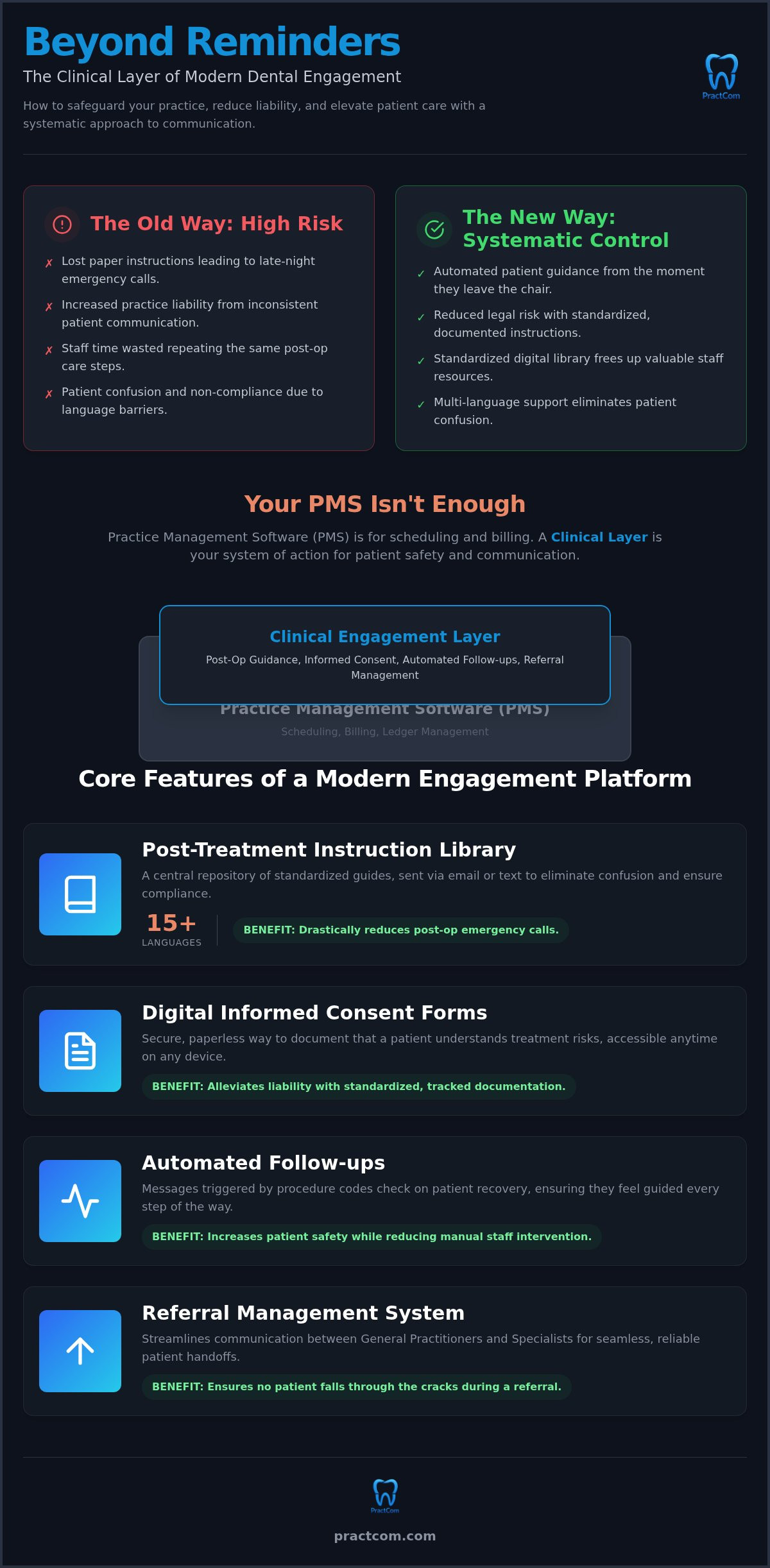
A high-performance platform must act as a guardian of your practice’s reputation. It integrates several essential tools to create a seamless flow:
- Automated Follow-ups: These trigger based on procedure codes to check on patient recovery. [Benefit: Reduces manual staff intervention while increasing patient safety.]
- Digital Informed Consent Forms: These provide a secure, paperless way to document that a patient understands treatment risks. [Benefit: Alleviates liability concerns through standardized documentation.]
- Post-Treatment Instruction Library: A repository of standardized guides sent via email or text in multiple languages. [Benefit: Eliminates confusion and reduces post-op emergency calls.]
- Referral Management System: This streamlines communication between GPs and specialists. [Benefit: Ensures no patient falls through the cracks during the handoff.]
Implementing these features allows you to move from operational friction to systematic control. You can see how this works by exploring why PractCom is designed specifically to serve as this essential clinical layer alongside your existing systems.
The Clinical Layer: Why Your PMS Isn’t Enough
Many dentists fall into the trap of believing their Practice Management Software (PMS) is a complete solution for patient interactions. While your PMS excels at ledger management and scheduling, its communication modules are often an afterthought. They lack the clinical specificity required to manage post-surgical care or complex treatment plans. This is where specialized dental patient engagement software serves as an essential “Clinical Layer.” This layer doesn’t replace your PMS; it enhances it by focusing on the quality of information exchanged between the chair and the home. It functions as your system of action, providing the administrative warmth and technical precision your primary database lacks.
The Patient Engagement Playbook emphasizes that health IT should facilitate clear, actionable communication to improve outcomes. Relying solely on a PMS for this often results in generic messages that don’t address procedure nuances. By implementing a dedicated clinical layer, you move from operational disorganization to systematic control, ensuring that your communication is as professional as your clinical work. To see how this fits into your current workflow, you can explore our clinical communication tools.
Standardizing Post-Treatment Instructions
Verbal-only instructions are a significant liability for any modern practice. Research consistently shows a drastic drop-off in patient memory within 24 hours of a procedure. When a patient is numb, stressed, or in pain, they aren’t processing your home care advice effectively. Utilizing a standardized Post-Treatment Instruction Library ensures every patient receives the same high-quality, written care information regardless of which team member handles the discharge. Our digital library of over 80 templates eliminates clinical variance by providing structured, repeatable guidance for every procedure in your practice. This standardization reduces the volume of repetitive phone calls and provides the psychological security patients need during recovery.
Digital Informed Consent as Risk Management
Paper forms are easily lost, difficult to audit, and often lack the detail required for true regulatory protection. Transitioning to digital dental informed consent forms allows you to modernize your risk management process while improving the patient journey. These digital versions ensure HIPAA compliance through secure delivery and encrypted storage, creating a permanent audit trail that paper simply can’t match. Language barriers shouldn’t compromise your legal standing or patient safety. By offering these forms in 15 languages, you ensure that every patient truly understands the risks and benefits of their treatment, fulfilling your ethical and legal obligations while projecting a modern, inclusive brand image.
Evaluating Engagement Software: A Feature Comparison
Selecting the right dental patient engagement software requires a shift in perspective. Generic communication tools often treat patients like retail customers, focusing solely on clicks and open rates. In a clinical setting, this is insufficient. A specialized dental suite understands the nuances of a restorative workflow or a surgical follow-up. It provides the technical precision needed to deliver the right information at the exact moment of need. This professional alignment ensures your communication doesn’t just reach the patient but actually influences their health behavior.
Evaluating the return on investment (ROI) goes beyond simple marketing metrics. You must measure success through three specific lenses: time saved at the front desk, reduced emergency calls, and a decrease in no-shows. According to industry data from June 2026, automated reminders reduce no-shows by an average of 22.95%. Considering a single daily no-show can cost a practice between $20,000 and $70,000 annually, the financial justification is immediate. A Practice Performance Dashboard allows you to track these metrics in real-time, moving your practice from guesswork to systematic control. Effective delivery methods must also include Email, SMS, and physical document printing to ensure no patient is left behind due to technical barriers.
Visual Engagement and Case Acceptance
The power of “seeing is believing” is a primary driver for high-value treatments. Smile Design tools allow patients to visualize before and after cosmetic changes during their consultation, which significantly reduces hesitation. These visual aids transform complex clinical explanations into an easy-to-understand reality. Integrating these visuals into the patient portal experience ensures the patient can share the proposed results with family members, further increasing case acceptance rates for veneers, implants, and full-arch rehabilitations. It’s about creating a modern brand image that values transparency and patient confidence.
Referral Management and Specialist Coordination
Engagement must extend beyond your own office walls to include your specialist network. When a patient is referred out, the communication chain often breaks, leading to patient “leakage” and a fragmented care experience. Streamlining the GP-to-specialist journey ensures that all clinical data, including images and treatment notes, moves securely with the patient. This coordination prevents the patient from feeling lost in the system and maintains the professional bond you’ve worked hard to build. For more on optimizing these critical handoffs, explore our guide on Mastering Dental Referral Management Software.
Implementation Strategies for High-Growth Practices
High-growth practices treat implementation as a clinical upgrade rather than a simple software installation. To move from operational friction to systematic control, you must follow a structured path. Start by auditing your current communication gaps. Ask your team where they spend the most time on repetitive explanations or which procedures trigger the highest volume of post-treatment phone calls. Identifying these pressure points allows you to apply the dental patient engagement software where it will have the most immediate impact on your daily sanity.
Once gaps are identified, follow these four steps for a successful rollout:
- Standardize: Use a Post-Treatment Instruction Library with 80+ templates to ensure every provider delivers consistent care information.
- Train: Ensure your clinical team owns the patient portal and referral management system to provide a cohesive patient experience.
- Automate: Set procedure-based triggers to remove the burden of manual follow-ups from your staff.
- Monitor: Use a performance dashboard to track engagement success and identify areas where patients still struggle with compliance.
Automating the Follow-Up Workflow
Automation serves as the engine of clinical efficiency. By setting triggers for automated post-op texts and emails based on specific procedure codes, you ensure no patient is left without guidance during the critical 24-hour recovery window. You must also navigate technical hurdles like “Error Code -1,” which often signals SMS delivery failures due to carrier filtering or compliance issues. A robust dental patient engagement software manages these technical layers for you, ensuring your messages actually reach the patient’s device. Ensuring your team actually integrates these tools into their daily routine is the key to optimizing dental practice workflow.
Multi-Language Communication Best Practices
Serving a diverse patient base requires a conscious effort to bridge communication gaps. Identify patient language preferences during the initial intake process to ensure they receive all automated instructions in their native tongue. Providing care details in a patient’s primary language significantly improves health outcomes and reduces the risk of post-op complications due to simple misunderstandings. Utilizing a 15-language library allows you to serve non-English speaking demographics effectively, enhancing both your practice’s professional image and its legal protection. Ready to standardize your clinical communication? Start your free trial today.
The PractCom Advantage: Clinical Communication Redefined
PractCom isn’t just another technology vendor; it’s a peer-founded solution built by professionals who understand the high-pressure reality of the modern operatory. While many dental patient engagement software platforms focus exclusively on filling the schedule, we prioritize the safety and clarity of the clinical interaction. This specialized focus transforms your communication from a source of operational resistance into a standardized, protective asset. By positioning ourselves as the essential clinical layer alongside your existing systems, we provide the technical precision and administrative warmth that generic marketing tools lack.
Our platform delivers a unique combination of over 80 post-treatment templates and comprehensive support for 15 languages. This ensures that every patient, regardless of their primary language, receives clear and actionable care instructions. By integrating seamlessly into your existing practice workflows, PractCom acts as a guardian of your reputation. It ensures that no detail is left to chance during the patient’s recovery, providing you with the psychological security that comes from a systematic approach to patient care.
Why Clinical Precision Matters
Precision in communication is your best defense against administrative failure and legal liability. Reducing legal risk is achieved through automated, timestamped digital consent forms that provide an irrefutable audit trail for every procedure. This level of documentation alleviates the anxiety of practitioners regarding compliance and informed consent. Beyond safety, this commitment to clarity builds a “Patient-First” reputation. When patients feel guided and protected throughout their journey, they are more likely to become organic referrers for your practice. To understand the deeper link between communication and trust, read our full The Dental Patient Experience guide.
Ready to Modernize Your Patient Engagement?
Transitioning to a dedicated clinical engagement suite offers immediate benefits that generic tools can’t match. You’ll see a reduction in chair time spent on repetitive explanations and a significant drop in the volume of post-treatment emergency calls. By standardizing your outreach and documentation, you empower your team to work with higher accuracy and less stress. It’s time to move from operational disorganization to systematic control. Experience the stabilizing force of our platform firsthand and see why we’re the trusted ally for high-growth dental practices. Start your free trial with PractCom today and redefine how your practice communicates.
Securing Your Practice’s Future with Clinical Communication
Transitioning your practice to a modern clinical layer is no longer optional; it’s a professional necessity. By moving beyond simple appointment reminders, you replace manual, error-prone tasks with a standardized system of action. You’ve seen how the right dental patient engagement software reduces chair time, minimizes post-op complications, and protects your reputation through rigorous documentation. This transition allows you to move from a state of operational resistance to one of systematic control. It ensures your communication is as precise as your clinical work.
PractCom was peer-founded by dental professionals who understand your daily operational stresses. We provide the essential tools for a high-growth environment, including a library of 80+ standardized clinical templates and support for 15 languages. This ensures your care remains consistent and inclusive for every patient who walks through your door. It’s time to elevate your professional brand and provide the psychological security your patients deserve.
Streamline your clinical communication—Start your PractCom free trial today
Take the first step toward a more organized, protective, and efficient practice environment.
Frequently Asked Questions
What is the difference between dental patient engagement software and a PMS?
Engagement software focuses on the clinical communication layer, whereas a PMS manages the practice’s administrative and financial database. While your PMS handles scheduling and billing, specialized dental patient engagement software ensures patients understand their treatment through standardized instructions and automated follow-ups. It acts as an active communication ecosystem that sits alongside your PMS to bridge the gap between chairside talk and home care compliance. This professional alignment ensures your communication influences health behavior.
How does engagement software help reduce emergency phone calls?
It reduces emergency calls by providing patients with clear, standardized digital instructions immediately after their procedure. Most post-op calls stem from simple confusion or forgotten verbal advice. By delivering a guide from our Post-Treatment Instruction Library via text or email, you ensure the patient has 24/7 access to care details. This standardized approach eliminates the ambiguity that often leads to late-night emergency inquiries and unnecessary staff intervention, saving your team valuable time.
Is PractCom HIPAA compliant for sending digital consent forms?
Yes, PractCom is designed with strict regulatory standards to ensure HIPAA compliance for all document delivery and storage. Our Digital Informed Consent Forms are sent through secure, encrypted channels and include timestamped signatures for a permanent audit trail. This systematic control alleviates the anxiety of practitioners regarding documentation and legal standing. We prioritize the security of electronic protected health information to protect both your patient’s privacy and your practice’s professional reputation.
Can I still print physical instructions for patients who prefer paper?
You can certainly print physical versions of all documents for patients who prefer paper or have limited digital access. Our platform offers both digital and physical document printing options to ensure your clinical guidance is inclusive for all demographics. This flexibility allows your team to maintain a high standard of care while accommodating the physical and logistical realities of your diverse patient base. It ensures no patient is left behind due to technical barriers.
How many languages are supported for post-op instructions?
We currently support 15 languages for all post-treatment guides and consent documents. This multi-language capability is essential for ensuring valid informed consent and patient compliance in diverse communities. Providing instructions in a patient’s native tongue reduces the risk of post-op complications caused by simple misunderstandings. It also projects a professional, modern brand image that shows your practice values clear communication. Using dental patient engagement software this way helps you serve diverse demographics effectively.
Does engagement software integrate with my existing dental referrals?
Our platform includes a dedicated Referral Management System designed to streamline the journey between general practitioners and specialists. This system ensures that all clinical data, images, and treatment notes move securely with the patient. By standardizing this handoff, you prevent patient leakage and ensure a cohesive care experience. This systematic oversight strengthens your professional network and ensures that no patient falls through the cracks during the referral process, maintaining the professional bond you’ve built.
What is a Smile Design tool and how does it help with engagement?
A Smile Design tool is a visual engagement feature that allows patients to see before and after cosmetic changes during their consultation. It helps with engagement by making complex treatment outcomes tangible and easy to understand. When patients can visualize their results, their anxiety decreases significantly. This visual aid is a powerful driver for case acceptance, especially for high-value procedures like veneers or implants. It transforms clinical explanations into an immediate, easy to understand reality.
Will this software help me manage my DSO across multiple locations?
Yes, the platform is built to support the systematic oversight required for DSOs and multi-location practices. Our Practice Performance Dashboard provides a centralized view of engagement metrics across all your clinics. This allows you to standardize the Post-Treatment Instruction Library and consent processes enterprise-wide. By ensuring every location follows the same high-quality communication protocols, you maintain a consistent brand image and reduce operational variance. This centralized control is vital for maintaining standards in high-growth environments.

Article by
Cary Ganz DDS
Dr. Cary H. Ganz is a dentist, prosthodontist, entrepreneur, lecturer, and author with more than 50 years of experience in clinical dentistry and dental technology. Throughout his career, he has combined hands-on patient care with a deep understanding of how technology can improve dental practice operations, communication, documentation, and patient outcomes.
In addition to his clinical background, Dr. Ganz has held significant leadership roles in the dental technology industry, including Past Owner and Vice President of Clinical Affairs at DEXIS Digital Radiography and Past Vice President of Clinical Affairs at Denticon Practice Management Software. His business experience includes product development, clinical strategy, dental software innovation, practice management solutions, and educating dental professionals on the effective use of technology in modern dentistry.
Today, Dr. Ganz continues to focus on creating practical technology solutions for dental practices, including PractCom, a comprehensive dental practice communication platform designed to improve patient communication, documentation, compliance support, referrals, and overall practice efficiency. His work reflects a career-long commitment to helping dentists deliver better care while making their practices more organized, efficient, and protected.
No responses yet