
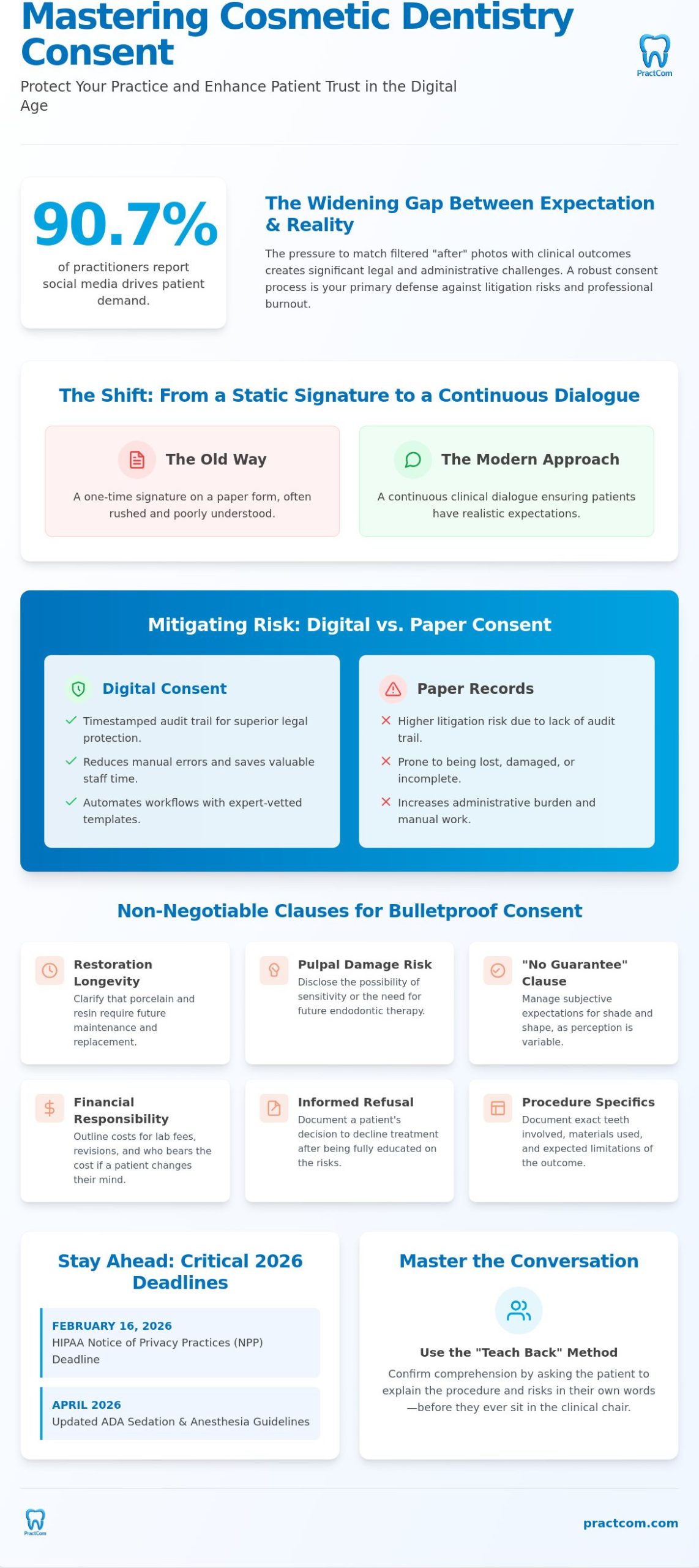
What if your most meticulously signed cosmetic dentistry consent form was actually your greatest legal liability? In a market where 90.7% of practitioners say social media drives patient demand, the gap between a filtered “after” photo and clinical reality has never been wider. You likely feel the pressure of managing these high-stakes expectations while juggling manual paperwork that eats into your chair time. It’s a stressful balance between providing life-changing aesthetics and maintaining the rigorous documentation required by the latest 2026 standards.
We understand that your goal is to provide exceptional care without the constant shadow of litigation or administrative burnout. This guide will show you how to master the essential elements of cosmetic informed consent to protect your practice and enhance patient trust. We’ll preview the critical February 16, 2026, HIPAA NPP deadline and the updated ADA sedation guidelines from April 2026 because staying ahead of these shifts is the only way to avoid operational resistance. By the end of this article, you’ll have a roadmap for a standardized, legally robust process that simplifies patient intake and ensures every client truly understands their treatment limitations.
Key Takeaways
- Understand why informed consent is a continuous clinical dialogue rather than a one-time signature to ensure patients have realistic expectations for elective procedures.
- Identify the non-negotiable clauses for your cosmetic dentistry consent form, including specific warnings about restoration longevity and pulpal damage to mitigate litigation risks.
- Discover how transitioning to digital documentation creates a timestamped audit trail that provides far superior legal protection compared to traditional paper records.
- Master the “Teach Back” method and strategic timing to confirm patient comprehension before they ever sit in the clinical chair.
- Learn how to automate your administrative workflow using expert-vetted templates and multi-language support to reduce manual errors and save valuable staff time.
What is a Cosmetic Dentistry Consent Form and Why is it Critical in 2026?
A cosmetic dentistry consent form isn’t just a piece of paper; it’s a documented record of a clinical dialogue and a mutual agreement between you and your patient. In the high-pressure environment of a modern practice, it’s easy to view this document as a mere administrative hurdle. However, it’s actually your strongest defense against the unique risks associated with aesthetic procedures. While general restorative work often addresses clear pathologies, cosmetic dentistry is largely elective. This distinction is vital because the legal burden for “informed choice” is significantly higher when the treatment isn’t medically necessary to resolve pain or infection.
The Legal Pillars of Informed Consent
The foundation of any valid agreement rests on three core pillars: the duty to disclose, patient capacity, and voluntary agreement. You must clearly outline the specific risks, potential benefits, and viable alternatives for every aesthetic change. This aligns with standard Informed Consent Principles, ensuring the patient understands what they’re truly buying into. Capacity requires that the patient is mentally and legally able to make this choice without external pressure. Informed refusal is a legally binding documentation of a patient’s decision to decline a recommended treatment after being fully educated on the specific health and aesthetic risks of non-action.
Managing Subjective Satisfaction in Aesthetic Cases
The phrase “beauty is in the eye of the beholder” represents a significant clinical risk in your practice. To protect your reputation and your bottom line, your documentation must set strict boundaries for shade, shape, and symmetry adjustments. You should require patients to sign off on a “trial smile” or a temporary phase before the final restorations are fabricated. This proactive approach is a vital part of The Dental Patient Experience, as it builds trust through transparency rather than just hoping for a happy accident at the cementation appointment. By standardizing this conversation, you move from a state of operational disorganization to one of systematic control.
Essential Clauses Every Cosmetic Consent Form Must Include
A standard waiver doesn’t suffice when you’re altering a patient’s smile. Your cosmetic dentistry consent form must act as a precise roadmap for the proposed aesthetic transformation. This includes documenting the exact teeth involved, the materials used, and the expected limitations of the outcome. You must explicitly address risks like post-operative sensitivity, the possibility of pulpal damage requiring endodontic therapy, and the realistic longevity of the restorations. Since porcelain and resin aren’t permanent, the patient needs to understand that these are long-term commitments with future replacement costs and maintenance requirements.
One of your most vital protections is the “No Guarantee” clause. Because perception of color is subjective and influenced by ambient lighting, you cannot promise a perfect match to a specific shade guide or an idealized image. This clause should also clarify financial responsibility for laboratory fees and revisions. If a patient changes their mind after the lab has started fabrication, the documentation must state who bears that cost. This level of clarity prevents the operational disorganization that leads to profit loss and patient frustration. To simplify this complex documentation process, you can explore digital consent solutions that include these expert-vetted clauses.
Procedure-Specific Clauses
Veneers require permanent tooth reduction. You must document that this process is irreversible and that the restorations will eventually require replacement. For whitening, statistics show 19% of US adults have undergone the procedure, yet many don’t realize results are unpredictable and subject to “rebound” effects. Crown and bridge work carries the risk of gingival recession over time, which may eventually expose margins. Detailing these specifics ensures you aren’t held liable for the natural aging of the restoration or the patient’s biological response to treatment.
The Role of Alternatives and Informed Refusal
Legal standards require you to present all viable options, not just the most expensive ones. This means documenting the “do nothing” option alongside alternatives like orthodontics instead of restorative masking. According to the ADA guidelines on informed consent, the process is a moral and legal duty that centers on a shared decision-making dialogue. If a patient refuses a recommended step, such as a nightguard to protect new veneers, you must record an informed refusal. This protects your reputation if the restorations fail due to bruxism or other preventable factors later on.
Digital vs. Paper Consent: Mitigating Risk in the Modern Practice
Relying on paper for your cosmetic dentistry consent form is a gamble with your reputation and your legal standing. Physical documents are inherently fragile; they are prone to loss, damage from spills, and the inevitable ambiguity of hurried handwriting. When a patient disputes an aesthetic outcome, an illegible or missing signature becomes a catastrophic liability. Digital platforms eliminate these vulnerabilities by transforming a static document into a dynamic, secure record. They provide a level of risk management in dental consent that paper simply cannot match.
Modern digital systems offer a timestamped audit trail that serves as your most reliable witness in court. This trail records exactly when a form was sent, when it was opened, and the precise moment the digital signature was applied. This data proves that the patient had ample time to review the risks before the procedure began. You can send these forms via SMS or email, allowing patients to digest complex information in a low-pressure environment. This reduces administrative friction and ensures your front office isn’t scrambling for signatures five minutes before a high-value veneer preparation begins.
The Power of 15-Language Support
Translating clinical risks isn’t just a courtesy; it’s a HIPAA requirement and a fundamental ethical necessity. If a patient doesn’t fully grasp the technical language of a consent form, their agreement isn’t truly “informed.” PractCom’s library supports 15 different languages, ensuring you can standardize care across diverse patient populations without needing an on-site translator for every interaction. This capability removes the language barrier as a source of operational resistance. You can explore our Digital Dental Informed Consent Forms to see how we bridge the gap between complex clinical terminology and general patient understanding.
Integrating Consent into the Clinical Workflow
Automating form delivery before the patient arrives significantly reduces the “chair time” spent on administrative explanations. Instead of wasting 15 minutes of an expensive clinical block on paperwork, you can focus on the technical artistry of the smile design. Once signed, these records are stored in a secure patient portal, creating a centralized ecosystem where no part of the communication process is left to chance. This systematic approach ensures that every cosmetic dentistry consent form is properly executed and easily retrievable, protecting your practice from the consequences of human memory limitations or filing errors.
Best Practices for the Cosmetic Consent Conversation
The dialogue surrounding a cosmetic dentistry consent form should never be a rushed formality performed while the patient is reclined and vulnerable in the clinical chair. This positioning creates a natural power imbalance that can lead to a perceived lack of voluntary agreement. Instead, you should schedule the final consent discussion in a dedicated consultation room where the patient is upright and at eye level. This environment encourages a transparent exchange of information. You can utilize the “Teach Back” method, asking the patient to explain the potential risks and treatment limitations in their own words. This confirms genuine comprehension and provides a layer of psychological security for both parties; if the patient cannot articulate the possibility of future restoration replacement, the education phase is not yet complete.
Modern clinical standards require you to document the specific questions asked during these sessions. Using digital platforms allows you to add custom notes to the record, capturing the nuances of the patient’s concerns. This systematic oversight ensures that the unique psychological needs of each aesthetic patient are addressed before any irreversible work begins. To streamline this dialogue and ensure no detail is missed, you can start your free trial of PractCom’s communication suite today.
Setting Realistic Expectations with Visual Aids
With 90.7% of practitioners reporting that social media drives the demand for cosmetic procedures, the gap between filtered expectations and clinical reality is a major risk factor. Using before and after visualizations as part of the legal record is no longer optional; it is a business requirement. PractCom’s Smile Design tool allows you to show patients the projected changes to their shade, shape, and symmetry before the first prep appointment. This visual bridge reduces “buyer’s remorse” because the patient has already approved a digital blueprint that aligns with your clinical capabilities. By making these images a permanent part of the digital file, you provide concrete evidence of the agreed-upon aesthetic goal.
Handling Patient Hesitation and Questions
You must address fears about permanent tooth alteration directly rather than glossing over them to close a case. If a patient displays significant hesitation during the discussion of veneer preparations, it is often a signal to pause the procedure for further consultation. This protective approach functions as a pre-emptive strike against future litigation. It is vital to record the patient’s specific aesthetic concerns, such as a desire for a particular translucency or incisal shape, directly within the digital record to prevent later disputes over subjective results. Documenting these specific details—a practice standard at The Coventry Centre for Advanced Dentistry—transforms the consent process from a mere tool into an ethical necessity that safeguards your professional reputation.
Streamlining Your Practice with PractCom’s Consent Suite
You shouldn’t have to build your cosmetic dentistry consent form from scratch or worry about whether your current documents meet the rigorous 2026 standards. PractCom provides a library of over 80 expert-vetted digital templates that serve as an ethical and professional necessity for the modern practice. These templates aren’t just generic forms; they are sophisticated tools you can customize to reflect your specific clinical techniques and material preferences. By moving from a state of operational disorganization to one of systematic control, you ensure that every patient receives a consistent and legally robust education regarding their aesthetic choices.
The return on investment for a paperless, automated communication platform is immediate and measurable. You reclaim valuable administrative hours by eliminating the need to scan, file, or track down missing signatures. Automating follow-ups and referral management for complex cases ensures that your clinical team stays focused on patient care rather than chasing paperwork. This platform functions as a guardian of your reputation, providing a centralized ecosystem where every interaction is timestamped and secured. When you reduce the resistance of manual tasks, you create a more efficient environment that prioritizes both accuracy and speed.
Scale Your Practice with Automated Workflow
Maintaining a high standard of documentation becomes increasingly difficult as a practice grows. Large organizations and DSOs use PractCom to standardize compliance across multiple locations with a single, unified system. This ensures that every office, regardless of its size, follows the same protective protocols for informed consent. Integrating referral management is especially critical for multi-specialty aesthetic cases where several practitioners must coordinate on the same smile design. Our system keeps the entire team aligned, ensuring that consent for gum contouring or orthodontic work is just as rigorous as the consent for the final restorations.
Start Your Transition to Digital Excellence
You can begin your journey toward a more secure practice by auditing your current consent process for gaps. Look for inconsistent documentation or forms that lack the specific clauses for sensitivity and restoration longevity we discussed earlier. Implementing PractCom is designed to be a seamless transition that doesn’t disrupt your daily operations. Our problem-solver persona anticipates common administrative failures, offering you a pre-emptive strike against the risks of manual documentation. It’s time to replace the anxiety of compliance with the confidence of a standardized system. Start your free trial with PractCom today and experience the ease of a fully automated, 15-language consent suite.
Elevate Your Clinical Documentation Standards
Mastering the modern consent process is about more than avoiding litigation; it’s about fostering a culture of transparency and trust. You’ve seen how transitioning to digital records eliminates the vulnerabilities of paper while providing a timestamped audit trail for your defense. By prioritizing a thorough dialogue and using visual tools to bridge the gap between expectations and reality, you protect both your reputation and your patients’ satisfaction. Integrating a robust cosmetic dentistry consent form into your digital workflow is now an ethical and professional necessity for any high-growth practice.
PractCom provides the systematic oversight you need with a library of 80+ post-op and consent templates. You can easily communicate with a diverse patient base using support for 15 languages and save hours of administrative time with automated SMS and email delivery. It’s time to replace the resistance of manual paperwork with the confidence of a standardized system. Secure your practice with digital informed consent; start your PractCom free trial today and take the first step toward administrative excellence. Your future self will thank you for the peace of mind.
Frequently Asked Questions
Is a digital signature on a consent form as legally binding as a wet signature?
Yes, digital signatures are just as legally binding as traditional wet signatures when they meet the standards set by the ESIGN Act and UETA. Digital platforms provide a superior audit trail by recording the IP address and exact timestamp of the signature. This level of technical precision creates a more robust legal record than a physical document, which can be easily lost or altered. It’s a stabilizing force for your practice’s legal standing.
Should I have a separate consent form for every cosmetic procedure?
You should utilize procedure-specific forms because the risks associated with professional teeth whitening differ significantly from those of porcelain veneers. A generic cosmetic dentistry consent form often lacks the granular detail required to protect you from claims regarding pulpal damage or restoration longevity. Using specific templates ensures that the patient acknowledges the unique biological and aesthetic limitations of each individual treatment plan, reducing operational resistance during the intake process.
What happens if a patient signs the form but later claims they didn’t understand the risks?
A signed form is a strong defense, but its validity can be challenged if the patient claims a lack of comprehension. This is why documenting the clinical dialogue is an ethical and professional necessity. Using the “Teach Back” method and adding custom notes to the digital record provides evidence of a shared decision-making process. This documentation makes it much harder for a patient to claim they weren’t fully informed during the consultation.
How long should my practice store cosmetic dentistry consent forms?
You must store these records for at least the length of your state’s statute of limitations, which is typically seven to ten years. However, since digital storage is inexpensive and highly secure, it’s a best practice to maintain these records indefinitely. Storing your cosmetic dentistry consent form within a secure patient portal ensures that you can retrieve a timestamped audit trail even decades after the procedure was completed, providing long-term psychological security.
Can I use a generic dental consent form for veneers and whitening?
You shouldn’t rely on generic forms because they fail to address the subjective nature of aesthetic outcomes. Veneers require specific disclosures about permanent tooth reduction, while whitening forms must explain the unpredictability of the final shade. A generic document doesn’t provide the regulatory reassurance needed to protect your practice from claims of breach of warranty or failure to disclose the specific risks associated with irreversible aesthetic changes.
How does PractCom handle consent forms for patients who speak different languages?
PractCom bridges the communication gap by providing digital informed consent forms in 15 different languages. This capability allows you to standardize care across a diverse patient base without the high cost of hiring on-site translators for every interaction. Ensuring that a patient reads the risks in their primary language is a fundamental requirement for the agreement to be considered truly “informed” under the clinical standards of 2026.
Does a signed consent form prevent a patient from suing for malpractice?
A signed form doesn’t prevent a lawsuit, but it significantly limits the patient’s ability to claim they weren’t informed of a known risk. If a complication occurs that was clearly outlined in the documentation, the burden of proof shifts to the patient to prove clinical negligence. It functions as a protective shield that validates your clinical process and demonstrates your commitment to transparent, professional communication in a high-pressure setting.
What is the “Smile Design” feature and how does it help with informed consent?
The Smile Design feature is a visual communication tool that allows patients to preview their projected aesthetic changes before treatment begins. By showing a side-by-side comparison of the expected outcome, you align the patient’s desires with your clinical capabilities. This visual evidence becomes part of the permanent record, providing a concrete baseline that helps prevent future disputes over subjective results like tooth shade, shape, or symmetry.
Article by
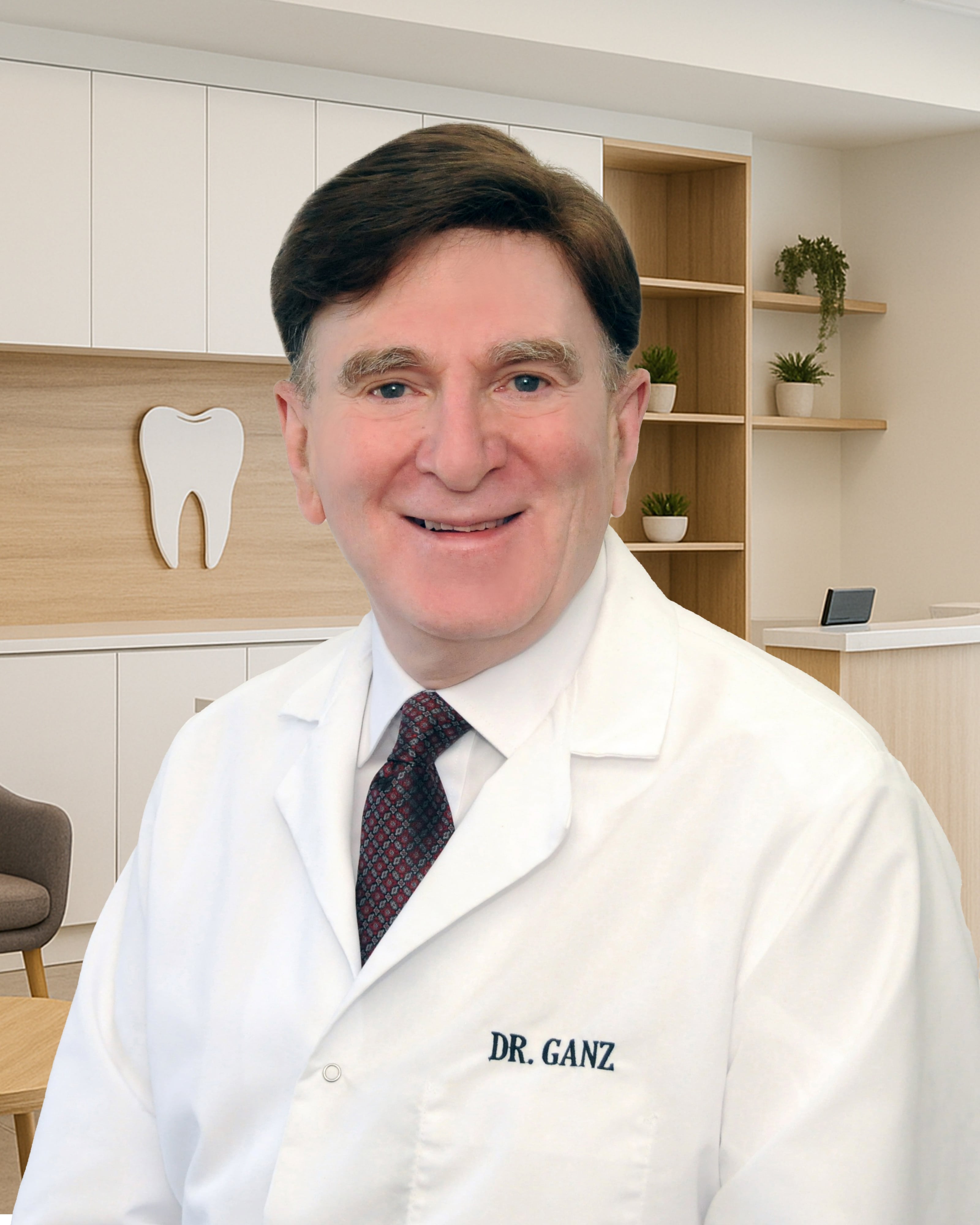
Cary Ganz DDS
Dr. Cary H. Ganz is a dentist, prosthodontist, entrepreneur, lecturer, and author with more than 50 years of experience in clinical dentistry and dental technology. Throughout his career, he has combined hands-on patient care with a deep understanding of how technology can improve dental practice operations, communication, documentation, and patient outcomes.
In addition to his clinical background, Dr. Ganz has held significant leadership roles in the dental technology industry, including Past Owner and Vice President of Clinical Affairs at DEXIS Digital Radiography and Past Vice President of Clinical Affairs at Denticon Practice Management Software. His business experience includes product development, clinical strategy, dental software innovation, practice management solutions, and educating dental professionals on the effective use of technology in modern dentistry.
Today, Dr. Ganz continues to focus on creating practical technology solutions for dental practices, including PractCom, a comprehensive dental practice communication platform designed to improve patient communication, documentation, compliance support, referrals, and overall practice efficiency. His work reflects a career-long commitment to helping dentists deliver better care while making their practices more organized, efficient, and protected.
No responses yet