
Between 30% and 40% of manual dental referrals are never completed, often vanishing due to uncoordinated handoffs and a lack of follow-up. If you’re managing a high-pressure clinical environment, you’ve likely felt the anxiety of referral leakage to local competitors. Sending a timely thank you letter for dental referral is more than a courtesy; it’s a stabilizing force that secures the referral loop and protects your professional reputation. This small step ensures that patients don’t fall through the cracks of a fragmented system.
We know that manual tracking is a time-consuming burden that drains your team’s energy and risks damaging your relationships with general practitioners. This guide promises to help you master the art of professional gratitude with clinical-grade templates and strategies designed to strengthen your referral network. You’ll discover how to move from the resistance of manual tasks to the confidence of a standardized system, ensuring improved patient continuity and stronger bonds with local specialists. We will explore HIPAA-compliant communication, automation tactics, and the specific wording needed to keep your practice top-of-mind.
Key Takeaways
- Understand how a thank you letter for dental referral serves as a strategic clinical document that reinforces the GP-specialist bond and ensures patient safety.
- Master the specific anatomical requirements of professional correspondence, from proper clinical salutations to confirming patient intake status.
- Access high-utility templates tailored for both specialists and general practitioners to standardize your professional outreach.
- Compare the operational risks of manual tracking against the efficiency of an automated referral management system to reduce administrative friction.
- Learn to leverage multi-language communication tools to close the referral loop and prevent patient attrition in diverse clinical settings.
Why the Dental Referral Thank You Letter is a Strategic Asset
In a high-pressure clinical environment, administrative tasks often feel like secondary noise compared to immediate patient care. However, the thank you letter for dental referral is not just a polite gesture; it’s a critical clinical document that secures your revenue pipeline. By acknowledging a referral, you validate the trust the referring doctor placed in your expertise. This peer-to-peer bond is built on shared clinical responsibility. When you communicate effectively, you position your practice as a reliable ally rather than just another service provider. It’s about moving from the resistance of manual, forgettable tasks to the confidence of a standardized professional system.
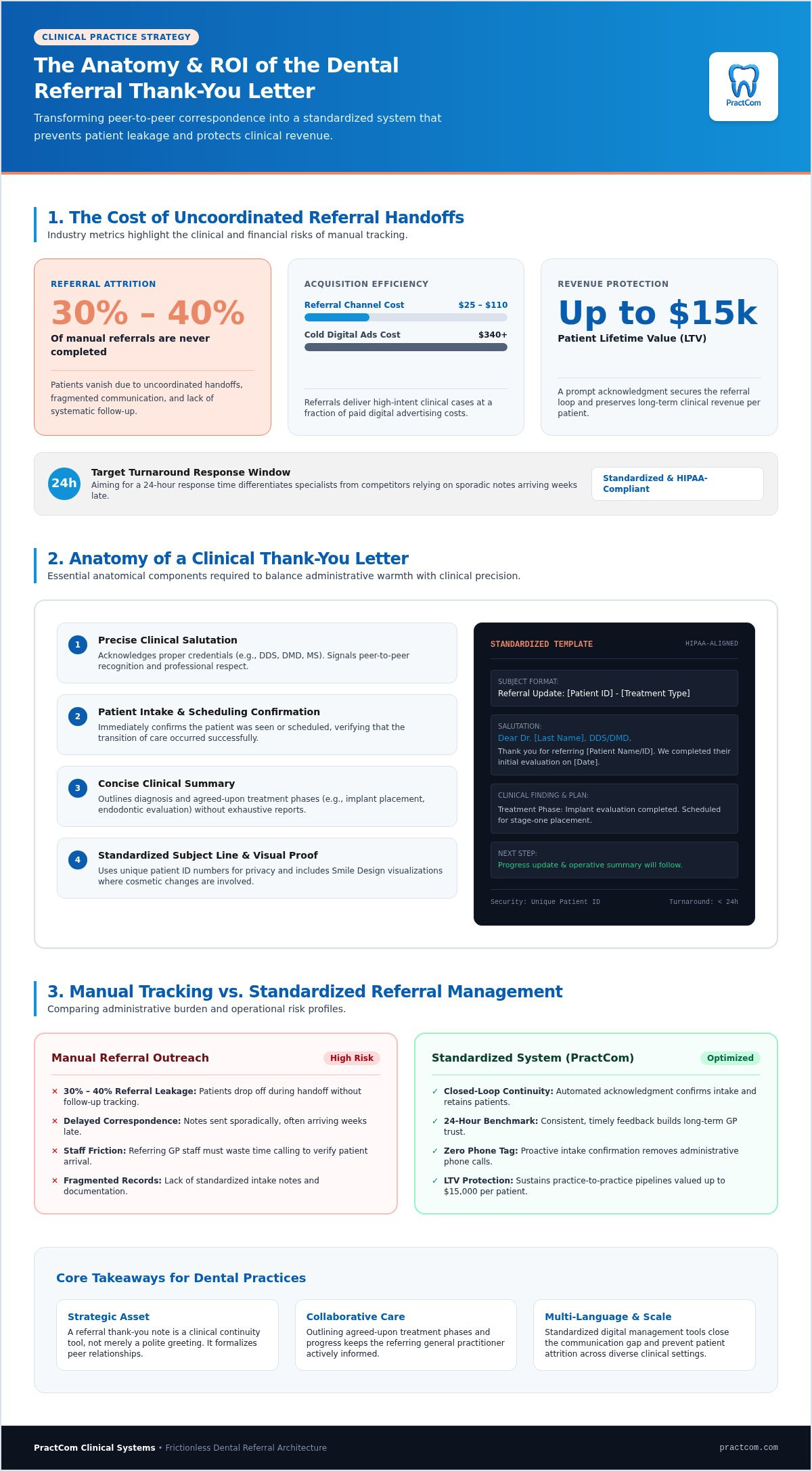
A formal acknowledgment serves as the primary mechanism for ensuring clinical continuity. It functions as a definitive confirmation of patient intake, verifying that the transition of care has occurred successfully. Without this closed loop, clinical patient referrals often result in “leakage,” where patients fail to schedule or follow through with necessary treatment. Industry data indicates that between 30% and 40% of manual referrals are never completed. A structured thank-you system acts as a pre-emptive strike against this loss, protecting both the patient’s health and your practice’s financial health.
Strengthening Your Referral Network
Speed is a powerful differentiator in the modern specialist market. Aiming for a 24-hour response time sets your office apart from competitors who might rely on sporadic, manual notes that arrive weeks late. Use your letter to confirm the specific treatment plan you’ve agreed upon with the patient. This transparency prevents clinical misunderstandings and moves the relationship from a transactional interaction toward a collaborative care model. It tells the referring GP that their patient is in safe, organized hands, which encourages them to keep your practice at the top of their list.
The ROI of Professional Gratitude
Every referral has a measurable value that impacts your bottom line. With patient acquisition costs for referrals ranging from $25 to $110, compared to the $340 or more required for cold digital ads, the financial incentive to maintain these bonds is clear. Consistent communication reduces the administrative friction for the referring office’s staff. They won’t need to waste time calling your office to check if a patient actually arrived. By removing this operational resistance, you turn a one-time referral into a long-term clinical pipeline. You’re protecting a patient lifetime value that can reach up to $15,000, ensuring your practice remains a stabilizing force in the local dental community.
The Anatomy of a High-Impact Referral Letter
A professional thank you letter for dental referral must balance administrative warmth with clinical precision. It starts with a precise salutation that acknowledges the referring doctor’s specific credentials, such as DDS, DMD, or MS. Using these titles correctly isn’t just a matter of etiquette; it signals professional respect and peer-to-peer recognition. Beyond the greeting, the letter must immediately confirm that the patient has been seen and scheduled. This confirmation alleviates the referring office’s anxiety regarding patient follow-through and closes the loop on the initial request for care.
Your clinical summary should be concise but meaningful. Briefly note the diagnosis or the commencement of the specific treatment phase, such as the placement of an implant or the completion of an endodontic evaluation. This provides the referring clinician with immediate status updates without requiring them to dig through a full operative report. Finally, include a clear call to action regarding how you’ll update them on future progress. This structured approach moves your correspondence from a simple “thank you” to an essential component of the patient’s permanent record.
Essential Components for Clinical Clarity
To ensure your communication is high-utility, standardize your subject lines. A clear format, such as “Referral Update: [Patient ID] – [Treatment Type],” allows the referring office to file the note in their practice management system in seconds. While you might use names in physical mail, using unique patient ID numbers in digital subject lines adds a layer of privacy. As a professional courtesy, consider including a Smile Design visualization if the case involves cosmetic changes. This visual proof of progress reinforces the value you provide to their patient and strengthens the collaborative care model.
Security and Compliance in Correspondence
Regulatory reassurance is a cornerstone of modern clinical documentation. Standard email often fails the security test because it lacks end-to-end encryption, potentially exposing protected health information. To remain compliant with the HIPAA Privacy Rule guidelines, you should deliver all referral correspondence through a secure Patient Portal or a dedicated Referral Management System. This ensures that every thank you letter for dental referral you send is tracked, logged, and encrypted. If you’re looking to eliminate the risk of manual documentation failures, you can explore how automated systems secure your clinical loop. By moving away from unencrypted channels, you protect your practice’s reputation and your legal standing.
Dental Referral Thank You Letter Templates for 2026
Generic business stationery often falls short in a clinical setting where precision is an ethical necessity. A high-utility thank you letter for dental referral must bridge the gap between administrative courtesy and clinical documentation. Following the ADA specialty referral guidelines ensures that your correspondence remains professional while maintaining the necessary standards for collaborative care. By using standardized templates, you eliminate the cognitive load on your staff and ensure that no referring partner feels overlooked.
Specialist to GP: The Intake Template
When a specialist acknowledges a new referral, the focus should be on validating the general practitioner’s initial diagnosis and confirming the start of the treatment phase. Use wording that reinforces the peer-to-peer bond: “Dear Dr. [Name], thank you for referring [Patient ID] for endodontic therapy. We have confirmed your diagnosis of symptomatic irreversible pulpitis and have scheduled the first stage of treatment.” This template should also provide instructions on how the GP can access digital consent forms or treatment notes via your secure portal, ensuring they remain informed throughout the clinical loop.
GP to Specialist: The Partnership Template
General practitioners should use the thank-you process to highlight a successful patient handoff and express satisfaction with the specialist’s care. This template focuses on the long-term clinical pipeline: “Dear Dr. [Name], our mutual patient expressed great satisfaction with the implant placement procedure performed at your office. We appreciate the seamless coordination and look forward to the restorative phase.” You can further streamline this by Mastering Dental Referral Management Software in 2026, which allows for automated triggers that send these notes the moment a procedure is logged as complete. This consistency encourages a reciprocal relationship that benefits both practices.
Patient Gratitude and Multi-Language Outreach
When thanking an existing patient for referring a friend, regulatory reassurance is paramount. Due to HIPAA restrictions, your note must remain generic to protect the new patient’s privacy. Avoid mentioning names or specific treatments; instead, focus on the trust the referring patient has placed in you. “Thank you for the confidence you’ve shown in our practice by recommending us to your family and friends.” Additionally, modern practices must address diverse demographics by deploying templates in multiple languages. Providing a thank you letter for dental referral in the patient’s primary language—whether Spanish, Mandarin, or Vietnamese—removes operational resistance and demonstrates a commitment to inclusive, high-quality care.
Manual vs. Automated Referral Management: Which Wins?
Administrative efficiency is often the invisible line between a thriving specialist practice and one that struggles with inconsistent volume. When you rely on manual systems, you’re essentially betting your reputation on the limitations of human memory. A dental coordinator typically spends an average of 18 minutes per referral on manual administrative tasks, including the physical dispatch of a thank you letter for dental referral. This time drain creates operational resistance, especially during peak clinical hours when staff are focused on immediate patient needs. The result is often a “ghosted” referring doctor who assumes their patient was never seen.
Automation functions as a protective guardian for your professional relationships. By shifting to a systematic approach, you replace administrative anxiety with the confidence of a standardized loop. Automated triggers ensure that your gratitude is dispatched the moment a patient checks in, providing immediate reassurance to the general practitioner. This level of technical precision is what positions your practice as a stabilizing force in the local dental community, ensuring you never miss an opportunity to reinforce a partnership.
The Pitfalls of Manual Referral Tracking
Manual referral slips are a primary source of clinical fragmentation. They are easily lost, misfiled, or forgotten in a stack of paperwork, leading to direct patient drop-off. In a manual environment, the “thank you” note is frequently viewed as a low-priority task that gets postponed indefinitely. This inconsistency creates a perception of disorganization. When a referring office doesn’t receive a timely acknowledgment, they lose trust in your ability to manage their patients’ continuity of care, which ultimately leads to referral leakage to your competitors.
Efficiency through Systematic Oversight
Modern clinical environments require a high-utility approach to communication. Integrating your correspondence into a broader Dental Practice Workflow allows you to maintain a personal touch without the manual labor. For DSOs managing thousands of referrals across multiple locations, a Practice Performance Dashboard is essential. It provides the analytics needed to identify your most valuable referring partners and track the status of every thank you letter for dental referral in real-time. This oversight ensures that your referral network remains a robust clinical pipeline rather than a source of administrative stress.
You can move away from the chaos of manual notes and secure your practice’s reputation with ease. If you’re ready to eliminate administrative friction, you should start your free trial to automate your referral management today. This simple transition provides the psychological security of knowing your clinical loops are always closed.
Implementing a Frictionless Referral System with PractCom
Transitioning to a paperless, automated model isn’t just a matter of convenience; it’s a clinical necessity for the modern specialist. PractCom’s Referral Management System functions as a guardian for your professional reputation by ensuring no communication is left to chance. When you dispatch a thank you letter for dental referral through our automated platform, you eliminate the psychological security risks associated with human memory failures. The system supports digital delivery in 15 different languages, allowing you to bridge communication gaps with a diverse patient demographic without increasing your team’s workload. This technical precision creates a frictionless clinical ecosystem where administrative ease and technical accuracy coexist.
The goal is to move from the resistance of manual, fragmented tasks toward the confidence of a standardized loop. By closing the communication loop, you provide referring doctors with immediate reassurance that their patient has successfully entered your care. This systematic oversight is what transforms a simple “thank you” into a strategic business asset that protects your long-term clinical pipeline. It’s about creating a comprehensive ecosystem where no part of the professional correspondence process is left to chance.
Setting Up Your Automated Gratitude Workflow
You can begin your transition by selecting preferred templates from the PractCom library, which are specifically designed to meet clinical standards. Integrating referral tracking with your existing clinical documentation, such as Digital Informed Consent Forms, ensures a seamless flow of information throughout the patient journey. Train your staff to utilize the Practice Performance Dashboard to visualize referral trends and identify key growth opportunities. This allows your team to focus on relationship building rather than manual data entry, reducing operational resistance across the entire office.
Why Specialized Communication Tools Matter
A generic practice management software often lacks the granular detail required for high-impact referral loops. A dedicated communication suite like PractCom offers specialized triggers and delivery tracking logs that a standard PMS simply cannot match. It acts as a pre-emptive strike against administrative failures, securing the professional bonds you’ve worked hard to build with local general practitioners. You can discover why dental professionals choose PractCom for referral management to see how specialized tools stabilize daily operations. Transitioning to this automated model is the final step in mastering professional gratitude and ensuring improved patient continuity of care.
Securing Your Clinical Pipeline for 2026
Mastering the professional thank you letter for dental referral is a vital step in moving from operational disorganization to systematic control. By implementing a standardized workflow, you ensure that no patient falls through the cracks and no referring partner feels neglected. We’ve explored how a high-impact letter reinforces the peer-to-peer bond while providing necessary clinical continuity. Transitioning from manual notes to automated oversight allows your team to focus on patient care without sacrificing professional gratitude.
PractCom offers a frictionless ecosystem designed by dental professionals for clinical accuracy. With a library of 80+ post-treatment templates and support for 15 languages, our platform acts as a protective guardian of your reputation. You can eliminate administrative friction and stabilize your referral loops today. Start Your Free Trial of PractCom’s Referral Management System and gain the psychological security of a truly closed-loop communication system. Your practice deserves the confidence that comes with technical precision and administrative warmth.
Frequently Asked Questions
Should I send a thank you letter for every single dental referral?
Yes, you should send a thank you letter for dental referral for every case to maintain professional standards. Standardizing this process prevents referral leakage, which affects 30% to 40% of manual referrals. By acknowledging every handoff, you provide psychological security to the referring doctor. It proves their patient reached your office and is receiving care, which reinforces the collaborative care model and protects your clinical pipeline from administrative failures.
How soon after receiving a referral should the thank you letter be sent?
You should ideally send the acknowledgment within 24 hours of the patient scheduling or immediately upon their first check-in. Promptness differentiates your practice from competitors who may take weeks to respond. A quick response time demonstrates technical precision and respect for the referring doctor’s time. Using an automated Referral Management System allows you to close the communication loop instantly, removing the administrative friction of manual follow-ups.
Is it better to send a digital or a physical thank you note to a colleague?
Digital correspondence is superior for clinical continuity because it allows for secure, encrypted document exchange. While a physical note is a warm gesture, it lacks the speed and regulatory reassurance required in a high-pressure clinical environment. Digital portals allow you to include Smile Design visualizations or treatment summaries safely. If you choose physical notes, ensure they contain no protected health information to remain compliant with federal privacy standards.
What information should I avoid including in a referral thank you to remain HIPAA compliant?
You must avoid including specific patient names, medical conditions, or treatment details in a thank you letter for dental referral sent to a patient. Under HIPAA regulations, acknowledging a referred individual’s appointment to a third party discloses protected health information. When communicating with other doctors for treatment purposes, you should use secure, encrypted channels like a dedicated Patient Portal to ensure all clinical data remains protected from unauthorized access.
How can I track which doctors are referring the most patients to my practice?
The most efficient way to track referral volume is through a Practice Performance Dashboard. This tool visualizes data from your Referral Management System, identifying your most valuable partners without manual tallying. You can see conversion rates and patient acquisition costs in real-time. This oversight helps you move from the resistance of manual tracking to the confidence of data-driven decision-making, ensuring you focus your relationship building efforts where they matter most.
Can I automate the referral thank you process without it sounding robotic?
Automation doesn’t have to sound robotic if you use high-utility, clinical-grade templates. By selecting from a library of 80+ post-treatment templates, you can maintain a professional voice while ensuring technical accuracy. Modern systems allow for personalization tags that insert specific clinical credentials, like DDS or DMD, automatically. This blend of administrative warmth and modern efficiency jargon ensures your correspondence feels personal while benefiting from the speed of a standardized system.
What should I do if a referring doctor stops sending patients?
If a referring partner stops sending patients, you should immediately analyze your Performance Dashboard for communication failures. Often, a drop in referrals is caused by administrative friction or a perceived lack of clinical feedback. Reach out to the referring office to confirm they are receiving your intake notifications and treatment summaries. Re-establishing a frictionless clinical ecosystem through consistent, automated updates is usually the fastest way to reactivate a stalled professional pipeline.
Should I also thank the patient for referring a friend or family member?
You should always thank patients who refer others, but you must strictly follow federal Anti-Kickback guidelines. Federal OIG rules cap patient gifts at $15 per item or $75 annually. Your note must remain generic, such as “Thank you for your ongoing confidence in our practice.” Never confirm if the referred person actually attended an appointment unless they have signed a formal disclosure waiver, as this protects the new patient’s privacy rights.
Article by
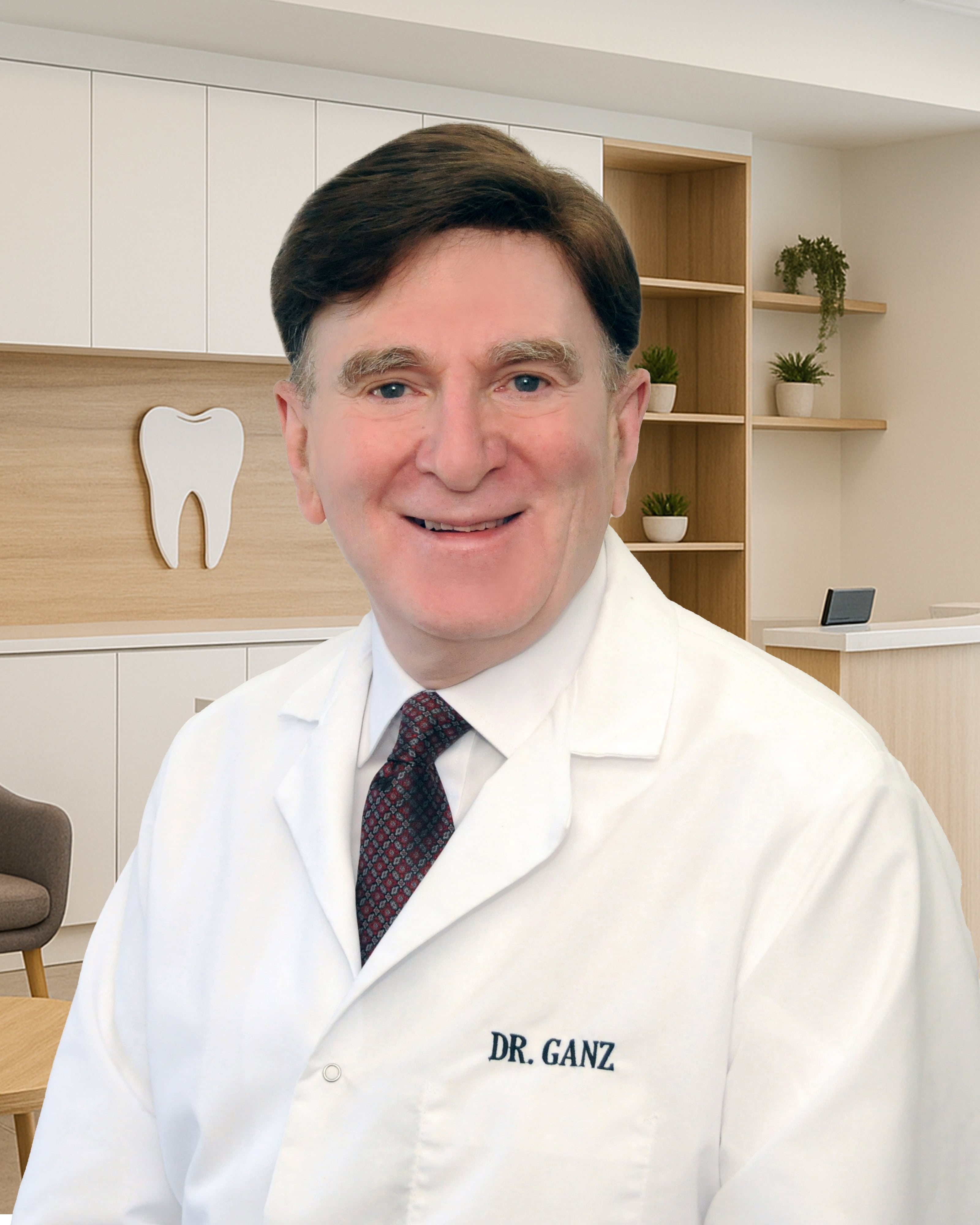
Cary Ganz DDS
Dr. Cary H. Ganz is a dentist, prosthodontist, entrepreneur, lecturer, and author with more than 50 years of experience in clinical dentistry and dental technology. Throughout his career, he has combined hands-on patient care with a deep understanding of how technology can improve dental practice operations, communication, documentation, and patient outcomes.
In addition to his clinical background, Dr. Ganz has held significant leadership roles in the dental technology industry, including Past Owner and Vice President of Clinical Affairs at DEXIS Digital Radiography and Past Vice President of Clinical Affairs at Denticon Practice Management Software. His business experience includes product development, clinical strategy, dental software innovation, practice management solutions, and educating dental professionals on the effective use of technology in modern dentistry.
Today, Dr. Ganz continues to focus on creating practical technology solutions for dental practices, including PractCom, a comprehensive dental practice communication platform designed to improve patient communication, documentation, compliance support, referrals, and overall practice efficiency. His work reflects a career-long commitment to helping dentists deliver better care while making their practices more organized, efficient, and protected.
No responses yet