
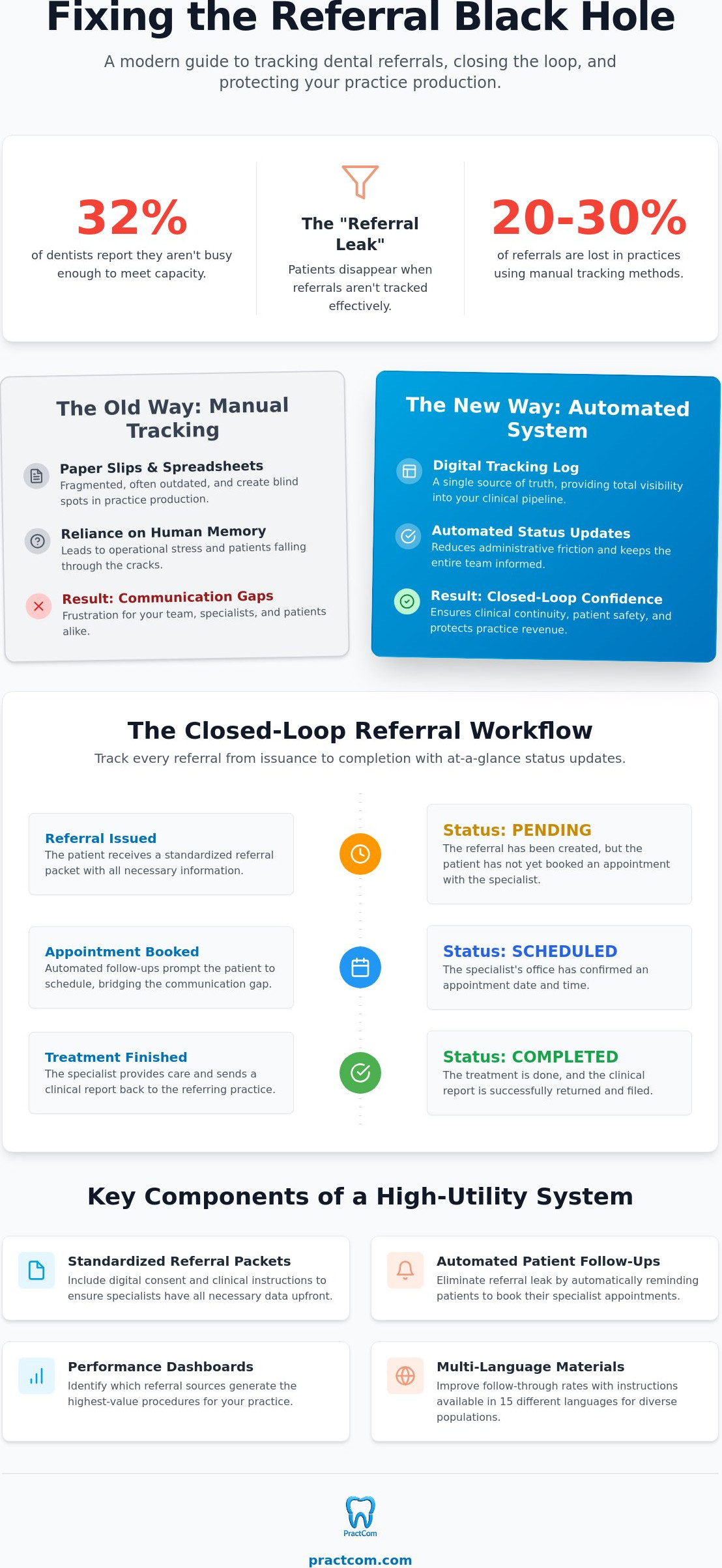
If your practice is among the 32% of dentists reporting they aren’t busy enough to meet capacity in 2026, the solution likely isn’t more marketing, but fixing the holes in your existing pipeline. You know the frustration of sending a patient to a specialist only for them to disappear into a referral black hole, or waiting weeks for a clinical report that never arrives. Managing these transitions through manual spreadsheets often leads to referral leak, where patients simply fail to book their follow-up care. Learning how to track dental referrals effectively is no longer just an administrative task; it’s a clinical necessity that protects your patient outcomes and your practice production.
We agree that the current reliance on human memory and fragmented communication creates unnecessary operational stress for your team. This guide provides a systematic approach to closing the referral loop, ensuring that every patient follows through and every specialist report returns to your files. You will learn how to implement a standardized tracking workflow that provides clear data on your most profitable referral sources while automating the follow-up process to reduce administrative friction and reclaim your professional confidence. By the end of this article, you will have a clear blueprint for moving from disorganized manual tasks to a high-utility, automated system.
Key Takeaways
- Distinguish between incoming and outgoing patient streams to gain complete visibility into your clinical pipeline.
- Master how to track dental referrals by implementing a standardized packet that includes digital consent and clinical instructions.
- Eliminate referral leak through automated follow-ups that bridge the communication gap between the GP and the specialist.
- Utilize a performance dashboard to identify which referral sources generate the highest-value procedures for your practice.
- Support diverse patient populations and improve follow-through rates with instructional materials available in 15 different languages.
The Fundamentals of Dental Referral Tracking in 2026
Dental referral tracking is the systematic monitoring of patient movement between general practices and specialists. It’s more than just a data entry task; it’s a strategic layer of communication that ensures clinical continuity. Understanding the medical referral process ensures that no patient falls through the cracks during transitions of care. When you master how to track dental referrals, you replace the anxiety of lost documentation with the confidence of a standardized system.
Research suggests that relying on paper slips or manual spreadsheets results in a 20-30% referral leak in average practices. This occurs because human memory is finite; a patient leaves your office with a recommendation but never reaches the specialist’s front desk. These manual logs are frequently out of date, creating a blind spot in your practice production. Understanding how to track dental referrals through digital oversight eliminates this operational resistance and protects your practice revenue.
Incoming vs. Outgoing: Two Different Workflows
Tracking incoming referrals allows you to measure marketing ROI and nurture professional peer relationships. You need to know which local GPs or digital ads are driving high-value cases to your door so you can allocate your resources effectively. Conversely, outgoing tracking focuses on clinical continuity and patient safety. Both workflows require a dedicated status system to ensure every handoff is verified. Your team should be able to identify the following statuses at a glance:
- Pending: The referral has been issued but the patient hasn’t booked yet.
- Scheduled: The specialist has confirmed an appointment date.
- Completed: The treatment is finished and the clinical report has been returned.
The Clinical Necessity of a Closed-Loop System
A closed-loop referral is a system where the referring doctor receives confirmation of treatment completion and a returned clinical report. This isn’t just about efficiency; it’s a legal safeguard. Documenting that a necessary referral was made and tracked reduces your liability and ensures the specialist’s findings are integrated into the permanent patient record. Modern documentation often utilizes a Unique Reference Number (URN) to sync records across different platforms without compromising privacy. This level of precision provides the regulatory reassurance you need in a high-pressure clinical setting, moving your practice from administrative guesswork to total systematic control.
How to Set Up a Practice-Side Referral Tracking System
Standardizing your “Referral Packet” is the next clinical requirement. This packet should include digital informed consent forms and specific pre-operative instructions to prepare the patient for the specialist. Aligning your internal protocols with ADA referral guidelines protects your professional standing. It also ensures that the specialist receives all necessary clinical data, reducing the need for back-and-forth phone calls that waste administrative time.
Assign a dedicated staff member as a Referral Coordinator to oversee the movement of these cases. In a high-pressure environment, you should automate status updates whenever possible to reduce the burden on your front desk. A digital tracking log that syncs with your patient communication tools provides a single source of truth for the entire team. This transparency ensures that everyone knows the status of a case without having to search through paper files or manual spreadsheets.
Consistency is the guardian of your practice revenue. Establish a weekly referral audit to review every outstanding case that hasn’t reached a “Scheduled” or “Completed” status. If a patient hasn’t booked within seven days, your system should trigger a proactive follow-up. This preemptive strike against referral leak ensures that patients don’t lose interest between the initial recommendation and the specialist’s chair.
Categorizing Referral Sources for Better Insights
Use specific tags like #Endo, #Ortho, or #OralSurgery to track production by specialty. Distinguishing between professional referrals from clinical peers and patient referrals from marketing campaigns helps you understand your true ROI. You should also track Referral Lab integrations for cases involving prosthetics or pathology. This level of granular detail allows you to see which referral sources generate the highest-value procedures for your practice.
Overcoming Language Barriers in Referrals
Clinical non-compliance often stems from a simple lack of understanding. If your referral instructions are only available in English, you risk losing patients who speak Spanish, Mandarin, or Vietnamese. Providing digital referral slips in the patient’s primary language significantly increases the likelihood they will follow through with the appointment. Using a system that supports automated communication in 15 different languages ensures every patient feels secure and fully understands their next steps in treatment.
Closing the Loop: Managing Outgoing Referrals and Specialist Communication
The transition from your chair to a specialist’s office is the most vulnerable point in the patient journey. You know the frustration of recommending an essential procedure only to find, months later, that the patient never booked the appointment. This “referral leak” isn’t just a loss of production; it’s a clinical risk that compromises patient care. Establishing a protocol for how to track dental referrals ensures that your clinical recommendations result in completed treatments rather than forgotten paperwork. Implementing a robust referral tracking system acts as a guardian for your practice’s reputation and your patient’s health.
Digital handoffs are the modern solution to this administrative failure. Instead of relying on a physical slip, your team should send digital instructions that include clinical images and signed informed consent forms directly to the specialist. This ensures the receiving office has everything they need to triage the case before the patient even calls. It also creates a permanent digital trail in your own records, providing the regulatory reassurance that your documentation is complete and compliant.
Why Patients Ignore Referral Slips
Patients often fail to follow through because of psychological friction. Anxiety over the complexity of a procedure or uncertainty about the costs at an unfamiliar office can lead to procrastination. The “paper slip” failure exacerbates this; physical documents are easily lost in a car or buried under mail at home. Sending digital instructions via SMS provides an immediate, accessible reference for the patient. This method reduces operational resistance by meeting the patient where they are, making the next step feel manageable and clear.
Automating the Specialist Follow-up
Manual follow-up is a high-pressure task that often falls to the bottom of a busy front desk’s to-do list. You should set specific “wait” periods within your system to trigger automated reminders. For example, if a patient hasn’t booked with the specialist within 48 hours, an automated text can offer assistance or a gentle nudge. This proactive approach keeps the referral top-of-mind for the patient without requiring a manual phone call from your team. To learn more about optimizing these digital workflows, read our guide on Mastering Dental Referral Management Software in 2026. Standardizing this feedback loop ensures that specialists can easily notify you of no-shows, allowing you to close the loop and maintain clinical oversight of the case.
Advanced Metrics: Analyzing Referral Data for Practice Growth
Moving beyond basic data entry is essential for any practice owner who wants to transition from operational survival to strategic growth. While your front desk might already be logging names, understanding how to track dental referrals for business intelligence requires a deeper look at your clinical outcomes. You need to know not just that a patient was referred, but what happened after they left your office. This data provides the psychological security of knowing your referral pipeline is healthy and productive.
The first metric you should monitor is your Referral Conversion Rate. This is the percentage of referred patients who actually complete their prescribed treatment. If you notice a high volume of referrals but a low completion rate, you have a communication gap that is costing you production. Analyzing these trends helps you identify whether the issue lies in your internal handoff process or the specialist’s front desk. Tracking referrals by production value is more accurate for growth than tracking by patient count. This distinction allows you to focus your relationship-building efforts on the partners who send high-value cases rather than just high-volume ones.
Time-to-Treatment is another critical indicator of practice health. This measures the lag time between the initial GP referral and the specialist’s treatment completion. A long delay often signals that the patient is losing interest or facing administrative hurdles. By identifying these delays early, you can intervene with automated follow-ups to keep the patient on track. Visualizing these metrics through a centralized system removes the limitations of human memory and provides a clear path for operational improvement.
Identifying Your Top Referral Ambassadors
Rank your peer GPs and specialists by the quality of the relationships they maintain with your practice. You should develop a standardized “Thank You” workflow for your highest-value referral partners to ensure these professional bonds remain strong. This isn’t just about professional courtesy; it’s a strategic move to protect your primary source of new patients. When you have clear data on who your top ambassadors are, you can allocate your marketing and networking resources with technical precision.
Using Dashboards to Spot Workflow Bottlenecks
Practice-side data often reveals hidden bottlenecks that manual logs miss. You might discover that a specific specialist has a significantly higher patient drop-off rate than others in your network. This insight allows you to adjust your referral circle based on actual clinical outcomes and patient feedback rather than habit. PractCom’s Practice Performance Dashboard visualizes these metrics in real-time, allowing you to see exactly where your patients are in the treatment cycle. This transparency ensures that no part of your professional communication is left to chance. Start your free trial today to gain full visibility into your practice analytics and eliminate the guesswork from your referral management.
How PractCom Simplifies Referral Management and Patient Compliance
PractCom functions as the essential communication layer that standard practice management systems often lack. While your PMS handles scheduling and billing, it rarely manages the complex nuances of the specialist handoff. Our Referral Management System bridges this gap by creating a unified workspace where both offices can monitor patient progress. This level of systematic oversight provides the psychological security you need to ensure that no treatment plan is abandoned halfway through. When you implement how to track dental referrals through our platform, you move from the anxiety of manual tasks to the confidence of a standardized workflow that values technical precision. This data provides clarity.
Patient compliance is directly linked to the quality of the information they receive. PractCom integrates your tracking with a library of over 80 post-treatment instructions, ensuring that every patient leaves with a clear clinical roadmap. These documents travel alongside digital informed consent forms that are signed and stored electronically. This ensures that the specialist has full clinical context and legal documentation before the patient arrives. By automating these essential clinical requirements with scheduled SMS and email follow-ups, you protect your practice’s legal standing while significantly reducing the administrative burden on your front desk. This ensures compliance.
Standardizing the Referral Experience
Operational resistance often occurs when patients don’t fully understand their next steps. PractCom eliminates this barrier by delivering consistent instructions in 15 different languages. This multi-language support ensures that diverse patient populations follow through on their referrals with total clarity. Additionally, our Patient Portal gives patients 24/7 access to their referral details and pre-op instructions from any device. This accessibility reduces unnecessary phone tag between offices and empowers the patient to take ownership of their specialized care, which is a core feature of the All-in-One Patient Communication Platform for Dental Practices.
Getting Started with Professional Referral Tracking
PractCom is the preferred choice for DSOs and multi-location practices because it’s a scalable solution for complex referral networks. You can integrate our tools into your existing clinical workflow without the high-pressure ordeal of changing your entire PMS. Our platform acts as a stabilizing force, allowing your team to focus on patient care rather than chasing down missing clinical reports. This forward-thinking approach anticipates administrative failures and offers a pre-emptive strike against referral leak. Ready to eliminate referral leak and boost your practice production? Start your free trial of PractCom today and experience the difference of a truly closed-loop system.
Securing Your Practice Growth Through Systematic Oversight
Mastering how to track dental referrals with modern tools allows you to maintain professional confidence while your team focuses on patient care. With access to a library of 80+ post-treatment templates and support for 15 languages, you can ensure every patient feels understood and guided through their specialized care. Our automated patient follow-up system acts as your practice’s guardian, ensuring no treatment plan is left incomplete due to simple administrative friction. Streamline your referral workflow with PractCom’s management system and regain total control of your clinical pipeline. You have built a reputation for excellence; let a standardized system protect it.
Frequently Asked Questions
What is the best way to track dental referrals without using complex software?
The most common manual method is a shared digital spreadsheet or a physical logbook. While this avoids initial software costs, it relies entirely on human memory and consistent data entry from your team. This often leads to fragmented records and missing reports, making it difficult to maintain clinical oversight. Learning how to track dental referrals manually requires rigorous discipline to avoid the 20-30% referral leak common in disorganized practices.
How do I know if a patient actually visited the specialist I referred them to?
You verify visit completion by receiving a returned clinical report or a status update from the specialist’s office. A closed-loop system ensures that the referring doctor receives confirmation once the treatment is finished. Without a digital tracking tool, your team must manually call the specialist to request these updates. This creates administrative friction and wastes valuable clinical time that could be spent on patient care.
What information should be included on a dental referral slip?
A comprehensive referral slip must include the patient’s full contact details, the specific clinical reason for the referral, and any relevant radiographs. You should also include signed informed consent forms and pre-operative instructions to prepare the patient for the next step. Including a Unique Reference Number (URN) helps sync records across different platforms, ensuring technical precision and regulatory compliance during the professional handoff between offices.
How often should I follow up with a specialist on an outstanding referral?
You should establish a weekly audit to review all outstanding cases that haven’t reached a completed status. If a patient hasn’t booked an appointment within 48 to 72 hours of the initial referral, an automated follow-up should be triggered. Consistent monitoring prevents patients from losing interest and ensures that your clinical recommendations are followed through before the case becomes stagnant or forgotten in the administrative shuffle.
Can I track referrals for marketing sources like Facebook or Google?
Yes, you can track marketing-driven referrals by using specific source tags or unique tracking numbers in your digital advertisements. By categorizing these as incoming referrals, you can measure your true marketing ROI and identify which platforms generate the highest-value procedures. Mastering how to track dental referrals from these sources allows you to allocate your advertising budget with technical precision and data-driven confidence.
What is a referral leak and how does it impact my dental practice revenue?
Referral leak occurs when a patient is referred to a specialist but never schedules or completes the appointment. This usually happens because of patient anxiety, loss of physical paperwork, or a lack of proactive follow-up from the practice. It directly impacts your revenue by reducing production and compromising patient outcomes. Estimates suggest that average practices lose a significant portion of their referred cases to this operational black hole.
Is it necessary to have a dedicated referral coordinator in a small practice?
While a dedicated coordinator is ideal for multi-location practices, smaller offices can achieve similar results through automation. You don’t need a full-time employee if you use a system that handles status updates and patient reminders automatically. The key is to ensure that one team member owns the weekly audit process to maintain systematic oversight and prevent cases from falling through the cracks during busy clinical hours.
How can multi-language instructions improve my referral conversion rates?
Multi-language instructions improve conversion rates by removing the barrier of clinical misunderstanding. When you provide digital referral slips and pre-op instructions in the patient’s primary language, you increase their psychological security and likelihood of following through. Offering support in 15 different languages ensures that diverse patient populations feel respected and fully informed about their specialized care, which directly boosts your scheduled appointment rates.

Article by
Cary Ganz DDS
Dr. Cary H. Ganz is a dentist, prosthodontist, entrepreneur, lecturer, and author with more than 50 years of experience in clinical dentistry and dental technology. Throughout his career, he has combined hands-on patient care with a deep understanding of how technology can improve dental practice operations, communication, documentation, and patient outcomes.
In addition to his clinical background, Dr. Ganz has held significant leadership roles in the dental technology industry, including Past Owner and Vice President of Clinical Affairs at DEXIS Digital Radiography and Past Vice President of Clinical Affairs at Denticon Practice Management Software. His business experience includes product development, clinical strategy, dental software innovation, practice management solutions, and educating dental professionals on the effective use of technology in modern dentistry.
Today, Dr. Ganz continues to focus on creating practical technology solutions for dental practices, including PractCom, a comprehensive dental practice communication platform designed to improve patient communication, documentation, compliance support, referrals, and overall practice efficiency. His work reflects a career-long commitment to helping dentists deliver better care while making their practices more organized, efficient, and protected.
No responses yet