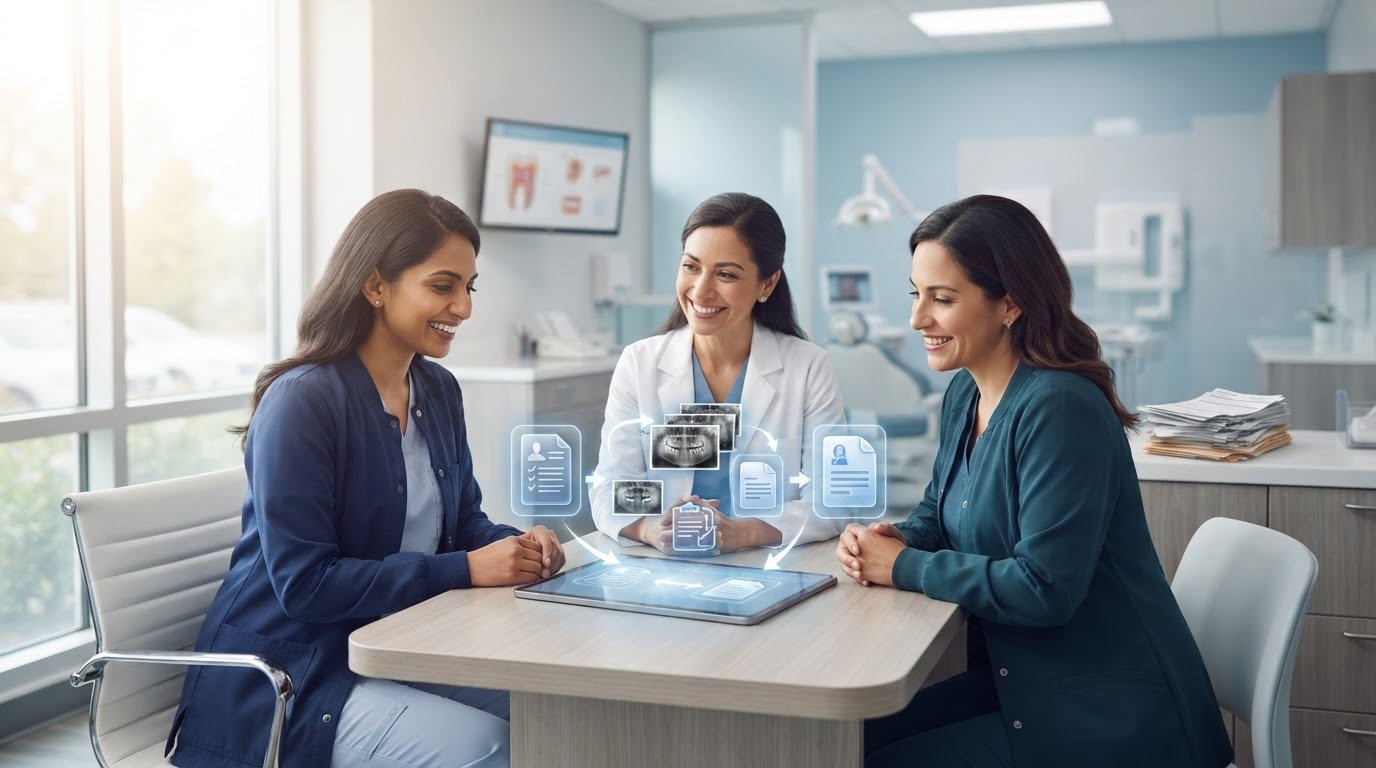
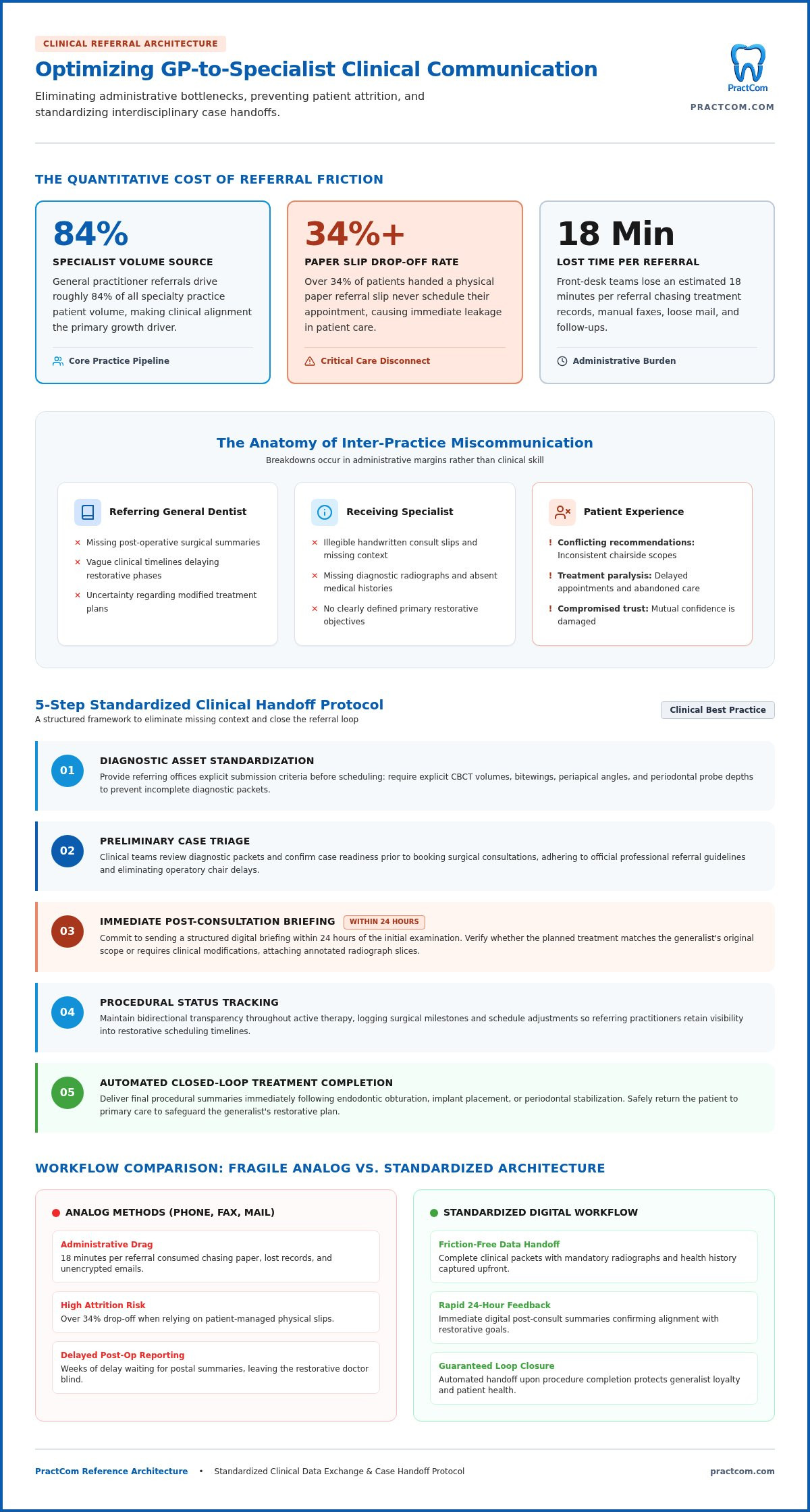
General practitioner referrals drive roughly 84% of specialist volume, yet industry data shows that over 34% of patients handed a paper referral slip never actually schedule their appointment. When specialty teams examine how to improve communication with referring dentists, the breakdown rarely stems from clinical friction. Instead, it occurs in the administrative margins: missing radiographs, illegible handwritten consults, and phone calls that pull staff away from in-office care.
You already know that relying on manual faxes and fragmented records exhausts your front desk and leaves referring doctors feeling alienated. In this 2026 guide, you’ll learn how to eliminate referral drop-off, streamline case updates, and build dependable GP partnerships using standardized clinical communication workflows. We’ll explore actionable strategies to create a frictionless, two-way loop that delivers immediate post-treatment reports, protects patient compliance, and secures a predictable stream of complex cases.
Key Takeaways
- Standardizing clinical intake protocols removes missing context and eliminates administrative bottlenecks before a referred patient ever enters your operatory.
- Master how to improve communication with referring dentists by replacing fragile fax lines and complex portals with direct, friction-free clinical data handoffs.
- Closing the referral loop with immediate post-operative summaries safeguards the general dentist’s restorative plan and builds lasting practice loyalty.
- Modern communication architectures work alongside your current practice software to deliver automated updates and multilingual care instructions without costly system disruptions.
Why Clinical Communication Breaks Down Between General Dentists and Specialists
Inter-practice miscommunication drives patient attrition and preventable clinical errors across dental specialties. General practitioners routinely express frustration over missing post-operative summaries and vague clinical timelines, leaving them unable to plan restorative phases accurately. Concurrently, specialists receive referral slips with missing diagnostic radiographs, absent medical histories, and no defined restorative goals. Referral communication breakdown is an administrative failure that compromises patient safety. Solving this friction requires understanding how to improve communication with referring dentists through reliable, standardized data exchanges rather than reactive phone calls.
The Administrative Cost of Fragmented Communication Channels
Uncoordinated communication channels create severe practice bottlenecks. When offices trade clinical data across analog faxes, loose physical mail, and unencrypted emails, front-desk teams spend hours chasing treatment records and consent verifications. Dental staff lose an estimated 18 minutes per referral on manual paperwork and follow-ups. This logistical drag strains staff capacity and elevates liability during complex multi-stage procedures. Modern dentistry thrives on coordinated and integrated forms of care, yet scattered records leave providers legally and clinically vulnerable when urgent surgical complications arise.
How Communication Lapses Directly Cause Patient Drop-Off
Patients notice administrative gaps immediately. When a specialist presents a treatment scope that contradicts the generalist’s preliminary chairside explanation, patient confidence erodes quickly. Consider how misaligned protocols disrupt patient retention:
- Conflicting clinical recommendations: Discrepancies between specialist consults and generalist expectations leave patients uncertain about true diagnostic priorities.
- Treatment paralysis: Ambiguous next steps cause patients to delay scheduling, leading to abandoned procedures and worsening pathology.
- Compromised mutual trust: Administrative disconnects make both providers look disorganized, damaging the referring doctor’s confidence in specialist coordination.
When practices evaluate how to improve communication with referring dentists, establishing consistent, transparent touchpoints protects both the patient relationship and the restorative workflow.
5 Steps to Standardize Clinical Data Exchange and Case Handoffs
An airtight clinical referral protocol requires five coordinated phases: diagnostic asset standardization, preliminary case triage, prompt post-consultation briefing, procedural status tracking, and automated treatment completion reporting. When practices establish structured intake protocols, they eliminate missing clinical context before the patient sits in the operatory chair. Implementing these standardized steps directly answers how to improve communication with referring dentists, transforming chaotic data exchanges into predictable interdisciplinary workflows that protect restorative outcomes.
Define Required Clinical Diagnostic Assets Upfront
Incomplete diagnostic packets stall treatment planning. Specialists should provide referring practices with explicit submission criteria detailing required CBCT volumes, bitewings, periapical angles, and periodontal probe depths. Establishing these baseline parameters aligns with official guidelines for referring dental patients, ensuring that clinical teams confirm case readiness prior to booking surgical consultations.
Establish an Immediate Post-Consultation Briefing Standard
Referring clinicians need visibility into diagnostic findings without waiting weeks for written records. Practices that commit to sending a digital briefing within 24 hours of the initial examination solve this issue cleanly. This summary should verify whether planned interventions match the referring doctor’s original scope or require modifications, incorporating relevant radiograph slices or intraoral images to document periodontal bone levels and structural compromises.
Automate Closed-Loop Treatment Completion Letters
The specialty handoff concludes only when the patient returns safely to primary care. Specialists must automate delivery of final procedural summaries immediately following endodontic obturation, implant placement, or periodontal stabilization. These standardized summaries must outline exact parameters for the restorative phase, including:
- Implant placement specifics: Document implant fixture brand, platform diameter, torque values, and healing abutment dimensions.
- Endodontic access criteria: Specify temporary restorative materials used, remaining tooth structure, and post space preparation guidelines.
- Periodontal maintenance parameters: Detail surgical outcomes, residual pocket depths, and recommended recall intervals.
Adopting modern communication protocols bridges these handoffs efficiently. If you want to refine how your practice coordinates specialty handoffs, you can explore standardized communication workflows that keep referring partners updated automatically. Learning how to improve communication with referring dentists through systematic documentation ensures clinical continuity while safeguarding the restorative doctor’s long-term restorative plan.
Comparing Referral Methods: Phone and Fax vs. Dedicated Digital Workflows
Evaluating clinical communication systems reveals a sharp divide between legacy habits and operational efficiency. While analog transmission and static phone tag remain entrenched across dental specialties, these methods compromise diagnostic integrity and drain staff hours. Dedicated digital workflows resolve these friction points by delivering immediate case data directly to referring clinicians without administrative roadblocks. Understanding how to improve communication with referring dentists requires objectively evaluating the channels your practice uses to exchange patient records every day.
The Hidden Vulnerabilities of Fax Machines and Manual Tracking
Analog fax machines remain a severe liability in clinical dentistry. Transmitting complex radiographic assets via fax compresses diagnostic imagery into illegible grayscale artifacts, forcing clinicians to retake exposures and subjecting patients to unnecessary radiation. Paper referral slips are easily misplaced in busy offices, creating hazardous gaps in tracking documentation that violate standard risk mitigation protocols. Manual data transcription compounds these risks, pulling administrative staff away from patient interactions while introducing preventable charting errors into the patient record.
The Friction Point of Provider Portal Logins
Recognizing the flaws of paper faxes, many specialty practices invested in secure doctor portals. Unfortunately, portals replaced physical paperwork with digital barriers. Busy general dentists rarely track separate login credentials, multi-factor verification prompts, and expired passwords for every periodontist or oral surgeon they work with. When accessing clinical updates requires negotiating forgotten passwords, referring doctors simply abandon the platform. Clinical communication fails because the delivery channel demands too much friction from the recipient.
A sustainable referral system delivers clinical updates directly into the referring doctor’s normal administrative flow without requiring third-party portal accounts. Reviewing the PractCom platform comparison illustrates how modern architecture bypasses login fatigue by transmitting encrypted, multi-channel reports instantly. Adhering to published ADA guidelines on specialty referrals depends on maintaining uninterrupted lines of consultation between providers. Mastering how to improve communication with referring dentists means removing login friction entirely, ensuring colleagues receive operative notes, post-op instructions, and follow-up alerts the moment treatment concludes.
Actionable Protocols to Close the Referral Loop and Retain Cases
Closing the referral loop extends far beyond sending a final clinical report. A true closed loop requires actively guiding the patient back into the general practitioner’s chair while reinforcing the primary doctor’s restorative treatment plan. When specialists treat handoffs as an ongoing continuum rather than isolated procedures, patient leakage plummets. Discovering how to improve communication with referring dentists means creating standardized systems that actively safeguard the referring clinician’s schedule and restorative outcomes.
Protecting the Restorative Timeline with Standardized Aftercare
Post-operative complications strain inter-office relationships faster than almost any administrative misstep. If an implant site becomes inflamed or an endodontic temporary restoration fails because a patient misunderstood home care directions, the general practitioner often absorbs that chairside frustration. Standardizing post-care protocols prevents these disruptions. Delivering multi-channel digital instructions via SMS and email across 15 languages ensures patients follow recovery protocols accurately. Structured aftercare templates clarify hygiene requirements while automated follow-up messages remind patients to book their definitive crown placement with their primary dentist.
Educating and Aligning Practice Staff Across Both Offices
Clinical alignment breaks down when front-desk teams remain disconnected. Specialty coordinators should confirm the patient’s return visit to the generalist before discharge, securing the restorative reservation rather than assuming the patient will call on their own.
Establishing structured coordinator communication ensures clinical milestones translate into shared schedule visibility. High-performing practices track patient compliance across several operational checkpoints:
- Discharge scheduling: Staff verify the patient has a confirmed restorative follow-up with the primary dentist before leaving the operatory.
- Digital milestone alerts: Coordinators send automated notifications confirming surgical release, tissue maturation, and restorative readiness directly to the referring team.
- Compliance tracking: Front-office personnel monitor automated patient check-ins to catch delayed appointments before restorative windows lapse.
Aligning these operational touchpoints transforms passive handoffs into predictable partnerships. To safeguard your provider network and eliminate referral leakage, build your automated communication workflow today. Mastering how to improve communication with referring dentists guarantees your practice delivers mutual clinical clarity, reduced overhead, and dependable colleague loyalty.
Transforming Colleague Communication with PractCom’s Referral Architecture
Upgrading inter-practice collaboration doesn’t require overhauling your entire clinical tech stack. Many software solutions force practices into disruptive practice management software (PMS) migrations, while corporate dental networks suggest that enterprise scale is the only way to coordinate care. PractCom solves this problem by functioning as a specialized communication layer that operates directly alongside your existing PMS. Mastering how to improve communication with referring dentists becomes achievable when software eliminates administrative friction instead of adding new technological barriers.
Frictionless Clinical Document and Update Delivery
PractCom delivers post-operative reports and clinical updates directly to colleagues without requiring cumbersome portal logins or forgotten passwords. The platform provides access to a comprehensive library of over 80 digital post-treatment instruction templates and consent forms. Clinical teams can dispatch these standardized assets instantly via SMS, email, or physical print across 15 distinct languages. Supplying patients with clear, multilingual instructions protects the general dentist’s planned restorative work, preventing treatment setbacks caused by poor patient compliance.
Data-Driven Referral Relationship Management
Maintaining a loyal specialist network demands objective visibility into case tracking and colleague engagement. PractCom’s dedicated referral tracking system and real-time practice performance dashboard transform anecdotal outreach into actionable metrics. Dental teams can evaluate workflow speed and identify referral bottlenecks across key operational indicators:
- Case turnaround intervals: Monitor the timeline between referral receipt, patient consultation, and post-treatment report delivery.
- Volume and engagement trends: Identify top referring colleagues and pinpoint partner offices experiencing unexpected drops in patient referrals.
- Automated follow-up metrics: Track patient compliance notifications to ensure restorative handoffs occur within the recommended clinical window.
Deploying dedicated communication architecture protects your professional reputation while eliminating manual phone calls and faxes. Standardized documentation and real-time data keep both practice teams aligned throughout every stage of care. Discover how to improve communication with referring dentists and streamline your network operations today when you start your PractCom implementation.
Build an Unbreakable Referral Network for 2026 and Beyond
Predictable inter-practice collaboration isn’t built on occasional outreach or manual check-in calls. It relies on structured, repeatable workflows that prioritize patient safety and clinical continuity. When your team masters how to improve communication with referring dentists, you eliminate administrative friction without upending your existing software. Standardizing intake diagnostic criteria and delivering prompt, closed-loop summaries guarantees that general practitioners feel respected, informed, and confident in your shared care plans.
PractCom provides the dedicated architecture needed to cement these colleague partnerships. Armed with a purpose-built referral tracking system, a library containing over 80 digital consent and post-treatment instruction templates, and multi-channel patient delivery supporting 15 languages via SMS, email, and print, your team can coordinate complex care effortlessly. Take the friction out of inter-office handoffs once and for all. Upgrade your referral communication and start with PractCom today to build a dependable, trusted professional network that elevates patient outcomes.
Frequently Asked Questions
What is the biggest complaint general dentists have about specialists?
The biggest complaint general dentists cite is the lack of prompt, detailed clinical follow-up after referring a patient. When specialists fail to return post-treatment letters or radiograph updates, referring clinicians feel excluded from the care continuum. This silence leaves the generalist unprepared when the patient returns with questions, creating chairside embarrassment and eroding confidence in the collaborative relationship. Establishing standardized case debriefs prevents this friction immediately.
How quickly should a specialist send a referral report to the general dentist?
Specialists should transmit an initial diagnostic update within 24 hours of the consultation and provide a definitive clinical summary immediately upon procedure completion. Timely communication ensures the referring doctor can schedule the necessary restorative follow-up before treatment momentum stalls. When specialty teams understand how to improve communication with referring dentists, they replace multi-week reporting delays with automated, direct notifications that maintain patient trust and protect restorative timelines.
Can practices share patient records and radiographs without violating HIPAA rules?
Yes, practices can legally share patient records and radiographs for treatment coordination under HIPAA Privacy Rule guidelines, provided the transmission method meets strict security standards. Modern compliance protocols require electronic Protected Health Information (ePHI) to be encrypted both at rest and in transit. Rather than relying on unencrypted email or analog faxing, offices should use dedicated, compliant communication platforms that safeguard data integrity while maintaining an auditable access log.
Why do referring dentists abandon specialty portal accounts?
Referring dentists routinely abandon specialty portals because login friction interrupts their busy clinical flow. Managing disparate usernames, forgotten passwords, and two-factor authentication prompts for multiple specialty offices wastes valuable administrative minutes. When accessing records demands excessive friction, doctors revert to phone calls or ignore the portal entirely. Delivering secure clinical updates directly through frictionless channels ensures colleagues review documentation without negotiating technical hurdles.
How do automated post-op instructions protect referring dentist relationships?
Automated post-operative instructions protect colleague relationships by drastically minimizing recovery complications that cause patient frustration. Delivering procedure-specific instructions via SMS and email across multiple languages reinforces proper home care protocols after extractions or implant placements. This operational clarity shields the referring doctor’s planned restorative work, prevents emergency re-visits, and reinforces the generalist’s original treatment recommendations through clear, automated patient reminders.
What key details belong in a clinical case completion letter?
A thorough completion letter must clearly outline the completed procedure, diagnostic findings, postoperative prognosis, and immediate restorative directives. For surgical or endodontic cases, document implant dimensions, torque values, canal obturation methods, temporary sealing materials, and clear clearance for definitive crowns. Providing these granular parameters answers how to improve communication with referring dentists by giving the primary provider the exact clinical context required to finish restorative therapy safely.
Does improving referral communication require replacing our practice management software?
No, modernizing referral communication does not require replacing your practice management software (PMS). Dedicated solutions like PractCom operate alongside your existing PMS rather than replacing it, eliminating the immense costs, administrative chaos, and downtime of software migrations. A purpose-built communication layer bridges the gap between practices by automating case updates, referral tracking, and post-op documentation without forcing staff to adopt a new core clinical system.
Article by
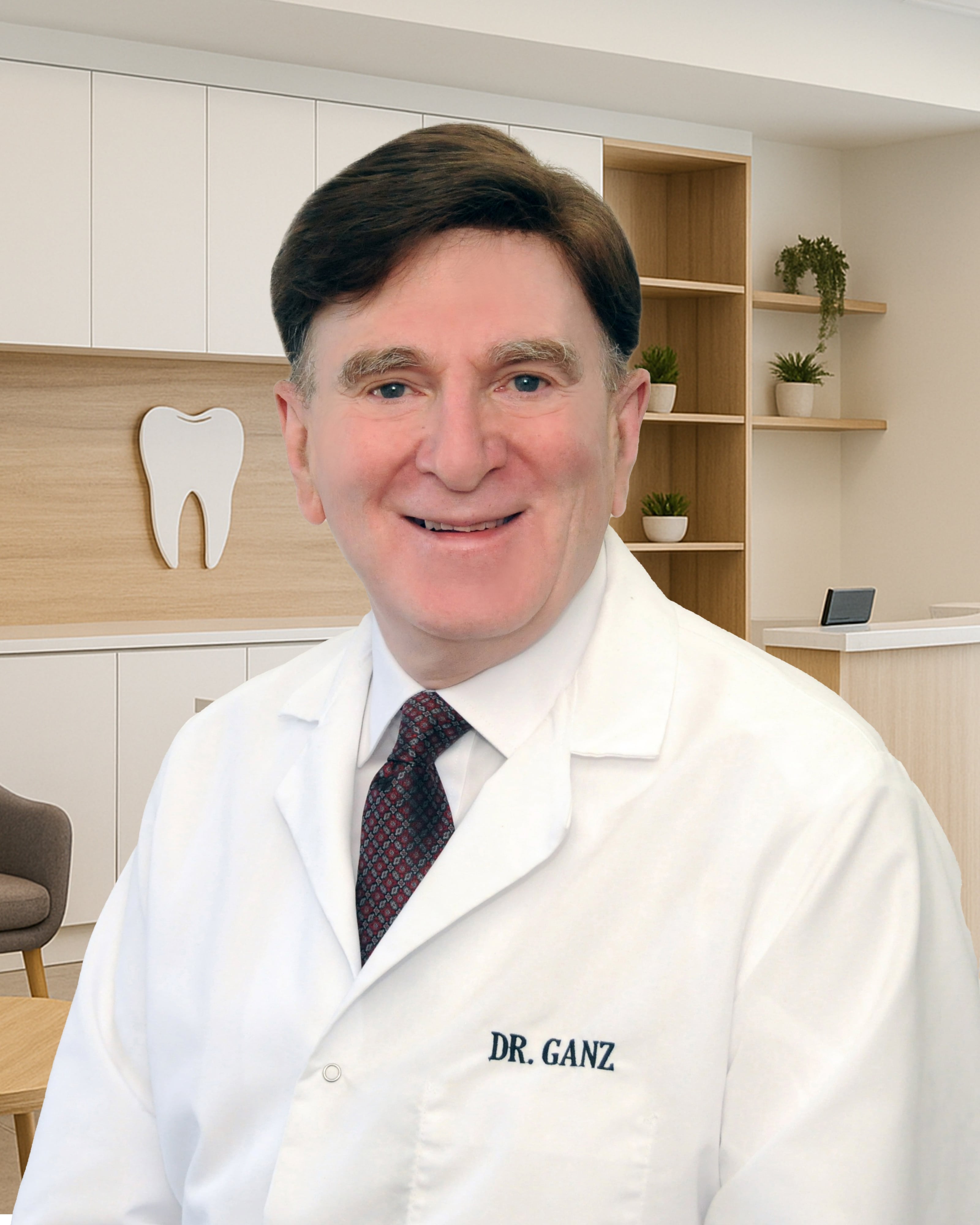
Cary Ganz DDS
Dr. Cary H. Ganz is a dentist, prosthodontist, entrepreneur, lecturer, and author with more than 50 years of experience in clinical dentistry and dental technology. Throughout his career, he has combined hands-on patient care with a deep understanding of how technology can improve dental practice operations, communication, documentation, and patient outcomes.
In addition to his clinical background, Dr. Ganz has held significant leadership roles in the dental technology industry, including Past Owner and Vice President of Clinical Affairs at DEXIS Digital Radiography and Past Vice President of Clinical Affairs at Denticon Practice Management Software. His business experience includes product development, clinical strategy, dental software innovation, practice management solutions, and educating dental professionals on the effective use of technology in modern dentistry.
Today, Dr. Ganz continues to focus on creating practical technology solutions for dental practices, including PractCom, a comprehensive dental practice communication platform designed to improve patient communication, documentation, compliance support, referrals, and overall practice efficiency. His work reflects a career-long commitment to helping dentists deliver better care while making their practices more organized, efficient, and protected.
No responses yet