
Imagine a patient who just invested $25,000 in a new smile, only to call your office in a panic because they misplaced their paper care sheet before the local anesthetic even wore off. It’s a high-stress moment that occurs in busy clinics every day, proving that even the most precise clinical work requires a foolproof system for dental veneers aftercare instructions. While porcelain veneers now command a 60% market share due to their 20-year durability potential, that longevity is entirely dependent on the quality of patient compliance once they leave your sight.
You likely feel the strain of high-volume post-op calls and the frustration of language barriers in a diverse patient population. This 2026 guide promises to provide the essential care protocols your patients need while showing you how to automate instruction delivery for maximum efficiency. We will preview the latest maintenance standards for zirconia and E.max materials, discuss the impact of digital smile design on patient expectations, and explore how a digital Post-Treatment Instruction Library can reduce your administrative burden through automated, multi-language support.
Key Takeaways
- Understand the critical 48-hour adjustment phase where bonding agents cure and patients must navigate the post-anesthesia window safely to avoid soft tissue trauma.
- Implement specific daily hygiene protocols, such as using non-abrasive fluoride toothpaste and PTFE floss, to protect margin integrity and prevent accidental snagging.
- Identify the risks of nocturnal bruxism and learn why custom-fabricated night guards are a professional necessity for preserving long-term porcelain durability.
- Combat the “forgetting curve” by replacing lost paper sheets with digital dental veneers aftercare instructions that serve as a permanent record and legal safeguard for your practice.
- Discover how to automate patient follow-ups and deliver standardized care templates in 15 languages using a digital Post-Treatment Instruction Library.
Immediate Veneers Aftercare: The Critical First 48 Hours
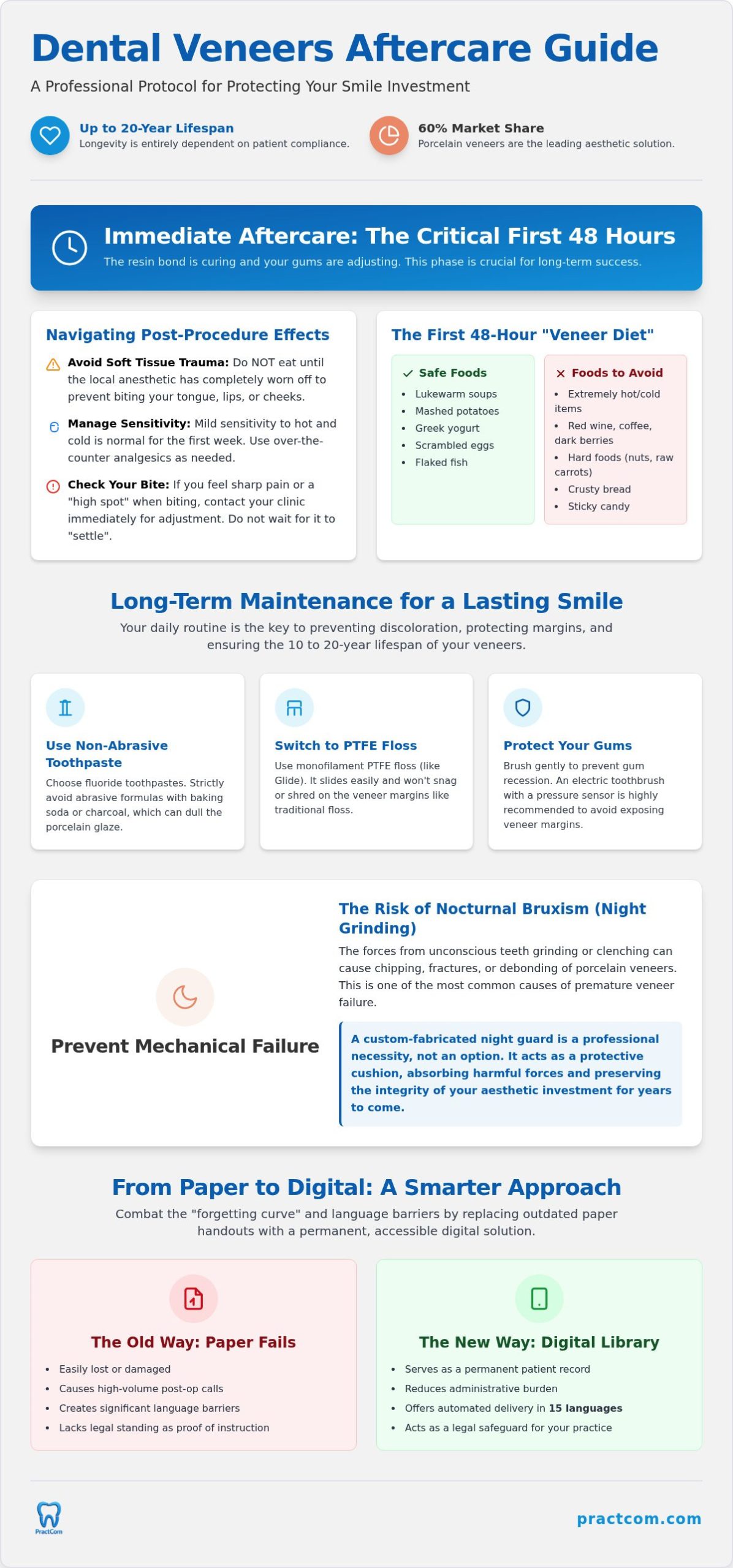
The first 48 hours after placement are arguably the most critical for long-term success. During this time, the resin bonding agent used to secure your Dental veneers undergoes a final curing process. It’s not just about the material; the adjustment phase represents the specific window where the gingival tissue adapts to the new restoration margins. Because the numbing agent remains active for several hours post-procedure, patients face a genuine risk of accidental soft tissue trauma. You shouldn’t eat until the anesthesia has completely worn off to prevent biting your cheeks or tongue. Clear communication during this window is vital, which is why providing digital dental veneers aftercare instructions ensures patients have these warnings at their fingertips the moment they leave the chair.
Navigating Post-Procedure Sensitivity
It’s common to experience mild sensitivity to thermal changes during the first week. This occurs because the tooth preparation process can temporarily irritate the pulp, especially if the enamel was significantly reduced. You can manage minor discomfort with standard over-the-counter analgesics like ibuprofen or acetaminophen, provided they align with your medical history. However, you need to distinguish between normal sensitivity and occlusion issues. If you feel a sharp pain when biting down or if it feels like one tooth is hitting before the others, you likely have a high spot that needs clinical adjustment. Don’t wait for this to “settle” on its own; a misaligned bite can lead to premature debonding or porcelain fractures.
The First 48-Hour Diet
Your choice of food during the initial two days acts as a protective measure for the curing bond. Stick to a “Veneer Diet” consisting of soft, lukewarm items that require minimal chewing force. Standardizing these recommendations helps prevent the “accidental crunch” that leads to emergency calls.
- Safe Selections: Lukewarm blended soups, mashed potatoes, Greek yogurt, and soft proteins like flaked fish or scrambled eggs.
- Items to Avoid: Extremely hot coffee, ice-cold smoothies, and highly pigmented liquids like red wine or dark berries that might stain the margins before they fully seal.
Avoid the temptation to “test” your new smile on hard objects like crusty bread or raw carrots. Even though modern porcelain is incredibly strong, the bond is at its most vulnerable during this initial window. Following these dental veneers aftercare instructions precisely reduces the likelihood of emergency follow-up visits and ensures the foundation of your aesthetic investment remains secure.
Long-Term Maintenance: Protecting Your Aesthetic Investment
After the critical adjustment period, your focus must shift toward protecting the structural integrity of the restorations. While porcelain is highly resistant to staining, the composite resin used to bond the veneer to your tooth remains susceptible to discoloration and chemical softening. Maintaining a meticulous routine is the only way to ensure your smile remains vibrant for the projected 10 to 20-year lifespan of the material. Standardized Veneers aftercare instructions emphasize the use of non-abrasive fluoride toothpaste to prevent micro-scratches on the porcelain surface. Abrasive products, particularly those containing baking soda or charcoal, can strip the polished glaze and leave the surface dull.
You should also switch to high-tech PTFE floss. Unlike traditional cotton-based floss, PTFE is monofilament and glides smoothly, which prevents it from snagging or shredding on the microscopic margins where the veneer meets the natural tooth. Gum health is equally paramount. If you develop gingival recession due to aggressive brushing or poor hygiene, the margins of the veneers will become exposed. This often results in “black triangles” or visible lines that compromise the aesthetic result. Consistent care prevents these issues and maintains the seamless transition between porcelain and tissue.
Hygiene Tools and Techniques
Switching to an electric toothbrush with a built-in pressure sensor is a smart move for veneer patients. Excessive manual pressure can lead to gum recession, but a sensor provides an immediate alert to keep your technique gentle. You must strictly avoid “whitening” toothpastes. These formulas don’t actually whiten porcelain; they simply use harsh abrasives that can damage the restoration over time. Additionally, always choose an alcohol-free mouthwash. Standard alcohol-based rinses can gradually soften the composite bonding agent, potentially leading to marginal leakage or premature failure of the bond.
Dietary Habits for Longevity
Your eating habits dictate the mechanical lifespan of your veneers. You should never use your front teeth to bite directly into hard objects like apples, corn on the cob, or crusty baguettes. These actions create a “lever” effect that puts immense shear stress on the porcelain. Instead, cut these foods into smaller pieces and use your back teeth for chewing. Alcohol consumption also plays a role in long-term success. Frequent exposure to high-alcohol beverages can degrade the resin cement over several years. By following these dental veneers aftercare instructions, you protect both the beauty and the function of your investment. To help your patients stay on track with these protocols, you can automate your follow-up sequence and deliver these tips directly to their smartphones.
Preventing Mechanical Failure: Bruxism and Protective Gear
Mechanical failure is often a silent threat that only becomes visible when a restoration chips or debonds. While you’ve already implemented the hygiene and dietary protocols necessary for success, parafunctional habits remain a significant risk factor. Chewing on pens, crunching ice, or biting fingernails creates concentrated pressure that porcelain isn’t designed to withstand. These repetitive actions lead to micro-fractures that eventually compromise the entire restoration. Caring for your veneers requires a conscious, daily effort to eliminate these mechanical stressors from your routine.
Bruxism, or nocturnal teeth grinding, is the most frequent cause of premature veneer failure. The forces generated during sleep can reach up to 250 pounds of pressure per square inch, which is far beyond the threshold of natural enamel or porcelain. Without a protective barrier, this force transfers directly to the bonding interface. This is why comprehensive dental veneers aftercare instructions always prioritize mechanical protection as a non-negotiable insurance policy for your investment.
The Role of the Custom Night Guard
A custom-fabricated night guard is a professional necessity for any patient with a history of grinding. Unlike bulky over-the-counter options that can shift your bite or cause jaw discomfort, a custom guard is precision-milled to redistribute occlusal forces evenly across the entire dental arch. This prevents any single veneer from bearing the brunt of grinding movements. You must clean your appliance daily with a non-abrasive cleanser to ensure it doesn’t harbor bacteria near your restoration margins. If you notice the plastic wearing thin or if your bite feels “off” in the morning, schedule a clinical adjustment immediately to maintain proper protection.
Sports and High-Impact Activities
For patients active in sports, a professional-grade athletic mouthguard is essential. Retail “boil-and-bite” guards often provide inadequate shock absorption and can snag on the edges of your veneers during heavy breathing or impact. A custom-fit sports guard offers a precise fit that stays in place during high-velocity movements. This protection is mandatory for contact sports like basketball or martial arts, but it’s also highly recommended for non-contact activities like mountain biking where sudden falls occur. If a veneer is ever dislodged during activity, place the restoration in a clean container and contact your dental office immediately. Following these dental veneers aftercare instructions ensures your smile remains intact regardless of your physical lifestyle.
The Clinical Side: Why Verbal Instructions Fail Your Practice
Clinical excellence doesn’t end when the patient leaves the operatory. Even the most skillfully placed restorations can fail if the patient doesn’t follow their dental veneers aftercare instructions properly. The psychological reality of the “Forgetting Curve” is a significant hurdle for any busy practice. Research in clinical communication suggests that patients lose approximately 80% of verbal information by the time they reach their car. When you consider the lingering effects of local anesthesia and the sensory overload of a cosmetic procedure, it’s clear that relying on a patient’s memory is a high-risk strategy. Implementing automated dental post-op instructions reduces practice liability by creating a verifiable digital trail of information delivery.
Beyond the clinical risks, there is a hidden administrative cost to poor communication. Every “Is this normal?” phone call consumes five to ten minutes of your front desk or clinical assistant’s time. These interruptions disrupt the workflow and pull your team away from high-value clinical production. Language barriers exacerbate this issue. Providing English-only instructions to a non-native speaker isn’t just an equity issue; it’s a clinical risk that often leads to non-compliance and preventable post-op complications.
Standardization as Risk Management
Standardizing your delivery process serves as a vital legal safeguard. It isn’t enough to simply provide the information; you must be able to document that the instructions were delivered and received. Using digital dental informed consent forms alongside automated aftercare creates a comprehensive ecosystem of clinical compliance. This system allows you to track engagement and ensures every patient receives the same high standard of care. Automated follow-ups further protect the clinician by identifying potential complications, such as occlusion issues or high spots, before they escalate into painful emergencies.
Overcoming Language and Literacy Barriers
Patient comprehension is the cornerstone of home-care success. In diverse clinical environments, the ability to provide instructions in a patient’s primary language is a game-changer. PractCom allows you to deliver dental veneers aftercare instructions in 15 different languages via SMS or email. By using simplified, non-jargon language, you improve the likelihood that patients will actually follow the protocols you’ve set. This approach removes the friction of translation and ensures that your clinical expertise isn’t lost in the gap between the chair and the home. To see how this system can transform your post-op workflow, you can explore our instruction library today.
Implementing a Digital Aftercare System with PractCom
Moving from the operational resistance of manual handouts to a standardized digital system is the final step in securing your clinical outcomes. PractCom allows you to deliver comprehensive dental veneers aftercare instructions via SMS or email in just two clicks. This efficiency ensures that no patient leaves the office without a permanent, accessible record of their care protocols. You can easily customize the library of over 80 templates to match your specific clinical preferences, ensuring the advice remains consistent with your unique approach to porcelain or composite restorations. By providing these resources digitally, you remove the risk of lost paper sheets and ensure that the information is available exactly when the patient needs it most.
The Patient Portal serves as a 24/7 “Single Source of Truth” for recovery. By integrating these digital resources into your broader dental practice workflow, you eliminate the administrative friction that leads to patient confusion. This systematic oversight moves your team away from reactive crisis management and toward proactive patient success. When instructions are delivered through a standardized platform, the administrative burden on your front desk drops significantly, allowing them to focus on high-value tasks rather than answering repetitive post-op questions.
Automation and Follow-Up
Automation acts as a guardian of your clinical reputation. You can set up automated “Day 3” check-ins to monitor patient comfort and recovery progress without manual intervention. This consistent touchpoint reduces “No-Show” follow-up appointments because patients feel supported and informed at every stage of their recovery. PractCom’s performance dashboard provides a transparent view of instruction delivery across your entire team. This high-level oversight allows you to identify and remedy communication gaps before they impact patient satisfaction or clinical results.
Getting Started with Standardized Instructions
Improving the dental patient experience starts with an audit of your current delivery methods. If your instructions are buried in a desk drawer or only provided verbally, you’re leaving your clinical results to chance. Transitioning to a digital library ensures that your expertise is always accessible, regardless of the patient’s primary language or the time of day. It’s time to replace operational disorganization with the confidence of a standardized system that protects both your patients and your practice. Ready to eliminate post-op confusion? Start your free trial with PractCom today.
Standardize Your Success and Protect Every Restoration
Clinical expertise creates the smile, but a standardized communication system preserves it. We’ve explored how the critical first 48 hours and consistent mechanical protection serve as the pillars of restoration longevity. Relying on a patient’s memory during the post-anesthesia window is an unnecessary risk that leads to preventable emergency calls and administrative friction. By digitizing your dental veneers aftercare instructions, you bridge the gap between the chair and the home while providing a vital legal safeguard for your practice.
PractCom provides a robust library of over 80 dental templates with multi-language support in 15 languages, ensuring every patient receives clear, actionable guidance. Whether you utilize digital delivery via SMS or high-quality printable options, our platform offers the tools to eliminate post-op confusion immediately. You can automate your practice aftercare with PractCom to reduce your team’s administrative burden and enhance the overall patient experience. It’s time to move from operational resistance to systematic control. Your patients deserve the security of a professional ally, and your practice deserves the efficiency of a modern, automated workflow.
Frequently Asked Questions
Can I brush my teeth normally after getting veneers?
You can resume brushing immediately, but you must use a soft-bristled brush and non-abrasive fluoride toothpaste. Avoid whitening formulas or charcoal products because they contain harsh abrasives that can scratch the porcelain surface. Gentle, circular motions are essential to protect the gingival margins. If you use an electric brush, ensure the pressure sensor is active to prevent aggressive scrubbing that leads to gum recession.
What happens if a veneer falls off or chips?
If a restoration becomes dislodged, place it in a clean container and contact your dental office immediately. Do not attempt to reattach it yourself with over-the-counter adhesives, as this can permanently damage both the tooth and the veneer. Most minor chips can be smoothed clinically by your dentist. However, a completely dislodged veneer requires professional rebonding to ensure the seal remains intact and prevents underlying decay.
How long do dental veneers typically last with proper care?
Porcelain veneers typically last between 10 and 15 years, though they can reach 20 years with meticulous maintenance. Composite resin options generally have a shorter lifespan of 5 to 7 years. Longevity depends entirely on your adherence to dental veneers aftercare instructions, specifically regarding your dietary choices and the consistent use of protective night guards. Regular professional cleanings every six months are vital for monitoring the bond’s integrity.
Is it normal to have gum soreness after the veneer procedure?
Mild gum soreness or inflammation is common for the first few days while the gingival tissue adapts to the new restoration margins. You can manage this discomfort with warm salt water rinses and over-the-counter anti-inflammatories if they fit your medical history. If the soreness persists beyond one week or is accompanied by heavy bleeding, schedule a follow-up. This allows your dentist to check for any excess bonding resin that might be irritating the tissue.
Can I still get cavities if I have dental veneers?
Yes, the natural tooth structure remaining under and around the veneer is still susceptible to decay. While the porcelain itself cannot rot, plaque can accumulate at the margins where the veneer meets the tooth. This makes daily flossing and professional cleanings essential to prevent “marginal decay.” If a cavity develops at the margin, it can compromise the entire restoration and may require the veneer to be replaced entirely.
Do I need a special type of toothbrush for my veneers?
A soft-bristled toothbrush is mandatory to prevent abrasive wear on the porcelain and recession of the gum line. Many clinicians recommend an electric toothbrush with a built-in pressure sensor. This technology provides an immediate alert if you’re brushing too hard, which acts as a safeguard for the delicate interface between your tooth and the veneer. Avoid medium or hard bristles, as they are too aggressive for cosmetic restorations.
Why is a night guard recommended even if I don’t think I grind my teeth?
A custom night guard serves as a vital insurance policy for your aesthetic investment. Many patients experience “silent” nocturnal bruxism during deep sleep cycles without realizing it. Even minor grinding can create enough shear force to chip porcelain or cause debonding over time. Wearing a guard redistributes these forces across the entire dental arch, ensuring your veneers aren’t subjected to the extreme mechanical stress that leads to premature failure.
How do digital aftercare instructions help my recovery?
Digital dental veneers aftercare instructions provide a permanent, searchable record that you can access on your smartphone at any time. Unlike paper sheets that are easily lost or ruined, digital delivery ensures you have the correct protocols during the critical first 48 hours. This accessibility reduces recovery anxiety and ensures you always know exactly how to manage sensitivity or dietary restrictions. It eliminates the guesswork and keeps your recovery on track.

Article by
Cary Ganz DDS
Dr. Cary H. Ganz is a dentist, prosthodontist, entrepreneur, lecturer, and author with more than 50 years of experience in clinical dentistry and dental technology. Throughout his career, he has combined hands-on patient care with a deep understanding of how technology can improve dental practice operations, communication, documentation, and patient outcomes.
In addition to his clinical background, Dr. Ganz has held significant leadership roles in the dental technology industry, including Past Owner and Vice President of Clinical Affairs at DEXIS Digital Radiography and Past Vice President of Clinical Affairs at Denticon Practice Management Software. His business experience includes product development, clinical strategy, dental software innovation, practice management solutions, and educating dental professionals on the effective use of technology in modern dentistry.
Today, Dr. Ganz continues to focus on creating practical technology solutions for dental practices, including PractCom, a comprehensive dental practice communication platform designed to improve patient communication, documentation, compliance support, referrals, and overall practice efficiency. His work reflects a career-long commitment to helping dentists deliver better care while making their practices more organized, efficient, and protected.
No responses yet