
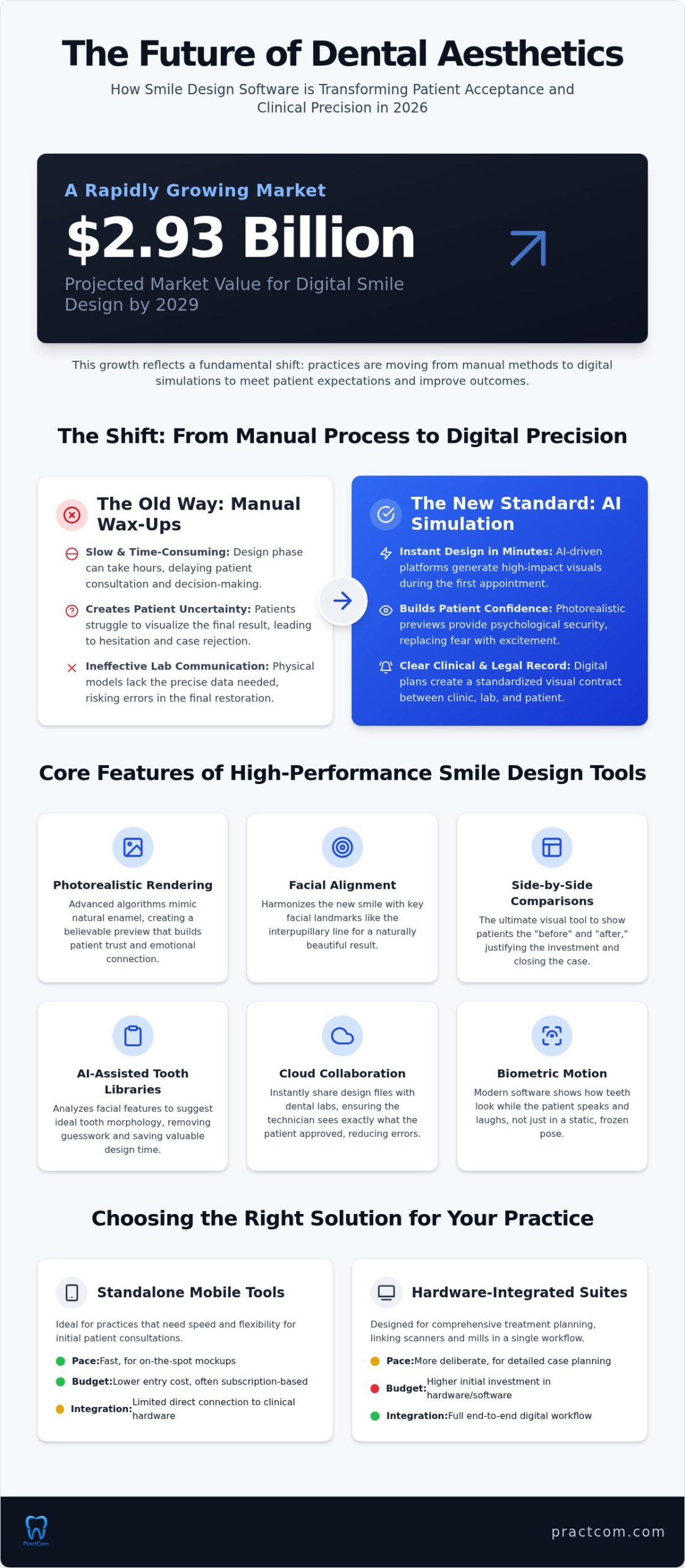
With the digital smile design market projected to reach $2.93 billion by 2029, the transition from manual mock-ups to digital simulations is no longer optional for growth-minded practices. You’ve likely felt the frustration of spending significant time on a wax-up, only for the patient to hesitate because they can’t visualize the final result. Integrating dental smile design software into your workflow solves this by replacing the fear of the unknown with the psychological security of a photorealistic preview.
We understand that manual methods are often too slow and don’t always communicate effectively with your dental lab. You deserve a standardized system that builds patient trust while creating a clear clinical and legal record of the intended outcome. This guide reveals how the latest 2026 technology bridges the gap between clinical planning and patient acceptance. We’ll examine the shift toward AI-powered 3D design and how these visual tools reduce operational resistance in high-pressure clinical environments. By the end, you’ll know how to turn a complex aesthetic proposal into a simple, confident “YES.”
Key Takeaways
- Understand why the transition to AI-assisted 3D simulations is the new standard for clinical predictability and patient communication in 2026.
- Discover how modern dental smile design software bridges the gap between aesthetic planning and case acceptance through photorealistic visualizations.
- Learn to distinguish between standalone mobile tools and hardware-integrated suites to select the solution that fits your practice’s pace and budget.
- Explore practical methods for integrating visual documentation into your daily routine without adding administrative stress to your clinical team.
- See how to leverage before-and-after visuals as a professional gateway to automated informed consent and comprehensive post-treatment care.
What is Dental Smile Design Software and Why is it Essential in 2026?
In the rapidly advancing field of Dentistry, modern dental smile design software serves as a critical bridge between clinical possibility and patient perception. It isn’t just a digital drawing tool; it’s a sophisticated simulation engine that allows you to preview aesthetic outcomes before a single tooth is prepped. By 2026, the standard for cosmetic consultations has shifted. Patients no longer accept vague promises or static 2D photos. They expect a comprehensive, facially-aligned visualization that shows exactly how their new smile will integrate with their unique anatomy. This visual-first approach eliminates the “fear of the unknown,” which remains the primary driver behind case rejection. When you provide a clear, photorealistic roadmap, you remove the mental barriers that prevent patients from committing to large-scale cosmetic work.
The Evolution of Cosmetic Imaging
The days of relying solely on time-consuming manual wax-ups are fading. While physical models still have their place in the lab, they’re too slow for the initial consultation. AI-driven platforms have reduced the design phase from hours to mere minutes, allowing you to present a high-impact “before and after” during the very first appointment. Modern software now incorporates biometric motion, showing how the teeth look while the patient speaks and laughs, rather than just in a frozen pose. This level of realism creates an immediate emotional connection that manual methods simply can’t match. It replaces the clinical coldness of traditional records with a vibrant, living representation of the patient’s potential transformation. This shift toward speed and accuracy allows your team to focus on the patient relationship rather than the technical struggle of manual drafting.
Clinical vs. Communication Goals
High-performance software must serve two masters: technical precision and emotional resonance. On the technical side, these tools provide the exact specifications your dental lab needs to execute the plan. They ensure that the final restoration matches the digital preview, protecting your professional reputation and legal standing. On the communication side, the software acts as an educational ally. It transforms complex clinical jargon into a clear, visual narrative that the patient understands instantly. When you show a patient their future smile in 3D, you’re not just selling a procedure; you’re providing the psychological security they need to move from a hesitant “maybe” to a confident “YES.” This systematic approach reduces operational friction and ensures your clinical goals align perfectly with the patient’s aesthetic desires. It’s about moving from disorganized verbal descriptions to a standardized, visual contract between you and your patient.
The Core Features of High-Performance Smile Design Tools
Selecting the right dental smile design software requires looking beyond basic image editing. You need a system that prioritizes data-driven aesthetics over simple filters. Photorealistic rendering serves as the foundation of patient trust. If a simulation looks artificial, the patient’s brain flags it as a risk rather than a solution. High-performance tools use advanced light-scattering algorithms to mimic natural enamel, making the transformation feel inevitable rather than experimental. This level of detail is essential for bridging the gap between clinical planning and the patient’s emotional “YES.”
Technical success depends on facial alignment. A smile doesn’t exist in a vacuum; it must harmonize with the interpupillary line and the lower lip curve. Research into Digital Smile Design emphasizes that these facial landmarks are essential for creating a “natural” look that patients subconsciously crave. Side-by-side comparisons then provide the visual hook that justifies the investment. Seeing the current state next to the projected outcome creates a psychological gap that only the treatment can close. Cloud collaboration eliminates the friction of traditional lab communication. You can share design files instantly, ensuring the technician sees exactly what the patient approved. If you’re looking to streamline this process, you can explore how systematic communication reduces errors.
AI-Assisted Tooth Library Selection
AI-assisted tooth libraries take the guesswork out of morphology. These systems analyze facial features to suggest tooth shapes that complement the patient’s gender and age. You can then refine the midline, gingival curves, and incisal edges with millimeter precision. In 2026 aesthetics, biometric alignment refers to the precise synchronization of dental proportions with a patient’s unique facial landmarks and muscular movements to ensure natural-looking results. This level of automation allows your team to produce high-quality designs without spending hours on manual adjustments.
Exporting for Clinical Success
Exporting these designs for clinical success is where the dental smile design software proves its worth. It generates precise blueprints that dental lab technicians use as a definitive guide. By integrating 2D designs into 3D CAD/CAM workflows, you ensure the mock-up isn’t just a fantasy. It’s a clinically achievable reality that protects you from over-promising and under-delivering. This systematic handoff reduces remakes and ensures that the final ceramic result matches the digital promise you made in the chair. It’s about moving from a vague aesthetic goal to a standardized, reproducible clinical outcome.
Comparing Smile Design Software: Standalone vs. Integrated Suites
Choosing the right dental smile design software isn’t just about the quality of the pixels; it’s about how the tool integrates with your existing workflow. In 2026, the market is divided into three distinct categories. Standalone apps offer high mobility and speed, making them excellent for quick chairside simulations. However, they often lack the clinical depth required for complex restorative planning. On the other end of the spectrum, hardware-integrated suites provide extreme precision by linking directly to intraoral scanners and milling units. While these offer a seamless technical path, they often come with high costs and a complexity that can overwhelm a busy clinical team. For most general practitioners, the goal isn’t just to design a tooth; it’s to secure a commitment from the patient.
Communication-first platforms prioritize the patient journey. These tools focus on the “visual hook” to drive case acceptance while providing the necessary documentation for clinical and legal safety. When evaluating your options, consider the return on investment (ROI) beyond just the software fee. A tool that requires hours of training or a significant hardware upgrade might not be the most efficient choice for a practice focused on growing its cosmetic revenue. You need a system that balances ease of use with professional results, ensuring your assistants can lead the visual presentation without constant doctor intervention.
When to Choose a Standalone Tool
Standalone tools are ideal for practices with high-volume cosmetic consultations where speed is the priority. Mobile-only apps allow you to capture a photo and present a simulation in under five minutes, which is perfect for a fast-paced environment. The downside is the limited ability to translate that 2D image into a 3D clinical reality. Desktop-based standalone software often provides more control over tooth morphology but requires more time and a dedicated workstation. If your goal is a quick “wow” factor to start a conversation, a standalone tool is a viable entry point. However, be prepared for the manual work required to bridge that simulation to your final lab instructions.
The ROI of the Integrated Communication Approach
A “pretty picture” only has value if it leads to a completed treatment. The integrated communication approach ensures that your before-and-after visualizations are immediately backed by digital informed consent and clear post-treatment instructions. This systematic method reduces operational resistance by keeping all patient data in one secure portal rather than scattered across multiple apps. It protects your reputation by ensuring the patient understands the clinical limitations of the visual simulation. You can explore why PractCom offers this systematic advantage by combining aesthetic tools with the administrative rigour required for a modern practice. This approach transforms a simple design tool into a comprehensive growth engine that manages the entire patient experience from the first “YES” to the final follow-up.
Workflow Integration: Implementing Smile Design Without Slowing Down
Integrating dental smile design software into a busy clinic often meets resistance because teams fear it adds unnecessary minutes to an already packed schedule. However, the true source of clinical friction isn’t the technology; it’s the lack of a standardized protocol. When you treat aesthetic visualization as a routine clinical record rather than a special event, you eliminate the “fear of the unknown” for both your staff and your patients. A systematic workflow ensures that every cosmetic consultation follows a predictable path, moving the patient toward a decision without requiring the doctor to perform manual design work. This standardization is the only way to scale cosmetic growth without burning out your clinical team.
The key to efficiency is delegation. Your dental assistants and front office team should lead the visual presentation, allowing you to focus on the final clinical approval. This creates a high-utility environment where the software serves as a bridge, not a bottleneck. You can start optimizing your patient communication today to see how these systems reduce the time spent on verbal explanations.
Step-by-Step Implementation Guide
- Step 1: Capture standardized portraits. Use a consistent background and lighting to ensure intraoral and extraoral photos are ready for immediate processing.
- Step 2: Generate the initial simulation. Leverage AI-assisted tools to create a preliminary before-and-after in under three minutes.
- Step 3: Present during the consultation. Use the “visual hook” to address aesthetic goals and set realistic expectations. This is where you have the “Visual vs. Reality” conversation, explaining that the simulation serves as a target for the final restorations while accounting for biological limitations.
- Step 4: Secure the commitment. Attach the final design to your digital informed consent form to ensure the patient understands the clinical scope and limitations.
Overcoming Common Staff Objections
The most frequent hurdle is the “I don’t have time to design” mindset. You must demonstrate that modern dental smile design software actually saves time by reducing the number of “I’ll think about it” responses that require multiple follow-up calls. Automation handles the heavy lifting, from tooth library selection to sending the final simulation home via a secure patient portal. This portal allows patients to share their potential new smile with family, which often leads to a faster “YES.” By using a practice performance dashboard, you can track the direct correlation between visual presentations and increased case acceptance. To further refine your clinic’s operational health, PraxisAdvisor offers an AI-powered advisory platform designed to help dental practice owners optimize their management and strategic growth. This data provides the justification your team needs to embrace the new system as a tool for their own efficiency rather than an extra administrative task.
The PractCom Advantage: Visuals Meet Systematic Documentation
Most dental smile design software options focus exclusively on the “wow” factor. While a photorealistic simulation is a powerful visual hook, it’s only the first step in a successful cosmetic case. PractCom transforms this visual promise into a protected clinical record by integrating the design directly into your administrative workflow. This ensures the excitement of the consultation leads naturally into a standardized system of documentation and patient care. By 2026, driving cosmetic growth requires more than just aesthetics; it requires a systematic approach that alleviates practitioner anxiety regarding compliance and long-term results. We bridge the gap between the dental chair and the final result by providing a comprehensive ecosystem where no part of the communication process is left to chance.
Our platform recognizes that a “pretty picture” is a liability if it isn’t backed by professional rigour. While competitors often stop once the patient says yes, we manage the entire patient experience that follows. This protective stance functions as a guardian of your reputation, ensuring that every cosmetic transformation is documented, understood, and maintained. It’s about moving from the resistance of manual administrative tasks to the confidence of a standardized, automated system.
From Smile Design to Informed Consent
A digital simulation is a target, not a guarantee. You must ensure your patients understand the biological and clinical limitations of any proposed transformation. PractCom standardizes the documentation trail for complex cosmetic cases by linking the visual design directly to digital informed consent forms. This reduces your professional liability by creating a clear, visual and written contract of what was discussed during the consultation. It replaces the operational disorganization of verbal agreements with a permanent record that protects your practice. This systematic handoff ensures that when a patient signs for their new smile, they’re doing so with a full understanding of the clinical scope.
Closing the Loop with Post-Op Instructions
The patient’s journey doesn’t end when the final restoration is seated. Long-term aesthetic success for veneers, implants, and professional whitening depends on precise aftercare. Our platform automates this critical phase by sending clear post-treatment instructions via email or text. We support 15 languages, ensuring your diverse patient base receives accurate, simplified instructions they actually understand. This automated follow-up system ensures that your clinical excellence is matched by patient compliance, which reduces the risk of costly failures or misunderstandings. You can learn more about our comparison with other platforms to see how we provide a full communication suite that competitors often ignore. By closing the loop, you turn a single cosmetic case into a long-term relationship built on trust and clinical success.
Driving Aesthetic Growth Through Systematic Control
The future of aesthetic dentistry depends on your ability to transform patient hesitation into clinical confidence. By 2026, implementing dental smile design software is no longer just about the initial “wow” factor; it’s about creating a standardized, defensible system for patient communication. You’ve seen how visual simulations act as the primary hook, but true growth comes from integrating those visuals with digital consent and automated aftercare. This systematic approach reduces operational resistance while ensuring your clinical goals align with the patient’s expectations.
PractCom provides the professional ecosystem you need to manage this entire journey. Our platform features a dedicated patient portal for visual designs and over 80 post-treatment instruction templates to ensure long-term clinical success. We help you support a diverse patient base with digital consent forms available in 15 languages, which reduces your liability while increasing case acceptance. Moving from disorganized manual tasks to a systematic digital workflow protects your reputation and your team’s time.
Start your free trial of the PractCom communication suite to see how we turn visual designs into a protected, profitable practice. You have the clinical skills to change lives; let us provide the communication tools to make it happen.
Frequently Asked Questions
Is dental smile design software hard to learn for a non-tech-savvy dentist?
Modern dental smile design software is designed for intuitive clinical use, requiring minimal technical expertise. AI-driven automation now handles the most complex morphology adjustments, which allows your team to generate results in minutes. Most practitioners find that the learning curve is focused more on standardized photography protocols than on the software interface itself.
Do I need a special camera or iPad to use smile design tools?
You don’t necessarily need a high-end DSLR to get started with modern tools. While professional photography improves clinical depth, many 2026 platforms are optimized for tablets and high-resolution smartphones. The key requirement is consistent, standardized lighting to ensure the AI can accurately map facial landmarks for the simulation.
Can smile design software actually increase my case acceptance rates?
Visualizing the final result directly addresses the primary cause of case rejection: patient anxiety. When a patient sees a photorealistic “before and after,” they move from a state of hesitation to one of psychological security. This clear communication bridge is a proven way to increase commitment on large-scale cosmetic and restorative plans.
How does smile design software integrate with my existing PMS?
Most dental smile design software tools operate as high-utility communication bridges that complement your existing practice management software. They typically integrate through cloud-based portals or secure file exports, allowing you to attach visualizations to patient records. This setup ensures your clinical and administrative data remains organized without requiring a full software overhaul.
Is the digital simulation legally binding as a guaranteed result?
A digital simulation is a clinical roadmap rather than a legally binding guarantee. It’s essential to present these visualizations as a target for treatment while accounting for biological limitations. You should always pair your designs with digital informed consent forms to ensure the patient understands that the final result may vary based on clinical realities.
How much does dental smile design software typically cost in 2026?
In 2026, pricing varies based on the software’s clinical depth and integration level. For example, some design apps are available for approximately $799 per year, while starter packages for cosmetic consultations can begin at $99 per month. Advanced AI-powered 3D design platforms with outsourced design options may reach $3,999 per year for specific case volumes.
Can I share the before-and-after simulations directly with my patients?
Yes, sharing simulations through a secure patient portal is a standard feature of modern communication platforms. Sending the “before and after” directly to the patient’s device allows them to review the transformation at home with family members. This transparency builds trust and often leads to a faster “YES” on comprehensive treatment plans.
Article by
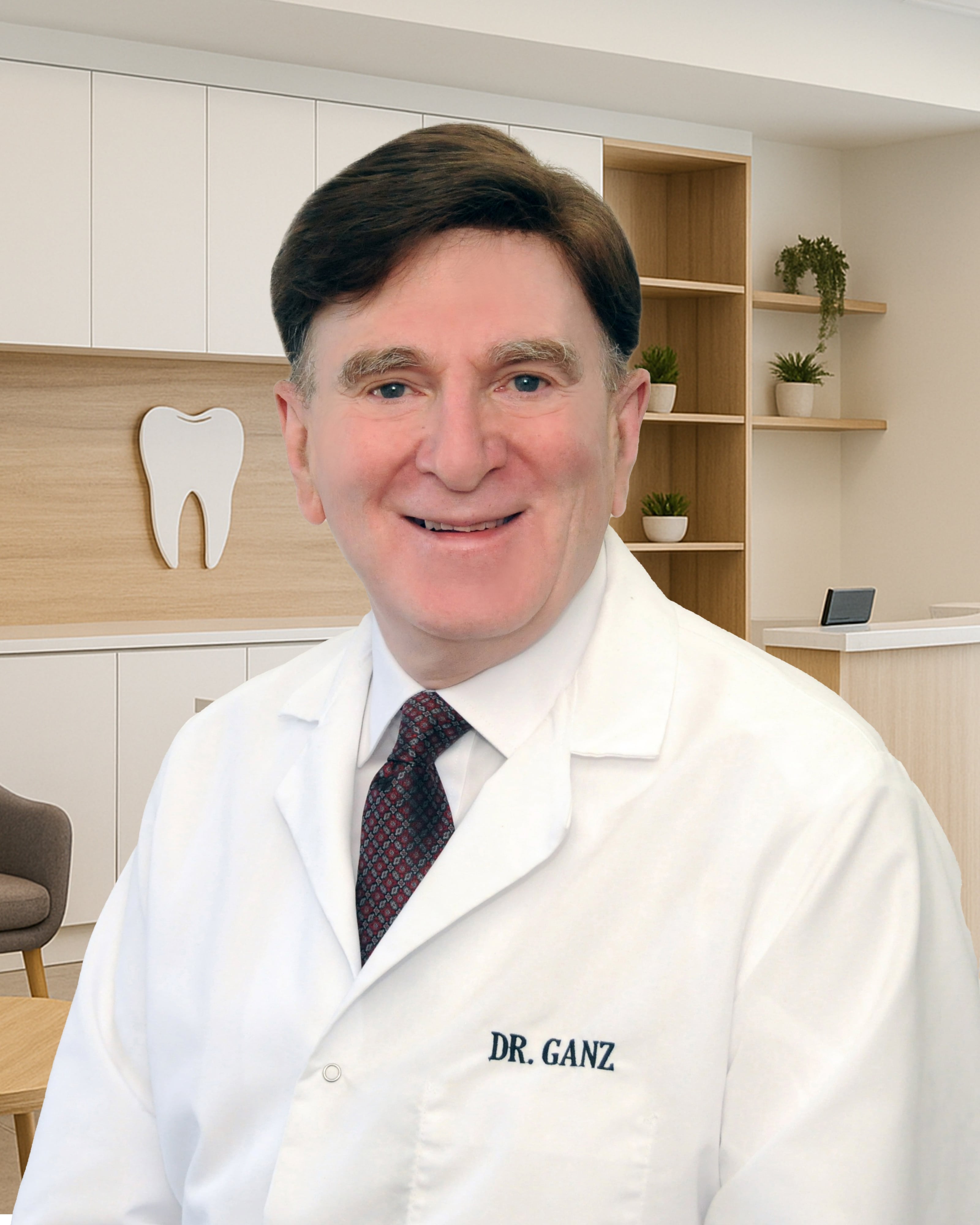
Cary Ganz DDS
Dr. Cary H. Ganz is a dentist, prosthodontist, entrepreneur, lecturer, and author with more than 50 years of experience in clinical dentistry and dental technology. Throughout his career, he has combined hands-on patient care with a deep understanding of how technology can improve dental practice operations, communication, documentation, and patient outcomes.
In addition to his clinical background, Dr. Ganz has held significant leadership roles in the dental technology industry, including Past Owner and Vice President of Clinical Affairs at DEXIS Digital Radiography and Past Vice President of Clinical Affairs at Denticon Practice Management Software. His business experience includes product development, clinical strategy, dental software innovation, practice management solutions, and educating dental professionals on the effective use of technology in modern dentistry.
Today, Dr. Ganz continues to focus on creating practical technology solutions for dental practices, including PractCom, a comprehensive dental practice communication platform designed to improve patient communication, documentation, compliance support, referrals, and overall practice efficiency. His work reflects a career-long commitment to helping dentists deliver better care while making their practices more organized, efficient, and protected.
No responses yet