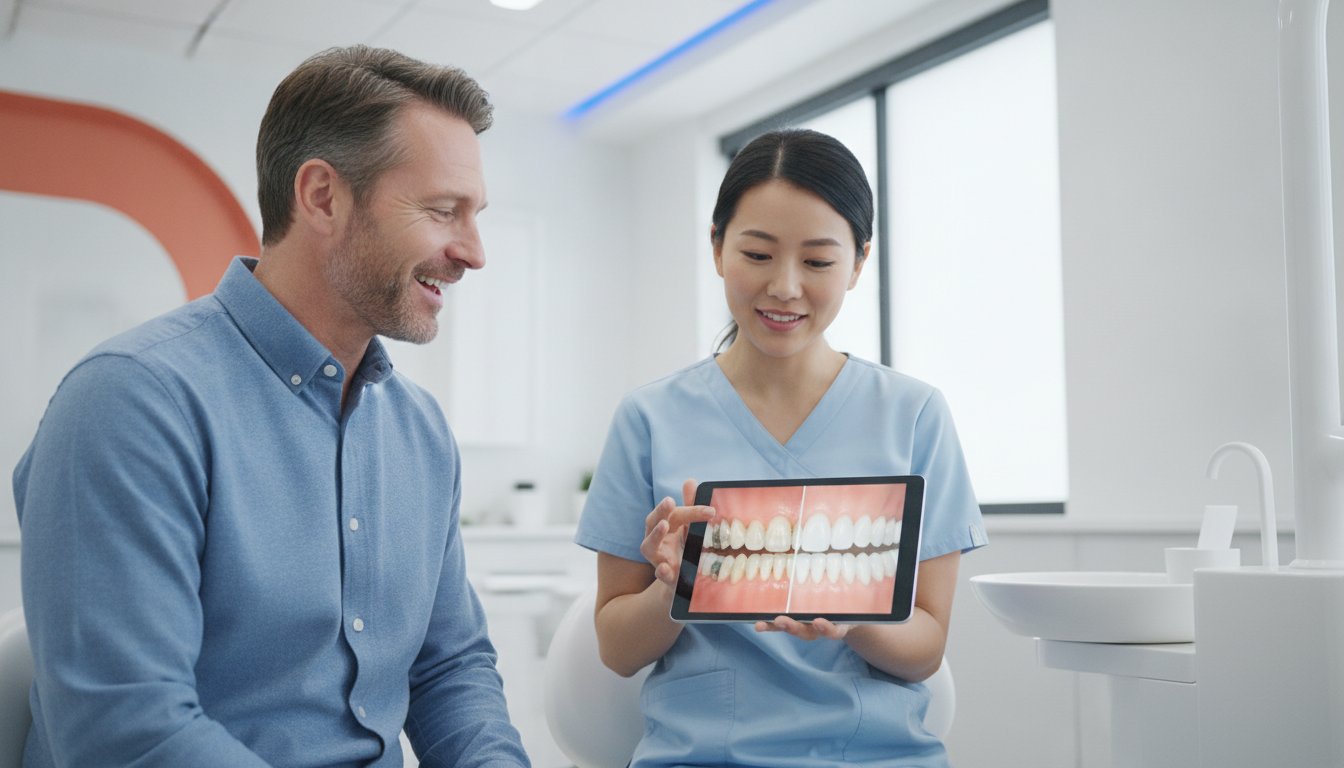
What if your patients could see their future smile before you even picked up a handpiece? In 2026, the clinical “wow factor” is no longer found solely in the final result; it is found on the screen during the very first consultation. You have likely spent hours explaining complex aesthetic changes only to hear a patient say they need to “think about it.” It is a common frustration when technical descriptions fail to bridge the gap between clinical necessity and emotional desire. By integrating modern dental smile design software into your workflow, you transform these abstract conversations into concrete visual evidence. This technology is a professional necessity that builds immediate trust and aligns patient expectations with your clinical vision.
We understand that managing a high-pressure practice requires tools that reduce operational resistance. This guide explores how to leverage digital visualization to drive faster treatment acceptance. Rationale: Providing a clear visual trajectory eliminates the psychological barriers that often stall high-value cosmetic cases. You will learn how to use these tools to simplify communication, eliminate the guesswork of cosmetic outcomes, and grow your practice’s case acceptance through systematic, visual storytelling that leads naturally to informed consent.
Key Takeaways
- Discover why smile design has evolved from a clinical luxury into an essential psychological tool for bridging the gap between patient hesitation and treatment consent.
- Learn how modern dental smile design software uses AI-driven simulations to provide photorealistic “before and after” visuals that justify high-value cosmetic procedures.
- Identify the specific implementation steps required to capture standardized portraits and generate intelligent simulations during a single consultation.
- Explore how to maximize your ROI by integrating visualization tools into a broader communication ecosystem that includes digital consent and multi-language aftercare.
- Understand the critical difference between fragmented standalone apps and integrated platforms that ensure seamless cross-device accessibility for your clinical team.
The Evolution of Dental Smile Design Software in 2026
In 2026, the definition of success in cosmetic dentistry has shifted. While clinical precision remains the baseline, the ability to communicate that precision to a patient is what drives practice growth. We’ve moved past the era where dental smile design software was merely a high-tech toy for early adopters. It’s now the primary communication bridge between your clinical expertise and a patient’s emotional commitment. Modern software doesn’t just show a generic set of teeth; it uses AI to create photorealistic simulations that feel personal and achievable.
Why Visual Communication Trumps Verbal Explanation
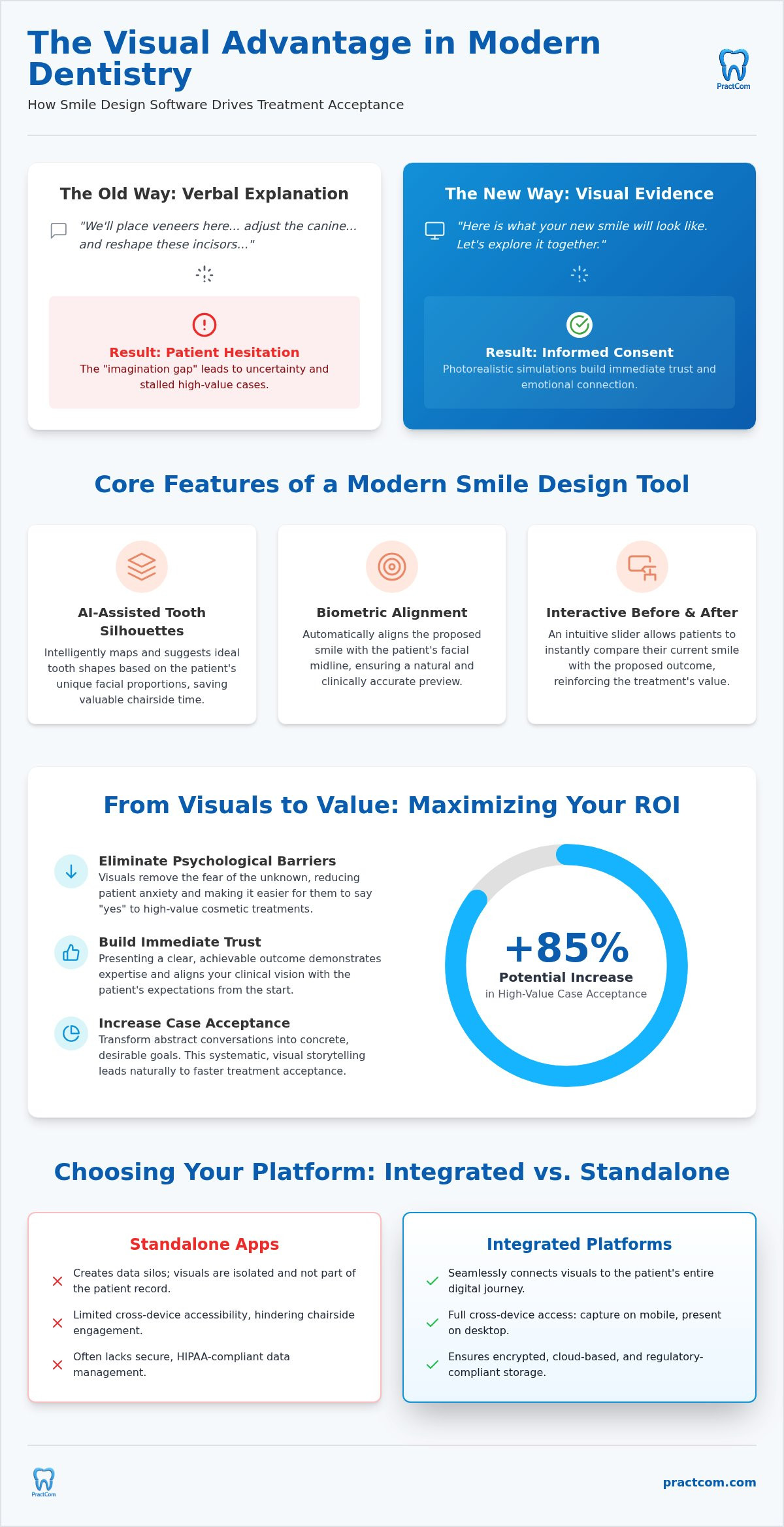
Patients often struggle to visualize how veneers or implants will change their appearance. This “imagination gap” is a leading cause of case rejection in many practices. When you rely on verbal descriptions, you’re asking the patient to do the heavy lifting of mental visualization. Visual-first dentistry removes this burden. By using 2D face photos transformed into interactive previews, you trigger the “mirror effect.” This psychological response happens when a patient sees a version of themselves with the proposed changes, creating an immediate emotional connection to the outcome. It’s a shift from selling a procedure to presenting a refined version of their own identity.
Key Components of a Modern Smile Design Tool
The latest tools in 2026 prioritize speed and accuracy to reduce your operational stress. You don’t need to be a graphic designer to produce a high-quality simulation. Key features include:
- AI-Assisted Tooth Silhouettes: Intelligent mapping that suggests shapes based on facial proportions.
- Biometric Alignment: Software that automatically aligns the new smile with the patient’s unique facial midline.
- Before and After Sliders: A simple interface that lets patients toggle between their current state and the proposed result, reinforcing the value of the treatment.
This isn’t just about marketing; it’s about creating a clinical blueprint that aligns expectations. While some tools focus on the laboratory technicalities, the most effective platforms focus on the patient’s journey from visualization to informed consent. Rationale: When a patient sees a realistic outcome, their anxiety drops, and their trust in your expertise grows. This systematic approach ensures that every cosmetic consultation is a productive step toward treatment acceptance.
Evaluating Feature Sets: What Your Practice Actually Needs
Selecting the right dental smile design software requires looking beyond the “wow” factor of a digital makeover. You need a system that fits into your daily operational reality without adding administrative weight. While standalone apps offer flashy visuals, they often create data silos that don’t communicate with your other systems. An integrated communication platform ensures that the “before and after” isn’t just a lost image on an iPad but a permanent part of the patient’s digital journey. This systematic control is what separates a busy practice from an organized one.
Cross-device accessibility is a non-negotiable requirement in 2026. You need the flexibility to capture portraits on a mobile device and present the final simulation on a large desktop monitor. This mobility allows for immediate, chairside engagement, which is critical for maintaining the emotional momentum of a consultation. Rationale: If you have to leave the room to process an image, you lose the patient’s focus. Cloud-based platforms also provide regulatory reassurance by ensuring that sensitive patient imagery is encrypted and HIPAA-compliant, removing the anxiety of manual data management.
Automation and AI in Cosmetic Visualization
AI has revolutionized the speed of clinical mapping. Modern tools can identify the “Ideal Smile Curve” in seconds, aligning tooth silhouettes with the patient’s unique facial midline. Rationale: Automated mapping reduces the time you spend on manual design, allowing you to focus on the patient relationship. However, it’s vital to maintain realism. Over-engineered simulations can lead to clinical disappointment if the final result doesn’t match the digital promise. High-quality portrait enhancement should improve the presentation’s professionalism without distorting the achievable outcome.
Integration with Clinical Workflows
A visualization is only effective if it leads to a predictable clinical result. Your software should facilitate a seamless move from the 2D simulation to a 3D digital wax-up. This process ensures that what the patient sees is exactly what the lab produces. Crucially, these visualizations must be linked to digital dental informed consent forms. This integration protects your reputation by documenting that the patient understood and approved the proposed aesthetic changes before treatment began.
Managing these steps through a single ecosystem reduces the operational friction that often leads to administrative failures. If you’re ready to see how a unified platform can streamline your cosmetic consultations, you can explore our all-in-one communication suite. This approach ensures that no part of the patient journey is left to chance, from the first visualization to the final signature.
Maximizing ROI: Turning Visuals into Treatment Acceptance
High-value cosmetic dentistry requires more than clinical skill; it requires a high-conversion communication process. Integrating dental smile design software is the most direct way to measure and improve your case acceptance rates. Rationale: Visual evidence justifies the investment in complex treatment plans, moving the patient from price-sensitivity to value-focus. By using a Practice Performance Dashboard, you can track exactly how many visualizations lead to signed consents, allowing for data-driven adjustments to your consultation technique. This systematic oversight ensures that your technology investment translates into clinical revenue.
The Consultation Room Strategy
Time is your most valuable asset in a high-pressure clinical setting. The “First Five Minutes” rule suggests showing the simulation early to anchor the consultation in the desired outcome. This approach reduces “shopper” behavior by creating an immediate emotional bond between the patient and their potential new smile. When a patient objects to the cost, use the visual simulation to highlight the specific aesthetic and functional improvements they’re paying for. Rationale: It’s harder to say “no” to a visible, improved version of oneself than to a list of codes on a treatment plan. You can also use “before and after” videos to provide social proof, provided you have the proper consent documentation in place.
Standardizing the Cosmetic Journey
Consistency is the guardian of your reputation. Every cosmetic inquiry should trigger a standardized visual follow-up to ensure the patient’s excitement doesn’t fade once they leave the office. You can further secure the patient’s trust by linking the cosmetic journey to professional aftercare. For example, using automated dental post-op instructions ensures the patient feels supported long after the veneers or implants are placed. This level of oversight reduces post-treatment anxiety and minimizes “emergency” phone calls, which protects your clinical schedule from unnecessary interruptions.
A visual-first approach also builds a robust referral network. Patients are far more likely to share a photorealistic simulation or a high-quality “before and after” image with their social circle than they are to describe a crown preparation. This organic marketing creates a predictable stream of high-value cases. By treating dental smile design software as the first step in a comprehensive patient journey, you ensure that no part of the professional communication process is left to chance.
Implementation: From Consultation to Consent
Successful implementation of dental smile design software requires moving beyond the “pretty picture” and into a repeatable clinical system. A visual simulation is a powerful motivator, but it only generates revenue when it’s backed by a structured workflow that leads to a signed treatment plan. By following a standardized five-step process, you eliminate the operational friction that often causes high-value cases to stall between the chair and the front desk.
- Step 1: Capture. Use your device to take high-quality, standardized facial portraits. Consistency here is the foundation for a believable simulation.
- Step 2: Generate. Apply intelligent tooth silhouettes to create a 2D simulation. AI tools handle the heavy lifting of mapping, allowing you to produce a result in minutes.
- Step 3: Present. Walk the patient through their “Ideal Midline” and “Smile Curve.” Rationale: Explaining the clinical logic behind the aesthetic changes builds professional authority and trust.
- Step 4: Secure. Link the visualization directly to integrated digital consent forms. This step ensures that the patient’s emotional commitment is immediately captured in a legally binding document.
- Step 5: Automate. Schedule automated follow-ups with post-treatment care instructions. This protects the clinical outcome and maintains the patient relationship long after they leave the office.
The Role of Multi-Language Support
Trust is built on clear communication, yet language barriers often create an “information gap” in diverse patient populations. Documenting the smile journey in a patient’s native language is a professional necessity that reduces anxiety and improves compliance. PractCom provides support for 15 different languages across all patient-facing documents, including consent forms and aftercare instructions. This ensures that every patient, regardless of their primary language, fully understands the proposed cosmetic changes and the responsibilities of post-operative care.
Streamlining the Administrative Hand-off
The transition from the clinical chair to the front office is where many cosmetic cases are lost. If the administrative team isn’t aligned with the clinical vision, the patient’s momentum fades. Optimizing dental practice workflow involves ensuring the smile design remains a permanent, accessible part of the patient record. This systematic control allows the front desk to reference the visual goals during financial discussions, reinforcing the value of the treatment. Rationale: A unified system prevents the “broken telephone” effect that leads to administrative failures and lost revenue.
If you’re ready to transform your consultation process into a high-conversion system, you can start your free trial today and explore our all-in-one communication platform.
The PractCom Advantage: Beyond the Visualization
While many tools provide a “before and after” image, PractCom offers a stabilizing force for your entire clinical environment. We recognize that dental smile design software is only effective when it’s part of a complete communication ecosystem. Our platform doesn’t just generate a simulation; it acts as a guardian of your reputation by integrating that visualization into a standardized system of documentation. This approach moves your practice from the resistance of manual, fragmented tasks to the confidence of a unified workflow. Rationale: When smile design is linked to digital consent and automated aftercare, you eliminate the administrative gaps where liability often hides.
PractCom functions as a professional ally that understands the logistical realities of 2026. By centralizing your patient interactions, you reduce the psychological stress of managing disparate software. Our system ensures that every cosmetic outcome is supported by visual evidence and followed by clear, multi-language instructions. This level of systematic oversight provides the regulatory reassurance you need to focus on clinical excellence rather than administrative paperwork.
A Peer-Founded Solution for Clinical Gaps
Our platform was built to address the specific operational stresses that keep practitioners awake at night. We understand that cosmetic dentistry is a high-pressure field where clear communication is non-negotiable. Moving toward a paperless, visual-first office isn’t just a trend; it’s an ethical necessity for modern patient care. Rationale: Standardized systems reduce the burden on human memory, ensuring that no patient leaves without the critical information they need for a successful recovery. This reliability builds an immediate bond of trust that manual systems simply cannot replicate.
Next Steps for Your Practice
Transforming your practice begins with a commitment to a more organized, patient-centered approach. You can start a free trial of the PractCom suite today to experience how our tools reduce operational resistance. Beyond smile design, you will gain access to our standardized library of 80+ post-treatment templates, ensuring your aftercare is as professional as your clinical work. Join the movement toward the patient-first dental experience and see how systematic communication drives both clinical satisfaction and practice growth. This is your opportunity to replace administrative disorganization with a high-utility system that protects your business and your patients.
Securing Your Practice’s Future with Visual Excellence
Integrating dental smile design software into your daily workflow is the most effective way to align patient expectations with clinical reality. These visualizations transform hesitation into emotional commitment, yet the true power lies in the systematic hand-off from chairside simulation to signed consent. By removing the imagination gap, you don’t just close more cases; you build a foundation of trust that carries through the entire treatment journey.
Our platform acts as a stabilizing force, providing regulatory reassurance through digital consent forms in 15 languages and a standardized library of 80+ post-treatment instructions. Designed by dental professionals who understand your daily operational stresses, PractCom ensures that every visual promise is backed by a secure, professional system of record. This systematic oversight protects your reputation while reducing the friction of manual administrative tasks.
Start your free trial of PractCom’s communication suite today and experience the confidence of a unified clinical ecosystem. It’s time to replace administrative resistance with the efficiency of a professional ally. Your patients deserve a clear vision, and your practice deserves the security of a modern, streamlined workflow.
Frequently Asked Questions
Is dental smile design software difficult to learn for my staff?
Modern tools are designed for intuitive use with AI automation. Most clinical teams can capture and generate a simulation in under five minutes. Rationale: Minimizing the learning curve reduces operational resistance and allows your staff to focus on patient interaction. Standardized workflows ensure that even new team members can produce professional grade visualizations without extensive training or a background in graphic design.
Does smile design software work for restorative cases like implants and bridges?
Yes, these tools are highly effective for visualizing complex restorative work. You can use the software to show how implants or bridges will restore facial symmetry and vertical dimension. Rationale: Providing a visual trajectory for restorative plans helps patients understand the long term value of the investment. This clarity reduces anxiety regarding the final aesthetic outcome; especially for high value procedures that involve significant structural changes.
Can I use smile design software on a standard Windows laptop or do I need an iPad?
You can use the software on both platforms as most modern systems are cloud based and cross device compatible. While an iPad is excellent for chairside capture and tactile patient engagement; a Windows desktop or laptop is often preferred for more detailed clinical review. Rationale: Having multi device access ensures that your visual communication isn’t limited to a single room; providing systematic control over the entire consultation process.
How does smile design software improve my practice’s case acceptance rate?
Dental smile design software improves acceptance by bridging the “imagination gap” through photorealistic simulations. When patients see a predictable version of their future smile; it triggers an emotional connection that verbal explanations cannot replicate. Rationale: Visual evidence justifies higher treatment costs and reduces “shopper” behavior. By linking these visuals to standardized digital consent; you create a seamless path from initial desire to clinical commitment.
Is the data stored in smile design software HIPAA compliant?
Professional platforms prioritize regulatory reassurance by using encrypted; cloud based storage that meets HIPAA standards. This protection is a professional necessity to safeguard sensitive patient imagery and health information. Rationale: Relying on a secure; standardized system eliminates the risks associated with manual file management or unencrypted storage. It ensures that your practice remains compliant while providing a modern; tech savvy experience that builds immediate patient trust.
Do I need to be a cosmetic specialist to use these tools effectively?
No, these tools are designed for any practitioner who performs aesthetic or restorative work. AI driven features handle complex tasks like mapping the gingival curve and aligning tooth silhouettes. Rationale: Automating these technical steps allows general practitioners to offer high end cosmetic consultations without needing specialized design skills. It empowers your entire team to act as clinical advocates who can confidently present aesthetic possibilities to every patient.
Can I export the designs to my dental lab for a physical wax-up?
Yes, exporting your 2D simulations is a critical step for ensuring clinical predictability. Most dental smile design software allows you to share designs directly with your lab technician to guide the creation of a 3D wax-up. Rationale: This integration ensures that the final restoration matches the visualization the patient approved. It reduces costly remakes and protects your reputation by delivering the exact result that was promised to the patient.
How do I handle patient expectations if the final result differs from the simulation?
Clear communication and integrated digital consent forms are your best defense against mismatched expectations. You must explain that the simulation is a visual guide; not a guaranteed biological replica. Rationale: Using standardized documentation in the patient’s native language ensures they understand the limitations of the procedure. Linking your visualizations to a robust library of post treatment instructions further manages expectations by outlining the patient’s role in maintaining the result.

Article by
Cary Ganz DDS
Dr. Cary H. Ganz is a dentist, prosthodontist, entrepreneur, lecturer, and author with more than 50 years of experience in clinical dentistry and dental technology. Throughout his career, he has combined hands-on patient care with a deep understanding of how technology can improve dental practice operations, communication, documentation, and patient outcomes.
In addition to his clinical background, Dr. Ganz has held significant leadership roles in the dental technology industry, including Past Owner and Vice President of Clinical Affairs at DEXIS Digital Radiography and Past Vice President of Clinical Affairs at Denticon Practice Management Software. His business experience includes product development, clinical strategy, dental software innovation, practice management solutions, and educating dental professionals on the effective use of technology in modern dentistry.
Today, Dr. Ganz continues to focus on creating practical technology solutions for dental practices, including PractCom, a comprehensive dental practice communication platform designed to improve patient communication, documentation, compliance support, referrals, and overall practice efficiency. His work reflects a career-long commitment to helping dentists deliver better care while making their practices more organized, efficient, and protected.
No responses yet