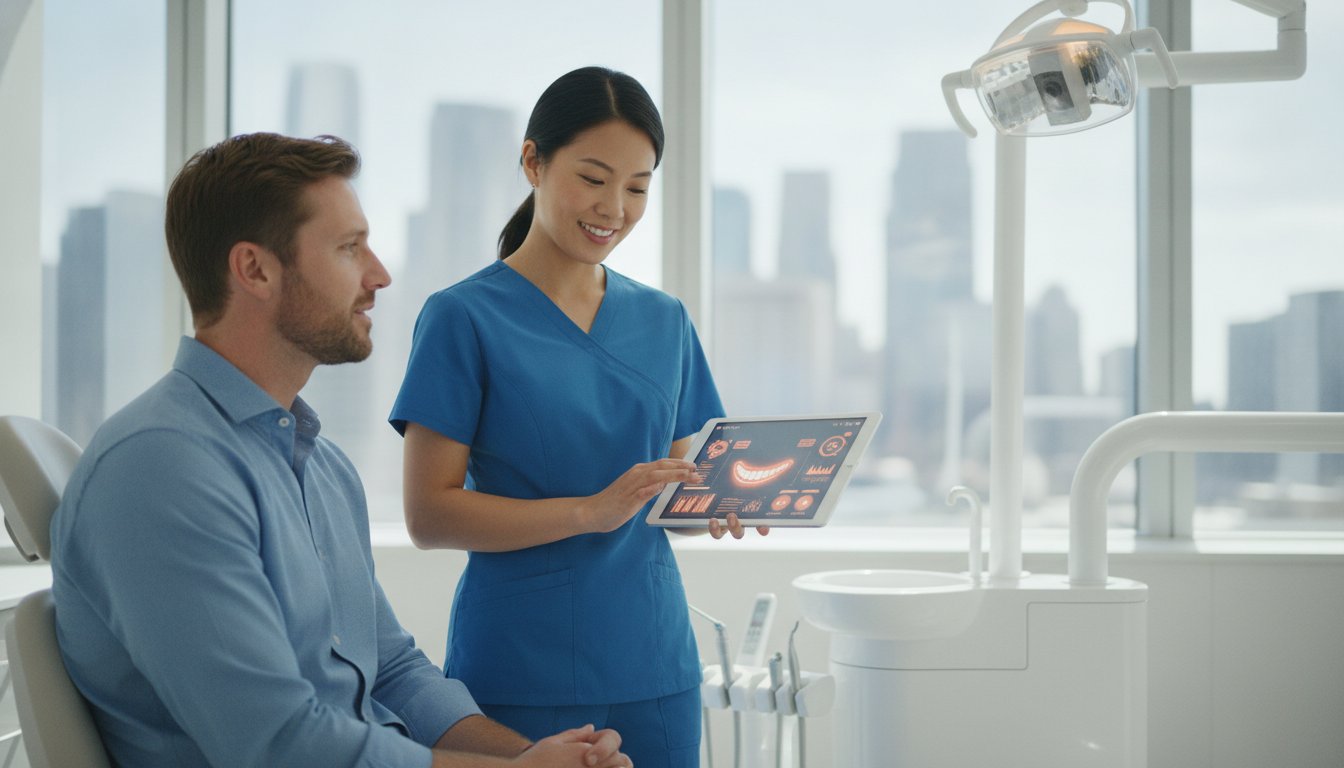
What if your front desk didn’t spend every Monday morning fielding panicked calls about post-extraction discomfort or forgotten antibiotic schedules? You likely agree that managing a high volume of emergency inquiries and inconsistent referral tracking is one of the most draining aspects of a modern clinical environment. It’s an exhausting cycle that doesn’t just stress your team; it creates documentation gaps that increase your clinical liability. Relying on a patient’s memory or a crumpled paper handout is no longer a viable professional standard, especially when modern dental patient engagement software offers a more systematic solution.
This guide explores how specialized engagement tools move beyond simple appointment reminders to become an essential clinical companion. You’ll learn how to leverage automated instructions in 15 languages, digital informed consent, and visual smile design tools to enhance treatment acceptance and patient compliance. We’ll provide a clear roadmap for using technology to reduce operational resistance, meet 2026 HIPAA security standards, and build a more secure, trust-based relationship with every patient in your chair.
Key Takeaways
- Learn how modern dental patient engagement software is evolving from a simple reminder tool into a comprehensive clinical ecosystem that supports the entire patient journey.
- Discover how implementing a standardized library of over 80 post-treatment templates can eliminate communication gaps during the critical first 24 hours after a procedure.
- Understand the legal and ethical necessity of providing informed consent in a patient’s primary language through automated 15-language support.
- Identify strategies to prevent referral leakage by streamlining the pipeline between general practitioners and specialists with integrated management tools.
- Evaluate the operational benefits and higher ROI of choosing a specialized clinical communication suite over a generic practice management software add-on.
Beyond Appointment Reminders: Redefining Dental Patient Engagement Software
Dental patient engagement software is no longer a luxury; it’s a clinical necessity. In 2026, we define it as a specialized ecosystem that facilitates clinical understanding, trust, and compliance throughout the entire patient journey. While older systems focused on the transactional side, filling the schedule and sending recall reminders, modern solutions prioritize the relational side. This means providing deep clinical support that follows the patient out of the operatory and into their home environment. By shifting the focus from mere attendance to actual clinical outcomes, you position your practice as a stabilizing force in a high-pressure healthcare setting.
This systematic approach relies on the psychological impact of standardized communication. When patients receive professional, structured follow-ups, their anxiety regarding post-operative recovery drops. It creates a sense of psychological security, moving them from the resistance of manual, often confusing instructions to the confidence of a standardized system. By utilizing a library of 80+ post-treatment templates, you ensure every patient receives the same high standard of care. You aren’t just sending a text; you’re delivering a professional promise of care that builds long-term retention and reduces the likelihood of emergency inquiries.
The Evolution of Patient Expectations in 2026
Modern patients have shifted their standards significantly. They don’t just want an appointment; they want 24/7 access to their clinical instructions through a dedicated patient portal. This transparency is a primary driver for long-term loyalty in both private practices and DSOs. When you provide clear, accessible data, you remove the ambiguity that often leads to patient dissatisfaction. This includes automated follow-ups in 15 languages, ensuring that linguistic barriers don’t compromise clinical safety. Providing this level of service isn’t just a marketing advantage; it’s an ethical and professional necessity.
Why Your PMS Isn’t a Full Engagement Solution
Many practitioners mistakenly believe their standard Practice Management Software (PMS) provides enough communication. However, a standard PMS is designed for billing and scheduling, not for clinical education or risk mitigation. While your Electronic Health Record (EHR) stores the raw clinical data, it rarely delivers it in a way that patients can digest or act upon. There are inherent communication gaps in these systems that lead to missed instructions and inconsistent consent documentation.
Specialized dental patient engagement software fills these gaps by offering a dedicated practice performance dashboard to track how well patients actually engage with their aftercare. This tool allows you to see which patients have opened their instructions and which might need a proactive follow-up. Using specialized tools reduces the administrative friction that typically causes staff burnout. Your team no longer spends hours repeating basic instructions over the phone or tracking down lost referral paperwork. To see how a specialized suite provides these advantages, you can explore the logic behind why PractCom is built specifically to serve as the essential clinical companion to your existing PMS.
Closing the Post-Treatment Communication Gap with Specialized Libraries
The first 24 hours after a dental procedure represent the “Forgotten Window” in many practices. This is the critical period when anesthesia wears off, questions about bleeding or discomfort arise, and patient anxiety levels peak. If your office relies on verbal instructions given while the patient is still in the chair or handing over a paper slip that will likely be lost in the parking lot, you’re leaving clinical success to chance. Implementing specialized dental patient engagement software allows you to bridge this gap by delivering precise, standardized instructions directly to the patient’s mobile device.
By utilizing a library of 80+ post-treatment templates, you ensure every patient receives the exact guidance they need without manual effort from your staff. This proactive approach significantly reduces the volume of after-hours emergency calls and the mental load on your team. When patients have clear instructions on pain management and what to expect during recovery, they feel supported and are less likely to panic. Automating the “Day-After” follow-up further strengthens this bond, catching minor complications before they escalate into serious clinical failures. You can view how these templates automate your clinical workflow to see the immediate impact on your practice efficiency and peace of mind.
Standardizing Clinical Instructions Across the Team
It’s common for different assistants and hygienists to explain post-operative care with varying degrees of detail. This variance creates confusion and increases your clinical liability if a patient claims they weren’t properly informed about risks. Digital delivery via SMS and email ensures that the information is permanent, legally documented, and easily accessible. As noted in the Patient Engagement Playbook, leveraging technology to provide health information is a key driver of improved outcomes and patient safety. Standardizing your post-op care yields a high ROI by reducing the total chair time required for unscheduled follow-up visits and troubleshooting appointments.
Visual Aids and the Smile Design Tool
Clinical connection isn’t just about text; it’s about visualization. Using “Before and After” cosmetic visualizations through a Smile Design tool helps patients understand the value of their treatment plan before they commit. This level of visual education is vital for managing expectations in complex restorative or surgical cases. When these visual aids are integrated into the patient portal, patients can review their potential results from the comfort of home, which significantly increases treatment acceptance rates. It transforms a complex, frightening procedure into a tangible, desirable goal, reinforcing the trust established during the initial consultation.
Solving the Language and Accessibility Barrier in Patient Care
Providing informed consent and aftercare instructions in a language the patient doesn’t fully grasp isn’t just a communication failure; it’s a significant legal liability. In a diverse healthcare environment, the ethical necessity of clear communication remains paramount. If a patient cannot understand the risks of a procedure or the steps for recovery, their consent is effectively compromised. This is why modern dental patient engagement software must prioritize linguistic accessibility. By offering automated support for 15 different languages, your practice moves beyond basic service to become a community-inclusive healthcare provider that values patient safety above all else.
Ensuring compliance with national standards for patient understanding requires a systematic approach. When you provide technical clinical data in a patient’s primary language, you alleviate the anxiety that often leads to non-compliance. This level of care establishes an immediate bond of shared professional experience, positioning your brand as a stabilizing force for families who might otherwise struggle to navigate the complexities of dental surgery. It transforms the practice into a guardian of the user’s reputation and legal standing by ensuring documentation is accurate and understood.
Multi-Language Support as a Growth Strategy
Expanding your practice’s reach into non-English speaking demographics is a powerful growth lever. By advertising that you provide full clinical support in multiple languages, you differentiate your practice from competitors who assume a mono-lingual patient base. This strategy reduces the frequency of clinical errors caused by linguistic misunderstandings during the delicate recovery phase. For larger groups, implementing these standards ensures that every location maintains the same high level of regulatory reassurance. You can explore how these features scale across large organizations by reviewing the capabilities of PractCom for DSOs.
The Case for Physical Printing in a Digital World
While 2026 is a digital-first era, ignoring the need for physical documentation creates a dangerous digital divide. Relying solely on digital portals can alienate specific demographics, making dental patient engagement software that includes physical printing options a more robust choice for comprehensive care. Many elderly or non-tech-savvy patients still require tangible aftercare instructions that they can keep on a bedside table or refrigerator.
A “Hybrid Delivery” model often works best in these scenarios. You can send a digital copy via SMS to a family caregiver for remote monitoring while providing a high-quality physical print directly to the patient. This dual approach ensures the information is never lost and remains accessible to everyone involved in the recovery process. Maintaining a professional brand image through standardized, printed documents also reinforces the value of the care provided, ensuring your practice remains grounded in the logistical realities of the profession.
Integrating Referral Management and Digital Consent for Risk Mitigation
Clinical security provides the foundation for a sustainable practice. While some tools prioritize online reviews to build marketing trust, your professional reputation is actually protected through rigorous documentation and seamless care transitions. Implementing dental patient engagement software that prioritizes these clinical safeguards moves your practice from a reactive state to one of systematic control. Centralizing your documentation creates a permanent paper trail for every clinical interaction; this ensures no detail is left to the limitations of human memory or disorganized filing systems.
A standardized approach to documentation alleviates the anxiety associated with regulatory compliance. By moving away from the resistance of manual tasks to the confidence of a standardized system, you protect both your patients and your license. This administrative warmth is essential in a high-pressure setting, as it ensures that no part of the professional communication process is left to chance. Using technical precision to manage these workflows allows your team to focus on care rather than chasing missing paperwork.
Protecting Your Practice with Digital Informed Consent
Ensuring every patient signs a legally robust, digital consent form before treatment begins is a professional necessity. Traditional paper files are prone to loss and lack the technical precision required for modern legal defense. Digital informed consent forms provide a superior alternative by utilizing digital signatures and precise time-stamping. This creates an immutable record that treatment risks were fully disclosed and accepted before any procedure began. These systems also offer the granular user access controls and comprehensive audit logs expected under 2026 HIPAA regulatory standards. You’ll find a deeper analysis of these requirements in our Digital Dental Informed Consent Forms: The 2026 Guide to Clinical Compliance.
Referral Tracking: Closing the Loop on Specialized Care
Referral leakage is a significant drain on both practice productivity and patient health. Data from 2026 shows that the average referral conversion rate for a solo dental practice is just 16.1%, whereas enterprise groups reach 25.5%. This discrepancy often stems from the use of physical referral slips that patients frequently lose or ignore. By automating the referral tracking process within your dental patient engagement software, you facilitate real-time communication between general dentists and specialists. This closed-loop system ensures patients actually schedule their specialized care, leading to improved clinical outcomes and stronger professional partnerships. You can explore strategies for optimizing these pipelines in our guide to Mastering Dental Referral Management Software in 2026.
To see how these tools can safeguard your clinical reputation, schedule a walkthrough of our referral management system.
Choosing the Right Engagement Platform: Specialized vs. Generic
Assessing the implementation friction of new dental patient engagement software is the first step toward clinical optimization. While some platforms attempt to serve as the “brains” of your entire practice, they often introduce technical complexity that overwhelms a busy team. Simplicity wins in a high-pressure environment because it ensures every staff member can use the system effectively. You need a solution that functions as a reliable professional ally, offering a pre-emptive strike against administrative failures without requiring weeks of specialized training.
Choosing the right platform involves moving beyond the basic features of your existing Practice Management Software. Specialized dental patient engagement software provides the technical precision and administrative warmth necessary to bridge the gap between complex procedures and patient understanding. During any software demo, you should prioritize specific questions to ensure the tool meets your clinical requirements:
- Does the system support automated delivery in all 15 languages?
- Are high-quality physical print options available for non-tech-savvy patients?
- How many specialized post-treatment templates are included in the library?
These markers transform a simple tool into an ethical necessity for your practice. Busy clinics can’t handle the operational disorganization that comes with fragmented communication systems.
The Hidden Costs of Generic PMS Texting Modules
Many practitioners rely on “included” texting modules, but these tools often lack the regulatory reassurance required in 2026. Generic systems frequently fail to meet proposed HIPAA Security Rule updates that mandate encryption for ePHI both at rest and in transit. They also suffer from “template fatigue” where patients ignore non-specific messages.
Specialized software pays for itself by reducing administrative hours spent on manual follow-ups.
By moving from the resistance of manual tasks to the confidence of a standardized system, you protect your professional reputation and your legal standing.
Implementation and Team Adoption
Successful rollout depends on appointing a “Communication Champion” within your practice to lead the transition. This individual ensures that the clinical-first communication model becomes a core part of your daily rhythm. A dedicated patient portal further stabilizes operations by drastically reducing the daily volume of status update phone calls. This creates a comprehensive ecosystem where no part of the communication process is left to chance. Ready to see the difference? Start your free trial with PractCom today.
Elevating the Standard of Clinical Connection
Modernizing your practice requires a shift from simple administrative reminders to a robust system of clinical support. You’ve seen how bridging the “Forgotten Window” of post-operative care and removing linguistic barriers can transform patient trust and compliance. By integrating digital informed consent and automated referral tracking, you don’t just improve efficiency; you create a protective shield for your professional reputation. Precision matters. Each interaction is an opportunity to reinforce your role as a reliable healthcare ally.
The right dental patient engagement software functions as a stabilizing force in the high-pressure environment of a busy clinic. It moves your team away from the stress of manual follow-ups and toward a standardized model of excellence. With a peer-developed library of over 80 clinical templates, HIPAA-compliant secure messaging, and support for 15 languages, PractCom provides the technical precision your practice deserves. This comprehensive approach ensures that no part of the professional communication process is left to chance.
Streamline your clinical communication; start your PractCom free trial now.
It’s time to replace operational resistance with systematic control and give your patients the clarity they need for a successful recovery. Your team and your patients will thank you for the consistency.
Frequently Asked Questions
What is the difference between dental patient engagement software and a PMS?
A Practice Management Software (PMS) focuses on the administrative backbone of your office, such as billing, scheduling, and basic patient records. In contrast, dental patient engagement software serves as a clinical communication suite designed to enhance the relationship between the provider and the patient. It bridges the gap between the operatory and the home by delivering standardized instructions and visual aids that a standard PMS often lacks.
How does automated post-op software reduce clinical liability?
Automated software reduces clinical liability by creating an immutable, time-stamped record of every instruction delivered to the patient. You don’t have to worry about whether an assistant remembered to explain a specific risk or if a paper handout was lost. Standardizing your post-treatment templates ensures that every patient receives legally robust information. This provides your practice with a verifiable audit trail that protects your reputation in the event of a dispute.
Can dental engagement software really help with non-English speaking patients?
Yes, specialized engagement software is designed specifically to solve linguistic barriers through automated support for 15 different languages. You can deliver post-treatment instructions, consent forms, and follow-up messages in the patient’s primary language via SMS or email. This level of accessibility ensures that non-English speaking patients fully understand their recovery requirements. It transforms your practice into a more inclusive healthcare provider while significantly reducing the risk of complications caused by misunderstandings.
Is digital informed consent as legally binding as a paper signature?
Digital informed consent forms are legally binding and often provide better protection than traditional paper signatures. These digital records include precise time-stamping and digital signatures that are difficult to dispute in a legal setting. They also support 2026 HIPAA standards by offering granular access controls and comprehensive audit logs. Moving to a digital system ensures your documentation is always legible, organized, and securely stored within your clinical ecosystem.
How does a referral management system prevent patient leakage?
A referral management system prevents leakage by moving away from physical referral slips that patients frequently lose or ignore. It creates a real-time communication channel between the general practitioner and the specialist to ensure the patient actually schedules their appointment. You can track the status of every referral and receive notifications when care is completed. This closed-loop process keeps patients within your trusted network and ensures they receive the specialized treatment they need.
Does patient engagement software require a long-term contract?
Contract terms vary by provider, so you should always verify the specific agreement before signing. Many modern platforms offer flexible, month-to-month subscriptions to reduce the financial risk for your practice. These services often provide a free trial to demonstrate their clinical value before you commit to a long-term plan. This approach allows you to assess the software’s impact on your workflow and patient satisfaction without a heavy upfront investment.
Will my dental team find it difficult to learn a new communication platform?
Most dental teams find modern engagement platforms very intuitive because they are designed to reduce administrative friction rather than add to it. A well-designed system simplifies complex tasks like multi-language translation and referral tracking into a few clicks. Appointing a “Communication Champion” in your office can further streamline the rollout process. When your staff sees how much time they save on repetitive phone calls, they usually embrace the new system quickly.
Can I use engagement software if my practice is already paperless?
Yes, even a paperless practice can benefit from specialized dental patient engagement software. While your PMS might handle digital records, it often lacks the specialized clinical libraries and automated follow-up features needed for comprehensive care. This software acts as a clinical companion that enhances your paperless workflow. It provides the tools for visual education and multi-channel communication that standard electronic health records don’t offer.

Article by
Cary Ganz DDS
Dr. Cary H. Ganz is a dentist, prosthodontist, entrepreneur, lecturer, and author with more than 50 years of experience in clinical dentistry and dental technology. Throughout his career, he has combined hands-on patient care with a deep understanding of how technology can improve dental practice operations, communication, documentation, and patient outcomes.
In addition to his clinical background, Dr. Ganz has held significant leadership roles in the dental technology industry, including Past Owner and Vice President of Clinical Affairs at DEXIS Digital Radiography and Past Vice President of Clinical Affairs at Denticon Practice Management Software. His business experience includes product development, clinical strategy, dental software innovation, practice management solutions, and educating dental professionals on the effective use of technology in modern dentistry.
Today, Dr. Ganz continues to focus on creating practical technology solutions for dental practices, including PractCom, a comprehensive dental practice communication platform designed to improve patient communication, documentation, compliance support, referrals, and overall practice efficiency. His work reflects a career-long commitment to helping dentists deliver better care while making their practices more organized, efficient, and protected.
No responses yet