
The first sixty minutes after a patient leaves your chair shouldn’t be a “black hole” where clinical instructions are forgotten and administrative burnout begins. You likely recognize the drain of a Monday morning filled with avoidable “emergency” calls simply because a patient misplaced their paper post-op instructions. It’s a common point of friction that strains your staff and compromises the recovery process.
Implementing automated patient follow-ups transforms this vulnerability into a standardized clinical safety net. You can maintain the personal touch your patients expect while ensuring every individual receives timely, encrypted guidance that meets the strict 2026 HIPAA Security Rule mandates. This article demonstrates how a systematic approach eliminates the “Golden Hour” communication gap, reduces non-emergency chair time, and provides the documented legal protection your practice requires. We will explore a real-world case study of how dental teams are using these tools to reclaim hours of administrative time while actually improving patient recovery outcomes.
Key Takeaways
- Identify why the 48-hour post-treatment window is a critical risk zone and how systematic oversight prevents missed clinical red flags.
- Learn why SMS-based communication delivers higher engagement than traditional email, ensuring patients actually adhere to their aftercare instructions.
- Discover how automated patient follow-ups can drastically cut the volume of anxiety-driven phone calls while strengthening patient trust.
- Understand how to integrate a specialized communication suite into your workflow without the complexity of a full Practice Management Software (PMS) overhaul.
- Explore the benefits of using a library of over 80 pre-built templates to standardize post-treatment excellence across every clinical procedure.
The Post-Treatment “Black Hole”: Why Manual Patient Follow-ups Compromise Dental Care
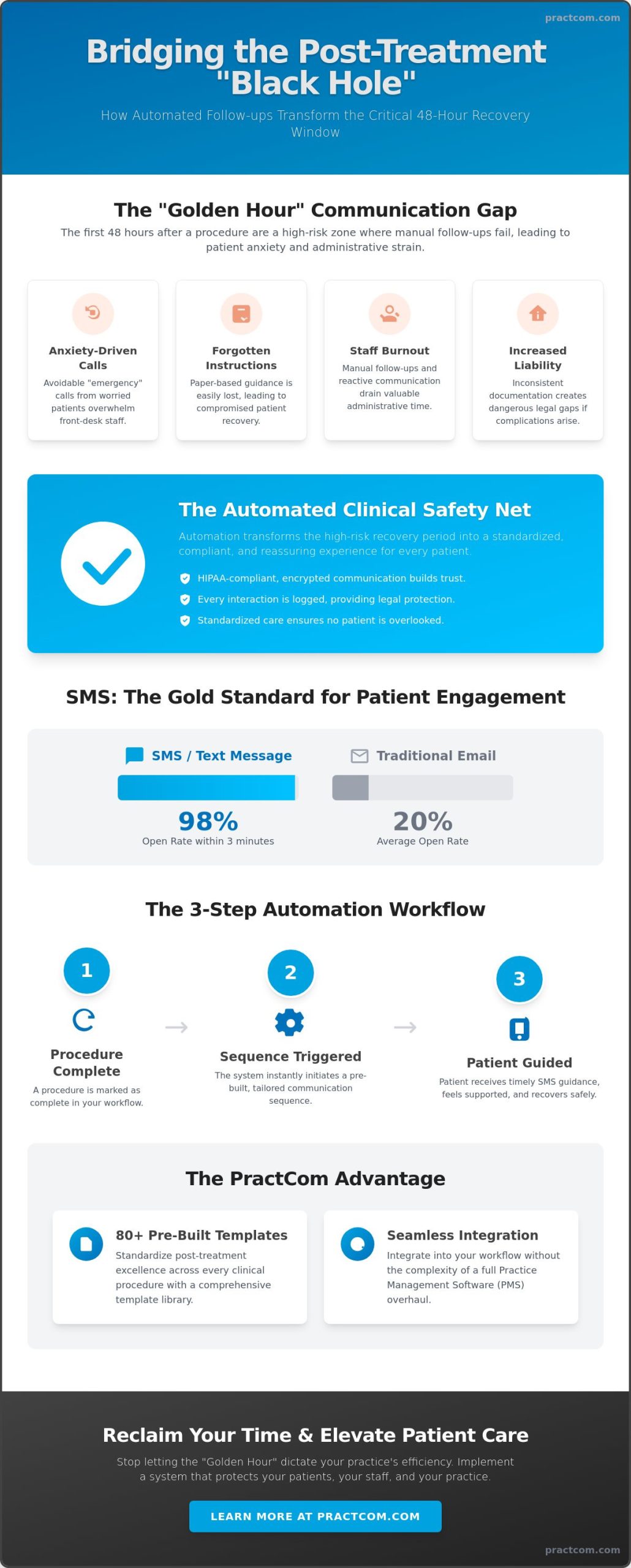
The first 48 hours following a complex dental procedure represent a high-risk zone for both the patient and the practice. We call this the post-treatment “Black Hole.” It is the specific period when localized anesthesia fades, post-operative discomfort peaks, and patient anxiety often transitions into panic. When a practice relies on manual follow-up logs, this window becomes a source of operational instability. Human memory is fallible. A busy afternoon at the front desk can easily lead to a missed check-in. These inconsistencies don’t just affect patient satisfaction. They allow clinical red flags, such as post-extraction infections or implant site complications, to go unnoticed until they become genuine emergencies.
Integrating automated patient follow-ups provides a structured remedy to this chaos. By moving from a reactive model to a standardized system, you establish a sense of regulatory reassurance. It ensures that every patient receives the same high level of care, regardless of how busy the office is, while maintaining the encryption standards required by the 2026 HIPAA Security Rule updates. This systematic control offers psychological security for the practitioner. You can rest easy knowing that the “Golden Hour” of recovery is being monitored by a reliable digital ally.
The High Cost of Reactive Communication
Unscheduled “check-in” calls from worried patients are a significant drain on front-desk productivity. When a patient feels uncertain about their recovery, their first instinct is to call the office. These calls often interrupt the clinical flow for non-emergency questions. This reactive cycle forces your staff into a defensive posture. Beyond the loss of time, manual follow-up systems create dangerous gaps in documentation. If a complication arises and your records don’t show a timely post-op check, your practice faces increased liability. A proactive system for automated patient follow-ups ensures that every interaction is logged. This provides the legal protection necessary in a modern clinical environment.
Bridging the Gap Between Chairside and Recovery
The transition from the dental chair to the home environment is often where clinical trust is tested. Patients who receive proactive, timed communication feel a profound sense of support that manual systems simply can’t replicate at scale. This is where Telehealth technologies play a vital role by allowing practices to extend their reach beyond the physical office. By Mastering Dental Patient Communication, you transform a routine follow-up into a powerful tool for building long-term loyalty. This proactive clinical safety net ensures that patients feel heard and protected. It reduces the friction of the recovery process and reinforces your reputation as a forward-thinking provider.
The Mechanics of Modern Automation: How Digital Aftercare Closes the Loop
Modern automation doesn’t replace your clinical team; it amplifies their reach during the most critical stages of recovery. The process operates on a sophisticated trigger-based system. When a procedure is marked as complete in your workflow, the system immediately initiates a tailored sequence of communications. This eliminates the need for staff to manually track follow-up logs or remember which patient needs a check-in. The Agency for Healthcare Research and Quality emphasizes the importance of patient follow-up as a cornerstone of clinical safety. By automating this cycle, you ensure that every patient receives a standardized “digital handshake” that guides them through the initial hours of healing.
While email serves as a valuable repository for long-form records, SMS is the gold standard for immediate engagement. Patients are far more likely to open a text message within minutes of receipt compared to an email that might sit in a crowded inbox. Under 2026 TCPA guidelines, these messages are designed to be concise and procedure-specific. This ensures your practice remains compliant while providing the instant clarity patients crave. You can explore how these triggers function in your practice to see the immediate impact on staff workload.
Standardizing the Message, Personalizing the Care
Consistency is the foundation of clinical excellence. Using a library of over 80 pre-built templates ensures that every patient receives the exact same high standard of instruction, regardless of which staff member is on duty. These automated patient follow-ups also account for patient preference. While digital delivery is the default, integrated printing capabilities allow you to provide physical documentation for those who find comfort in a paper trail. To protect your practice’s reputation, 10DLC registration is utilized for all SMS campaigns. This technical standard ensures high deliverability and prevents your critical aftercare messages from being flagged as spam by mobile carriers.
Multi-Language Support as a Clinical Requirement
True informed consent is impossible if a patient cannot understand their aftercare instructions. In diverse communities, providing 15-language support isn’t just a courtesy; it’s a clinical requirement. Implementing automated dental post-op instructions in a patient’s native tongue removes linguistic barriers that often lead to non-compliance. When instructions are clear, the risk of post-op complications drops significantly. For most US-based practices, the most critical languages to support include:
- Spanish
- Mandarin and Cantonese
- Vietnamese
- Tagalog
- Arabic
By providing automated patient follow-ups in these languages, you bridge the gap between complex professional procedures and general patient understanding. This level of care fosters deep clinical trust and ensures that your practice stands out as a protective, forward-thinking ally in the patient’s health journey. A modern approach to dental patient education recognizes that linguistic accessibility is not optional — it is a foundational requirement for genuine informed consent and post-operative compliance.
Case Study Analysis: Quantifying the Impact of Automated SMS Follow-ups
Consider a typical three-chair practice processing forty procedures a week. Before adopting a systematic approach, the lead dental assistant spent approximately ninety minutes each morning on manual outreach. This fragmented effort was often interrupted by chairside duties, leaving several patients without a post-operative check-in. By implementing automated patient follow-ups, the practice replaced this operational disorganization with a reliable digital safety net. Within the first month, the administrative burden shifted from active calling to passive oversight. This allowed the clinical team to focus on high-value patient interactions instead of playing phone tag with recovering patients.
The impact on the front desk was immediate. Anxiety-driven phone calls, which typically peak in the 24 to 48 hours following a procedure, saw a measurable and significant decrease. Because patients received proactive guidance via SMS, they didn’t feel the need to call the office to ask if their swelling was “normal.” This reduction in “noise” allowed the office manager to focus on scheduling and billing, which are critical for practice performance. Patient satisfaction scores also showed a marked improvement, as individuals felt a higher level of clinical support during their recovery.
Metrics of Success: Beyond the Open Rate
Success in post-treatment automation is measured by “Loop Closure.” This is the percentage of patients who interact with the message to confirm they have read and understood their instructions. In our case study practice, loop closure rates reached nearly 100 percent because the system utilized procedure-specific triggers. This standardized approach directly impacts the bottom line by reducing the volume of non-essential post-op visits. While automated reminders have already been shown to reduce no-shows by an average of 22.95 percent according to recent industry data, follow-up automation provides a similar efficiency boost on the back end of the clinical cycle. On average, the practice reclaimed five to seven hours of administrative time per week, providing a clear and immediate return on investment.
The Patient Perspective: Trust and Compliance
From the patient’s point of view, receiving a timed text message feels like an extension of the doctor’s care. It bridges the gap between the clinical environment and the home, fostering a deeper sense of security. This level of proactive support is a cornerstone of The Dental Patient Experience, where trust is built through consistent and clear communication. Patients also appreciated the convenience of the patient portal, which allowed them to access their specific instruction library at any time. This self-service model ensures that health literacy remains high and recovery outcomes stay on track without requiring a single phone call from your staff.
Overcoming Implementation Friction: Integrating Automation into the Dental Workflow
Software fatigue is a reality in the modern clinic. You don’t need another complex system that requires weeks of staff training. The primary objection we hear from practitioners is the fear of adding operational weight to an already strained team. It is vital to clarify that a specialized communication suite is not a full Practice Management Software (PMS). Instead, it functions as a high-utility layer that sits on top of your existing database. By focusing exclusively on the patient interaction cycle, these tools eliminate the “Black Hole” of recovery without forcing you to migrate your clinical records or billing data.
A dedicated platform for automated patient follow-ups is designed to complement systems like Dentrix or Eaglesoft. It bridges the gap between your chairside notes and the patient’s home environment. When evaluating an automation partner, you should prioritize clinical relevance over generic marketing features. Use the following checklist to ensure the tool meets the specific demands of a dental environment:
- Does it offer a library of procedure-specific instructions (extractions, implants, endo)?
- Is the messaging fully encrypted to meet the 2026 HIPAA Security Rule updates?
- Does it provide automated 10DLC registration to ensure high SMS deliverability?
- Can it deliver instructions in multiple languages to support health literacy?
If you are ready to see how a streamlined system reduces administrative resistance, schedule a brief walkthrough of the platform today.
The Performance Dashboard: Monitoring Practice Health
You cannot manage what you do not measure. The Practice Performance Dashboard provides a real-time view of your communication ecosystem. It tracks engagement rates and confirms that automated patient follow-ups are being delivered as intended. This level of systematic oversight also extends to referral management, ensuring that no patient falls through the cracks when transitioning to a specialist. To see how these features stack up against generic engagement tools, visit our PractCom Comparison page for a detailed breakdown of clinical versus administrative capabilities.
Scaling for DSOs and Multi-Location Groups
For Dental Support Organizations (DSOs), maintaining a uniform clinical voice across dozens of branches is a significant challenge. Centralized automation allows you to standardize post-treatment excellence at scale. You can deploy identical instruction templates across every location, ensuring that your brand’s reputation for care remains consistent. This centralized control reduces the risk of manual errors at the local level and provides a “proactive clinical safety net” for the entire organization. Learn more about our specialized solutions on the PractCom for DSOs page.
The PractCom Advantage: Standardizing Post-Treatment Excellence at Scale
Moving from operational disorganization to systematic control is more than a technical upgrade; it’s a commitment to professional peace of mind. As we’ve explored, the manual follow-up logs of the past are a significant liability in the modern clinic. They lead to inconsistent care, administrative burnout, and missed clinical signals that can escalate into emergencies. PractCom replaces this friction with a comprehensive ecosystem that bridges the gap between the dental chair and the patient’s home recovery. By utilizing automated patient follow-ups, you ensure that every individual receives procedure-specific guidance that reflects the high clinical standards of your practice.
The core of this advantage lies in our library of over 80 pre-built templates. Whether you’re managing a routine extraction or a complex multi-stage implant case, the system delivers the right information at the exact moment it’s needed. For routine extractions in particular, using a standardized post-extraction instructions template ensures patients receive clinically accurate, compliance-driving guidance that reduces the risk of complications and unnecessary callbacks. This level of specificity addresses the unique nuances of dental care that generic medical platforms often ignore. It transforms a simple check-in into a robust clinical safety net that protects both the patient’s health and the practice’s reputation. This systematic approach allows your team to move from a defensive, reactive posture to one of proactive oversight and administrative warmth.
A Guardian of Your Clinical Reputation
Standardized systems act as a vital fail-safe for patient care. When you eliminate the risk of human memory failure, you protect your professional standing and your legal documentation. The long-term ROI of a practice that never lets a patient “fall through the cracks” is found in higher retention rates and significantly reduced liability. It creates a psychological security for the practitioner that is invaluable in a high-pressure setting. You shouldn’t have to wonder if a patient understood their aftercare instructions while you’re focused on your next surgery. If you’re ready to experience this level of systematic control and regulatory reassurance, you can Start a Free Trial to see the system in action.
Next Steps for the Modern Practice
Transitioning to a proactive communication model doesn’t require a multi-month implementation project. You can begin standardizing your automated patient follow-ups this week by following a simple three-step plan. First, audit your current post-op communication to identify consistent gaps or patterns in “emergency” phone calls. Second, select the relevant templates from our extensive library of 80+ dental procedures to ensure clinical accuracy across all cases. Third, integrate the automated triggers into your daily workflow to close the loop on every patient interaction. The platform is designed for ease of use, allowing your staff to complete complex tasks like sending multi-language instructions in just 2 clicks. This efficiency allows you to maintain a modern, tech-savvy presence without the logistical burden of manual logs. Learn more about the PractCom mission and how we function as your dedicated professional ally in the pursuit of clinical excellence.
Standardizing Your Clinical Safety Net for 2026
The transition from manual follow-up logs to a standardized communication ecosystem is an essential evolution for any modern dental practice. You’ve seen how bridging the post-treatment “Black Hole” protects your clinical reputation while reclaiming hours of administrative time every week. By implementing automated patient follow-ups, you provide your team with the psychological security of a fail-safe system and your patients with the technical precision they deserve.
With access to over 80 procedure-specific templates and support for 15 languages, you can ensure health literacy across your entire patient base without increasing staff workload. Integrating these tools alongside a dedicated referral management system transforms your practice into a protective, forward-thinking ally for every individual in your care. It’s time to move beyond the limitations of human memory and embrace the efficiency of a high-utility digital safety net. Effective dental patient education in 2026 demands that practices replace passive paper handouts with systematic, automated delivery of clinical intelligence that drives real compliance outcomes.
Streamline your practice with PractCom—Start your free trial today. You’re just a few clicks away from a more organized, compliant, and empathetic clinical environment.
Frequently Asked Questions
How do automated patient follow-ups improve clinical outcomes?
Automated patient follow-ups improve outcomes by ensuring 100 percent consistency in the delivery of post-operative instructions. This systematic approach eliminates the risk of human memory failure, which often leads to missed check-ins. By providing timely, procedure-specific guidance, you reduce the likelihood of patient non-compliance and catch potential clinical red flags before they become emergencies.
Can I customize the follow-up messages for different dental procedures?
You can fully customize every message to match the specific nuances of different dental procedures. Our platform provides a library of over 80 pre-built templates for everything from routine extractions to complex implant surgeries. This ensures the instructions are always clinically relevant to the patient’s exact recovery needs rather than a generic medical check-in.
Is automated patient communication HIPAA compliant?
Yes, modern systems are built to exceed the 2026 HIPAA Security Rule mandates, which require full encryption for all electronic protected health information (ePHI). This encryption applies both when data is at rest and while it is in transit. Using a dedicated platform provides the regulatory reassurance you need to protect your practice from documentation gaps and liability risks.
Do patients find automated follow-up messages too impersonal?
Most patients perceive these messages as a proactive extension of your clinical care rather than impersonal automation. Receiving a timed check-in during the “Golden Hour” of recovery makes individuals feel supported and protected once they leave your chair. It bridges the communication gap that often leads to patient anxiety, fostering a stronger bond of clinical trust.
How does an automated follow-up system integrate with my existing dental PMS?
The system functions as a specialized communication layer that sits on top of your existing Practice Management Software (PMS) like Dentrix or Eaglesoft. It is not a full PMS replacement. Instead, it uses procedure-completion triggers to initiate the follow-up sequence. This ensures a seamless workflow that doesn’t require you to migrate your clinical records or billing data.
What happens if a patient responds to an automated follow-up with a clinical concern?
If a patient responds with a specific concern, the system immediately routes that communication to your practice performance dashboard for staff review. This allows for rapid human intervention when a genuine clinical issue arises. Automation handles the routine “check-in” tasks, while your team remains focused on the high-priority cases that require professional judgment.
Can these follow-ups be sent in languages other than English?
Yes, the platform supports automated communication in 15 different languages to ensure health literacy across diverse patient populations. Providing instructions in a patient’s native tongue is a critical component of true informed consent. It removes linguistic barriers that often lead to post-operative complications and ensures that every patient understands their recovery protocol.
How much time can my staff realistically save with automated follow-ups?
A typical mid-sized practice can reclaim five to seven hours of administrative time per week by eliminating manual follow-up logs. This shift allows your lead assistants and office managers to focus on high-value chairside duties instead of playing phone tag with recovering patients. The reduction in avoidable, anxiety-driven phone calls further stabilizes your daily clinical schedule.

Article by
Cary Ganz DDS
Dr. Cary H. Ganz is a dentist, prosthodontist, entrepreneur, lecturer, and author with more than 50 years of experience in clinical dentistry and dental technology. Throughout his career, he has combined hands-on patient care with a deep understanding of how technology can improve dental practice operations, communication, documentation, and patient outcomes.
In addition to his clinical background, Dr. Ganz has held significant leadership roles in the dental technology industry, including Past Owner and Vice President of Clinical Affairs at DEXIS Digital Radiography and Past Vice President of Clinical Affairs at Denticon Practice Management Software. His business experience includes product development, clinical strategy, dental software innovation, practice management solutions, and educating dental professionals on the effective use of technology in modern dentistry.
Today, Dr. Ganz continues to focus on creating practical technology solutions for dental practices, including PractCom, a comprehensive dental practice communication platform designed to improve patient communication, documentation, compliance support, referrals, and overall practice efficiency. His work reflects a career-long commitment to helping dentists deliver better care while making their practices more organized, efficient, and protected.
No responses yet