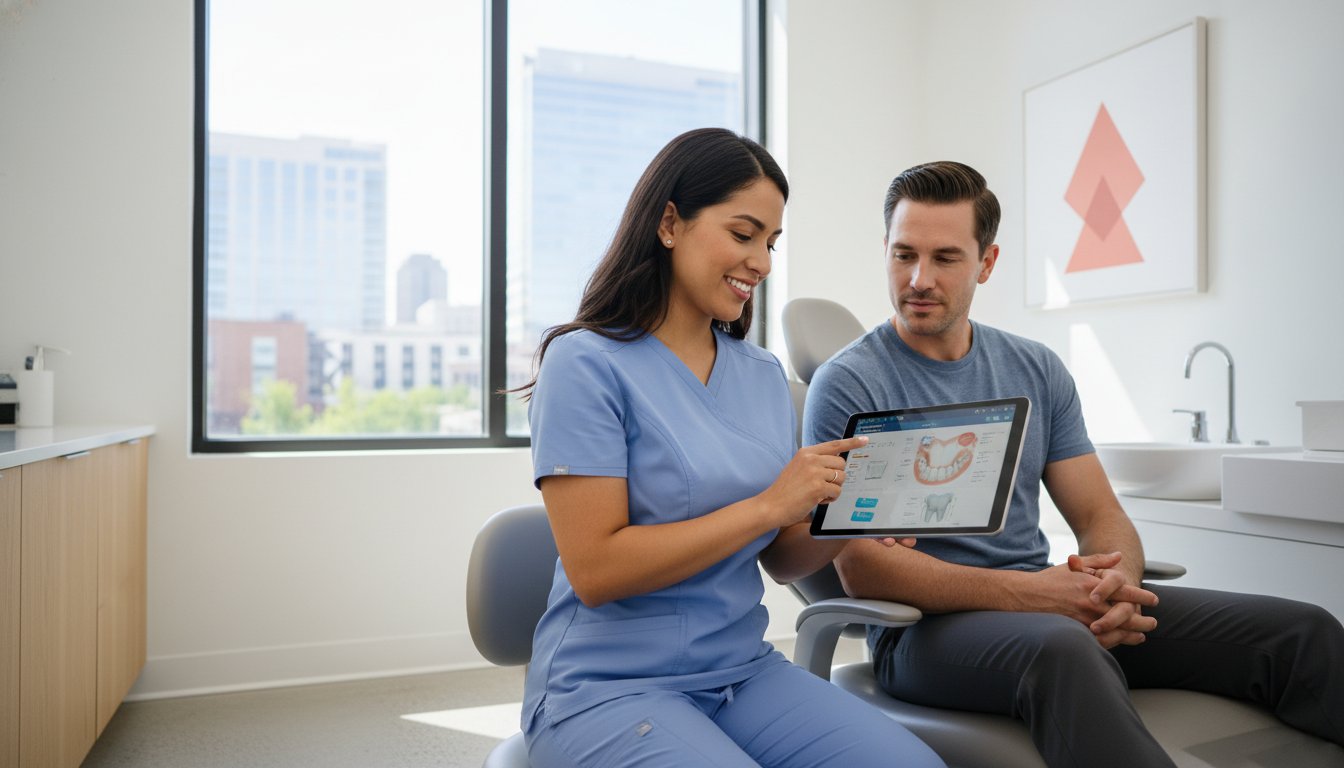
Did you know that 27.7% of patients report switching dentists specifically because of poor communication? When you consider that the average practice misses 35% of incoming calls, it becomes clear that dental patient communication is more than just a soft skill; it’s a clinical safety net. You likely feel the daily pressure of a team stretched thin, where forgotten post-op instructions lead to avoidable emergency calls and inconsistent documentation creates unnecessary medico-legal risks. It’s frustrating to watch your front desk struggle with a chaotic workflow that compromises the patient experience.
This guide will show you how to transform that friction into a standardized system that protects your practice and your peace of mind. You’ll learn how to operationalize your outreach to ensure every patient receives vetted instructions in their preferred language while meeting the critical February 16, 2026, HIPAA NPP update deadline. We’ll explore how to implement a frictionless Standard of Care for all digital interactions. Why it’s critical: because moving from manual chaos to a standardized system is the only way to increase case completion rates, which rose to 47% industry-wide in 2026 through better patient follow-through.
Key Takeaways
- Audit your clinical touchpoints to replace verbal chaos with a standardized, centralized instruction library that every team member can access instantly.
- Optimize your dental patient communication by delivering automated, multi-channel instructions in 15+ languages to improve treatment acceptance and aftercare compliance.
- Establish a secure “Consent-to-Aftercare” loop that links digital informed consent with post-op follow-ups to mitigate medico-legal risks and “failure to warn” claims.
- Learn why a specialized communication system provides more robust clinical protection and documentation than basic practice management software modules alone.
- Eliminate administrative friction and reduce avoidable emergency calls by providing patients with 24/7 access to their treatment details via a dedicated portal.
The Evolution of Dental Patient Communication in 2026
Dental patient communication has transformed from a front-office courtesy into a rigorous clinical requirement. In 2026, the industry views communication as the vital bridge between a successful treatment plan and actual patient compliance. The Evolution of Dental Patient Communication shows that when patients understand the “why” behind their aftercare, clinical outcomes improve dramatically. However, the physical reality of the dental chair remains a hurdle. Research indicates that patients forget 80% of clinical details the moment they leave your office. The stress of the procedure, combined with residual anesthesia, creates a mental fog that makes verbal instructions nearly useless for long-term recovery.
Modern practices are moving away from the chaos of verbal-only advice and toward the control of digital documentation. This transition defines the new 2026 standard of “Frictionless Communication.” It’s about removing the barriers that prevent a patient from following your advice. If a patient can’t find their instructions, they won’t follow them. Why it’s critical: Effective communication acts as a clinical safety net that protects both the patient’s health and the practice’s reputation. You can learn more about how this system stabilizes a chaotic office environment by exploring why PractCom is essential for modern workflows.
Why Traditional Handouts are Failing Your Practice
Paper-based systems are no longer sustainable or effective. Beyond the environmental impact, physical handouts carry a heavy administrative cost. Staff spend hours printing, folding, and handing out slips that often end up in a car floorboard or a trash can before the patient even gets home. This “lost instruction” problem is a major driver of avoidable after-hours phone calls. More importantly, paper offers no delivery log. If a patient claims they were never told how to manage a surgical site, you have no digital proof to defend your protocol. This creates a significant medico-legal vulnerability that modern practices can’t afford to ignore.
The Shift from Soft Skill to Clinical Protocol
Communication is no longer just a soft skill; it’s a clinical protocol as vital as sterilization. For example, clear, automated instructions on avoiding straws or smoking are the primary defense against dry socket after an extraction. When communication is standardized, it becomes a predictable part of the procedure rather than an afterthought. We now define robust communication as a “Standard of Care” requirement in modern dentistry. By implementing a system that sends vetted, consistent instructions every time, you gain the peace of mind that comes with knowing no detail was missed. It moves your team from a state of reactive chaos to proactive control, ensuring every provider delivers the same high-quality advice without adding friction to your day.
How to Standardize Clinical Communication Across Your Team
Standardizing dental patient communication requires moving beyond individual provider habits and toward a unified Clinical SOP. You should begin by auditing every touchpoint in your workflow, from the initial pre-op consultation to the critical 24-hour follow-up mark. This audit often reveals a “communication gap” where patients receive conflicting verbal advice or lose physical paper slips. By establishing a Centralized Instruction Library, you ensure that every provider, from the lead clinician to the newest hygienist, delivers the exact same vetted advice. How to Standardize Clinical Communication research supports that consistency is the foundation of patient trust and medico-legal safety. It transforms a “soft skill” into a measurable clinical protocol.
Efficiency is the second pillar of this standard. We recommend training your team on the “Five-Click” rule: sending a complete post-op packet should take less than 60 seconds. If your current workflow involves manual typing, searching for PDFs, or photocopies, you’re adding friction to your day. Why it’s critical: Staff are already stretched thin; a complex system will be ignored, leading the team back to the chaos of verbal-only instructions. You can streamline your team’s workflow today to eliminate this administrative burden and replace manual “wellness calls” with automated patient follow-ups that are tracked and documented.
Creating Your Post-Treatment Instruction Library
Your library should prioritize high-risk or high-frequency procedures to have the most immediate impact. Focus on creating standardized templates for RCT, extractions, implants, perio maintenance, and crown preparations. These templates must use “plain language” rather than dense clinical jargon. If a patient doesn’t understand terms like “hemostasis” or “vasoconstriction,” they won’t know how to manage a surgical site effectively. For extractions specifically, using a proven post-extraction instructions template ensures patients receive clear, compliant aftercare guidance that reduces complications and emergency callbacks. Learn how PractCom helps you standardize your instruction library with vetted templates that patients actually understand and follow.
Training Your Team for Consistency
Moving from individual provider styles to a unified practice voice requires transparency and data. Use a performance dashboard to track which instructions are being sent and, more importantly, which ones are being opened and read by patients. This visibility allows you to identify gaps in your follow-up protocols before they result in emergency calls. Additionally, establish a clear protocol for referral management. Many patients fall through the cracks when transitioning to a specialist; a standardized digital referral ensures the patient remains within your care ecosystem. This approach elevates communication to a true “Standard of Care” that protects your practice’s legal standing while improving clinical outcomes.

Implementing Multi-Language and Multi-Channel Delivery
Modern dental patient communication requires a multi-faceted approach because your patient base isn’t a monolith. While 98% of SMS messages are opened, some older demographics still rely on the permanence of a printed document or the detail of an email. In 2026, a truly frictionless practice offers all three. However, digital delivery now comes with strict technical hurdles. You must ensure your practice has completed 10DLC registration for all SMS outreach. Without this 10-digit long code verification, carriers will likely flag your post-op instructions as spam, leaving your patient without guidance. Why it’s critical: A blocked message isn’t just an IT glitch; it’s a breakdown in the Standard of Care that can lead to surgical complications.
To solve the “lost document” problem, a secure Patient Portal acts as a 24/7 clinical anchor. Instead of digging through an overflowing inbox, patients can access their specific instructions, informed consent forms, and referral details via a single, encrypted link. This centralized access eliminates the friction of manual requests and ensures that clinical documentation is always available when the patient needs it most, such as at 11:00 PM when they’re unsure about post-extraction swelling. It moves the practice away from reactive phone calls and toward a model of patient self-service and empowerment.
Breaking the Language Barrier in Clinical Care
Offering instructions in 15+ languages is no longer a luxury; it’s a business and clinical necessity. Diverse patient populations often struggle with complex clinical jargon when it’s delivered only in English. This gap significantly increases the risk of post-op complications like infection or dry socket. While it’s tempting to use tools like Google Translate, they’re notoriously unreliable for medical nuances and don’t meet the requirements for vetted medico-legal documentation. Using professionally translated templates ensures that a patient receiving an RCT or an implant understands every step of their recovery in their native tongue, providing you with the peace of mind that your instructions are actually understood.
Optimizing SMS and Email for High Open Rates
High open rates depend on timing and simplicity. Send your SMS post-op packet the moment the patient leaves the chair so it’s the first thing they see when they check their phone. These messages should be concise and include a direct, frictionless link to a secure portal. Bridging the Gap Between Informed Consent and Compliance requires that these digital interactions remain HIPAA-compliant at every stage. This means avoiding unencrypted sensitive data in the body of the text and instead using secure, authenticated access points. For a deeper dive into the technical setup, read our guide on SMS post-op instructions to see how automation can replace manual staff tasks.
Bridging the Gap Between Informed Consent and Compliance
Effective dental patient communication doesn’t end when the patient signs a form; it’s a continuous “Consent-to-Aftercare” loop. This loop ensures that the risks discussed during the informed consent phase are actively mitigated by the patient’s actions during recovery. If a patient signs a form acknowledging the risk of infection but loses their physical post-op slip, your practice remains vulnerable to “failure to warn” claims. Why it’s critical: A signature only proves they were told; a digital delivery log proves they had the tools to comply. By linking consent directly to automated aftercare, you create a legal and clinical safety net that protects your reputation.
Visual aids play a massive role in this process. Tools like Smile Design, which show before-and-after cosmetic changes, do more than just improve treatment acceptance. They provide a visual goal that motivates the patient to follow strict aftercare protocols to protect their investment. When a patient sees the final result before the procedure starts, their psychological “buy-in” increases, leading to better compliance with complex instructions for RCT or implant recovery. It transforms the procedure from a clinical necessity into a shared goal between you and the patient.
You might worry that digital systems are too complex for your older patient base. However, data from 2025 shows that simplified “One-Click” digital access actually improves accessibility for elderly patients compared to reading small-print paper handouts. A clear text message with a direct link to a portal removes the friction of physical filing and ensures the information is always available on a device they already use. It’s about meeting the patient where they are, without adding friction to your day.
Digital Informed Consent as Risk Management
Modern risk management requires more than a filing cabinet full of paper. Digital informed consent forms provide time-stamped, tracked delivery logs that prove exactly when a patient received and reviewed their documents. This level of transparency is now considered a Standard of Care in modern dentistry. It eliminates the “he-said-she-said” chaos that often accompanies clinical disputes. Check our FAQ on digital consent and compliance to see how these systems protect your practice from documentation gaps.
Reducing Emergency Calls with Proactive Aftercare
Standardized, automated patient follow-ups can reduce “avoidable” after-hours phone calls by up to 40% by answering common questions before the patient feels the need to call. This includes “Premedicate” instructions sent via SMS to ensure patient safety and compliance before they even arrive for their appointment. By using automated follow-ups to check on a patient 24 hours post-procedure, you can catch minor complications like persistent oozing or mild swelling before they escalate into true emergencies. Start your journey toward frictionless aftercare and reclaim your team’s time from the phone lines.
Transforming Communication into Practice Growth with PractCom
PractCom acts as your practice’s dedicated ally, bridging the gap between clinical excellence and administrative efficiency. While many practices rely on basic Practice Management Software (PMS) modules for outreach, these tools often lack the depth required for true medico-legal protection and patient education. A PMS is designed for billing and scheduling; PractCom is designed for the high-stakes reality of clinical recovery. By centralizing your dental patient communication into a single, automated platform, you move from a state of reactive chaos to proactive control. This shift ensures that your team isn’t just sending messages, but is instead building a clinical safety net for every patient.
The Practice Performance Dashboard provides immediate visibility into your communication ROI. You can track exactly how many referral documents were sent and, more importantly, how many resulted in completed consultations. This data allows you to stop the “revenue leakage” that occurs when patients are referred out but never followed up on. Why it’s critical: Without a tracked delivery log and automated follow-up, you lose both clinical oversight and potential practice growth. You can start your frictionless communication journey with a free trial today to see the difference a dedicated system makes.
Why PractCom is the Standard for Modern Offices
PractCom offers a comprehensive library of 80+ pre-vetted post-treatment templates that cover everything from routine cleanings to complex surgical procedures. This library ensures that every patient receives the same high Standard of Care, regardless of which provider they see. For larger organizations, PractCom for DSOs allows you to scale this consistency across dozens of locations with just a few clicks. The referral management system acts as a secondary safety net, ensuring that every specialist referral is tracked from initiation to completion. It prevents patients from falling through the cracks of a manual, paper-based system.
Next Steps: Your 30-Day Communication Upgrade
Transforming your office workflow doesn’t have to be a multi-month project. You can achieve a significant reduction in administrative friction by following a structured 30-day plan. This timeline allows your team to adjust to the new system without feeling overwhelmed.
- Step 1: Digitize your consent forms to ensure every signature is time-stamped and securely archived in the patient portal.
- Step 2: Automate your top 10 most frequent post-op instructions to ensure they’re sent via SMS the moment the patient leaves the chair.
- Step 3: Use the performance dashboard to track the reduction in clinical phone friction and emergency after-hours calls.
This structured approach allows you to implement a total practice communication system without adding friction to your day. It’s time to move toward a model where communication is a clinical asset rather than an administrative burden. By focusing on these three steps, you’ll see improved patient compliance and a more organized, less stressed front-office team.
Standardizing Your Practice for a New Era of Clinical Care
The transition from verbal-only instructions to a digital, tracked system is the only way to meet the rigorous standards of 2026. By operationalizing your dental patient communication, you eliminate the 35% of missed phone calls and the “lost instruction” problem that plagues manual workflows. You’ve seen how bridging the gap between informed consent and aftercare provides the medico-legal protection your practice needs to thrive. Why it’s critical: relying on a patient’s memory after a stressful procedure is a risk you no longer have to take. It’s about moving from administrative friction to the confidence of a standardized system.
PractCom provides the tools to stabilize your office environment with 80+ pro-vetted clinical templates and multi-language support in 15 languages. This dedicated referral management system ensures no patient falls through the cracks, while automated follow-ups catch complications before they escalate into emergencies. It is time to reclaim your team’s time and protect your reputation with a platform built for the realities of modern dentistry. Eliminate communication friction and protect your practice; Start your PractCom trial today. You deserve the peace of mind that comes with knowing every patient is fully supported.
Frequently Asked Questions
How does digital patient communication improve treatment acceptance?
Digital patient communication improves treatment acceptance by providing visual clarity and reducing procedural anxiety. Tools like Smile Design allow patients to see 3D before and after results, which increases psychological buy-in for cosmetic and restorative work. When a patient can visualize the final outcome of an RCT or implant, they’re more likely to move forward with the procedure. This clarity removes the ambiguity that often leads to treatment refusal or delay.
Is automated dental texting HIPAA compliant?
Automated dental texting is HIPAA compliant only when it utilizes secure, encrypted links rather than sending Protected Health Information directly in the body of the text. Standard SMS is unencrypted and insecure. To maintain the Standard of Care, you must use a system that directs patients to an authenticated portal. This ensures that sensitive details about treatment or finances remain protected, satisfying 2026 privacy requirements and providing medico-legal reassurance.
Can I use digital consent forms if I don’t have a full PMS?
You can absolutely use digital consent forms without a full Practice Management Software suite. Specialized platforms like PractCom are designed to operate as a standalone clinical safety net that works alongside your existing office tools. This allows you to modernize your clinical documentation and informed consent protocols without the friction of a total software overhaul. Why it’s critical: This approach provides specialized clinical protection that generic billing modules often lack.
What languages should my dental instructions be available in?
Your dental instructions should be available in at least 15 languages to reflect the diverse demographics of modern patient populations. Providing vetted translations in a patient’s native tongue ensures that complex recovery steps for procedures like perio surgery are fully understood. Accurate translation is a medico-legal necessity. It reduces the risk of post-op complications by ensuring that every patient, regardless of their primary language, can follow your clinical protocols safely.
How do automated follow-ups reduce staff burnout?
Automated follow-ups reduce staff burnout by eliminating the need for manual wellness calls, which can consume hours of administrative time. By automating the outreach for routine post-op checks, your team can focus on in-office patient care and high-value tasks. This shift helps reduce the 35% of missed calls typically seen in busy practices. It transforms the front desk from a reactive, chaotic environment into a streamlined and controlled operation without adding friction to your day.
What is the difference between a patient portal and an email?
The difference between a patient portal and an email lies in security and organization. A portal provides a centralized, encrypted location for all clinical documents, whereas email is often unencrypted and easily lost in a crowded inbox. Portals allow for tracked delivery logs, proving a patient accessed their instructions. This level of documentation is essential for clinical protection and ensures the patient has 24/7 access to their recovery protocols and digital consent forms.
How can I track if a patient actually read their post-op instructions?
You can track if a patient read their instructions by using a system that generates tracked delivery logs. When a patient clicks their unique, secure link, the system records the timestamp and duration of the access. This data is vital for risk management. It provides concrete evidence that the patient received and reviewed the necessary aftercare information, which protects the practice’s reputation and legal standing in the event of a clinical dispute.
Do digital communication tools work for elderly patients?
Modern dental patient communication tools work exceptionally well for elderly patients when they utilize One-Click access points. Research from 2025 indicates that seniors often find high-contrast digital text on a mobile device easier to read than small-print paper handouts. By sending a direct link via SMS, you remove the hurdle of physical filing. This ensures that both the patient and their caregivers have immediate access to the necessary clinical details, improving the overall Standard of Care.

Article by
Cary Ganz DDS
Dr. Cary H. Ganz is a dentist, prosthodontist, entrepreneur, lecturer, and author with more than 50 years of experience in clinical dentistry and dental technology. Throughout his career, he has combined hands-on patient care with a deep understanding of how technology can improve dental practice operations, communication, documentation, and patient outcomes.
In addition to his clinical background, Dr. Ganz has held significant leadership roles in the dental technology industry, including Past Owner and Vice President of Clinical Affairs at DEXIS Digital Radiography and Past Vice President of Clinical Affairs at Denticon Practice Management Software. His business experience includes product development, clinical strategy, dental software innovation, practice management solutions, and educating dental professionals on the effective use of technology in modern dentistry.
Today, Dr. Ganz continues to focus on creating practical technology solutions for dental practices, including PractCom, a comprehensive dental practice communication platform designed to improve patient communication, documentation, compliance support, referrals, and overall practice efficiency. His work reflects a career-long commitment to helping dentists deliver better care while making their practices more organized, efficient, and protected.
No responses yet