
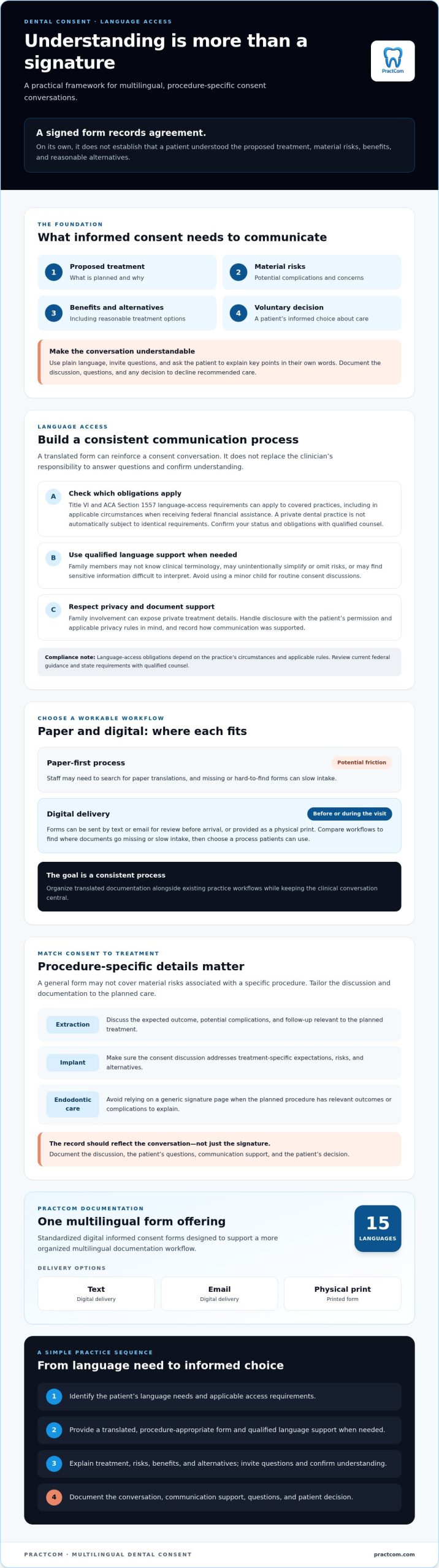
What protects your practice better: a patient’s signature or confidence that they understood the procedure? A signed English form may not show that a patient who speaks another language understood the risks, benefits, and alternatives. That’s why multilingual dental consent forms are more than paperwork. They support informed dialogue and help reduce the risk of failure-to-inform disputes.
Language barriers can complicate intake. Staff may need to search for paper translations, while relying on a patient’s family member can raise concerns about accuracy, privacy, and consent. For practices receiving federal financial assistance, Title VI and Section 1557 language-access obligations also make meaningful communication an important compliance consideration.
This 2026 guide explains how to build a consistent consent process without adding front-desk friction. Learn how to approach language access, why procedure-specific forms and documented conversations matter, and how digital delivery can help patients review forms before they arrive. PractCom offers standardized digital informed consent forms in 15 languages, delivered by text, email, or physical print, to help your team manage documents in a more organized workflow.
Key Takeaways
- Use multilingual dental consent forms to support understanding of procedure-specific risks, benefits, and alternatives, not just to collect a signature.
- Review how Title VI and ACA Section 1557 language-access obligations apply to your practice, and establish a consistent process for communicating with patients with limited English proficiency.
- Compare paper and digital workflows to identify where forms go missing or slow intake, then choose a process patients can use before or during their visit.
- Tailor consent discussions and documentation to the planned treatment. A general form may not cover material risks associated with procedures such as extractions or implants.
- Consider standardized forms in 15 languages, delivered by text, email, or physical print, to manage multilingual documentation alongside your existing practice software.
The Clinical and Legal Imperative for Multilingual Dental Consent Forms
A signature records agreement, but it doesn’t establish by itself that a patient understood what they agreed to. Valid informed consent depends on communication about the proposed treatment, its material risks and benefits, and reasonable alternatives, followed by a voluntary decision. For a foundational overview, see the legal and ethical principles behind informed consent.
An English-only form signed by someone who can’t understand it may leave a gap in the record. That doesn’t automatically make consent legally invalid in every case, but it can weaken evidence that the patient was adequately informed. Multilingual dental consent forms can help address that gap when they’re accurate, appropriate to the procedure, and paired with a meaningful conversation.
Defining Legal Validity in Cross-Language Consent
Courts and regulators may look beyond the signature to how the consent discussion took place. If a patient later says they weren’t told about a material risk or alternative, a form they couldn’t read may not demonstrate comprehension. Before treatment, use plain language, invite questions, and ask the patient to explain key points in their own words. Document the discussion, the patient’s questions, and any decision to decline recommended care.
This is especially important in restorative and surgical care. For an extraction, implant, or endodontic procedure, misunderstanding expected outcomes, potential complications, or follow-up can become a clinical concern and a source of dispute. Match the consent discussion to the planned treatment rather than relying on a generic signature page.
Federal Language Access and Practice Responsibilities
For dental practices receiving federal financial assistance, Title VI and Section 1557 require meaningful access for patients with limited English proficiency. The scope of obligations depends on the practice and applicable rules, so don’t assume every private practice has identical requirements. As of September 2026, HHS has confirmed that language-access protections remain in force under Section 1557, even as portions of the 2024 rule concerning sex discrimination were vacated. Review current federal guidance and applicable state requirements with qualified counsel.
The Pitfalls of Ad-Hoc and Family Translators
A family member may want to help but may not know clinical terminology, may unintentionally omit or simplify risks, or may find sensitive information difficult to interpret. Using a minor child is especially inappropriate for routine consent discussions. Family involvement can also expose private treatment details. It isn’t automatically a HIPAA violation, but disclosure should be handled with the patient’s permission and applicable privacy rules in mind.
Use a qualified interpreter when needed, and document how communication was supported. A standardized translated form can reinforce the conversation, but the clinician remains responsible for answering questions and confirming understanding.
Regulatory Compliance: Section 1557 and Federal Language Access Standards
Language-access obligations depend on a practice’s circumstances. Section 1557 of the Affordable Care Act applies to covered health programs and activities, including entities receiving federal financial assistance in applicable circumstances. Title VI may also apply to recipients of federal assistance. A private dental practice isn’t automatically subject to the same requirements simply because it provides dental care, so confirm your status and obligations with qualified counsel.
For covered providers, Section 1557 prohibits discrimination based on national origin, which includes obligations to take reasonable steps toward meaningful access for patients with limited English proficiency. On June 2, 2026, HHS issued a Notice of Vacatur concerning portions of the 2024 rule’s interpretation of sex discrimination. Language-access protections remain in force. The ADA’s guidance on meaningful access to individuals with LEP offers a dental-specific starting point.
Understanding Meaningful Access Requirements
Meaningful access means effective communication, not simply having a translated page on hand. Depending on the patient’s needs and the circumstances, that may involve qualified oral interpretation, written translations of vital documents such as consent forms, or both. Covered providers must take reasonable steps and cannot charge patients for language assistance required under these federal protections.
Build a repeatable record by noting the patient’s preferred language, the communication support provided, and relevant consent discussion details. Check applicable state dental board rules, too. Requirements vary, so don’t assume one documentation standard applies nationally. A documented process helps your team show what steps were taken without treating a signature as proof of comprehension.
Choosing Languages and Checking Translation Quality
Prioritize languages your patients use instead of relying on a single national checklist. The U.S. Census Bureau’s 2024 language data identifies Spanish, Chinese, and Tagalog among the most common non-English languages spoken at home nationally. Vietnamese and Korean may also be important for an individual practice, depending on its patient population. Ask patients about their language preference and review intake records to guide coverage.
Translation quality matters as much as language availability. Consent terminology must preserve the meaning of risks, benefits, alternatives, and follow-up instructions. Don’t rely on unreviewed machine translation for clinical forms. Have translations checked by a qualified human reviewer. Multilingual dental consent forms can support a consistent process, but they don’t replace interpretation when a patient needs help discussing treatment.
Federal enforcement may include civil rights review, with outcomes depending on the facts and applicable law. Avoid assuming that a specific fine or reimbursement consequence applies to every practice. For a practical language-access check, review which patient documents your team can provide in the languages patients request.
Comparing Multilingual Consent Workflows: Paper vs. Digital Solutions
Paper forms can work, but manually managing multiple language versions adds steps when the front desk is busy. Staff may need to locate the right translation, print it, track the signed copy, and make sure it reaches the patient’s record. If a form is missing or a signature is difficult to read, the team may need to follow up before treatment can proceed.
Digital workflows can move document review earlier. Send a procedure-specific form by email or text so patients can read it on a personal device before their visit, or present it on a tablet in the office. Digital signature capture can help create a clearer record of when consent was documented. Confirm how a platform stores completed forms, preserves the record, and fits your existing recordkeeping process. No form or signature replaces the clinician’s conversation with the patient.
Reduce Paper Handling Without Losing Oversight
With paper binders, staff need to keep versions current, find the right language, and file completed copies consistently. Physical storage takes space, and misplaced documents can complicate access to the clinical record. Digital delivery reduces printing and scanning steps, but practices should still decide who checks completion and where the signed document is retained.
Patients can review complex treatment information at home, where they may have more time to read and prepare questions. This can make the appointment easier to organize, but the dentist still needs to confirm understanding and address concerns before treatment.
Keep Consent and Aftercare in Step
Communication shouldn’t stop when consent is signed. For procedures such as surgery, provide post-treatment instructions in a language the patient can understand, using a consistent channel where possible. Clear aftercare guidance reinforces what was discussed and helps patients know what to expect after they leave. PractCom offers translated informed consent forms and post-treatment instructions in 15 languages, delivered by text, email, or physical print.
For a practical comparison of how a communication platform can complement your existing practice software, see how PractCom supports dental practices. It isn’t a replacement for a full practice management system. It provides a communication layer for documents and patient interactions.
Keep a Print Option Available
Digital isn’t the right fit for every patient. Some may prefer paper, need help using a device, or want to review the document with staff in person. A hybrid workflow keeps that choice available: send forms by text or email when useful, and print translated documents for patients who prefer paper. The goal is consistent access, not forcing every patient into one format.
Procedure-Specific Consent: Essential Clinical Elements by Treatment Type
A general consent form can’t anticipate every material risk or alternative associated with a particular procedure. Use multilingual dental consent forms that match the planned treatment, then discuss the patient’s circumstances, invite questions, and document the conversation. The translated form supports communication, but it doesn’t replace the dentist’s clinical judgment or explanation.
Oral Surgery and Implantology
For extractions and implant procedures, explain relevant risks in clear language before treatment. Depending on the case, these may include nerve injury or altered sensation, sinus perforation, complications involving a bone graft, and the possibility that the planned treatment may not succeed. Don’t present every risk as equally likely for every patient. Explain which concerns apply, what alternatives are reasonable, and what the patient can expect during recovery.
Discuss postoperative expectations and pain management before local anesthesia, while the patient can ask questions and consider the information. For implants, explain ongoing maintenance responsibilities as well. Confirm understanding rather than relying on an unchecked acknowledgment box.
Endodontic and Restorative Treatment
Root canal consent should address the treatment’s purpose, reasonable alternatives, and relevant limitations. Explain that complications such as instrument separation or perforation can occur, and discuss the possibility of persistent symptoms, further treatment, or an unsatisfactory outcome as appropriate to the case. Avoid quoting a failure rate unless you have reliable, procedure-specific evidence for that estimate.
If a permanent restoration, such as a crown, is recommended after endodontic treatment, explain why it’s part of the proposed plan and what may happen if the patient chooses another option or delays it. Then align the discussion with written aftercare. A consistent handoff to automated dental post-op instructions can reinforce recovery guidance in the patient’s language without substituting for individualized clinical advice.
Sedation, Anesthesia, and Refusal
For sedation, make sure patients or guardians receive and understand the practice’s applicable instructions, including preparation, transportation, monitoring, and emergency information relevant to the planned care. Don’t rely on a generic template for details that depend on the patient or sedation plan. The ADA updated its sedation and general anesthesia guidelines in April 2026; its guidance calls for written consent for procedures involving moderate or deep sedation, obtained personally by the dentist.
If a patient declines recommended imaging or treatment, document the recommendation, the discussion of relevant risks and alternatives, the patient’s questions, and their decision. A clear informed-refusal record helps distinguish a considered choice from a communication breakdown. To organize translated consent and patient documents, explore PractCom’s dental communication platform.
Standardizing Practice Communication: Deploying 15-Language Documentation with PractCom
Consistency is easier to maintain when translated consent forms and aftercare instructions are part of one patient communication workflow, rather than scattered among paper files. PractCom is an all-in-one patient communication platform for dental practices, with standardized digital informed consent forms and post-treatment instructions available in 15 languages. It adds a documentation layer alongside your existing practice management software, rather than replacing it.
A shared workflow can help your team select the appropriate document, deliver it in the patient’s preferred language, and collect a signature before the appointment or chairside. Translations make information more accessible, but clinicians should still check that forms suit the planned treatment and discuss it with each patient.
Use PractCom Alongside Your Existing Systems
You don’t need to replace your practice management system to organize patient documents. PractCom focuses on communication and documentation, which can help reduce manual form hunting without requiring your practice to migrate its core systems. Before adopting a workflow, confirm how it will fit your office’s recordkeeping and staff procedures. You can compare dental communication platforms to evaluate which capabilities fit your needs.
Connect Intake, Consent, and Aftercare
Build a straightforward workflow around the visit. Your team can send consent documents by text or email for patients to review ahead of time, or present them in the office for signature. PractCom also supports physical printing, so patients who prefer paper have that option. Staff can pair consent communication with relevant aftercare rather than treating instructions as an unrelated handout.
The library includes more than 80 post-treatment instructions, available in the same 15-language communication environment. For example, a patient receiving an extraction can review the consent discussion before treatment and receive relevant recovery guidance afterward. The instructions reinforce the care plan, while the dentist remains responsible for tailoring advice and answering questions.
Make Language Access Part of the Patient Experience
Clear, accessible communication respects a patient’s preferences and supports a more organized visit. Written guidance also gives patients a way to revisit information after they leave, though no document can guarantee a particular clinical outcome or prevent follow-up questions. Standardizing multilingual dental consent forms and aftercare materials gives your team a repeatable foundation, with text, email, and print options for different patient needs.
If you’re ready to assess this workflow for your practice, explore PractCom’s free trial and review how its 15-language documents could fit your intake and aftercare process.
Build a More Consistent Consent Workflow
Meaningful consent depends on understanding, not simply collecting a signature. A sound process pairs a procedure-specific explanation of risks, benefits, and alternatives with clear documentation of the patient’s questions and decisions. For practices subject to federal language-access requirements, a consistent way to provide information in a patient’s preferred language can also support compliance efforts.
Multilingual dental consent forms work best as part of a broader communication workflow. Give patients a way to review documents before or during the visit, capture consent clearly, and reinforce the care plan with relevant post-treatment instructions. Keep clinical conversations central, and make sure translated materials are accurate and appropriate for the procedure.
PractCom brings digital consent forms and a library of more than 80 post-treatment instructions together in 15 languages, with delivery by text, email, or physical print. It supports your documentation workflow alongside your existing practice management software.
Start your free trial to explore PractCom’s multilingual consent and post-treatment resources. See how its documents and delivery options could fit your intake and aftercare workflow.
Frequently Asked Questions
Can a bilingual dental staff member legally translate an English consent form chairside?
Not automatically. Speaking two languages doesn’t by itself establish that someone is qualified to interpret clinical information accurately and impartially. Requirements depend on the practice’s circumstances, applicable federal protections, and state rules. For covered providers, use appropriate qualified language assistance rather than relying on informal translation. A translated form can support the discussion, but staff should document the patient’s preferred language, communication support, and consent conversation.
Are digital signatures on multilingual dental consent forms legally enforceable in court?
They can be, but enforceability depends on applicable law and the facts of the case. A digital signature should reliably show who signed, their intent to sign, and the document they agreed to, with records retained in an accessible form. A signature alone doesn’t prove the patient understood the procedure. Pair digital consent forms with a documented clinical discussion, questions, and confirmation of understanding.
What specific dental procedures strictly require written informed consent?
There isn’t one universal federal list covering every dental procedure. Written-consent requirements can depend on state law, dental board rules, the procedure, and whether sedation or anesthesia is involved. Practices commonly use procedure-specific written forms for surgery, implants, and sedation, but should confirm requirements with their state board, professional counsel, and current clinical guidelines. Regardless of form requirements, discuss material risks, benefits, and reasonable alternatives with the patient.
Does federal Section 1557 require all dental practices to provide multilingual consent forms?
No. Section 1557 applies to covered health programs and activities, including entities subject to the law through federal financial assistance or other applicable criteria. Covered providers must take reasonable steps to provide meaningful access for patients with limited English proficiency, which may involve translated vital documents and qualified oral interpretation. Whether a particular dental practice is covered depends on its circumstances. Review current guidance and applicable state requirements with qualified counsel.
Can our practice use Google Translate to create foreign-language dental consent forms?
Don’t use unreviewed machine translation as a final clinical consent document. Errors in risks, alternatives, or instructions can change the meaning patients receive. If machine translation is used in drafting, have the translated text reviewed by a qualified human translator with relevant language and clinical knowledge before use. Also check that the form is procedure-specific, written clearly, and consistent with the dentist’s explanation and the patient’s care plan.
How do multilingual consent forms work alongside dental malpractice insurance defense?
Multilingual forms can help document what information was provided, but they don’t guarantee a defense or determine coverage. If a claim arises, the insurer and defense counsel assess the full record, including the consent discussion, treatment notes, and applicable policy terms. Keep accurate records of the language used, interpreter support, patient questions, and decisions. Follow your carrier’s requirements for preserving records and reporting potential claims.
What languages should my dental practice prioritize when adopting translated forms?
Start with languages patients identify as preferred during intake, then review your practice’s patient records to spot common needs and gaps. Nationally, Spanish, Chinese, and Tagalog are among the most common non-English languages spoken at home, according to 2024 U.S. Census Bureau data. Vietnamese and Korean may also be priorities for your patients. PractCom provides digital consent forms and other documents in 15 languages, with text, email, and print delivery.
Article by
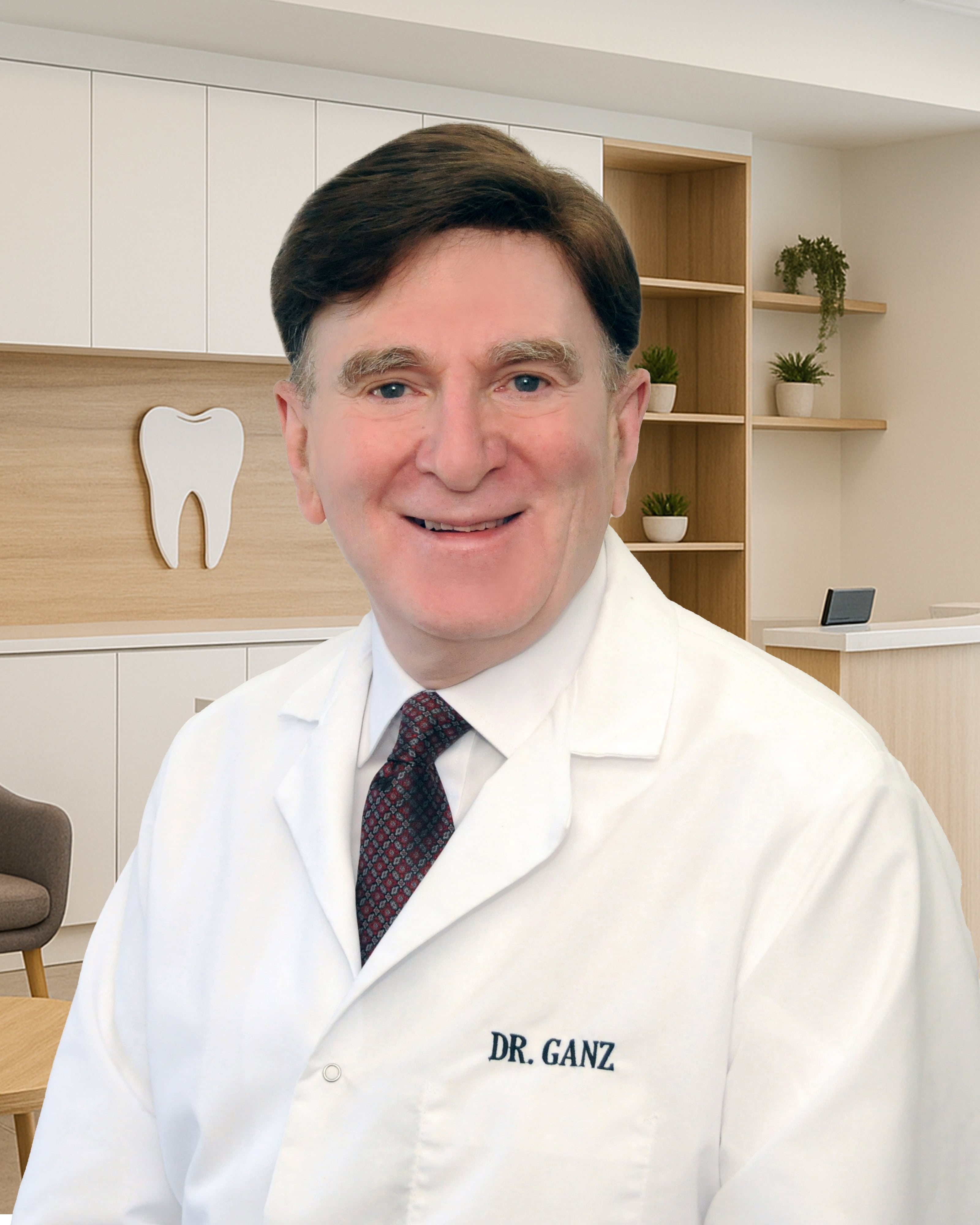
Cary Ganz DDS
Dr. Cary H. Ganz is a dentist, prosthodontist, entrepreneur, lecturer, and author with more than 50 years of experience in clinical dentistry and dental technology. Throughout his career, he has combined hands-on patient care with a deep understanding of how technology can improve dental practice operations, communication, documentation, and patient outcomes.
In addition to his clinical background, Dr. Ganz has held significant leadership roles in the dental technology industry, including Past Owner and Vice President of Clinical Affairs at DEXIS Digital Radiography and Past Vice President of Clinical Affairs at Denticon Practice Management Software. His business experience includes product development, clinical strategy, dental software innovation, practice management solutions, and educating dental professionals on the effective use of technology in modern dentistry.
Today, Dr. Ganz continues to focus on creating practical technology solutions for dental practices, including PractCom, a comprehensive dental practice communication platform designed to improve patient communication, documentation, compliance support, referrals, and overall practice efficiency. His work reflects a career-long commitment to helping dentists deliver better care while making their practices more organized, efficient, and protected.
No responses yet