
A change in your health can matter as much as the dental procedure itself. Good pre-appointment instructions for dental patients include bringing an up-to-date medication, allergy, and health history; following the dental team’s fasting directions if sedation or anesthesia is planned; arranging a ride when required; and reporting new symptoms or medications before the visit. These steps help your team prepare for your care and keep the appointment on track.
It’s easy to focus on what to bring and overlook a new cold, a medication change, or another shift in your health. Share that information promptly so the dental team has a clearer picture before treatment and can tell you whether any instructions need to change. This guide covers the records and personal details to prepare, how fasting and transportation depend on the appointment, and which health changes to report. You’ll have a practical plan for routine visits and understand what extra preparation may apply when sedation or anesthesia is involved.
Key Takeaways
- Gather a current list of medications, allergies, medical conditions, and previous dental care to help your team prepare.
- Follow the fasting instructions provided for your specific treatment, especially if sedation or anesthesia is planned.
- Arrange a responsible adult to drive you when sedation or anesthesia means you shouldn’t travel home alone.
- Tell the dental team about new symptoms, health changes, or medications before your appointment so they can plan your care.
Bringing medication, allergy, and dental history information
Arrive in time to complete check-in and intake before your scheduled appointment. For a surgery appointment you can’t keep, give the dental office 48 hours’ notice of cancellation.
- Prepare a current health summary. Include medical conditions, allergies, pregnancy status when applicable, and any significant conditions that have resolved. Mention diabetes, heart disease, a weakened immune system, or previous chemotherapy or radiation therapy. These details can affect planning for treatment.
- List every medication you take regularly, including blood thinners and insulin. Tell the dental team about recent medication changes, supplements, and smoking. Some blood disorders and medicines can increase bleeding risk, so an accurate list supports safer planning.
- Bring previous dental records, including information about oral surgery, orthodontic care, and recent procedures. If you’re changing dentists, ask for your records to be sent ahead. Note current concerns, such as tooth pain or sensitivity, so you can describe them clearly.
- For surgery, don’t stop or change daily medication on your own. Follow the instructions from your surgeon or anesthesiologist; if you take routine oral medication before surgery, ask your doctor for directions before the surgical date. Take medication with water only as instructed.
- Brush and floss before your appointment to clear surface plaque. If surgery is planned, follow the team’s food and drink instructions rather than assuming you should fast. For recovery, Boise Oral Surgery & Dental Implant Center advises sedation patients to have soft foods ready for a few days. After a tooth removal, VCU Dentistry advises applying an ice bag for 20 minutes on and 20 minutes off on the procedure day. Greenville Oral Surgery notes that IV sedation effects may take up to 24 hours to fade. Plan support and recovery time accordingly, and follow the specific instructions provided for your procedure and healing.
Transportation and post-anesthesia restrictions
- Arrange an escort when sedation or general anesthesia is planned. Choose a responsible adult who can accompany you to the clinic and drive you home. VCU Dentistry requires an adult escort for patients having sedation or general anesthesia, and patients can’t drive or take a bus home. Confirm the pickup plan before the procedure, rather than relying on a taxi or public transit.
- Plan for supervision after sedation. Oral sedation can leave you groggy or disoriented for several hours. Arrange for someone to stay with you at home until the effects wear off. After oral conscious sedation, Greenville Oral Surgery advises that the driver may need to remain with you for a few hours after you return home. Build that time into your ride arrangements.
- Keep post-anesthesia limits in your schedule. After intravenous anesthesia, don’t drive, operate machinery, or make important decisions for 24 hours. A ride home alone doesn’t cover the full restriction, so arrange support and avoid tasks requiring alertness during that period. Follow the instructions for your specific procedure, since sedation and anesthesia plans differ.
- Ask about transportation for local anesthetic. Greenville Oral Surgery says patients receiving only local anesthetic don’t need to arrange a ride home. Sedation or general anesthesia changes that plan. If your appointment includes more than local anesthetic, arrange transportation and ask the clinic what supervision is expected afterward.
- Prepare records and clothing before leaving. If you’re transferring care, ask your previous dentist or pediatric dentist to send your records to the new clinic. For surgery, wear loose clothing with sleeves that roll above the elbow and low-heeled shoes. Remove contact lenses, jewelry, and dentures as instructed. These are special preparations for surgery, not routine visits. Ask the clinic about any further instructions, including whether you may eat or drink before treatment. Dental teams can also explore organized patient communication for appointment instructions.
Fasting before sedation or general anesthesia
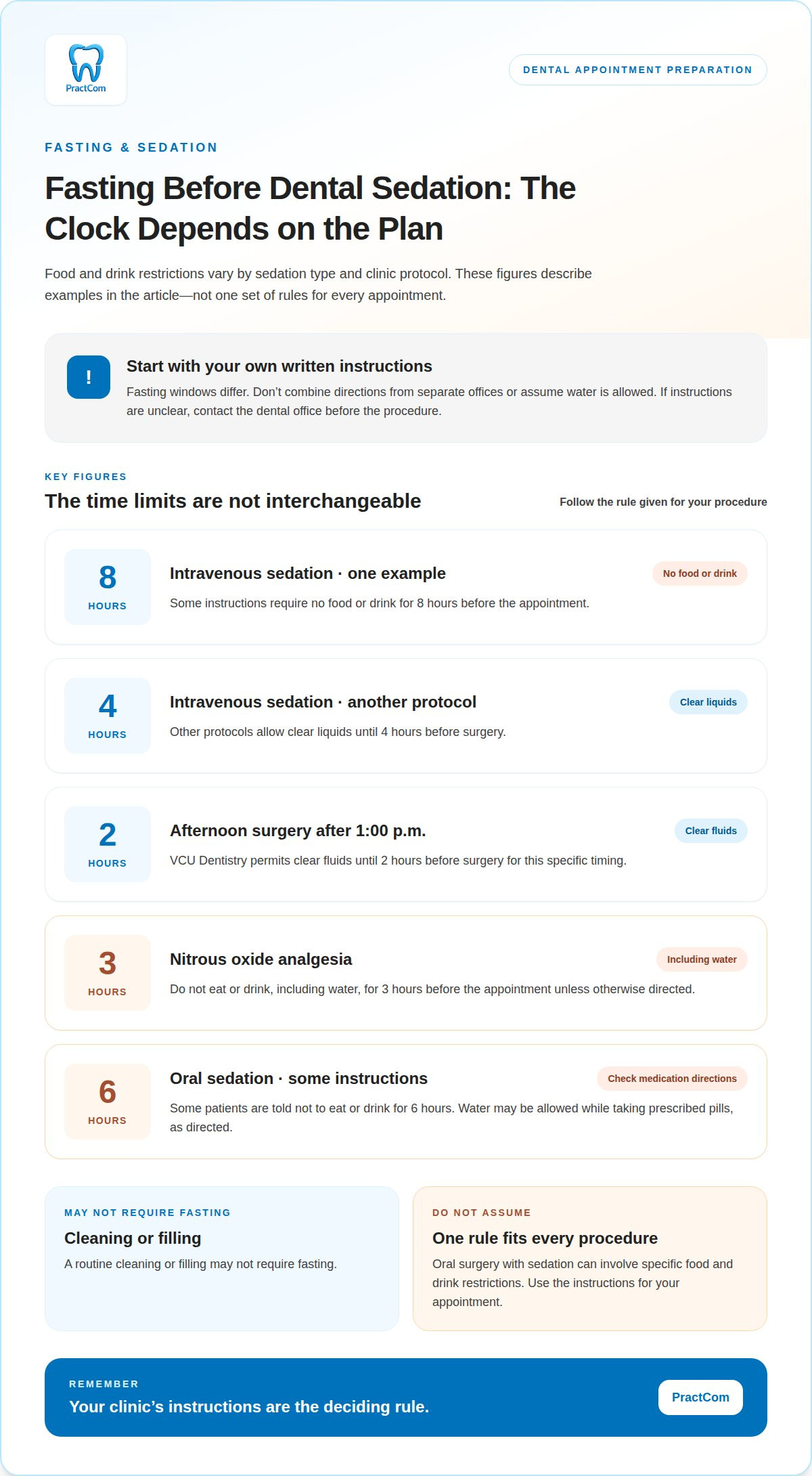
Yes. Instructions depend on the treatment and whether sedation or anesthesia is planned. A cleaning or filling may not require fasting, while oral surgery with sedation can involve specific food and drink restrictions. Follow the instructions provided for your procedure.
- Use your written fasting instructions as the rule. Fasting times differ by sedation type and clinic protocol. Don’t combine instructions from separate offices or assume water is allowed. If the directions seem unclear, contact the dental office before the procedure and explain your concerns.
- For intravenous sedation, confirm both the fasting window and liquid rules. Some instructions require no food or drink for 8 hours before the appointment. Other protocols allow clear liquids until 4 hours before surgery. For afternoon surgery after 1:00 p.m., VCU Dentistry permits clear fluids until 2 hours before surgery. These directions differ, so follow the instructions given for your own appointment.
- For nitrous oxide, follow the stated restriction. Patients scheduled for nitrous oxide analgesia should not eat or drink, including water, for 3 hours before the appointment unless otherwise directed. Don’t treat this as the rule for other sedation methods.
- For oral sedation, check the medication instructions too. Some patients are told not to eat or drink for 6 hours before the procedure, with water allowed while taking prescribed pills. Take medication only as directed by your dentist or doctor. Don’t change a prescription or fasting plan on your own.
- For oral surgery, clarify the plan before surgery day. Fasting may depend on the procedure’s complexity and anesthesia. Some protocols require no food or liquids after midnight for morning surgery. Ask the responsible dental team how your appointment time affects the cutoff.
- Separate routine care from sedation preparation. Cleanings, fillings, root canals, and extractions don’t automatically share one fasting rule. The planned procedure, sedation, and anesthesia determine the instructions. If your treatment plan changes, ask whether the existing fasting directions still apply.
Notifying the dental team about health changes
- Report new symptoms before treatment. Call the dental office if you develop a cold, sore throat, or stomach or bowel upset. For surgery, share symptoms before arriving. An illness can affect whether the procedure should go ahead as planned, so don’t wait until you’re in the chair to mention it.
- Update the team about new medication. Tell your dentist if you’ve started, stopped, or changed a medication since completing your intake form. This is especially relevant before oral sedation, when medication instructions can affect preparation. Include the medication name, dose, and when you take it, if known.
- Disclose significant conditions, even if they’ve resolved. Mention conditions such as diabetes or heart disease, and tell the team about past chemotherapy or radiation therapy. These details give the dentist context for planning dental procedures. Also report a weakened immune system or a higher risk of infection.
- Share pregnancy information before dental X-rays. Tell the dental team if you’re pregnant before imaging. That information lets the dentist consider precautions or whether postponing X-rays is appropriate. Include pregnancy status on your intake details when applicable, then update the office if it changes.
- Speak up about anxiety and comfort needs. Tell the team if dental anxiety affects your appointment, including a specific concern such as discomfort during injections. Sharing this before treatment gives the dentist a chance to discuss comfort options and explain the steps. Ask for instructions in clear language if anything feels uncertain.
- Refresh your health details regularly. Review your intake information at least once a year and update it sooner after a diagnosis, illness, or medication change. Before oral surgery, disclose alcohol or recreational drug use, since preoperative instructions include restrictions. Dental practices can organize patient communication to make health updates easier to share before visits.
PractCom: Post-Treatment Instruction Library
PractCom’s Post-Treatment Instruction Library helps dental practices provide patients with clear guidance after care. While pre-appointment preparation covers health updates, fasting, and transportation, consistent aftercare instructions help patients understand what to do once they leave the clinic. The library includes over 80 post-treatment templates, which practices can deliver by email, text, or print in 15 languages.
Practices can use the library alongside PractCom’s Digital Informed Consent Forms and Referral Management System within its all-in-one patient communication platform. This can support a more organized communication process before and after treatment, without replacing clinical judgment or individualized advice.
If your practice wants a consistent way to share post-treatment guidance, explore PractCom’s Post-Treatment Instruction Library.
Make your next appointment easier to manage
A prepared visit involves more than a calendar reminder. Share clear, current information to help the dental team plan your visit and discuss next steps. Use pre-appointment instructions for dental patients as a starting point, then follow the directions for your specific appointment. Keep those instructions with your appointment details so they’re easy to find if plans change.
For dental practices, clear communication matters between appointments, too. PractCom provides a Post-Treatment Instruction Library, Digital Informed Consent Forms, and a Referral Management System to help organize patient communication alongside clinical care. Consistent pre-appointment instructions for dental patients can also help teams explain what to expect before a visit.
Contact PractCom with your questions about patient communication for your practice. A thoughtful process can make the next step clearer for both your team and your patients.
Frequently Asked Questions
What should patients do before a routine dental appointment?
Before a routine visit, confirm the appointment details and complete any intake forms the office sends. Note questions or changes you want to discuss, such as new tooth sensitivity or a concern about a previous filling. This helps you make the most of your time with the dentist. If the visit includes a procedure or sedation, follow the instructions for that appointment.
Should patients eat or drink before a dental appointment?
For a routine appointment involving only local anesthetic, patients generally don’t need to avoid food beforehand. Sedation or oral surgery can involve different restrictions, including limits on water, so don’t assume routine-visit guidance applies. Follow the instructions for your planned treatment, and tell the dental office if you’ve eaten or drunk something that may conflict with them.
What information and documents should patients bring to a dental appointment?
Bring photo identification and your dental insurance details, if applicable. If another provider referred you, bring the referral slip; previous dental records may also help a new dentist understand your treatment history. Gather these items in a folder or on your phone before leaving home. Note your current dental concern, including when it began and what affects it.
Should patients take their regular medications before a dental appointment?
For a routine visit, don’t skip a regular medication unless your prescribing doctor or dental team tells you to. Surgery and sedation may require specific medication timing, so get instructions before the procedure. If they conflict with your usual schedule, contact the dental office or prescribing doctor before changing a dose. Bring an accurate medication list to discuss any questions.
What are pre-appointment instructions for dental sedation or anesthesia?
Instructions depend on the type of sedation or anesthesia and the procedure. Before the appointment, confirm when to stop eating or drinking, whether you can take prescribed medication with water, and what transportation is required. Keep the instructions accessible on your phone or in print. If the treatment plan changes, ask whether the original directions still apply rather than assuming they do.
What should patients with diabetes, heart conditions, or other health issues tell their dentist before an appointment?
Tell the dentist about the condition, how it affects your care, and any related medication or recent changes. Include resolved conditions and relevant treatment, such as chemotherapy or radiation. For example, mention diabetes even if it’s well managed, and report a new illness before treatment. This information helps the team plan your care and discuss any precautions that may be needed.

Article by
Cary Ganz DDS
Dr. Cary H. Ganz is a dentist, prosthodontist, entrepreneur, lecturer, and author with more than 50 years of experience in clinical dentistry and dental technology. Throughout his career, he has combined hands-on patient care with a deep understanding of how technology can improve dental practice operations, communication, documentation, and patient outcomes.
In addition to his clinical background, Dr. Ganz has held significant leadership roles in the dental technology industry, including Past Owner and Vice President of Clinical Affairs at DEXIS Digital Radiography and Past Vice President of Clinical Affairs at Denticon Practice Management Software. His business experience includes product development, clinical strategy, dental software innovation, practice management solutions, and educating dental professionals on the effective use of technology in modern dentistry.
Today, Dr. Ganz continues to focus on creating practical technology solutions for dental practices, including PractCom, a comprehensive dental practice communication platform designed to improve patient communication, documentation, compliance support, referrals, and overall practice efficiency. His work reflects a career-long commitment to helping dentists deliver better care while making their practices more organized, efficient, and protected.
No responses yet