
A follow-up call isn’t effective only because a patient books on the spot. Measure it by whether you understand the objection, explain relevant treatment risks clearly, and document an agreed next step. A dental patient follow-up call script can keep that conversation consistent without making it feel rigid. If the patient hasn’t scheduled after the third follow-up contact, consider them uninterested and end active outreach.
When a patient hesitates, start by listening. Cost, timing, and concerns about treatment call for different responses, but each conversation should be empathetic and informative, not pressuring. This guide covers common objections, how to discuss possible risks of delaying recommended care, follow-up after a difficult appointment, and respectful limits on repeated calls. It also explains what to record so the team can follow the patient’s concern and agreed next step.
Key Takeaways
- Respond to scheduling, cost, and care concerns by first clarifying what’s behind the patient’s hesitation.
- Explain the specific risk of delaying recommended care in clear, patient-friendly language.
- Use a considerate follow-up after an emotionally difficult visit to acknowledge the patient’s experience and agree on a next step.
- Set a consistent outreach limit so follow-up remains respectful, organized, and focused on patients who want to continue the conversation.
How Should You Handle Patient Objections?
Use a consistent call structure, then tailor your questions and response to the patient’s concern and care history.
-
Ask About Symptoms and Urgent Concerns
Ask what the patient noticed, when it began, and whether it is improving or worsening. If they mention pain, swelling, or bleeding, record their description and any changes since treatment. Ask how the symptoms affect eating, sleep, or daily activities. Don’t diagnose or dismiss a concern during the call.
For severe, worsening, or concerning symptoms, contact the dentist promptly for direction. If the patient describes an emergency, direct them to emergency care rather than continuing routine scheduling.
Keep privacy-conscious voicemail brief: “Hello, this is our team calling from PractCom. Please call us back at our main office number.” Don’t include treatment details. Discuss care only after confirming you’re speaking with the patient, and use their preferred contact method when available.
-
Address Scheduling, Cost, and Care Concerns
Ask what is making the patient hesitate before suggesting solutions. For scheduling concerns, ask whether another time would work better with their job or transportation. If cost is the concern, listen without pressure and clarify what information they need. For care-related questions, invite them to ask about treatment duration, appointments, alternatives, driving, returning to work, or insurance coverage.
Use the patient’s appointment history, care goals, and scheduling preferences to personalize the dental patient follow-up call script. For example: “You mentioned mornings work best. Would you like me to look for a morning appointment?” This keeps the conversation supportive and gives the patient a clear choice.
After a routine cleaning, say: “Hello, this is a team member calling from PractCom. How have your teeth and gums felt since your cleaning? Would you like to schedule your next visit?” Record the patient’s concerns, recommendations discussed, and agreed next step. If they don’t schedule, ask when they would like you to follow up. Agree on a specific time and channel, such as another call or an email within the next week or two.
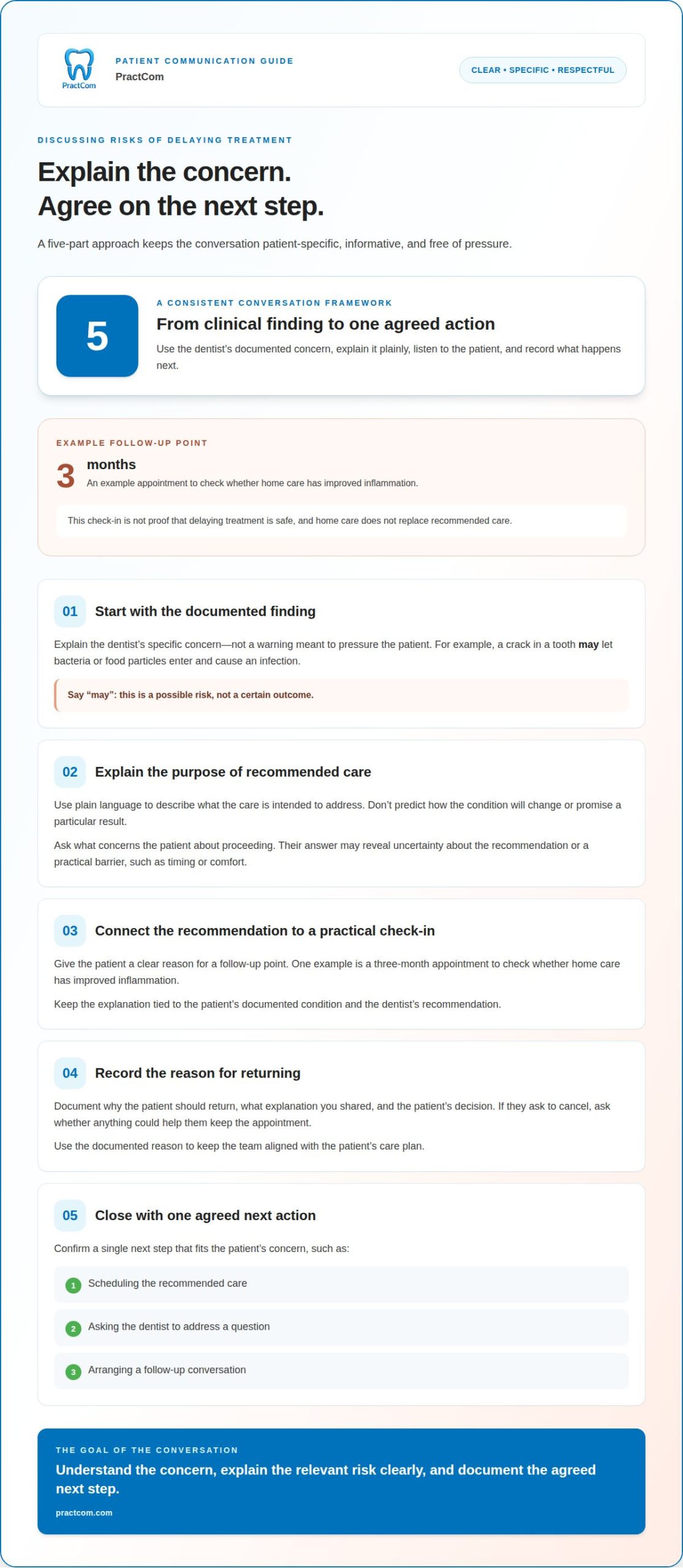
Discussing risks of delaying treatment
Explain the documented clinical concern clearly, then connect it to a practical next step.
- Start with the dentist’s finding, not a warning intended to pressure the patient. For example, explain that a crack in a tooth may allow bacteria or food particles to enter and cause an infection. Say “may” because this is a possible risk, not a certain outcome. Keep the explanation specific to the patient’s documented condition.
- Explain in plain language what the recommended care is intended to address. Don’t predict how the condition will change or promise a particular result. Ask what concerns the patient about proceeding. Their answer can help the team understand whether they are uncertain about the recommendation or facing a practical barrier involving timing, comfort, or something else.
- Tie the recommendation to a practical follow-up point. For example, explain that a three-month appointment will include checking whether home care has improved inflammation. This gives the patient a clear reason for the visit. Don’t suggest that the check proves delaying treatment is safe or that home care replaces recommended care.
- Record why the patient should return, what explanation you shared, and the patient’s decision. If they ask to cancel, ask whether anything could help them keep the appointment. Use the documented reason to confirm the next appointment or guide the conversation if they later try to cancel. This keeps the team aligned with the patient’s care plan.
- Close by agreeing on one next action, such as scheduling, asking the dentist to address a question, or arranging a follow-up conversation. For a consistent process, organize follow-up communication around the concern discussed and the next step agreed upon.
Following up after difficult or emotionally charged appointments
Use a planned follow-up to acknowledge the visit and agree on what happens next.
- Before calling, note the specific part of the appointment that the patient found difficult, such as a stressful emergency exam or frustrating denture adjustment. Record what the patient said, not an assumption about how they feel. This gives the team a useful starting point and prevents the caller from asking the patient to repeat details unnecessarily.
- Give the patient time to reflect before following up. Suggest a timeframe, such as one week after the conversation, and ask if it works for them. Agreeing on a time makes the call a planned check-in rather than an unexpected demand. If the patient prefers another time, record it for the next contact.
- Open with a specific, neutral reference to the appointment. For example: “I’m calling to check in after your denture adjustment. How has the fit felt since we spoke?” After an emergency exam, ask whether the patient has questions about the visit or next steps. Pause and listen before offering information.
- Acknowledge the concern without arguing or rushing to defend the appointment. If the patient says an adjustment felt frustrating, respond: “I’m sorry the visit felt difficult. What would help us understand your concern?” Then clarify what they need, such as another conversation about the adjustment or help arranging the next step. Keep clinical responses within the dentist’s recommendations.
- Close by summarizing what the patient shared and confirming the agreed action. Document the call date, the concern discussed, any recommendation made, and the next contact or appointment plan. If the patient needs time, note when they prefer the practice to call again. A clear record helps other team members continue the conversation with context and care.
Limits on repeated follow-up attempts
Set a clear outreach limit before contacting patients about unscheduled care. A practical rule is to consider the patient uninterested if they haven’t scheduled after the third follow-up contact.
- Agree on the next contact while speaking with the patient. If they need time to decide, ask when they would prefer a call or email. Record the agreed timing and channel. This prevents silence from becoming a reason for unlimited outreach and gives the next team member a clear instruction.
- Use a dated sequence for routine recall instead of repeating the same message. One example is an SMS on Day 1, another SMS on Day 3, a phone call on Day 5-7, and a final SMS on Day 10. Keep each attempt focused on arranging care, and record its date and outcome.
- End active campaign messages after the third follow-up contact if the patient hasn’t scheduled. Before closing the sequence, review the record for a reply, appointment, or request to pause contact. If the patient has given a preferred time, follow that request instead of continuing the standard sequence.
- Remove unresponsive patients from active recall after Day 14 and flag them for future reactivation. Keep the status clear so another team member doesn’t restart the same campaign immediately. If the patient later contacts the practice, update the record and base the next conversation on their current request.
- Review the outreach record before any new attempt. Note the contact date, method, response, scheduling decision, and agreed next step. For example, “Day 5-7 call, no answer; final SMS sent Day 10; remove after Day 14.” A consistent workflow makes the third-contact limit easier to apply. Streamline patient follow-up workflows to keep outreach steps organized.
PractCom: Automated Patient Follow-ups
PractCom’s Automated Patient Follow-ups help practices maintain a consistent communication process after appointments and when care remains unscheduled. They’re useful when manual reminders and scattered notes make follow-up harder to organize.
As part of The All-in-One Patient Communication Platform for Dental Practices, PractCom brings together tools for communication throughout care. The Post-Treatment Instruction Library helps practices share treatment guidance, while Digital Informed Consent Forms support discussions before treatment. These resources keep patient-facing information organized alongside follow-up communication, while clinical conversations remain tailored to each patient.
To organize patient follow-up communication, explore PractCom’s tools for dental practices.
Make the Next Conversation Easier to Continue
A dental patient follow-up call script is a starting point, not a substitute for listening. Let each conversation help shape a process your team can use consistently without making calls feel impersonal. Make handoffs clear, too: the next team member should understand the purpose of the conversation and the agreed next step.
PractCom’s tools support connected communication around patient care. The Post-Treatment Instruction Library and Digital Informed Consent Forms help practices share patient-facing information, while the Referral Management System supports referral workflows. Each serves a different communication need. Consider where a more organized process would help your team, then explore PractCom’s platform.
Ready to discuss how your practice handles patient follow-up? Contact PractCom to discuss your follow-up approach. A thoughtful process gives your team a clearer way forward and helps patients feel heard.
Frequently Asked Questions
How Do You Measure Script Effectiveness?
Measure contact, booking, attendance, and opt-out rates rather than bookings alone. Suggested recall benchmarks include a 25-40% contact rate for calls, a 30-50% booking rate, an 85% or higher show rate, and an opt-out rate below 2% for texts. Compare results by channel and script version. For A/B testing, use at least 100 contacts per version.
What Are the Best Timing Practices?
Make a post-op call 24-48 hours after a procedure involving an injection. For routine recall, send a pre-due text 2-4 weeks before the patient’s due date. Fit other outreach around the patient’s preferred contact method and the purpose of the message. Keep time-sensitive clinical concerns separate from routine recall reminders, so they receive the appropriate attention.
What is a Post-Op Call?
A post-op call is a check-in after dental treatment to ask how the patient is doing and whether they have questions about their care. It gives them a chance to describe their recovery in their own words. The caller can note concerns, clarify which instructions the patient has, and route clinical questions to the dentist for follow-up.
Why Do Scripts Matter for Patient Recall?
Scripts give team members a consistent starting point for inviting patients back, even when different staff handle recall calls. They also prompt staff to connect the invitation to the patient’s expected care interval. For example, frame a six-month hygiene recall as a reminder to plan the next routine visit, not an unfamiliar sales call.
What should a dental patient follow-up call script include?
A dental patient follow-up call script should include the caller’s name and practice, the reason for calling, and an open invitation for the patient to respond. Add prompts for questions, concerns, and the preferred next step. Close by confirming what the team will do next. This structure helps staff sound prepared while leaving room for a natural conversation.
What should a dentist ask patients after a filling, crown, or other procedure?
Ask the patient how they have felt since the procedure and whether anything has changed. Invite questions about the care instructions and ask what remains unclear. If they report a new or worsening concern, record their description and connect them with the dentist for guidance. Don’t diagnose or recommend treatment during an administrative check-in.

Article by
Cary Ganz DDS
Dr. Cary H. Ganz is a dentist, prosthodontist, entrepreneur, lecturer, and author with more than 50 years of experience in clinical dentistry and dental technology. Throughout his career, he has combined hands-on patient care with a deep understanding of how technology can improve dental practice operations, communication, documentation, and patient outcomes.
In addition to his clinical background, Dr. Ganz has held significant leadership roles in the dental technology industry, including Past Owner and Vice President of Clinical Affairs at DEXIS Digital Radiography and Past Vice President of Clinical Affairs at Denticon Practice Management Software. His business experience includes product development, clinical strategy, dental software innovation, practice management solutions, and educating dental professionals on the effective use of technology in modern dentistry.
Today, Dr. Ganz continues to focus on creating practical technology solutions for dental practices, including PractCom, a comprehensive dental practice communication platform designed to improve patient communication, documentation, compliance support, referrals, and overall practice efficiency. His work reflects a career-long commitment to helping dentists deliver better care while making their practices more organized, efficient, and protected.
No responses yet