
Did you know that between 30% and 50% of outbound patient referrals simply vanish, never resulting in a scheduled appointment? This high rate of referral leakage represents a significant drain on your practice’s revenue and a potential gap in patient care. In 2026, relying on manual logs and verbal handoffs is no longer sustainable. Implementing a modern dental referral tracking system is now essential to bridge the communication gap between general practitioners and specialists. You understand the stress of chasing down reports and the administrative burden of constant follow-up calls that rarely yield results.
We recognize that your front office team is already stretched thin. This article promises to show you how a standardized digital system protects your revenue while ensuring you meet the 2026 Medicare closed-loop referral requirements. By moving from operational disorganization to systematic oversight, you can enhance patient compliance and secure your professional reputation. We will examine how automated follow-ups and clear performance dashboards transform your referral network into a high-utility clinical ecosystem.
Key Takeaways
- Discover how implementing a structured dental referral tracking system can recover the 30% to 50% of outbound patients typically lost to follow-up gaps.
- Learn why the 2026 Medicare closed-loop mandate makes digital documentation an ethical and professional requirement for modern practices.
- Reduce administrative strain by replacing manual phone calls with automated follow-ups that increase patient compliance and case acceptance.
- Secure your practice against liability by maintaining a complete clinical record from the initial recommendation to the final specialist report.
- Streamline your workflow by choosing a dedicated communication layer that functions as a guardian for your patient relationships without the complexity of a full PMS overhaul.
The High Cost of Poor Dental Referral Tracking
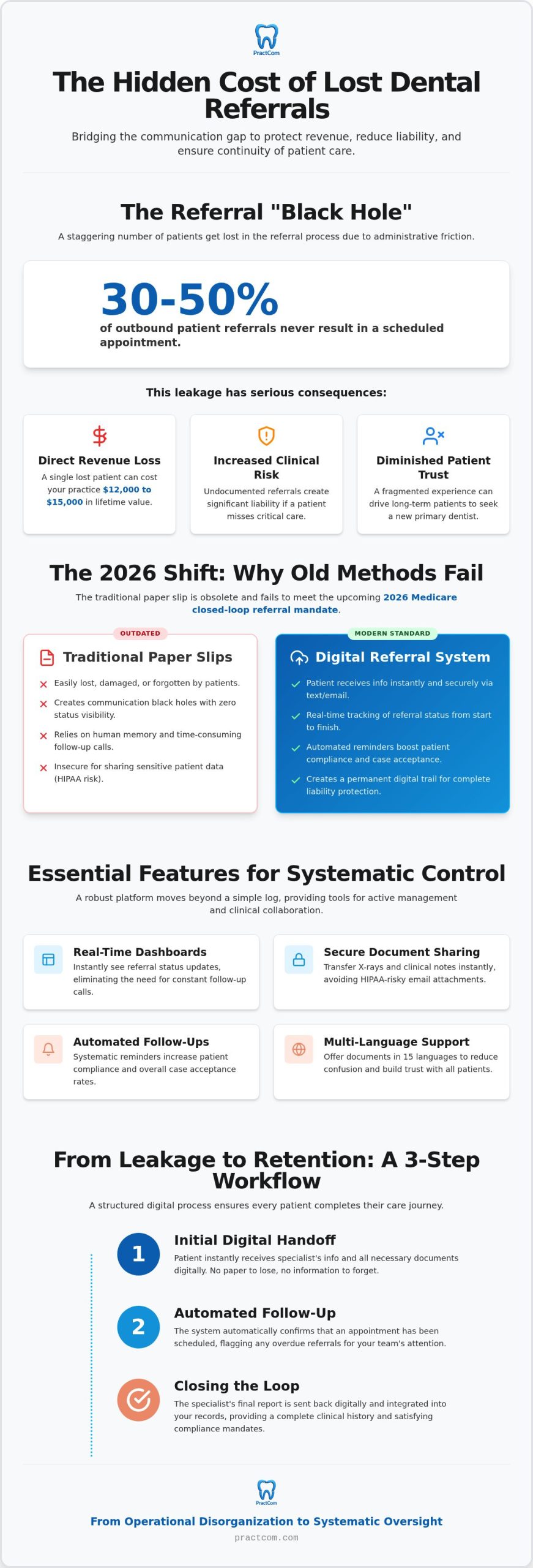
Dental referral tracking is the systematic monitoring of a patient’s journey from the initial general practitioner recommendation to the final specialist treatment completion. It functions as a critical component of a Referral (medicine) framework that ensures continuity of care. When this system breaks down, your practice suffers from the “Black Hole” effect. Industry data shows that 30% to 50% of outbound referrals are lost, meaning the patient never schedules, never shows up, or the results never return to your office.
This leakage represents a direct hit to your bottom line. With the average lifetime value of a dental patient estimated between $12,000 and $15,000, losing a patient due to poor coordination is an expensive oversight. It isn’t just about the single procedure you’re referring out; it’s about the patient’s trust in your clinical oversight. If they feel lost in the system, they might eventually seek a new primary dentist who offers a more guided experience. You don’t want to lose a long-term relationship over a simple administrative gap.
Clinical risk is another major factor. Undocumented or un-followed referrals create significant liability for your practice. If a patient fails to visit an oral surgeon for a suspicious lesion or an endodontist for an abscessed tooth, you need a robust digital trail to prove you fulfilled your professional obligations. Relying on paper notes or memory is a dangerous strategy in a modern regulatory environment.
Why Traditional Referral Slips Fail in 2026
The traditional paper referral slip is a relic that creates unnecessary friction. Patients frequently lose physical documents before they even get home. Without immediate digital information or a text-based link, they often deprioritize the specialist visit. This creates a massive communication gap where you don’t know if the patient booked, and the specialist doesn’t even know the patient was referred. In a high-pressure clinical setting, human memory is a poor substitute for a standardized tracking system.
Referral Leakage vs. Referral Retention
We define referral leakage as a preventable administrative failure where a patient drops out of the referral funnel due to friction or lack of follow-up. Effective dental referral tracking shifts the focus toward retention. Automated reminders and digital handoffs ensure the patient stays on the path to treatment. Identifying where patients drop off allows you to apply a structured remedy to your workflow. Consider these common points of failure:
- The Initial Handoff: Ensuring the patient has the specialist’s contact info digitally and immediately.
- The Follow-up: Checking if an appointment was scheduled within 48 hours of the referral.
- Closing the Loop: Receiving the specialist’s report back for your permanent clinical records.
Essential Features of Referral Management Software
Effective dental referral tracking requires more than just a digital log. It demands a system that provides real-time status updates so your front office doesn’t have to call the specialist to find out if a patient showed up. This visibility allows you to intervene before a patient falls through the cracks. Secure digital document sharing is equally vital. You must be able to send high-resolution X-rays and clinical notes instantly without relying on HIPAA-risky email attachments or cumbersome physical mail. According to the ADA’s General Guidelines for Referring Patients, clear and timely communication is the cornerstone of successful specialty care.
A sophisticated tracking system functions as a guardian of your reputation. It bridges the gap between complex professional procedures and general patient understanding. By standardizing the way you send and monitor referrals, you move from operational disorganization to a state of systematic control. This level of oversight ensures that every patient receives the treatment they need while protecting your practice from the revenue loss associated with patient leakage.
The Power of Multi-Language Communication
Linguistic barriers are a leading cause of referral non-compliance. When a patient doesn’t fully grasp the “why” behind a referral, they’re less likely to follow through. PractCom addresses this by offering all referral documents and instructions in 15 different languages. This ensures that clinical instructions are understood across cultural barriers, reducing confusion for non-English speaking patients during complex specialty cases. Providing information in a patient’s native tongue builds immediate trust and increases the likelihood of case acceptance.
Automated Follow-ups and Patient Engagement
Automation is the antidote to administrative fatigue. Instead of your team spending hours on manual phone calls, the system uses the psychology of the digital “nudge” to keep patients on track. A well-timed SMS or email reminder significantly increases the likelihood of a patient booking their consult. By utilizing automated patient follow-ups, you ensure that no patient is forgotten. This proactive approach builds a sense of psychological security for the patient, knowing their care is being monitored. If you’re ready to see how a dedicated communication layer can transform your workflow, you can explore our system’s capabilities to protect your patient relationships.
GP and Specialist: Closing the Clinical Loop
Closing the clinical loop is the final, most critical stage of dental referral tracking. A referral isn’t truly complete when the patient leaves your office; it’s complete when the specialist’s post-treatment summary is securely filed in your patient records. This documentation provides the administrative warmth of knowing your patient received the necessary care. It also fulfills the 2026 Medicare closed-loop requirements. By adopting patient-centered referral tracking, you move away from the anxiety of incomplete charts toward a state of regulatory reassurance.
Digital documentation acts as a guardian for both the general practitioner and the specialist. By integrating digital dental informed consent forms into the initial referral process, you ensure the patient is fully informed before the specialist consultation begins. This transparency builds a “Circle of Trust” between providers. It creates a shared clinical ecosystem where data moves seamlessly, reducing the risk of human memory failures or lost paperwork. When both parties have immediate access to the same clinical truth, the potential for liability drops significantly.
Strengthening the GP-Specialist Relationship
A standardized system allows specialists to demonstrate their value to referring GPs with concrete data. Instead of vague updates, specialists can provide real-time visibility into case progress and completion. This transparency is a core component of Mastering Dental Referral Management Software. It also eliminates the administrative friction that plagues the specialist’s front desk. When clinical notes and X-rays arrive digitally and pre-organized, the specialist’s team can focus on patient care rather than chasing down missing files via phone or fax.
Risk Management and Informed Consent
In 2026, the necessity of standardized clinical documentation cannot be overstated. You must document the referral recommendation clearly to protect your practice from “failure to refer” claims. Ensuring the patient has signed the correct digital forms before they arrive at the specialist’s office provides a pre-emptive strike against potential liability. This structured approach moves your practice from a posture of operational resistance to one of professional confidence. It establishes a clear, auditable trail that proves you’ve prioritized patient safety and coordinated care at every step of the clinical journey.
How to Implement a Referral Tracking System
Transitioning from a manual, paper-based method to a digital dental referral tracking system requires a structured approach. You can’t fix what you haven’t measured. Start by auditing your existing process to pinpoint exactly where patients are dropping out of the funnel. This audit often reveals a staggering amount of lost revenue that was previously invisible to your team. By following a standardized implementation plan, you move from operational disorganization to systematic control.
- Step 1: Audit your current referral process to identify the 30% to 50% leakage points common in manual systems.
- Step 2: Select a communication layer that integrates with your existing workflow without the complexity of a full PMS overhaul.
- Step 3: Standardize your referral templates and instruction library using a pre-built set of 80+ clinical documents.
- Step 4: Train your front office on using the performance dashboard to ensure daily oversight and accountability.
Selecting a dedicated system instead of struggling with a clunky, all-in-one PMS module allows for a faster rollout. A specialized communication layer functions as a guardian of your patient relationships, ensuring that clinical necessity is never compromised by administrative failure. Once your templates are standardized in 15 languages, your practice is ready to provide a level of care coordination that meets the highest professional standards.
Training Your Team for Success
Staff resistance is a common hurdle when introducing new software. You can overcome this by highlighting how automation eliminates the need for exhausting manual follow-up calls. When the system handles the “nudge,” your team gains hours back for in-office patient care. Utilizing a structured dental practice workflow guide helps streamline the transition and sets clear expectations. Establishing specific KPIs for referral completion rates creates a culture of professional confidence and pride.
Leveraging Analytics for Practice Growth
The PractCom performance dashboard provides the granular data needed to track your referral ROI with precision. It allows you to identify which specialist partners are most active and which ones are failing to send back documentation. This transparency helps you nurture the most valuable relationships in your network. Data-driven decisions based on hard analytics must replace gut feelings when managing your referral ecosystem. If you’re ready to stop the leakage and secure your practice growth, you can explore our implementation process to protect your patient relationships today.
The PractCom Advantage: Beyond Basic Tracking
Many practices assume their all-in-one Practice Management Software (PMS) handles every administrative need. However, generic PMS modules often lack the clinical depth and technical precision required for effective dental referral tracking. PractCom functions as a specialized communication layer that bridges the gap between providers without requiring you to replace your existing software. This dedicated approach offers the psychological security of a system designed specifically for the high-pressure handoff between general practitioners and specialists. By focusing on the nuances of patient handoffs, we provide a stabilizing force that generic modules simply cannot match.
Choosing a dedicated suite over a clunky PMS module allows for a more streamlined user experience. You don’t have to navigate through unrelated clinical screens to send a simple referral or track a patient’s status. Instead, our platform provides a brisk, logical flow that values your time and accuracy above all else. This efficiency ensures that your front office can manage complex networks with professional confidence, moving from the resistance of manual tasks to the ease of a standardized system.
Visualizing the Outcome: Smile Design
Referrals for cosmetic work often stall because the patient cannot visualize the final result. Our Smile Design tool solves this by providing before-and-after visualizations that motivate patients to follow through with specialty care. When a patient can see the potential transformation, the referral shifts from a clinical chore to an exciting personal goal. This tool acts as a powerful conversion asset for the specialist while increasing the patient’s trust in your initial recommendation. Visualizing the outcome is an essential business requirement for any practice looking to increase case acceptance for referred cosmetic procedures.
Comprehensive Instruction Library
A professional patient experience must be consistent from the first consult through final recovery. PractCom provides access to a library of over 80 post-treatment templates, all available in 15 languages. This ensures that every patient receives clear, understandable guidance regardless of cultural or linguistic barriers. By utilizing automated dental post-op instructions, you provide a pre-emptive strike against common post-procedure confusion. This standardized approach significantly reduces the volume of unnecessary emergency calls to your front desk, allowing your team to focus on high-value tasks.
While we prioritize digital speed, we also remain grounded in the logistical realities of the profession. Some patients still prefer the physical security of a paper document. Our system includes professional printing capabilities so you can provide a physical handoff when needed. This flexibility ensures that your practice remains an administrative ally to every patient, regardless of their tech-savviness. If you are ready to move from operational disorganization to systematic control, you can start your transition today and protect your patient relationships for the long term.
Securing Your Patient Pipeline for 2026 and Beyond
Modernizing your dental referral tracking is no longer an optional upgrade; it’s a fundamental requirement for clinical compliance and revenue stability. By moving away from the resistance of manual handoffs, you establish a state of systematic oversight that protects both your reputation and your bottom line. Transitioning to a digital ecosystem eliminates the communication gaps that lead to patient leakage while ensuring you meet the latest closed-loop documentation standards. You can now replace operational disorganization with the confidence of a standardized, data-driven system.
With support for 15 languages, a library of over 80 post-treatment templates, and the powerful Smile Design visualization tool, PractCom functions as a guardian for your patient relationships. These features work together to reduce administrative friction and increase case acceptance for referred procedures. It’s time to provide your team with the tools they need to succeed in a high-pressure clinical setting. Start your free trial of PractCom’s referral management system today to eliminate leakage and enhance your specialist partnerships. Your practice deserves the psychological security that comes with a truly organized and protective clinical workflow.
Frequently Asked Questions
What is the difference between a PMS and referral tracking software?
A Practice Management System (PMS) focuses on the internal logistics of your office, such as scheduling and billing. In contrast, a dedicated dental referral tracking system functions as an external communication layer. It bridges the gap between your practice and the specialist. While a PMS might have a basic referral field, it often lacks the real-time status updates and automated follow-ups necessary to prevent patient leakage and ensure clinical continuity.
How does automated referral tracking improve patient compliance?
Automation improves compliance by removing the administrative resistance that often leads to patient drop-off. By using SMS and email nudges, the system keeps the specialist visit top-of-mind for the patient. These digital reminders provide a sense of psychological security, making the patient feel monitored and cared for. When the process is frictionless and immediate, patients are much more likely to follow through with their recommended specialty treatment.
Can I use PractCom if I already have a practice management system?
Yes, PractCom is designed to complement your existing software rather than replace it. It acts as a specialized communication suite that integrates into your current practice workflow. You don’t have to endure the stress of a full PMS migration to gain advanced referral tracking. This allows your team to maintain their familiar billing and scheduling routines while gaining high-utility tools for patient communication and referral management.
Is dental referral tracking HIPAA compliant?
Security is a core component of professional referral management. Modern tracking systems utilize encrypted channels for secure digital document sharing, which eliminates the risks associated with sending X-rays or clinical notes via standard email. This technical precision ensures that your practice remains compliant with HIPAA regulations while protecting sensitive patient data. It functions as a guardian of your reputation and legal standing in a highly regulated clinical environment.
How many languages are supported for referral instructions?
PractCom provides clinical documentation and referral instructions in 15 different languages. This capability is essential for reducing linguistic barriers that often lead to non-compliance in diverse patient populations. By providing the “why” behind a referral in a patient’s native tongue, you increase the likelihood of case acceptance. This standardized approach ensures that every patient, regardless of their primary language, receives a clear and professional experience.
Can patients track their own referral status through a portal?
Patients can access their referral details and status through a secure Patient Portal. This transparency reduces the volume of repetitive phone calls to your front desk. When patients have immediate access to specialist contact information and their own clinical instructions, they feel more empowered and engaged in their treatment journey. This digital access acts as a stabilizing force, moving the patient from confusion to a state of informed confidence.
Does the software provide analytics on referral partners?
Yes, the system includes a Practice Performance Dashboard that provides granular analytics on your referral network. You can see exactly which specialists are completing cases and which ones are failing to send back documentation. These hard analytics allow for data-driven decisions regarding your professional partnerships. Identifying your most valuable referral partners helps you nurture those relationships and optimize your practice’s growth strategy with professional confidence.
What happens if a patient ignores the referral follow-up?
If a patient ignores the initial automated nudges, the system flags the referral for your front office team. This ensures that no patient is forgotten due to a failure in human memory. You can then intervene with a personalized call or adjust the follow-up strategy. This proactive approach acts as a pre-emptive strike against patient leakage, ensuring that even the most hesitant patients stay on the path to necessary care.

Article by
Cary Ganz DDS
Dr. Cary H. Ganz is a dentist, prosthodontist, entrepreneur, lecturer, and author with more than 50 years of experience in clinical dentistry and dental technology. Throughout his career, he has combined hands-on patient care with a deep understanding of how technology can improve dental practice operations, communication, documentation, and patient outcomes.
In addition to his clinical background, Dr. Ganz has held significant leadership roles in the dental technology industry, including Past Owner and Vice President of Clinical Affairs at DEXIS Digital Radiography and Past Vice President of Clinical Affairs at Denticon Practice Management Software. His business experience includes product development, clinical strategy, dental software innovation, practice management solutions, and educating dental professionals on the effective use of technology in modern dentistry.
Today, Dr. Ganz continues to focus on creating practical technology solutions for dental practices, including PractCom, a comprehensive dental practice communication platform designed to improve patient communication, documentation, compliance support, referrals, and overall practice efficiency. His work reflects a career-long commitment to helping dentists deliver better care while making their practices more organized, efficient, and protected.
No responses yet