A single no-show per day can cost your practice up to $105,600 annually, yet many offices still rely on manual outreach that your team doesn’t have time to complete. With 90% of practices reporting extreme difficulty hiring hygienists in 2026, your staff’s time is too valuable to waste on repetitive phone tag. It’s frustrating when patients call back with avoidable emergencies because they forgot their post-op instructions. You understand that clinical success depends on what happens after the patient leaves the chair, but the administrative weight of a manual dental patient follow-up system is likely reaching a breaking point.
We agree that your team should focus on high-value clinical tasks, not bridging language barriers or chasing unscheduled treatments. This guide will show you how to master the art of clinical continuity and practice growth by automating follow-ups that go far beyond simple reminders. You’ll learn how to implement a standardized system for post-treatment care that reduces liability through better documentation, which provides the legal paper trail necessary for modern compliance. We’ll preview the essential components of a modern communication ecosystem, from multi-language digital instructions to automated clinical checkpoints that protect your reputation and your bottom line.
Key Takeaways
- Transition from a simple recall mindset to a model of clinical continuity that prioritizes patient safety and long-term treatment success.
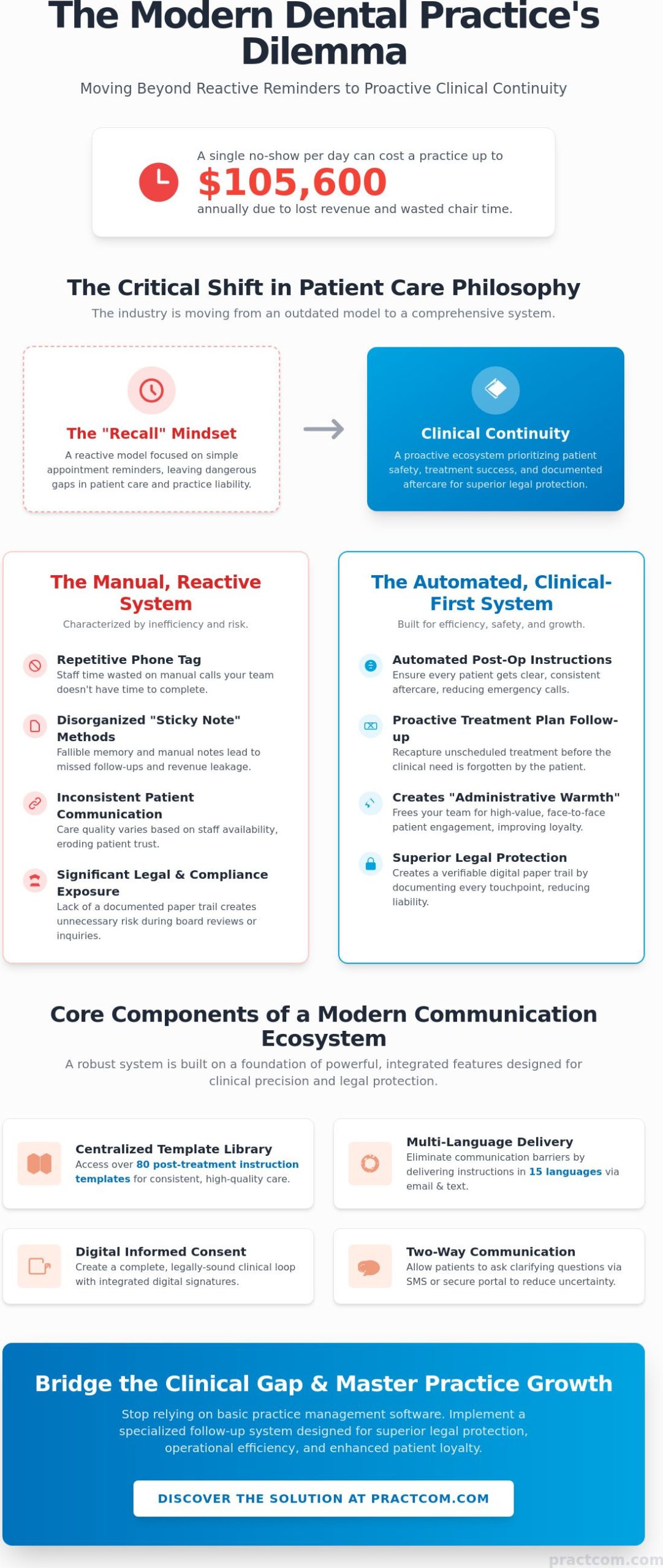
- Leverage a centralized library of over 80 post-treatment instruction templates to ensure consistent, high-quality aftercare communication across every operatory.
- Bridge the “Clinical Gap” left by basic practice management software by integrating a specialized dental patient follow-up system designed for superior legal protection.
- Audit your current unscheduled treatment rates and post-op emergency call volumes to identify specific operational leaks before automating your digital workflows.
- Eliminate communication barriers and reduce liability by delivering automated, professional clinical instructions in 15 different languages via email and text.
What is a Dental Patient Follow-Up System in 2026?
In 2026, a dental patient follow-up system is no longer just a collection of reminder calls; it’s a sophisticated framework designed to manage every patient interaction after they leave your chair. We’ve moved beyond the era of simple “recall” into an age of “continuity,” where the transition from the operatory to the home must be seamless, clear, and fully documented. Embracing this shift is an ethical and professional necessity. You need a system that integrates automated clinical instructions, precise referral tracking, and treatment plan follow-ups into a single, cohesive ecosystem. Relying on manual “sticky note” methods or the fallible memory of a busy front desk team is a major liability. These disorganized approaches lead to missed revenue, patient frustration, and unnecessary legal exposure in an increasingly regulated industry.
The Core Objectives of Modern Follow-Up
Your primary objective is clinical success. You achieve this by providing automated dental post-op instructions that patients can access instantly on their mobile devices. Rationale: When instructions are delivered digitally in any of 15 languages, compliance rates rise significantly while emergency call volumes drop. Revenue retention is the second pillar of a modern system. You must recapture unscheduled treatment plans before the clinical need is forgotten by the patient. Finally, rigorous risk management protects your professional standing. By documenting every digital touchpoint and ensuring it aligns with the data in a patient’s Electronic Health Record (EHR), you create a verifiable paper trail. This documentation is your first line of defense during board reviews or legal inquiries.
Routine vs. Reactive Follow-Up
Many practices still operate within a “reactive” follow-up model. They only initiate outreach when the schedule looks empty or a post-operative emergency forces their hand. This inconsistency erodes patient trust and creates a cycle of operational chaos. Benefit: Routine automation replaces this administrative resistance with a predictable cadence of care. A standardized system ensures every patient receives the same high level of attention, regardless of staffing levels or daily office volume. This environment creates what we call “administrative warmth.” By automating the repetitive, manual tasks of follow-up, you free your team to focus on face-to-face patient engagement. You move from a state of constant administrative catch-up to a position of organized, forward-thinking control that patients notice and appreciate.
The Mechanics of a Clinical-First Follow-Up System
A robust dental patient follow-up system relies on more than just good intentions; it requires a centralized library of over 80 post-treatment instruction templates. This volume is necessary because clinical precision varies between an extraction, a root canal, and a simple filling. Rationale: Standardizing these templates ensures that every patient receives the same high level of care, regardless of which assistant is assisting or how busy the front desk becomes. Because patient populations are increasingly diverse, your system must support multi-language delivery in at least 15 languages. This isn’t just about convenience; it’s an ethical requirement to ensure aftercare instructions are understood. When you send these documents via email or text, you’re providing a permanent record that patients can’t lose.
Integrating digital informed consent into this workflow further strengthens your practice’s legal standing. By requiring a digital signature before the procedure and following up with the specific aftercare instructions immediately after, you create a complete clinical loop. This system should also facilitate two-way communication, allowing patients to ask clarifying questions via their preferred channel, whether that’s SMS or a secure patient portal. According to the American Dental Association, effective communication is one of the best ways to cultivate loyal dental patients. By offering this level of accessibility, you reduce the psychological resistance patients feel when they’re unsure about their recovery progress.
Standardizing Post-Treatment Instructions
Moving beyond verbal instructions is critical for patient safety. Studies suggest patients forget up to 80% of what they hear in the chair due to stress or the lingering effects of anesthesia. Delivering digital instructions via SMS and email ensures that the information is available exactly when the patient needs it at home. To eliminate manual errors, your system should link specific instructions to procedure codes. Benefit: When a clinician completes a code in the chair, the corresponding instruction is queued for delivery automatically. This level of systematic oversight ensures no patient leaves the office without the guidance they need to heal properly.
Referral Management as a Follow-Up Tool
Referral tracking is a vital component of clinical continuity that many offices overlook. You must manage the “Referral Loop” to ensure patients actually visit the specialist you’ve recommended. A modern system standardizes communication between general practitioners and specialists, preventing data loss and ensuring the patient doesn’t feel abandoned during the transition. You can master dental referral management software by automating the follow-up prompts for both the patient and the specialist’s office. This proactive approach protects your reputation and ensures the patient receives the comprehensive care they require. If you’re ready to see how a standardized system can stabilize your workflow, consider starting a risk-free trial to experience the difference in administrative efficiency.
Communication Suite vs. Practice Management Software (PMS)
Most practices mistakenly assume their built-in software handles every aspect of the patient journey. While your PMS is the backbone of your billing and scheduling, it often fails as a comprehensive dental patient follow-up system. This “Clinical Gap” exists because standard PMS developers prioritize database management over the nuances of patient communication. A specialized suite acts as a stabilizing force, providing the administrative warmth and technical precision that a rigid back-office system lacks. It moves your practice from a state of operational resistance to one of systematic control, ensuring no clinical detail is left to chance. By separating your clinical communication from your financial database, you protect the integrity of your patient relationships.
The user experience of a legacy PMS is often clunky and designed for internal data entry rather than patient engagement. In contrast, a modern communication suite offers a patient-facing portal that feels intuitive and professional. This distinction is critical for your practice’s reputation. Patients in 2026 expect a digital experience that matches the high-tech care they receive in your chair. When you provide a streamlined, mobile-friendly interface for aftercare instructions and consent forms, you’re not just sending information; you’re providing psychological security. This professional ally approach alleviates the anxiety patients feel post-treatment, leading to higher satisfaction and better clinical outcomes.
Why Your PMS Isn’t Enough for Follow-Up
Standard PMS platforms generally offer basic text fields that lack multi-language support. This is a significant hurdle when you need to serve a diverse patient base in 15 different languages to ensure ethical compliance. Additionally, these systems don’t handle complex referral tracking or high-resolution smile design visualizations effectively. You need a dedicated library of 80+ templates to cover the nuances of various procedures, which is far beyond the scope of a standard “recall” tool. By using a specialized suite, you gain a level of documentation depth that provides superior legal protection, creating a time-stamped paper trail that basic software simply cannot match.
The Power of a Performance Dashboard
You can’t improve what you don’t measure. A dedicated dashboard allows you to visualize your follow-up success by tracking the conversion rates of unscheduled treatment plans. This transparency helps you identify staff bottlenecks; you can see exactly which follow-ups are being missed and where your team needs additional support. Integrating these insights is a key step in optimizing dental practice workflow. By shifting the burden of tracking from human memory to a digital dashboard, you reduce clinical stress and ensure your office operates with maximum efficiency. This transition ensures that your team stays focused on patient care rather than digging through logs to find missed opportunities.
How to Implement a Follow-Up System Without Disrupting Workflow
Implementing a new dental patient follow-up system shouldn’t feel like a disruption to your clinical routine; it’s about replacing manual resistance with systematic control. Your first step is to audit your current performance by reviewing your unscheduled treatment rates and the frequency of post-operative emergency calls. This data provides a clear baseline for where your communication requires the most support. Once you’ve identified the gaps, you can begin to standardize your clinical instruction templates across all 15 necessary languages to ensure total patient understanding.
The transition to automation requires a clear map of the patient journey. You must trace every touchpoint from the initial treatment plan presentation to the 48-hour post-operative check. Rationale: Mapping these interactions allows you to automate “low-value” touches, such as basic appointment reminders and initial aftercare instructions. This automation preserves your team’s “high-value” time for complex patient questions and face-to-face care. Finally, you must train your clinical team to mention the digital follow-up during the chairside handoff. When a doctor confirms that instructions are coming via text, the patient is much more likely to engage with the digital portal.
The 24-Hour Post-Op Automation
The first 24 hours after a procedure are the most critical window for ensuring patient compliance with aftercare protocols. Benefit: Automated “How are you feeling?” texts sent within this timeframe provide immediate reassurance and a direct link back to your patient portal. By sending bite-sized reminders over a three-day period, you reduce “instruction fatigue” and increase the likelihood that the patient follows every clinical requirement. This consistent cadence builds trust and reduces the chance of preventable complications that lead to after-hours calls.
Closing the Loop on Unscheduled Treatment
Recapturing elective or cosmetic cases requires a persistent but professional approach. You can automate “Treatment Interest” follow-ups that provide additional value before a staff member ever picks up the phone. Using digital dental informed consent forms during this phase helps educate the patient on the benefits and risks of the procedure while they’re still in the decision-making process. Result: Your front desk team has the “full story” of the patient’s engagement levels before they make a reactivation call. To see how this systematic approach can stabilize your office, explore our all-in-one communication platform.
Why PractCom is the Industry Leader in Patient Follow-Up
PractCom has redefined the dental patient follow-up system by grounding every feature in the logistical realities of a high-pressure office. Unlike generic communication tools, our platform is built by dental professionals who understand that clinical accuracy is just as important as administrative speed. We act as a stabilizing force that standardizes your “Clinical Voice” across every touchpoint, ensuring that every patient receives the same authoritative guidance. This consistency reduces the psychological resistance your staff faces when managing complex aftercare. By automating the follow-up process, you gain the ROI of peace of mind; you reduce your liability through meticulous documentation while simultaneously increasing treatment acceptance for elective procedures.
Maintaining a professional ally persona is at the heart of our design philosophy. We recognize that the limitations of human memory shouldn’t dictate the quality of your patient care. Rationale: When you move from disorganized manual tasks to a standardized system, you create an environment of administrative warmth that patients notice. Our platform doesn’t just send messages; it functions as a guardian of your reputation and legal standing. This forward-thinking approach ensures that your practice remains modern, tech-savvy, and grounded in the physical realities of the dental profession.
A Suite for Every National Practice
Scaling a consistent patient experience across multiple locations requires a system that handles diversity with technical precision. DSOs and group practices trust our 15-language library because it ensures ethical compliance and clinical safety in every market they serve. We support the dental patient experience by using empathetic automation that feels personal rather than robotic. For practices focused on cosmetic growth, our smile design tool acts as the ultimate aesthetic follow-up by showing patients their potential results before they commit. You can explore our enterprise-level capabilities by visiting PractCom for DSOs to see how we maintain order across large-scale operations.
Ready to Systematize Your Success?
Moving from a fragmented, manual approach to a standardized ecosystem is a “zero-risk” transition with our dedicated support team. We help you map your existing workflow to identify where automation can have the most immediate impact on your bottom line. The clinical benefits of automated follow-ups include better patient outcomes and reduced emergency calls, while the business benefits manifest as higher retention and a more organized staff. You don’t have to choose between clinical excellence and administrative efficiency. You can have both. It’s time to move toward a future where your practice is protected, organized, and growing. Start your journey toward a more organized practice today.
Secure Your Clinical Legacy Through Systematic Care
Transitioning your practice into a high-performance clinical environment requires more than just chairside skill; it demands a reliable dental patient follow-up system that acts as a guardian of your reputation. You’ve seen how moving from manual resistance to systematic control stabilizes your workflow and protects your legal standing. By integrating 80+ clinical instruction templates and supporting your diverse patient base with 15+ languages, you bridge the clinical gap that basic practice management software leaves behind.
Your new framework includes advanced referral management and smile design tools to ensure every treatment plan reaches its full aesthetic and clinical potential. This level of systematic oversight isn’t just an administrative upgrade; it’s a commitment to a higher standard of professional care. Ready to eliminate clinical chaos? Start your specialized follow-up strategy here. You’re now equipped to lead a practice that values accuracy, efficiency, and the long-term well-being of every patient who enters your chair.
Frequently Asked Questions
How does a dental patient follow-up system integrate with my current PMS?
A specialized dental patient follow-up system integrates with your existing PMS by acting as a high-utility clinical layer that sits on top of your database. It reads procedure codes and patient contact details to trigger specific aftercare workflows automatically. This setup ensures that your financial data remains secure in the PMS while your clinical communication stays organized and consistent in a dedicated suite.
Can follow-up systems send instructions in languages other than English?
Yes, modern systems provide support for at least 15 different languages to serve diverse patient populations ethically and effectively. You can deliver digital instructions, consent forms, and follow-up texts via email or SMS in the patient’s preferred tongue. This capability eliminates language barriers that often lead to poor clinical compliance and avoidable post-operative complications.
Do automated follow-ups help with HIPAA compliance and legal documentation?
Automated follow-ups enhance your regulatory standing by creating a verifiable, time-stamped paper trail of every patient interaction. Digital informed consent forms and delivery receipts for post-op instructions provide superior legal protection compared to manual logs or verbal advice. This systematic oversight ensures you’re prepared for board reviews with comprehensive documentation that proves clinical continuity.
How many follow-up touches are recommended for an unscheduled treatment plan?
We recommend a sequence of three to five touches for unscheduled treatment plans to maintain patient interest without causing communication fatigue. The first touch should occur within 48 hours of the presentation, followed by periodic value-driven check-ins over the next 30 days. This cadence keeps the clinical necessity at the forefront of the patient’s mind, which significantly increases the likelihood of treatment acceptance.
Can patients respond to automated follow-up texts to ask clinical questions?
Patients can respond directly to automated follow-up texts to ask clinical questions through a secure two-way communication channel. These responses are routed to your office dashboard, allowing your team to provide administrative warmth and technical clarity in real-time. This immediate accessibility reduces patient anxiety and prevents minor concerns from escalating into actual clinical emergencies.
What is the difference between a follow-up system and a basic reminder tool?
A basic reminder tool only confirms a time and date, whereas a comprehensive dental patient follow-up system manages the entire clinical aftercare journey. Specialized systems include a library of 80+ instruction templates, referral tracking, and digital consent management. While reminders focus on reducing no-shows, follow-up systems ensure clinical success and long-term practice growth by closing the gap in patient care.
How does a follow-up system reduce the number of post-op emergency calls?
A follow-up system reduces post-operative emergency calls by delivering clear, bite-sized instructions exactly when the patient needs them at home. When patients have permanent digital access to aftercare protocols in their own language, they’re less likely to call with routine questions. This proactive guidance addresses common concerns before they trigger a panic-driven after-hours call to your staff.
Is it possible to track specialist referrals within a follow-up system?
You can track the entire referral loop within a modern follow-up system to ensure patients actually visit the specialist as recommended. The platform standardizes communication between the general practitioner and the specialist’s office, preventing data loss and patient abandonment. This systematic oversight protects your clinical reputation and ensures the patient receives the comprehensive care they require to reach their health goals.

Article by
Cary Ganz DDS
Dr. Cary H. Ganz is a dentist, prosthodontist, entrepreneur, lecturer, and author with more than 50 years of experience in clinical dentistry and dental technology. Throughout his career, he has combined hands-on patient care with a deep understanding of how technology can improve dental practice operations, communication, documentation, and patient outcomes.
In addition to his clinical background, Dr. Ganz has held significant leadership roles in the dental technology industry, including Past Owner and Vice President of Clinical Affairs at DEXIS Digital Radiography and Past Vice President of Clinical Affairs at Denticon Practice Management Software. His business experience includes product development, clinical strategy, dental software innovation, practice management solutions, and educating dental professionals on the effective use of technology in modern dentistry.
Today, Dr. Ganz continues to focus on creating practical technology solutions for dental practices, including PractCom, a comprehensive dental practice communication platform designed to improve patient communication, documentation, compliance support, referrals, and overall practice efficiency. His work reflects a career-long commitment to helping dentists deliver better care while making their practices more organized, efficient, and protected.
No responses yet