
A language barrier can make even a clear treatment plan difficult to understand. Effective communicating with parents in a pediatric dental office combines plain-language conversations, parent involvement, and written follow-up in a language the family understands. Digital tools can help organize explanations, consent information, and care instructions, while direct conversation gives parents room to ask questions and share concerns.
Use more than one communication method: a portal or message can reinforce what the dental team explains, but it should not replace a respectful, two-way conversation. Clear recommendations, parental involvement in decisions, and thoughtful follow-up all support better communication. Digital tools can also make information more accessible to families who speak different languages.
Key Takeaways
- Listen to parents’ concerns and explain recommendations in plain, age-appropriate language to build understanding and trust.
- Include parents in treatment discussions by describing options clearly and agreeing on how they can support their child.
- Use portals and digital follow-ups to reinforce conversations and make instructions easier for families to revisit.
- Offer written communication in a language parents understand, with PractCom supporting document delivery by email, text, or print in 15 languages.
1. Why Is Communication Important in Pediatric Dentistry?
Clear communication helps parents feel heard and children understand what to expect. In pediatric dentistry, the dentist, child, and parent each bring useful information to the visit. Ask the parent about their concerns, then explain the next step directly to the child. For example, describe a dental mirror as a small tool for looking at teeth. The American Academy of Pediatric Dentistry includes effective communication among the dentist, child, and parent as an objective of parental presence or absence. Listening and explaining clearly can build trust and support children’s oral health.
Before sharing a child’s health information, confirm that the parent or guardian has authority to receive it. Discuss details privately and account for applicable exceptions rather than assuming every accompanying adult can receive records or updates.
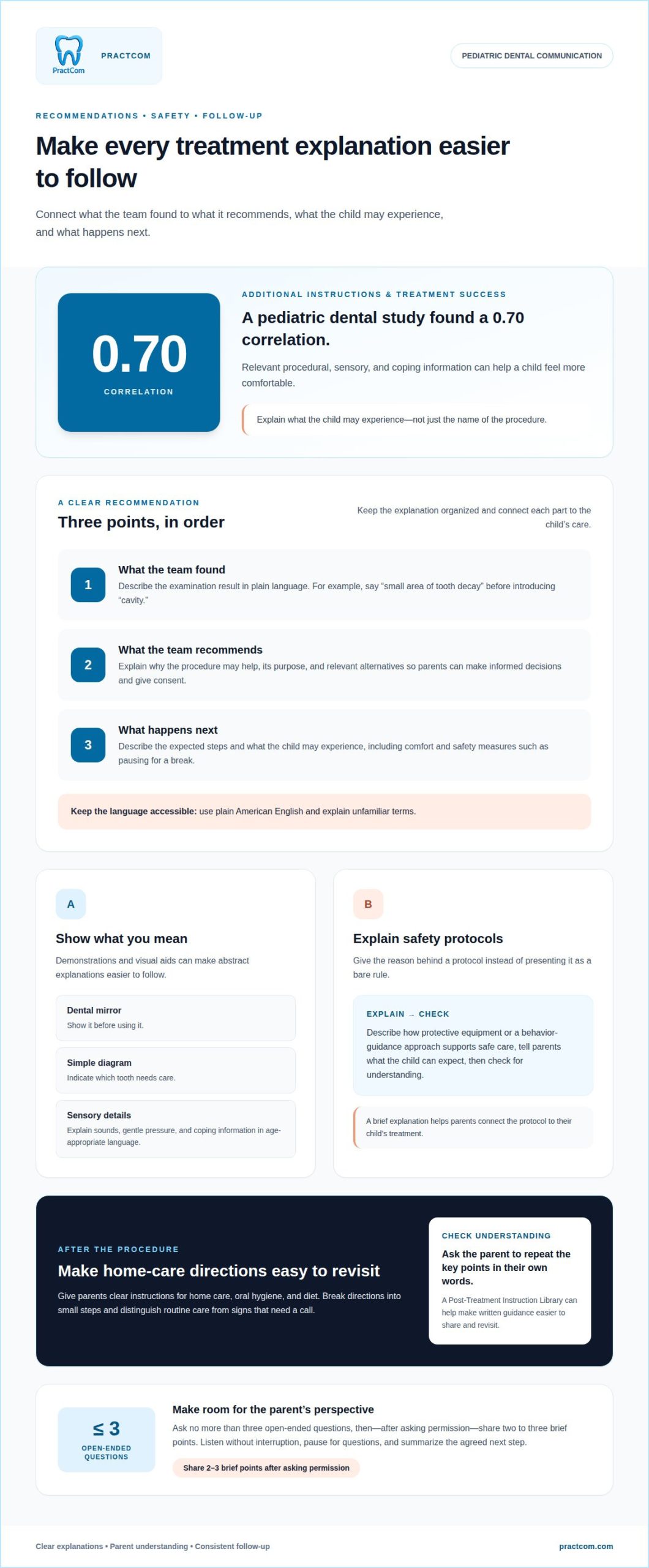
Effective communication with parents in a pediatric dental office starts with listening without interruption, using plain language, and checking understanding. Offer a brief explanation, pause for questions, and summarize the agreed next step. Child-care communication guidance recommends asking no more than three open-ended questions, then sharing two to three brief points after asking permission. For example, ask what the parent has noticed about brushing, acknowledge their answer, and offer a practical oral-health resource.
Discuss costs, insurance, and payment options before treatment decisions. Explain the proposed procedure, expected charges, what the office knows about insurance coverage, and available payment arrangements in clear terms. Invite parents to ask which costs remain uncertain, then document the discussion.
For a child with special health care needs, ask the parent what helps the child feel safe and what may trigger distress. Agree on practical supports, such as a predictable sequence, extra time, or reduced sensory input. Follow the child’s communication preferences and explain each step before proceeding.
When a parent is anxious or dissatisfied, pause, lower your voice, and ask a clarifying question before responding. Acknowledge the concern, explain what can happen next, and follow through on any commitment. A calm tone and open posture can help keep the conversation focused.
Train the whole team to use consistent, respectful language from reception through treatment. Practice brief scripts such as, “What concerns you most today?” and “Would it help if I explained that another way?” Role-play questions about visits and procedures so staff can respond with empathy, clear steps, and age-appropriate explanations.
2. Explaining recommendations and safety protocols
Before recommending treatment, explain what the examination showed and why a procedure may help. Use plain American English instead of terms parents may not recognize. For example, say “small area of tooth decay” before introducing “cavity.” Explain the purpose, expected steps, and relevant alternatives, then invite questions. This helps parents make informed decisions and give consent.
For each treatment recommendation, connect it to a finding, explain the procedure, and describe what the child may experience. Mention comfort and safety measures in practical terms, such as how staff will pause if the child needs a break. Keep the explanation organized: what the team found, what it recommends, and what happens next. Document the discussion to support continuity between the appointment and follow-up.
Demonstrations and visual aids can make abstract explanations easier to follow. Show a dental mirror before using it, or use a simple diagram to indicate which tooth needs care. Explain the steps to the child in age-appropriate language, including sensory details such as a sound or gentle pressure. A pediatric dental study found a 0.70 correlation between giving additional instructions and treatment success. Relevant procedural, sensory, and coping information can help a child feel more comfortable.
Explain the purpose behind safety protocols. If a child needs protective equipment or a specific behavior-guidance approach, describe how it supports safe care and what the child can expect. Avoid presenting a policy as a bare rule. A brief explanation followed by a check for understanding helps parents connect the protocol to their child’s treatment.
After the procedure, give parents clear instructions for home care, oral hygiene, and diet. Break directions into small steps, distinguish routine care from signs that need a call, and ask the parent to repeat the key points in their own words. A Post-Treatment Instruction Library can help make written guidance easier to share and revisit after the appointment.
3. Parent participation, support, and observation during treatment
Parents can help the team prepare by sharing useful context before treatment begins. Ask what helps the child manage anxiety, which language they understand best, and whether past dental care affected them. Agree on a simple support role, such as offering a familiar phrase or holding the child’s hand. This gives the team practical information without making the parent responsible for clinical decisions.
The American Academy of Pediatric Dentistry describes parental presence or absence as a way to gain cooperation. It identifies participation, physical and psychological support, and observation as possible objectives for parents. Presence may be used with any patient, while a parent unable or unwilling to provide effective support is a contraindication. A parent’s wish to observe does not necessarily signal distrust.
Set expectations before the procedure. Explain what the child may see or hear, what behavior guidance means, and how staff will respond if the child needs a pause. For example, agree that one adult will speak calmly while the clinician gives instructions. Consistent language helps prevent competing directions that can increase anxiety or disrupt the child’s attention.
For treatment decisions, explain the recommended care and available options in understandable terms. Describe relevant benefits and drawbacks, invite questions, and record the parent’s decision and consent. In the United States, who may consent and what exceptions apply depend on applicable law and circumstances. Confirm the authorized decision-maker before treatment rather than assuming every accompanying adult has authority.
Effective communication supports cooperation, but participation should fit the child and situation. The American Academy of Pediatric Dentistry lists gaining attention, minimizing anxiety, avoiding negative behavior, and supporting a positive experience among objectives of presence-or-absence guidance. If a child resists, pause and clarify whether the parent’s support, the child’s comfort, or the explanation needs adjustment. A study found a positive correlation of 0.60 between giving a child a sense of control and cooperation during treatment. Offer a manageable choice, such as selecting a headrest angle, then continue with clear guidance.
4. Digital communication platforms and patient portals
A patient portal gives families a consistent place to review practice messages and shared care information. A useful workflow is to send appointment details through the selected channel, then keep follow-up instructions accessible after the visit. For example, a parent can revisit a written care plan rather than relying on memory alone. Digital messages support the conversation; they do not replace time for questions or clinical discussion.
For appointment reminders, cancellations, and follow-up instructions, send direct, timely messages with clear next steps. A reminder should identify the appointment and explain how to respond if plans change. After a cancellation, acknowledge the change and explain how rescheduling works. Following treatment, send concise instructions and a way to raise new concerns. Keep each message focused so parents can quickly find the action they need.
Consistency matters. Use a shared communication process so front-desk staff and clinical team members do not give conflicting information. Before sending a message, confirm it is intended for the right family and includes only information needed for that task. For example, separate routine scheduling details from treatment discussions that need a private conversation. A patient portal can organize routine exchanges while preserving a clear path to speak with the team.
Digital communication can help a practice establish a reliable follow-up routine. Set a clear sequence: send the instructions, invite questions, and document relevant responses in the appropriate patient record. Automated follow-ups can support this process, but staff still need to review concerns that call for personal attention. This keeps technology useful without making a family’s dental care feel like a series of impersonal alerts.
For successful communication, match the channel to the message: use portal messages for information parents may need to revisit, and direct conversation for complex concerns. Explore a more organized patient communication workflow.
PractCom: The All-in-One Patient Communication Platform for Dental Practices
PractCom is the all-in-one patient communication platform for dental practices, bringing key communication tools together. For pediatric dental teams, it supports consistent follow-through beyond the chair, from sharing consent information to delivering care instructions after a visit.
The Post-Treatment Instruction Library helps practices share written guidance families can revisit at home. Digital Informed Consent Forms support the consent process, while the Referral Management System helps organize referral communication. These tools give teams a structured way to keep patient information and follow-up steps in order.
If you’re ready to explore how PractCom can support communication in your practice, contact PractCom.
Build a Communication Routine Your Team Can Use
Effective communication with parents in a pediatric dental office comes from deliberate habits, not a single conversation. Decide how your team will capture recurring questions, keep explanations consistent, and make follow-up part of the care process. A shared routine gives staff a clear starting point while leaving room to respond to each family.
Use parent feedback as a practical signal. If families often ask the same question after visits, revisit how the team explains the topic and where families can find guidance later. Small adjustments can make information easier to follow without making interactions feel scripted or impersonal.
If your practice is ready to bring its communication process into clearer focus, contact PractCom to discuss communication. Take the next step at a pace that fits your team, and keep building a supportive experience for children and parents.
Frequently Asked Questions
What’s the best way to handle language barriers with non-English speaking parents?
Ask which language the parent prefers for discussing their child’s care, then arrange communication that supports accurate understanding. Use a qualified medical interpreter for complex treatment discussions, and address the parent directly rather than speaking only to the interpreter. Keep written materials in the family’s preferred language when available. Before ending, invite the parent to explain the plan in their own words and clarify any remaining questions.
Why Is Communication Important in Pediatric Dentistry?
Clear communication helps parents share information that can shape a child’s dental visit, including changes in health, medication, or past experiences. It also gives families a chance to raise concerns before they become barriers to care. For instance, a parent may explain that a child is sensitive to certain sounds. Sharing that detail helps the team plan a more thoughtful visit and build a cooperative relationship over time.
How can pediatric dental offices explain behavior guidance, sedation, and anesthesia risks to parents?
Explain each approach in plain language, including its purpose, what the child may experience, relevant risks, and available alternatives. Distinguish behavior guidance from sedation or anesthesia, and describe only the approach being considered for that child. Invite questions and allow time for discussion before seeking informed consent. For example, clarify what monitoring the proposed care involves and whom parents can ask about concerns before the appointment.
What consent and parental rights rules apply to pediatric dental treatment in the United States?
Who may consent to treatment, and what exceptions apply, depend on applicable law and the circumstances. Confirm the authorized decision-maker before treatment rather than assuming every accompanying adult has authority.
What privacy rules apply when sharing a child’s dental information with parents or guardians under HIPAA?
Confirm a parent’s or guardian’s authority before sharing a child’s health information. Discuss details privately and account for applicable exceptions. Do not assume every accompanying adult can receive records or updates.

Article by
Cary Ganz DDS
Dr. Cary H. Ganz is a dentist, prosthodontist, entrepreneur, lecturer, and author with more than 50 years of experience in clinical dentistry and dental technology. Throughout his career, he has combined hands-on patient care with a deep understanding of how technology can improve dental practice operations, communication, documentation, and patient outcomes.
In addition to his clinical background, Dr. Ganz has held significant leadership roles in the dental technology industry, including Past Owner and Vice President of Clinical Affairs at DEXIS Digital Radiography and Past Vice President of Clinical Affairs at Denticon Practice Management Software. His business experience includes product development, clinical strategy, dental software innovation, practice management solutions, and educating dental professionals on the effective use of technology in modern dentistry.
Today, Dr. Ganz continues to focus on creating practical technology solutions for dental practices, including PractCom, a comprehensive dental practice communication platform designed to improve patient communication, documentation, compliance support, referrals, and overall practice efficiency. His work reflects a career-long commitment to helping dentists deliver better care while making their practices more organized, efficient, and protected.
No responses yet