
You leave the dental chair with a transformed smile, but as you reach for your morning coffee the next day, a sudden wave of anxiety hits. You wonder if that single cup will stain the fresh resin or if a crunchy snack might cause an immediate chip. It’s a common stress, especially when you’ve left the clinic without a clear, written roadmap for care after dental bonding. We understand that the pressure to maintain a “day one” aesthetic can feel high when you aren’t sure which habits put your investment at risk.
You deserve the psychological security of knowing exactly how to protect your new look. This guide provides the technical precision you need to master immediate and long-term maintenance, helping you avoid emergency repairs and keep your smile flawless for five to ten years. We’ll examine the critical 48 hour window where staining is most likely, identify the specific foods that threaten composite resin, and explore how standardized digital instructions are finally replacing the confusion of verbal aftercare.
Key Takeaways
- Navigate the critical 48 hour post-treatment window by avoiding staining agents while the composite resin achieves its final set and structural stability.
- Protect your aesthetic investment by identifying high-risk foods and acidic beverages that can degrade the resin polish and lead to premature wear.
- Optimize your daily hygiene routine with non-abrasive gels and alcohol-free mouthwashes to preserve the essential resin-to-enamel bond.
- Learn to distinguish between minor surface stains and serious marginal leaks to ensure proper care after dental bonding and avoid unnecessary emergency visits.
- Understand how standardized digital instruction libraries eliminate the confusion of verbal aftercare, providing the psychological security of a clear, repeatable maintenance plan.
The Critical First 48 Hours: Setting the Foundation for Bonding Success
The first 48 hours following your procedure represent the most vulnerable window for your new restoration. While the high-intensity curing light used by your dentist initiates the hardening process, the chemical reality of dental bonding is that residual polymerization continues for several hours after you leave the office. During this time, the composite resin hasn’t yet achieved its maximum density or stain resistance. This initial period is when the majority of early failures occur, often due to a lack of clear, actionable guidance on care after dental bonding. Without a standardized system of instructions, patients frequently rely on memory, which often fails in the high-pressure environment of a clinical discharge.
A specific chemical phenomenon known as the surface oxygen inhibition layer makes the resin particularly susceptible to external influences. This microscopic layer remains slightly more porous and “hungry” for pigments immediately after placement. Proper care after dental bonding requires a proactive approach to prevent these pigments from becoming a permanent part of your tooth’s new structure. Standardizing this information through a digital Post-Treatment Instruction Library is an ethical necessity for modern practices, as it eliminates the operational resistance that leads to patient confusion and preventable repair appointments.
The “White Diet” Rule
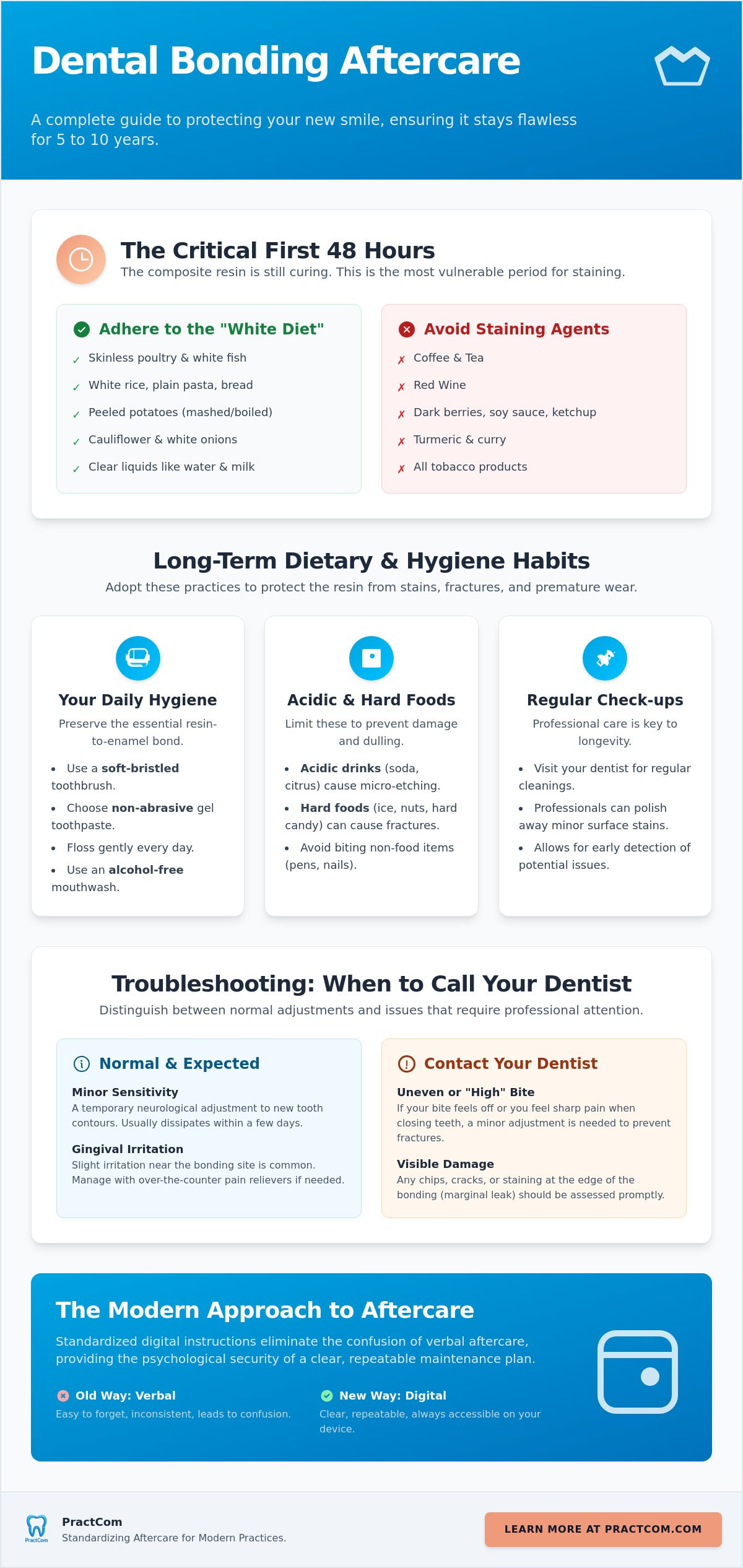
To ensure the aesthetic success of your bonding, you must adhere to a strict “white diet” for the first two days. This isn’t a mere suggestion; it’s a technical requirement to prevent premature staining while the resin stabilizes. During this phase, you should only consume clear liquids and light-colored foods. Safe options include:
- Cauliflower and white onions
- White rice and plain pasta
- Peeled potatoes (mashed or boiled)
- Skinless poultry and white fish
Clear liquids are mandatory because the resin absorbs pigments more readily during the initial setting phase. Avoiding coffee, tea, red wine, and dark berries for 48 hours ensures that your restoration maintains its “day one” brilliance for years to come.
Managing Immediate Sensitivity
It’s common to experience minor discomfort as your mouth adapts to the new material. Post-bonding sensitivity is a temporary neurological adjustment to new tooth contours. This sensation usually dissipates within a few days as the nerve tissues settle. If you experience minor gingival irritation near the site, over-the-counter solutions like ibuprofen or acetaminophen are typically sufficient to manage the transition.
However, you must distinguish between normal adjustment and “high spots.” If your bite feels uneven or if you experience sharp pain when closing your teeth together, the bonding may need a minor structural adjustment. Recognizing these signs early allows for a quick office visit to refine the contours, protecting the resin from the excessive pressure that leads to fractures.
Dietary Guidelines: Protecting the Resin from Stains and Fractures
Effective care after dental bonding requires a shift in how you view the physical limitations of your teeth. Unlike natural enamel, which is remarkably dense, composite resin is a porous material that interacts dynamically with your diet. Staining agents exist on a hierarchy of severity. While coffee and red wine are well known culprits, substances like turmeric and tobacco possess smaller molecular structures that penetrate the resin matrix more deeply. This makes them significantly harder to remove through standard brushing alone, often requiring professional intervention to restore the tooth’s original shade.
Acidity is an often overlooked factor in restoration longevity. High-acid beverages, such as citrus juices and sodas, cause a phenomenon known as micro-etching. This process degrades the high-luster polish of the bonding, creating a rougher surface that traps pigments more easily. It’s a cumulative effect that slowly dulls the aesthetic result over several months. To help patients maintain good oral hygiene after dental bonding, many clinicians now provide digital guides that categorize these risks, ensuring you have a clear reference at home long after you leave the office.
High-Risk Foods and Behavioral Habits
Mechanical stress is the primary cause of fracture at the incisal edge, which is the biting surface of the tooth. Habits like ice-chewing or fingernail-biting create concentrated pressure that the resin-to-enamel bond isn’t designed to withstand. When eating hard foods like apples or corn on the cob, you should avoid using your bonded teeth to tear into the item. This creates shearing forces that can cause the material to de-bond or chip. Adopting the “back teeth rule”, which involves cutting food into smaller pieces and chewing with your molars, is a simple way to protect your investment from structural failure.
The Science of Porosity and Pigmentation
Composite resin differs fundamentally from porcelain veneers. Porcelain is glass-like and non-porous, whereas composite has a microscopic texture that absorbs fluids over time. This difference is why your bonding may require professional polishing every 6 to 12 months to reset the surface luster. If you frequently consume coffee or tea, the “straw technique” is a practical remedy. Using a straw minimizes the contact time between the liquid and the bonded surface, significantly reducing the rate of pigmentation. For practices looking to automate these reminders, standardized patient communication tools can ensure every patient receives these maintenance tips exactly when they need them.
Long-Term Maintenance: Beyond the Bathroom Sink
Achieving lasting success with your restoration requires moving beyond the basic advice of “brushing twice a day.” Technical precision in your daily care after dental bonding involves selecting products that respect the chemical limitations of composite resin. While natural enamel is the hardest substance in the human body, the resin used in bonding is significantly softer and more prone to surface wear. Using the wrong tools can inadvertently strip away the high-luster finish, leading to premature staining and a dull appearance that no amount of home brushing can fix.
Standard whitening toothpastes are often the biggest culprit in early bonding degradation. These products typically rely on high concentrations of abrasive particles like silica to scrub away surface stains from enamel. On composite resin, these particles act like sandpaper, creating microscopic scratches that catch pigments and bacteria. Switching to a non-abrasive gel toothpaste is a non-negotiable requirement for anyone serious about maintaining good oral hygiene and care. Similarly, you must choose alcohol-free mouthwashes. Alcohol is a solvent that can gradually soften the resin matrix over time, weakening the essential resin-to-enamel bond and increasing the risk of marginal leakage.
For patients who struggle with bruxism, a custom night guard is an essential insurance policy. The shearing forces generated by nighttime teeth grinding can easily exceed the bond strength of the material, leading to catastrophic fractures at the incisal edge. A professionally fitted guard redistributes these forces across the entire dental arch, protecting your aesthetic investment while you sleep. To ensure these details aren’t lost in the shuffle of daily life, many modern practices now use a digital Post-Treatment Instruction Library to provide patients with a permanent, searchable record of these specific maintenance requirements.
Optimizing Your Oral Hygiene Routine
The method of cleaning is just as important as the tools. A soft-bristled electric toothbrush is superior to manual scrubbing because it provides consistent, gentle pressure that removes plaque without abrading the resin surface. Water flossers are particularly effective for cleaning the “margin,” which is the transition zone where the bonding meets your natural tooth. You must strictly avoid “charcoal” or “baking soda” DIY whitening products. These substances are far too aggressive for composite materials and will destroy the surface polish within weeks of use.
Professional Maintenance and Polishing
Standard dental cleanings are necessary, but they aren’t enough to keep bonding in “day one” condition. You should schedule a specific “bonding polish” every six months. During this appointment, your hygienist uses specialized, fine-grit aluminum oxide points to buff out micro-scratches and reset the surface luster. This visit also allows the dentist to inspect for micro-leakage. Identifying a dark line at the edge of the bonding early can prevent secondary decay from forming underneath the restoration, saving you from a more expensive replacement later.
Troubleshooting: When to Call Your Dentist
Even with meticulous care after dental bonding, mechanical and chemical variables can sometimes necessitate a professional follow-up. One of the most common issues patients encounter is the presence of a “high spot.” This occurs when the new resin sits slightly higher than your natural bite profile, causing heavy contact when you close your teeth. You shouldn’t ignore this sensation. Constant pressure on a high spot leads to localized inflammation in the periodontal ligament and can cause the bonding to fracture prematurely. A simple five minute adjustment in the office is usually all it takes to realign the bite and protect the restoration.
You also need to distinguish between surface stains and marginal leaks. A surface stain is typically a broad, yellowish discoloration on the face of the resin caused by dietary pigments. In contrast, a marginal leak appears as a thin, dark line exactly where the bonding meets the natural tooth. This indicates that the seal has been compromised, allowing bacteria and fluids to seep underneath the material. While a stain is primarily a cosmetic concern, a leak is a clinical priority. It requires professional attention to prevent secondary decay from forming in the space between the resin and the enamel.
Emergency vs. Cosmetic Repairs
Not every chip is a true dental emergency. A real emergency involves pain, swelling, or a sharp edge that’s actively cutting your tongue or cheek. If you lose a piece of bonding but aren’t experiencing pain, you can typically wait a few days for a scheduled appointment. However, you must never attempt a “DIY dental repair” with household glues or over-the-counter kits. These chemicals are often toxic and can permanently damage your underlying enamel, turning a simple cosmetic fix into a complex restorative problem. If the bonding detaches completely, try to save the piece and bring it to your appointment.
The Role of Digital Documentation
Psychological security comes from having immediate access to your clinical records and aftercare instructions. Using the PractCom patient portal allows you to review your specific care steps before making an anxious phone call, helping you determine if your situation requires an immediate visit. Practices that utilize “Smile Design” visualizations also provide a digital baseline of your “day one” look. This makes it easier for the dentist to recreate your original results during a repair, ensuring the aesthetic continuity of your smile remains intact.
If you’re a practitioner looking to eliminate patient confusion and protect your clinical reputation with standardized systems, start your free trial with PractCom today.
The Practitioner’s Solution: Standardizing Aftercare with PractCom
The clinical success of a restoration often hinges on what happens after the patient leaves your chair. While you may provide excellent chairside education, the reality of a modern clinical environment is that verbal instructions are frequently forgotten or misinterpreted. This operational gap is a leading cause of poor outcomes and negative reviews. When a patient fails to follow proper care after dental bonding, the resulting staining or fractures are often blamed on the practitioner rather than the patient’s habits. Standardizing this communication isn’t just a convenience; it’s a stabilizing force that protects your clinical reputation and ensures long-term success.
The PractCom Post-Treatment Instruction Library provides a structured remedy for this common industry pain point. By moving from manual, paper-based tasks to a standardized digital system, you provide patients with a reliable professional ally they can access at any time. This reduces the volume of non-billable emergency visits and “re-work” appointments that drain your practice’s profitability. With support for 15 languages, you can ensure that every patient, regardless of their primary language, receives technically precise guidance on care after dental bonding, eliminating the risk of translation errors in complex cosmetic cases.
Reducing Practice Liability and Improving Compliance
Documented post-operative instructions are an ethical and legal necessity in modern risk management. Relying on a patient’s memory of a verbal conversation offers no protection in the event of a dispute. Integrating Digital Informed Consent with your aftercare workflow creates a complete, paperless ecosystem that safeguards your legal standing. This systematic oversight ensures that every step of the procedure and maintenance plan is recorded and acknowledged. Research shows that automated SMS instructions increase patient compliance by 40%, directly translating to fewer preventable failures and higher patient satisfaction scores.
Streamlining the Cosmetic Workflow
Operational efficiency improves when your front desk isn’t bogged down by repetitive “instruction-related” phone calls. PractCom’s automated follow-ups act as a pre-emptive strike against patient confusion by checking in at the critical 48 hour mark. This proactive communication confirms the patient is adhering to the “white diet” and managing any initial sensitivity correctly. The ROI is clear: you spend less time on administrative damage control and more time on high-value clinical procedures. This high-utility approach transforms your patient communication from a source of stress into a competitive advantage.
Ready to standardize your practice and eliminate operational resistance? Start your free trial with PractCom today.
Securing Your Smile’s Future with Precision and Consistency
Achieving a lasting, flawless smile is a partnership between clinical excellence and diligent patient habits. You’ve learned that the first 48 hours are foundational; they require a strict white diet to prevent early staining while the resin stabilizes. Beyond the initial setting phase, success depends on using non-abrasive hygiene tools and attending regular professional polishing appointments to maintain the material’s integrity. Mastering care after dental bonding doesn’t have to be a guessing game of memory and verbal advice.
For dental professionals, the key to reducing non-billable emergency calls lies in a standardized system. PractCom offers a library of 80+ dental post-op templates in 15 languages, helping top-tier practices eliminate operational resistance and improve outcomes. Elevate your patient communication with PractCom’s automated instruction library to provide the psychological security your patients deserve. With the right roadmap and professional support, your aesthetic investment will remain a source of confidence for years to come.
Frequently Asked Questions
How long after dental bonding can I eat normally?
You can eat as soon as any local anesthesia wears off, but you must adhere to a “white diet” for the first 48 hours. This period is essential because the composite resin is still reaching its final hardness and structural stability. Avoid hard, crunchy, or sticky foods immediately after the procedure to prevent the new material from chipping or de-bonding before it fully sets.
Can I drink coffee or tea if I have dental bonding on my front teeth?
You should completely avoid coffee and tea for the first 48 hours to prevent deep staining while the resin is most porous. After this initial window, drinking these beverages through a straw is a practical way to minimize contact with the bonded surface. Rinsing your mouth with water immediately after consumption also helps preserve the material’s original shade and luster.
What happens if my dental bonding chips or falls off?
You must contact your dentist for a professional repair if the bonding chips or detaches. While a minor chip isn’t always a medical emergency, it creates sharp edges and leaves the underlying tooth structure vulnerable to decay. Never attempt a DIY repair with household glues or over-the-counter kits, as these chemicals are toxic and can cause permanent damage to your natural enamel.
Is it normal for my teeth to be sensitive after a bonding procedure?
Yes, minor sensitivity to temperature and pressure is a normal neurological adjustment to the new tooth contours. This sensation typically resolves within a few days as the nerve tissues settle. If you experience persistent or sharp pain when biting down, it may indicate that the bonding requires a minor structural adjustment to realign your bite.
How long does dental bonding typically last in 2026?
In 2026, modern nano-hybrid composites allow dental bonding to typically last between 5 and 10 years. Its actual lifespan is determined by your dietary habits and the quality of your daily hygiene. Consistent care after dental bonding, including professional polishing every six months, is a technical requirement to ensure the restoration reaches its maximum longevity.
Can I use a whitening toothpaste on my bonded teeth?
No, you must avoid abrasive whitening toothpastes because they act like sandpaper on the composite resin. These products create microscopic scratches that dull the surface and make the material significantly more prone to trapping pigments. Switching to a non-abrasive gel toothpaste is an essential step in care after dental bonding to maintain a smooth, stain-resistant finish.
Do I need a special toothbrush for dental bonding?
You don’t need a specialized tool, but you must use a soft-bristled toothbrush to prevent abrasive wear on the resin. Soft-bristled electric toothbrushes are often superior because they provide consistent, gentle pressure that removes plaque without damaging the bond. This approach protects the delicate transition zone where the material meets your natural tooth enamel.
How do I know if my bite is “off” after the bonding is applied?
Your bite is likely “off” if you feel a “high spot” or heavy pressure on the bonded tooth when closing your mouth naturally. You might also notice that your teeth don’t meet comfortably on the opposite side of your jaw. This requires a quick professional adjustment to redistribute the biting forces and prevent the excess pressure from causing a fracture.

Article by
Cary Ganz DDS
Dr. Cary H. Ganz is a dentist, prosthodontist, entrepreneur, lecturer, and author with more than 50 years of experience in clinical dentistry and dental technology. Throughout his career, he has combined hands-on patient care with a deep understanding of how technology can improve dental practice operations, communication, documentation, and patient outcomes.
In addition to his clinical background, Dr. Ganz has held significant leadership roles in the dental technology industry, including Past Owner and Vice President of Clinical Affairs at DEXIS Digital Radiography and Past Vice President of Clinical Affairs at Denticon Practice Management Software. His business experience includes product development, clinical strategy, dental software innovation, practice management solutions, and educating dental professionals on the effective use of technology in modern dentistry.
Today, Dr. Ganz continues to focus on creating practical technology solutions for dental practices, including PractCom, a comprehensive dental practice communication platform designed to improve patient communication, documentation, compliance support, referrals, and overall practice efficiency. His work reflects a career-long commitment to helping dentists deliver better care while making their practices more organized, efficient, and protected.
No responses yet