
Explaining complex dental procedures to patients starts with plain language: describe the condition, why you recommend treatment, the available options, and what accepting or declining them may mean. For braces and Invisalign, explain the practical distinction clearly: braces shift teeth over 18-24 months, while Invisalign aligners are replaced every 1-2 weeks.
Patients naturally want to understand a procedure before deciding whether to proceed. They may also be concerned about discomfort, difficult past experiences, or being judged. Take time to hear those concerns and invite questions so the conversation feels clear and unhurried.
This guide explains how to listen for what matters to each patient, encourage questions, and describe diagnoses and treatment options in everyday terms. You’ll also see how diagrams, models, and imaging can support an explanation, so patients have a clearer picture of what to expect and can take part in informed decisions.
Key Takeaways
- Begin by listening for the concern behind a patient’s hesitation, including worries shaped by earlier dental experiences.
- Invite questions, acknowledge the patient’s perspective, and leave room for a clear, unhurried discussion.
- Explain the diagnosis, reason for treatment, options, and possible consequences in everyday language.
- Use images, models, and take-home materials to make complex explanations easier to follow and revisit.
Asking patients about their concerns
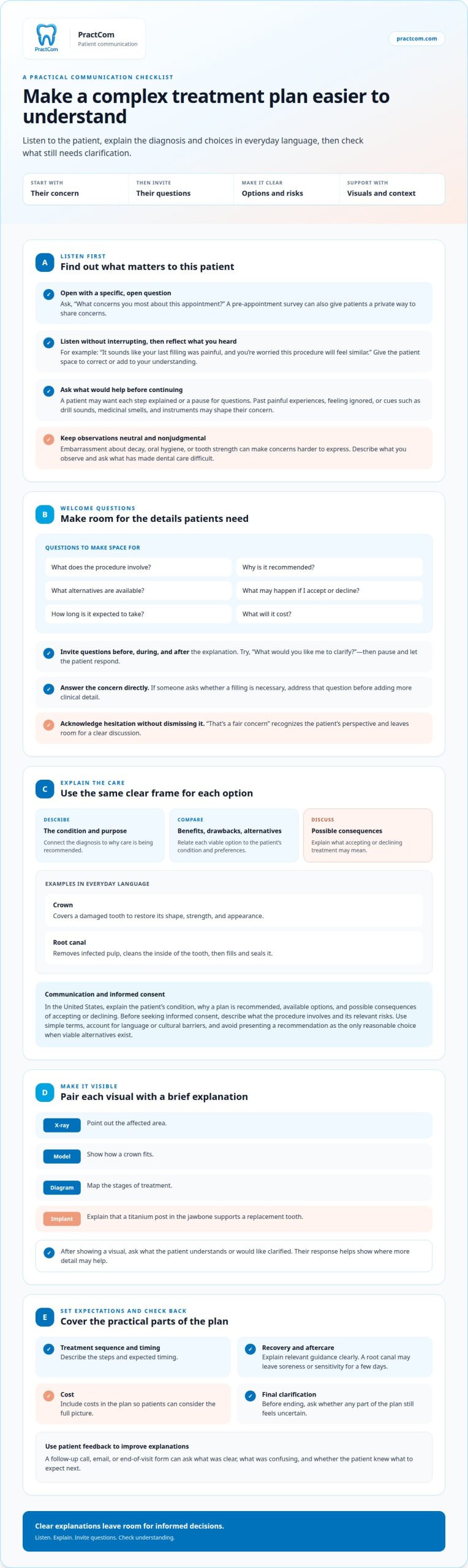
Before discussing treatment, ask, “What concerns you most about this appointment?” An open question gives patients room to name a specific worry instead of agreeing with a general question such as “Are you nervous?” A pre-appointment survey can let them share concerns privately. At the visit, acknowledge what they raised and tailor the conversation to their needs.
Listen without interrupting, then reflect the patient’s meaning in plain language. For example: “It sounds like your last filling was painful, and you’re worried this procedure will feel similar.” This shows what you heard and gives the patient a chance to correct you. Focus on their message and respond thoughtfully instead of rushing into an explanation of techniques.
Ask about past dental experiences without making patients justify their feelings. A painful procedure or a sense that staff ignored their needs can shape anxiety about a new visit. Anticipating pain may also make someone hesitant before treatment begins. Asking, “What would help you feel more informed before we continue?” invites a practical answer, such as explaining each step or pausing for questions.
Some concerns are harder to express. Patients may feel embarrassed about tooth decay, oral hygiene, or the strength of their teeth, and worry that the dental team will judge them. Describe what you observe neutrally. Rather than blame someone for missed care, explain the finding and ask what has made dental care difficult. Keep the focus on the patient’s needs and next steps.
Notice environmental cues, too. Drill sounds, medicinal smells, or seeing instruments can trigger anxiety before a procedure begins. Ask whether a particular cue feels uncomfortable, then offer a clear explanation or a pause. Identifying the specific trigger helps the dentist tailor the conversation and address the concern before discussing a diagnosis or treatment.
Encouraging questions and feedback
Patients can ask what a procedure involves, why it is recommended, what alternatives are available, and what may happen if they accept or decline treatment. They can also ask about the expected duration and cost. These questions help patients understand the treatment plan and make informed decisions about their care.
Welcome questions before, during, and after explaining a recommendation. Try asking, “What would you like me to clarify?” Then pause to give the patient time to respond. If someone asks whether a filling is necessary, address that concern directly before adding clinical detail. The answer can help identify whether they need more information about the diagnosis, procedure, or alternatives.
- Clarify the recommendation: Ask the patient to share what they understand about the proposed treatment and what remains unclear.
- Discuss alternatives: If the patient hesitates, explain other viable options and how each relates to their goal of staying healthy.
- Invite a final question: Before ending the conversation, ask whether any part of the plan still feels uncertain.
Acknowledge the patient’s perspective without dismissing it. Saying, “That’s a fair concern,” can recognize hesitation before you explain the clinical reasoning. Allow time for discussion so the patient does not feel rushed. When patients feel heard, they are better able to raise misunderstandings before deciding. Give specific, plain-language answers to questions about oral hygiene or the lasting effects of a procedure.
Feedback after an appointment can reveal which explanations need improvement. A practice can gather it through a follow-up call, email, or form completed at the end of the visit. Ask what was clear, what was confusing, and whether the patient knew what to expect next. Use the responses to improve how the team explains treatment plans and supports understanding.
Explaining diagnoses and procedures in plain language
Connect the diagnosis to the proposed care, then explain what each option involves. For dentists, explaining complex dental procedures to patients means making the reason for treatment understandable without sacrificing clinical accuracy.
Comparing Benefits, Risks, and Alternatives
Compare procedures using the same criteria: their purpose, possible drawbacks, and viable alternatives. A crown covers a damaged tooth to restore its shape, strength, and appearance. A root canal removes infected pulp, cleans the inside of the tooth, then fills and seals it. Explain how each option relates to the patient’s condition and preferences, and discuss possible consequences of accepting or declining treatment. Consistent comparisons make the differences easier to weigh.
Rules for Dental Procedure Communication
In the United States, explain the patient’s condition, why you recommend a treatment plan, available options, and possible consequences of accepting or declining it. Use simple terms and account for language or cultural barriers. Before seeking informed consent, describe what the procedure involves and its relevant risks. Keep the explanation specific to the diagnosis, and avoid presenting a recommendation as the only reasonable choice when viable alternatives exist.
Using Visual Aids to Explain Procedures
Visual aids can make an unfamiliar procedure easier to understand. Use an X-ray to point out an affected area, a model to show how a crown fits, or a diagram to map treatment stages. For an implant, explain that a titanium post in the jawbone supports a replacement tooth. Pair each visual with a brief explanation, then ask what the patient understands or would like clarified. Their response shows where more detail may help.
Treatment Steps, Timing, Recovery, and Payment
Describe the treatment sequence, expected timing, recovery guidance, and costs so patients can consider the full plan. A root canal may leave soreness or sensitivity for a few days, so explain relevant aftercare clearly. Out-of-pocket insurance estimates are approximate because the insurer determines coverage. Insurance verification can provide a more precise estimate than a predetermination. Briefly explain available payment-plan terms and offer written information patients can review after the visit.
How should dentists use diagrams, models, and imaging to explain procedures?
Use a visual aid to link a clinical finding to the proposed procedure. Point to the specific area, explain what it shows, and describe how the treatment addresses that finding. A shared visual reference helps patients follow the explanation and ask about the same detail.
Choose the aid that best fits the explanation. An X-ray can help locate a tooth or show the area being discussed. A 3D scan can show structures from different angles, while a model can make the shape and position of teeth easier to understand. Diagrams and dental animations can illustrate a sequence that’s difficult to picture from spoken instructions alone.
- For gum treatment: Use a diagram to show how flap surgery lifts the gums so tartar deposits can be removed before the gums are sutured back.
- For bone loss: Use a model or labeled image to show how a bone graft can help regenerate lost bone tissue and support affected teeth.
- For a dental bridge: Show how crowns on teeth beside a gap support replacement teeth between them.
Keep each visual focused. Explain one feature at a time, avoid unexplained labels, and connect clinical terms to plain-language descriptions. For example, point to the affected area before describing what the treatment aims to address. Pause between steps and ask the patient to describe what they see. Their response can show whether the visual clarified the procedure or raised another question.
After the appointment, printed or digital treatment-plan materials give patients a way to revisit the explanation. Pair a useful visual with concise written notes about the discussed procedure, so the patient can review the same details later. Post-treatment instructions can also reinforce care guidance after a procedure. To organize patient communication materials alongside these explanations, explore PractCom’s patient communication tools.
PractCom: The All-in-One Patient Communication Platform for Dental Practices
PractCom brings patient communication tools together to support clear explanations before and after treatment. When your team needs a consistent way to share procedure information, Digital Informed Consent Forms help organize the consent process, while the Post-Treatment Instruction Library provides instructions patients can review after care.
PractCom’s Referral Management System helps organize communication around patient referrals alongside other patient-facing materials. PractCom also provides post-treatment instructions, informed consent forms, and a patient portal, giving patients information to revisit and helping your team maintain a structured communication process.
Explore PractCom’s patient communication tools to see how they could support your practice. Contact PractCom to take the next step.
Build a communication routine your team can sustain
Clear communication is an ongoing practice, not a one-time skill. Make it part of the patient journey, from the first discussion through follow-up. A consistent approach to explaining complex dental procedures to patients creates familiar touchpoints without making every conversation sound scripted. Keep the language personal and let each patient’s questions guide the discussion.
Choose a practical next step for your practice. Review how treatment information moves between team members and where patients need a clearer way to revisit what they heard. Adjusting the workflow can make communication more deliberate and easier to maintain across appointments.
PractCom can support the communication process with tools for consent, post-treatment guidance, and referrals. If you’re ready to explore how those tools could fit your practice, start a conversation about your patient communication workflow. Keep building a practice where patients feel able to understand, ask, and decide with confidence.
Frequently Asked Questions
How Do Dental Crowns and Bridges Restore Damaged or Missing Teeth?
A crown covers a damaged or decayed tooth, restoring its shape, size, strength, and appearance. After a root canal, a dentist often places a crown to protect the tooth and restore its function. A bridge replaces one or more missing teeth, using crowns on the teeth beside the gap to support replacement teeth. The appropriate treatment depends on the teeth and gap being addressed.
What Are Common Side Effects and How Can They Be Managed?
Recovery effects depend on the procedure. Root canal treatment may leave soreness or sensitivity for a few days; soft foods and avoiding bites on the treated tooth are part of recovery guidance. Mild discomfort after a simple extraction may last 1-2 days, while swelling after surgical or impacted removal may last 3-7 days. After periodontal surgery, prescribed medication and ice packs may help manage discomfort and swelling.
How can dentists explain complex procedures in plain language?
Begin with the patient’s specific finding, then explain one treatment step at a time. Instead of saying, “the pulp is removed,” explain that the dentist cleans infected tissue from inside the tooth. Define clinical terms when doing so helps the patient follow the plan. Pause after each explanation so the patient can ask about an unfamiliar word or step.
What communication techniques help patients understand dental treatment options?
Present options in a consistent order: what each involves, its purpose, possible drawbacks, and what may happen if treatment is declined. Apply the same comparison points to every option so patients can focus on meaningful differences. For example, distinguish a bridge supported by neighboring teeth from an implant supported by a post in the jawbone. Ask which differences matter most to the patient’s decision.
How can dentists adapt procedure explanations for anxious patients or different literacy levels?
For an anxious patient, ask which part of the procedure feels most difficult, then tailor the explanation to that concern. Break information into short sections, using familiar words before introducing technical terms. A diagram or model can reinforce the spoken explanation, while attention to language and cultural barriers helps keep the discussion accessible. Invite the patient to describe the next step in their own words.

Article by
Cary Ganz DDS
Dr. Cary H. Ganz is a dentist, prosthodontist, entrepreneur, lecturer, and author with more than 50 years of experience in clinical dentistry and dental technology. Throughout his career, he has combined hands-on patient care with a deep understanding of how technology can improve dental practice operations, communication, documentation, and patient outcomes.
In addition to his clinical background, Dr. Ganz has held significant leadership roles in the dental technology industry, including Past Owner and Vice President of Clinical Affairs at DEXIS Digital Radiography and Past Vice President of Clinical Affairs at Denticon Practice Management Software. His business experience includes product development, clinical strategy, dental software innovation, practice management solutions, and educating dental professionals on the effective use of technology in modern dentistry.
Today, Dr. Ganz continues to focus on creating practical technology solutions for dental practices, including PractCom, a comprehensive dental practice communication platform designed to improve patient communication, documentation, compliance support, referrals, and overall practice efficiency. His work reflects a career-long commitment to helping dentists deliver better care while making their practices more organized, efficient, and protected.
No responses yet