
A signed English form doesn’t show that a patient understood the procedure. Informed consent depends on comprehension, and a language barrier can make it harder to communicate questions, risks, benefits, and alternatives clearly. Multilingual dental consent forms help make that communication more consistent, without leaving staff to search for paper copies or relying on a patient’s family member to interpret.
It’s understandable to be concerned about failure-to-inform disputes and whether your language-access procedures meet federal requirements. This guide explains how to build a more consistent consent workflow, what Section 1557 and Title VI mean for language access, and why a completed form should support, not replace, a meaningful conversation with the patient.
You’ll also learn how to organize consent delivery before or during a visit and offer documents by text, email, or print. PractCom provides 80+ informed consent templates in 15 languages, alongside post-treatment instructions and other patient documents. This gives your team a practical alternative to manually locating translated forms. The result is a clearer intake process and more consistent documentation, while your clinical team remains responsible for ensuring each patient understands their care.
Key Takeaways
- Build consent around a documented conversation about risks, benefits, and alternatives, not just a signature.
- Review how Section 1557 and Title VI may shape your practice’s language-access procedures and patient communications.
- Use procedure-specific consent to address material risks, including nerve-related risks for surgical extractions and implants.
- Standardize multilingual dental consent forms so staff can deliver the right documents without searching through paper binders.
- Use PractCom’s 15-language document library and text, email, and print options to support pre-visit and chairside workflows.
The Clinical and Legal Imperative for Multilingual Dental Consent Forms
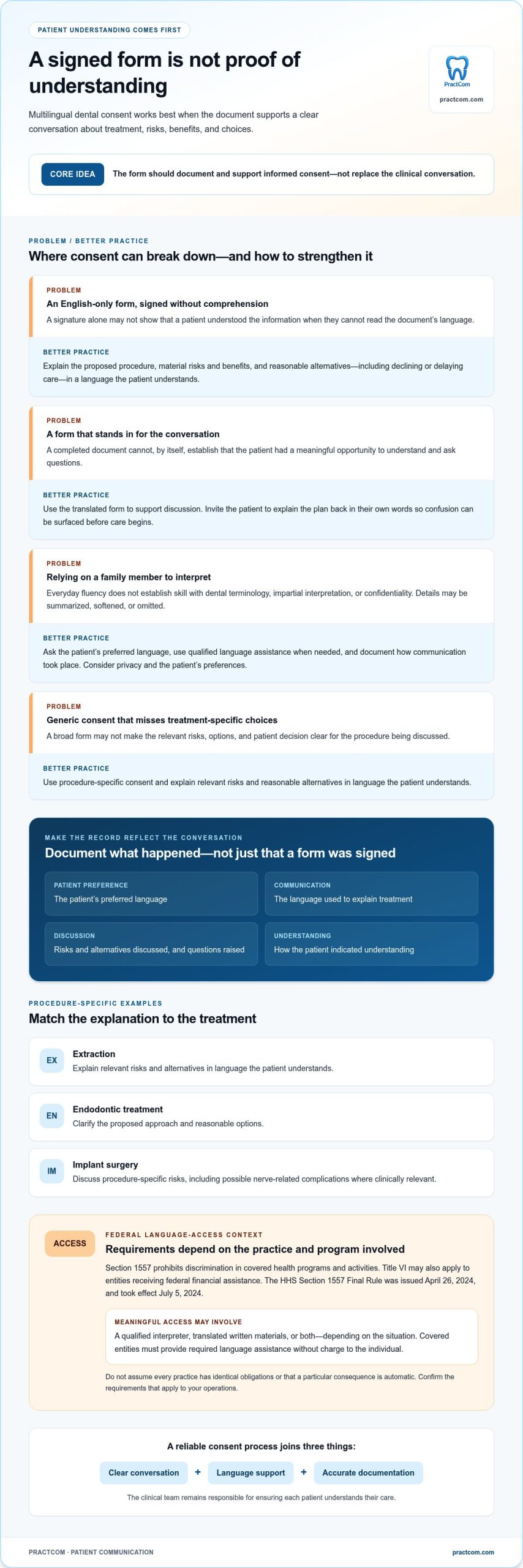
Consent is a clinical conversation, not a signature-collection task. Before treatment, a patient should have a meaningful opportunity to understand the proposed procedure, its material risks and benefits, and reasonable alternatives, including declining or delaying care. An English-only form does not, by itself, establish that a patient who doesn’t understand English received that information. Whether consent is legally sufficient depends on the circumstances and applicable law, but a language mismatch can leave important questions about the discussion unanswered.
The stakes are especially clear when treatment involves consequential decisions. A patient who misunderstands extraction risks, endodontic options, or implant complications may later say they weren’t adequately informed. Informed Consent rests on understanding and voluntary agreement. The form should document and support that process, not substitute for it.
Defining Legal Validity in Cross-Language Consent
Courts assess the facts of a dispute, so don’t treat any single form or signature as automatic proof of valid consent. If the patient can’t read the language used in the document, the signature alone may not show whether the discussion covered the patient’s actual decision. Build a record that reflects what happened: note the patient’s preferred language, the language used to explain treatment, the risks and alternatives discussed, questions raised, and how the patient indicated understanding. Use plain language and invite the patient to explain the plan back in their own words. This can surface confusion before care begins and create a clearer record if a postoperative concern arises.
- For an extraction, explain relevant risks and alternatives in language the patient understands.
- For endodontic treatment, clarify the proposed approach and reasonable options.
- For implant surgery, discuss procedure-specific risks, including possible nerve-related complications where clinically relevant.
These steps don’t guarantee a particular legal outcome. They help align the documentation with the consent conversation that actually took place.
The Pitfalls of Ad-Hoc and Family Translators
A bilingual relative may be trying to help, but fluency in everyday conversation doesn’t establish skill with dental terminology, impartial interpretation, or confidentiality. A child may not understand the procedure well enough to interpret it and may be placed in an inappropriate position between the clinician and parent. Family interpreters can also unintentionally summarize, soften, or omit details, leaving the patient without a reliable explanation of risks or choices.
Routine reliance on family members can create privacy concerns, especially when discussing sensitive health information or treatment alternatives. It doesn’t automatically mean a HIPAA violation; the patient’s preferences and applicable privacy rules matter. A more reliable practice protocol is to ask the patient which language they prefer, use qualified language assistance when needed, and document how communication took place. Federal language-access obligations also depend on the practice and program involved. Section 1557’s 2024 HHS rule requires covered entities to take reasonable steps to provide meaningful access to people with limited English proficiency; Title VI may also apply to recipients of federal financial assistance. These obligations make a consistent, documented process more than an administrative convenience.
Regulatory Compliance: Section 1557 and Federal Language Access Standards
Federal language-access duties depend on the organization and program involved, so don’t assume every dental practice has identical obligations. Section 1557 of the Affordable Care Act prohibits discrimination in covered health programs and activities. The U.S. Department of Health and Human Services issued a Final Rule on April 26, 2024, which took effect July 5, 2024. Title VI may also apply to entities receiving federal financial assistance. For covered practices, meaningful access is part of nondiscrimination compliance, not simply a patient-service preference.
Potential consequences of noncompliance depend on the facts, applicable law, and enforcement process. A complaint may prompt a civil rights review and corrective steps; federal funding consequences may also be possible in relevant cases. Don’t treat a particular fine or loss of reimbursement as automatic. State dental board rules and consent standards can differ, so practices should confirm the requirements that apply to their operations and maintain a consistent record of how they support patient understanding.
Understanding Meaningful Access Requirements
For individuals with limited English proficiency, meaningful access means taking reasonable steps to make communication effective. Depending on the situation, language assistance may involve a qualified interpreter, translated written materials, or both. Partnering with professional language services like dialog-one.com can help healthcare practices access qualified interpreters and accurate translations. A translated consent document can help a patient review procedure details, while interpretation supports questions and discussion with the clinician. Neither should be treated as a substitute for the other when both are needed.
Covered entities must provide required language assistance without charge to the individual. The 2024 rule also addresses notices about language assistance: they must be made available in English and at least the 15 most common non-English languages spoken by people with limited English proficiency in the state or states served, as specified by the rule. That notice standard is not a blanket rule requiring every consent form to be translated into the same 15 languages. Keep the distinctions clear. In the patient record, document the preferred language, assistance provided, and relevant communication steps. This creates a practical trail for internal review and helps staff follow a repeatable process.
Choosing Languages and Building a Reliable Process
Spanish, Chinese, and Tagalog are among the most commonly spoken non-English languages at home nationally, according to the research cited for this guide. A practice’s patient population may call for additional languages, such as Vietnamese or Korean. Use your patient communication needs to guide document planning, while separately following any applicable notice requirements. National rankings alone won’t determine what your practice needs.
Translation quality matters in clinical consent. Automated translation can mishandle terms about anesthesia, complications, alternatives, or follow-up care. Use standardized documents with clinically appropriate wording, and establish a review process for updates so translated versions remain aligned with the English source. PractCom provides digital informed consent forms and patient documents in 15 languages, delivered by text, email, or print. A standardized library can help your team make multilingual dental consent forms easier to use alongside existing practice systems. You can explore PractCom’s patient communication workflow as one way to organize that process.
Comparing Multilingual Consent Workflows: Paper vs. Digital Solutions
A paper binder can seem straightforward until the front desk needs the right form in the right language as patients arrive. A digital workflow can make documents easier to locate and deliver before a visit or chairside. The goal isn’t to eliminate paper. It’s to create a consistent process that lets patients review consent and related post-treatment instructions in a format they can use.
The Administrative Load of Paper Forms
Paper workflows depend on staff finding, printing, handing out, collecting, and filing the correct version. A missing translation, illegible signature, or clipboard that never makes it back can interrupt intake and leave an incomplete record. Physical documents also require storage and careful handling. If a form is misfiled, staff may spend time locating it when the clinical team needs to review the patient’s documentation.
Paper remains useful, but scattered copies make version control difficult. Start by organizing approved forms by procedure and language, assigning responsibility for updates, and using a consistent filing routine. That reduces reliance on memory during a busy check-in.
What Digital Delivery Can Improve
Digital delivery gives patients the opportunity to review documents before they arrive, using a smartphone or another device. Sending a form by email or text can give someone more time to read it and prepare questions, rather than starting with paperwork at the front desk. For staff, a consistent delivery process can make it easier to identify which document was sent and when.
Decide how your practice will handle completed forms and signatures, where staff should file them, and how the clinician will continue the conversation. A digital form still doesn’t replace that conversation or establish comprehension on its own. Pair the consent document with matching post-treatment instructions in the patient’s language, so the information provided before treatment aligns with guidance the patient can refer to afterward.
PractCom’s digital dental informed consent forms can be sent by text, email, or print. PractCom also provides tracked delivery logs showing what was sent, how it was delivered, and when. These tools can support documentation alongside a practice’s existing software. PractCom is a communication and documentation platform, not a full practice management system, and the practice remains responsible for its recordkeeping procedures.
Keep a Paper Option in the Workflow
Some patients prefer printed forms or need help using a digital device. A hybrid process accommodates those preferences without sending staff back to an unstructured binder system. Keep print-ready versions organized, and apply the same review and filing steps used for digital documents so the record remains consistent regardless of format.
Offer documents by text, email, or print to give patients practical options. PractCom supports all three, helping staff provide multilingual dental consent forms in a format that fits the patient and visit. Print-ready handouts also let practices connect digital document management with paper when needed.
Procedure-Specific Consent: Essential Clinical Elements by Treatment Type
A general consent form can’t explain every material risk, alternative, and aftercare need for a particular procedure. Use a procedure-specific document as a structured aid, then tailor the discussion to the patient’s diagnosis, treatment plan, and clinical circumstances. With multilingual dental consent forms, precise translation matters: patients need to understand what may happen, what choices they have, and what care will be expected afterward.
Oral Surgery and Implantology
For surgical extractions and implant procedures, explain the risks relevant to the planned treatment in clear, patient-facing language. Depending on the case, the discussion may address nerve injury or altered sensation, sinus perforation, bone graft complications, and other material risks. Explain expected recovery, pain-management instructions, and when to seek follow-up before local anesthesia or sedation affects the patient’s ability to ask questions. For implants, also cover maintenance responsibilities and the possibility that the treatment may require additional care. Give the patient an opportunity to ask questions and confirm their understanding in their preferred language.
Endodontic and Restorative Treatment
Root canal consent should describe the proposed treatment, reasonable alternatives, and the possibility that the procedure may not resolve the problem or may require further treatment. Where clinically relevant, explain risks such as instrument separation or perforation without presenting them as inevitable. If a crown or another permanent restoration is recommended after endodontic care, discuss its purpose and timing so the patient understands the full treatment plan rather than viewing the restoration as an unexpected add-on.
Connect the consent discussion to the aftercare the patient will receive. Translated instructions should match the procedure and reinforce the clinician’s verbal guidance, including routine care steps and signs that warrant follow-up. PractCom’s post-treatment instruction library supports this handoff. See how automated dental post-op instructions can align written aftercare with the treatment workflow.
Sedation, Anesthesia, and Patient Decisions
Sedation and anesthesia documents should use clear language for the specific plan. If the patient’s care instructions include fasting, transportation, monitoring, or other precautions, explain what applies to that patient and document the discussion and acknowledgment. Don’t rely on a signature alone to establish that instructions were understood. For minors or patients who need a decision-maker, make the communication and acknowledgment process clear to the appropriate patient or guardian.
Patients may also decline recommended imaging or treatment. Document the recommendation, the reason it was made, the risks of declining, the alternatives discussed, and the patient’s decision as part of the language-access workflow. This records the decision without pressuring the patient. Standardized digital forms can help organize procedure-specific consent and related instructions alongside existing practice systems. Explore a multilingual consent and aftercare workflow for your practice.
Standardizing Practice Communication: Deploying 15-Language Documentation with PractCom
Consistent communication takes more than translated forms. Your team needs a practical way to deliver consent documents before or during a visit and provide matching aftercare information. PractCom brings these patient communication tools together for dental practices, with 80+ informed consent templates and 80+ post-treatment instruction templates available in 15 languages.
A shared library gives staff a consistent starting point instead of a different manual process for each language. Documents can be sent by text or email, or printed in the office. Tracked delivery logs show what was sent, how it was delivered, and when. Together, these features make it easier to organize multilingual dental consent forms and related patient information without relying on a paper binder as the sole source.
Use PractCom Alongside Your Existing Practice Systems
PractCom is a patient communication and documentation platform, not a replacement for your practice management software. Your team can keep its existing system while using PractCom for patient-facing documents and communication. This distinction helps avoid treating a consent workflow as a reason to migrate core practice operations.
To make the workflow practical, decide when staff will send forms, how they’ll handle patients who prefer print, and where completed documents belong in your recordkeeping process. Review the patient communication platform comparison to understand how PractCom fits into a practice’s broader software setup.
Connect Intake, Consent, and Aftercare
A repeatable workflow can begin before the appointment: staff send the relevant consent document by text or email, then the patient reviews it before arrival or with the team at the office. If a patient needs paper, staff can print the document instead. These options help reduce last-minute form searches while preserving time to review the treatment plan with the patient.
Consent is only one part of the communication sequence. PractCom also includes 80+ post-treatment instruction templates, helping your team pair procedure documentation with relevant aftercare information. Staff can select and deliver documents in the patient’s language by text, email, or print. The platform also includes a practice performance dashboard, while clinical teams remain responsible for discussing care and maintaining their documentation practices.
Make Language Access Part of the Patient Experience
Offering important information in a patient’s preferred language can make the process feel more considerate and easier to follow. Standardized documents also help staff provide a consistent experience across visits, rather than improvising under front-desk pressure. PractCom’s 15-language library gives practices a ready-to-use resource for consent and post-treatment communication.
Build a more consistent multilingual intake and aftercare workflow with PractCom. Start your free trial to explore the 15-language consent and patient document library.
Make Clearer Consent the Standard in Your Practice
Your next step doesn’t need to be a practice-wide overhaul. Choose one common procedure and map the patient’s communication from first contact through follow-up. Decide who selects the documents, who confirms the patient’s preferred language, and how the team records questions and signatures. A focused rollout gives staff a chance to refine the process before using it more broadly.
Use multilingual dental consent forms as part of a patient-centered workflow, not as a substitute for the clinician’s conversation. PractCom helps dental practices organize patient documents and support consistent communication. Your clinical team remains responsible for explaining care, confirming understanding, and maintaining appropriate records.
Ready to put a more consistent process into practice? Start your free trial and explore PractCom’s digital consent forms and post-treatment library. Take the first step toward a workflow that supports your team and helps patients feel informed at every stage of care.
Frequently Asked Questions
Can a bilingual dental staff member legally translate an English consent form chairside?
Not automatically. Speaking two languages doesn’t by itself establish that an employee is qualified to translate clinical documents or interpret a consent discussion. Requirements depend on the circumstances and applicable rules, including whether the practice is covered by federal language-access obligations. For higher-risk treatment, use a consistent process that identifies the staff member’s language role and qualifications, and document how communication was handled. Don’t make a relative or untrained employee the default for complex clinical explanations.
Are digital signatures on multilingual dental consent forms legally enforceable in court?
They can be, but enforceability depends on applicable law, the circumstances, and the quality of the consent process. A digital signature records agreement; it doesn’t prove by itself that the patient understood the document or had a chance to ask questions. Keep the signed form with the treatment record, retain available completion details, and document the conversation separately. Apply your practice’s normal identity and recordkeeping controls to electronic forms.
What specific dental procedures strictly require written informed consent?
There isn’t one universal federal list of dental procedures that always require written consent. Requirements can vary by state law, board rules, procedure, and practice policy. Written documentation is commonly used for invasive treatment, surgery, sedation, and other care with material risks, but the exact rule depends on jurisdiction. Create a written-consent protocol with qualified legal or risk-management guidance, then specify which procedures require a signed form and what discussion must be documented.
Does federal Section 1557 require all dental practices to provide multilingual consent forms?
No. Section 1557 applies to covered health programs and activities, not automatically to every dental practice. Whether a practice is covered depends on its circumstances, including relevant federal financial assistance and program relationships. Covered entities must take reasonable steps to provide meaningful access to people with limited English proficiency, which can involve translated documents and language assistance. Assess your organization’s status and obligations rather than assuming either universal coverage or a blanket exemption.
Can our practice use Google Translate to create foreign language dental consent forms?
Don’t rely on an unreviewed machine translation as the final consent document. Automated tools can render clinical terms, risks, or instructions inaccurately, and a small wording error can change meaning. If technology is used to create a draft, have the translation reviewed by a qualified language professional with relevant clinical terminology knowledge, then maintain a controlled version that matches the approved source. Protect patient information when using any online translation tool.
How do multilingual consent forms work alongside dental malpractice insurance defense?
They can help show what information was presented in the patient’s language, but they don’t guarantee a defense or replace the clinician’s discussion. If a claim arises, the form may be considered with the clinical notes, communications, and other records. Follow your insurer’s documentation guidance and notify the carrier promptly when a matter may involve a claim. Consistent records help the practice explain its process without overstating what a signed document proves.
What languages should my dental practice prioritize when adopting translated forms?
Start with languages patients report preferring, using intake data and staff observations rather than assumptions based on names or appearance. Spanish, Chinese, and Tagalog are among the most commonly spoken non-English languages nationally, while your own patient population may indicate additional needs such as Vietnamese or Korean. Review language requests regularly and consider whether translated forms are understandable to your patients. PractCom offers patient documents in 15 languages to help practices standardize delivery.
Article by
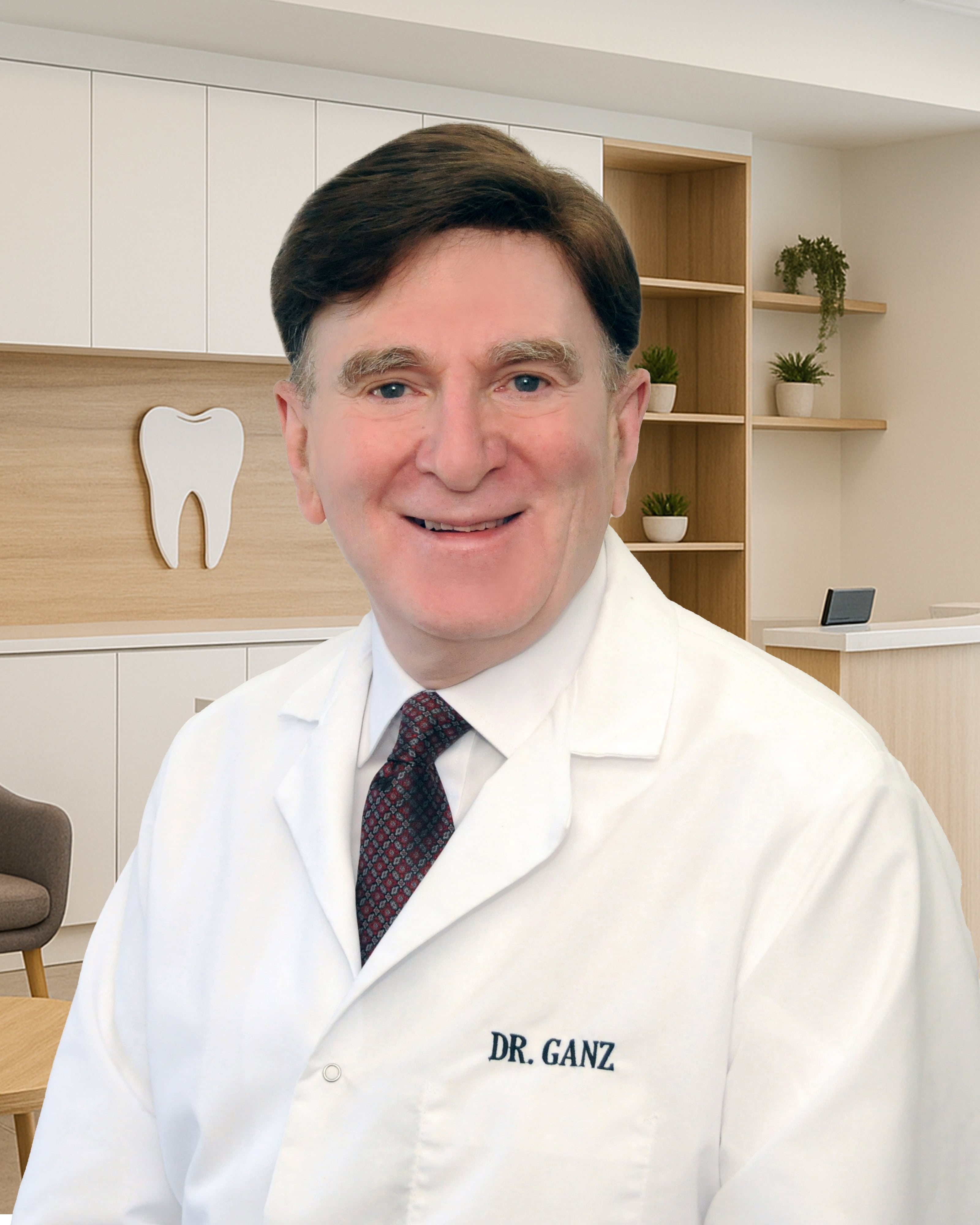
Cary Ganz DDS
Dr. Cary H. Ganz is a dentist, prosthodontist, entrepreneur, lecturer, and author with more than 50 years of experience in clinical dentistry and dental technology. Throughout his career, he has combined hands-on patient care with a deep understanding of how technology can improve dental practice operations, communication, documentation, and patient outcomes.
In addition to his clinical background, Dr. Ganz has held significant leadership roles in the dental technology industry, including Past Owner and Vice President of Clinical Affairs at DEXIS Digital Radiography and Past Vice President of Clinical Affairs at Denticon Practice Management Software. His business experience includes product development, clinical strategy, dental software innovation, practice management solutions, and educating dental professionals on the effective use of technology in modern dentistry.
Today, Dr. Ganz continues to focus on creating practical technology solutions for dental practices, including PractCom, a comprehensive dental practice communication platform designed to improve patient communication, documentation, compliance support, referrals, and overall practice efficiency. His work reflects a career-long commitment to helping dentists deliver better care while making their practices more organized, efficient, and protected.
No responses yet