
What if increasing cosmetic dentistry case acceptance starts with less persuasion, not more? Patients can make more confident decisions when they can picture a proposed change, understand why treatment is recommended, and have time to consider their options.
Cosmetic consultations can feel rushed. Patients may leave unsure how treatments compare, what questions to ask, or what happens next. For your team, inconsistent explanations and follow-up can make clear communication harder than it needs to be.
This guide offers a practical approach to patient-centered, consistent treatment discussions. You’ll learn how to explain clinical findings and alternatives in plain language, use smile visualizations as conversation aids rather than promises, and give patients useful information to revisit. We’ll also cover how documented discussions, digital consent forms, and follow-up communication can support a clear next step while leaving the decision in the patient’s hands.
Key Takeaways
- Define case acceptance as an informed patient choosing a care plan, not a conversion target or a result of pressure.
- Connect each recommendation to the patient’s goals and clinical findings, then use visuals to support the conversation rather than predict outcomes.
- Use a practical consultation sequence to listen, explain options, check understanding, and agree on next steps at the patient’s pace.
- Increasing cosmetic dentistry case acceptance starts with clear, consistent communication that helps patients make their own decisions.
- Build a repeatable process for recaps and follow-up so patients can revisit information without making communication feel impersonal.
Why cosmetic dentistry case acceptance starts with patient understanding
Cosmetic dentistry case acceptance means an informed patient chooses a proposed care plan after understanding its purpose, options, and implications. It isn’t a persuasive presentation, a pressured “yes,” or a conversion rate your team can guarantee. The goal is a decision the patient can explain in their own words, whether they choose treatment now, later, or not at all.
Patient-first case acceptance means helping someone make a clear, voluntary choice that fits their goals and clinical needs.
That distinction matters because cosmetic decisions involve personal preferences as well as clinical considerations. A patient may want to change tooth shape or shade but still be unsure what a change could look like, what treatment involves, or whether it suits their priorities. Increasing cosmetic dentistry case acceptance starts with making room for those uncertainties instead of treating hesitation as an objection to overcome.
What can make a cosmetic treatment decision feel difficult?
A proposed change can be hard to picture from a verbal description alone. The patient may also be weighing treatment steps, timing, and how the result would fit their idea of a natural-looking smile. For background on the range of procedures and considerations, see What is cosmetic dentistry?
Unfamiliar terminology can add another barrier. If options are described in technical terms without being translated into everyday language, a patient may struggle to compare them or understand why one is recommended. A pause, a request for an explanation, or a decision to think it over can signal that more clarity is needed. Ask what remains unclear, then address that point without rushing toward a commitment.
For example, a patient might say they want a brighter smile, while the discussion quickly turns to a particular procedure. Before moving forward, clarify what “brighter” means to them, explain relevant options, and check that they understand the differences. The aim isn’t to make every option sound equally suitable. It’s to make the reasoning clear.
Why trust matters more than a polished presentation
A polished explanation can’t replace listening. Invite the patient to describe what they’d like to change and what matters most to them. One person may prioritize a subtle adjustment; another may have questions about the process or how a proposed change could look. Their answers help the clinician discuss appropriate options and explain how the findings relate to a recommendation.
Keep the conversation specific: reflect the patient’s stated concern, explain the clinical rationale in plain language, and make space for questions. If the proposed plan doesn’t match what the patient wants, clarify the mismatch rather than pressing ahead. Trust grows when patients can see that a recommendation responds to their concerns, not just to a prepared presentation.
Consistent, respectful communication also shapes the patient experience beyond a single consultation. The dental patient experience guide explores how clear explanations and trust support the broader patient relationship.
How clear explanations and smile visualization support cosmetic decisions
A clear cosmetic consultation follows a practical sequence: start with what the patient wants to change, explain the relevant clinical findings, compare appropriate options, and make a recommendation the patient can understand. Connect each step to the patient’s stated goal so the recommendation feels reasoned rather than like a procedure presented without context.
Use plain language and pause between steps. After describing a finding, explain what it means for the patient’s goal before discussing possible treatments. Then outline the key differences between options, including what each is intended to address. This structure helps patients follow the reasoning and gives them natural opportunities to ask questions.
Use visual aids to make proposed changes easier to discuss
Words like “subtle,” “brighter,” or “more even” can mean different things to different people. A before-and-after visualization gives the patient and clinician a shared reference point. It may help a patient identify preferences, such as wanting a less uniform appearance, or clarify that a proposed change doesn’t match what they had in mind.
Set expectations as you present the image. Explain the assumptions behind the visualization and what it cannot show or predict. A simulation is a conversation aid, not a diagnosis, treatment plan, or promise of a specific result. PractCom’s smile design tool shows before-and-after cosmetic changes to support this discussion, while clinical assessment and judgment remain with the clinician.
Visualization can make a proposed change easier to discuss, but it cannot guarantee a clinical result.
Make the visual part of an ongoing conversation. Invite the patient to describe what feels right or wrong, connect that feedback to available options, and summarize any changes to the discussion. A patient communication platform such as PractCom’s communication tools can help practices include visuals and follow-up information in patient communication.
Explain options in language patients can revisit
Translate clinical terms into practical meaning. If you use a technical term, explain what it refers to and why it matters for the patient’s goal. Then compare options consistently: what each addresses, what the process generally involves, and how it relates to the clinical findings. Avoid details that distract from the decision at hand.
After the discussion, provide a concise written recap of the patient’s goal, the recommendation and its rationale, the options discussed, and the next step. Patients can review it later and return with focused questions. The recap supports understanding, but it isn’t a substitute for documented consent. A discussion helps the patient consider a plan; consent records the patient’s informed decision. Keeping these purposes distinct supports clear communication.
Address the biggest case-acceptance concern: pressure and unrealistic expectations
Clear case presentation isn’t a technique for getting patients to say yes to more treatment. It explains findings and options so patients can decide whether a proposed plan fits their goals. Pressure can undermine that process: a patient who feels rushed may agree without feeling ready or disengage because their concerns weren’t addressed. Neither response shows that the discussion succeeded.
Increasing cosmetic dentistry case acceptance should mean supporting informed, voluntary decisions, not pursuing a conversion target at the expense of trust. The clinician explains the recommendation, its rationale, and relevant alternatives. The patient weighs that information and chooses what feels right for them.
Set realistic expectations when discussing cosmetic outcomes
Before recommending an option, ask what a successful change would look like to the patient. “What would you like to be different?” can reveal preferences that a broad request, such as wanting a better smile, may not capture. Keep three things distinct in the conversation: clinical findings, the patient’s aesthetic preferences, and possible outcomes. This makes it easier to explain where the patient’s hopes align with what treatment can address.
Visualizations can help patients discuss preferences, but they’re illustrative, not a guarantee. Explain what the image represents, the assumptions behind it, and why actual results may differ. Don’t describe a simulation as a promise or let it stand in for diagnosis and clinical judgment. If the patient expects a change the proposed care plan cannot reliably deliver, say so plainly and discuss appropriate alternatives or limits.
Respond constructively when patients hesitate
Hesitation is a cue to understand, not a refusal to overcome. Try asking, “What questions or concerns are shaping your decision?” The answer may point to unclear information, uncertainty about the expected change, or a need to consider priorities. Address the concern directly, check whether your explanation helped, and let the patient decide whether they’re ready to proceed.
For example, if a patient says they want time to think, agree on a next step that leaves the choice with them. They may want to review information, discuss it with someone they trust, or return with questions. A concise recap and respectful follow-up can keep communication open without creating pressure. PractCom’s communication tools support consistent patient-facing communication so the conversation can continue beyond the consultation in an organized way.
Practice teams can review how well their process supports patient decisions, but there’s no universal acceptance benchmark to apply. If you track a practice-specific measure, define exactly what counts as acceptance, which cases are included, and how patient decisions are recorded. Calculate the result from consistent data, then consider it alongside patient feedback and communication quality. A number alone can’t show whether patients understood their options or felt respected.
A practical consultation framework for increasing cosmetic dentistry case acceptance
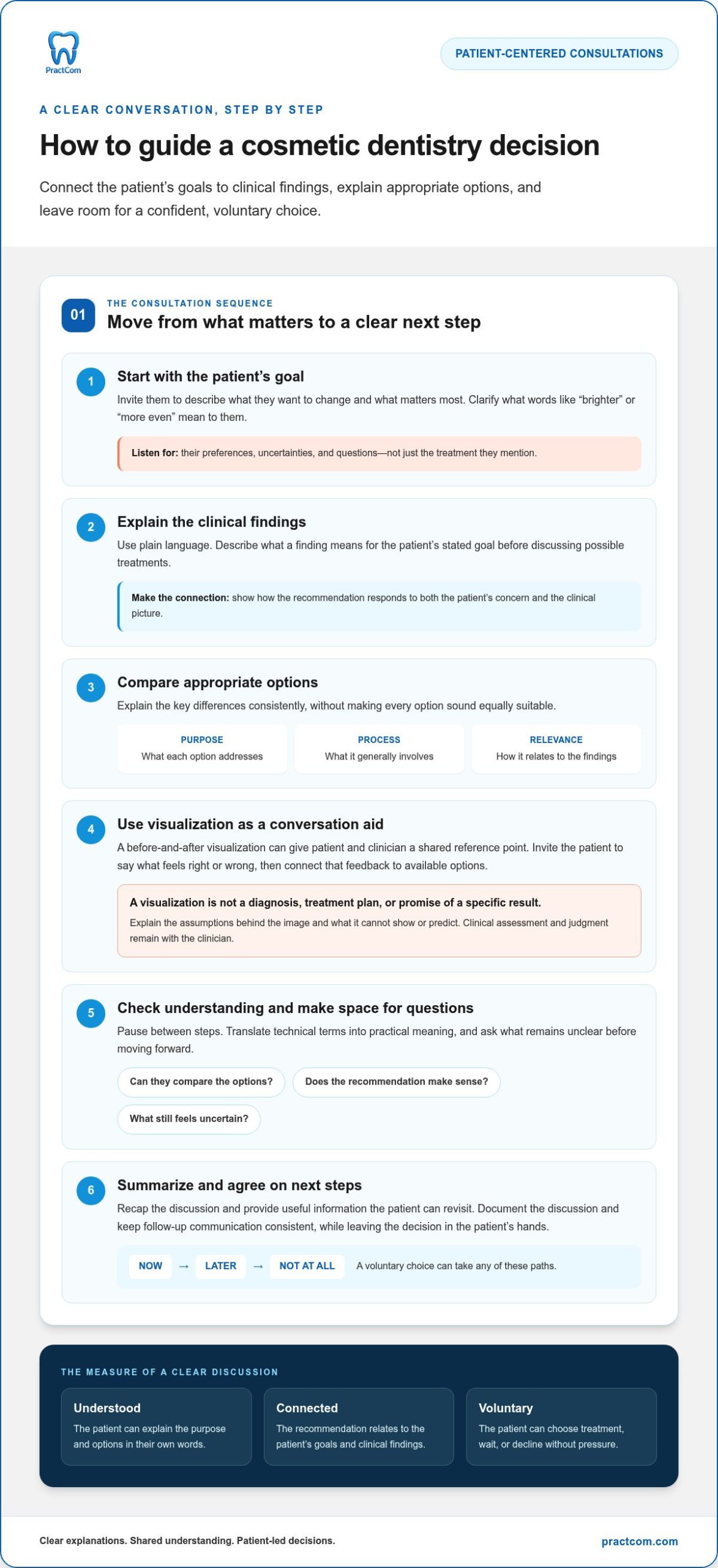
A repeatable consultation process helps your team communicate consistently without turning the appointment into a script. Use this sequence to connect each recommendation to the patient’s priorities and clinical findings. Adjust the conversation to the person in front of you, and leave room for the patient to pause or choose a different next step.
Listen, assess, explain, visualize, check understanding, and agree on next steps: a clear sequence keeps the decision grounded in the patient’s goals and clinical needs.
Guide the conversation from patient goals to treatment options
Begin with an open question, such as, “What would you most like to change about your smile?” Let the patient finish before interpreting their goal. Then move through the consultation in order:
- Listen: Clarify the patient’s priorities, concerns, and expectations. Ask what matters most if they mention more than one goal.
- Assess: Explain the relevant clinical findings and how they relate to the concern. Separate what you observe from what the patient hopes to change.
- Explain: Present appropriate options in plain language. Describe how each relates to the goal, and explain why you recommend a particular approach based on the findings.
- Visualize: Use a focused visual when it can help make a proposed change easier to discuss. Explain its limits, and invite the patient to share what they notice.
- Check understanding: Ask, “What questions came up as we talked?” or “Would it help if I explained any part another way?” This invites clarification without putting the patient on the spot or asking them to prove they understood.
- Agree on next steps: Summarize the options discussed and ask what the patient would like to do next. That might mean proceeding, reviewing information, scheduling another conversation, or taking time to decide.
Keep the sequence flexible. If the patient’s questions reveal a different priority, return to that point before moving on. This keeps the presentation from becoming a one-way explanation and makes increasing cosmetic dentistry case acceptance a result of clearer shared decision-making, rather than pressure to follow a predetermined plan.
Make follow-up useful rather than persistent
Before the patient leaves, agree on whether follow-up would be helpful and how they’d prefer to receive it. A concise recap can capture the goal discussed, the recommendation and its rationale, the options reviewed, and the next step the patient chose. Keep it true to the conversation; don’t turn it into a sales message.
Automated follow-ups can support timely, consistent communication, while a patient portal gives patients a place to revisit shared information. Use these tools to follow the agreed communication plan, not to decide what care is appropriate or replace individualized clinical judgment. If a patient asks a clinical question, the response should reflect their specific circumstances.
PractCom’s patient communication tools support an organized consultation and follow-up workflow.
Build a consistent communication system for cosmetic dentistry decisions
A thoughtful consultation can still feel uneven if each team member explains options differently or follow-up depends on memory. Ad hoc conversations may leave one patient with a clear recap and another with unanswered questions. A repeatable communication system helps your team provide consistent information while preserving the personal conversation each patient needs.
Standardization shouldn’t mean reading from a script. Use flexible templates to guide the essentials, then tailor each explanation to the patient’s goals, clinical findings, and questions. For example, a recap template can prompt the team to record the concern discussed, the options reviewed, and the patient’s preferred next step. The structure helps prevent omissions; the clinician’s judgment and the patient’s priorities shape the content.
Connect visualization, documentation, and follow-up
A smile visualization works best as part of a broader discussion. The clinician can use a before-and-after view to explore the patient’s preferences, explain what the image illustrates, and connect the conversation to appropriate treatment options. Digital informed consent forms support documentation of the discussion, but they don’t replace the conversation or ensure the patient understands every detail.
A patient portal gives patients a way to revisit shared information, while automated follow-ups support agreed communication after the appointment. These tools support communication, not individualized clinical guidance. PractCom brings smile design visualizations, digital informed consent forms, a patient portal, and automated patient follow-ups into a patient communication and documentation suite for dental practices.
To build a workflow your team can maintain, decide who prepares the recap, what it should contain, and how the patient’s preferred follow-up is recorded. Review the process with the team and adjust templates when recurring questions or communication gaps emerge. A repeatable dental practice workflow can make handoffs more consistent without making patient communication feel impersonal.
Choose measures that reflect patient understanding
Track process indicators that show whether communication steps are happening: whether the consultation included a clear explanation of options, what questions patients raised, and whether the agreed follow-up occurred. These measures can reveal where a recap template or team handoff needs attention. Increasing cosmetic dentistry case acceptance isn’t a useful goal if it comes at the cost of patient understanding or choice.
Acceptance rate may offer context, but it isn’t a standalone measure of care quality. Define how your practice calculates it, review it alongside patient questions and follow-up completion, and look for patterns rather than assuming every decision should end in treatment. A patient who chooses to wait or decline after understanding the options has still taken part in a clear decision-making process.
For an example of how PractCom can bring these tools together, visit this practical starting point.
Make the next patient conversation clearer
Choose one part of your cosmetic consultation workflow to strengthen first. It might be how your team records a patient’s priorities, checks that an explanation is clear, or agrees on follow-up. A small, consistent change gives your team something practical to refine together and keeps the focus on the quality of each patient’s decision, not simply whether treatment is accepted.
That’s a sustainable foundation for increasing cosmetic dentistry case acceptance: patients can make choices with greater clarity, and your team has a shared process to support the conversation. PractCom’s patient communication and documentation tools help organize how information is shared and revisited, including documents available in 15 languages.
Explore PractCom’s patient communication tools to organize how your practice shares and follows up on patient information. A clear process helps your team support patients as they consider their options.
Frequently Asked Questions
How can dentists increase cosmetic dentistry case acceptance without pressuring patients?
Build the conversation around the patient’s priorities, not a target for how many people agree to treatment. Ask what matters most, explain why a recommendation fits the clinical findings, and give the patient space to compare options. For example, if someone is unsure about the extent of a proposed change, discuss whether a more limited approach is appropriate. Increasing cosmetic dentistry case acceptance should reflect informed choices, including a decision to wait or decline.
Do smile simulations improve cosmetic dentistry case acceptance?
Smile simulations can help patients express preferences, but they don’t guarantee higher acceptance or prove that a treatment is right for someone. A patient might use a visualization to point out a detail they like or explain that the proposed appearance feels too uniform. The clinician can then clarify what the image represents and relate that feedback to suitable options. Treat the simulation as a discussion aid, not a prediction or substitute for clinical evaluation.
What should a cosmetic dentistry case presentation include?
Include the patient’s stated concern, relevant clinical findings, the reason for the recommendation, and appropriate alternatives. Explain expected treatment steps, important limitations, and any questions the patient raises in language they can follow. A focused presentation avoids overwhelming the patient with every possible procedure. For instance, if their main concern is tooth shade, keep the discussion centered on options relevant to that goal rather than introducing unrelated cosmetic services.
How should a dental team respond when a patient says they need time to decide?
Thank the patient for saying so, then ask whether there’s a particular question or concern they’d like addressed before leaving. Don’t assume the pause means they’re opposed to treatment. Offer a written recap they can review, and ask whether they would welcome a follow-up or prefer to initiate the next contact themselves. If they choose a follow-up, agree on a reasonable time and channel, then honor that preference without repeated prompting.
Can before-and-after images guarantee the result of cosmetic dental treatment?
No. Before-and-after images and simulations can illustrate a possible aesthetic direction, but they can’t guarantee an individual clinical result. Actual outcomes depend on the patient’s clinical circumstances and the treatment provided. Explain what the image is intended to show, where it may not reflect the patient’s situation, and what questions remain. Keep images in their proper role: useful visual references for discussion, not promises about what treatment will deliver.
How can a practice measure cosmetic dentistry case acceptance ethically?
Define the measure before reviewing it. For example, a practice might calculate the share of eligible, discussed treatment plans that patients choose to begin within a specified tracking period. Set the period and inclusion criteria consistently, and interpret the result alongside patient feedback, unresolved questions, and follow-up completion. Don’t treat a higher figure as proof of better care. A patient’s informed decision to defer or decline should remain a valid outcome.
What role can follow-up communication play after a cosmetic consultation?
Follow-up can help patients revisit information, remember the agreed next step, and raise questions that came to mind after the appointment. Keep the message relevant to the consultation, such as sharing the promised recap or checking whether the patient needs clarification. If automated communication is used, make sure it supports the agreed plan rather than implying urgency or replacing a clinician’s individualized response to a clinical question.
Article by
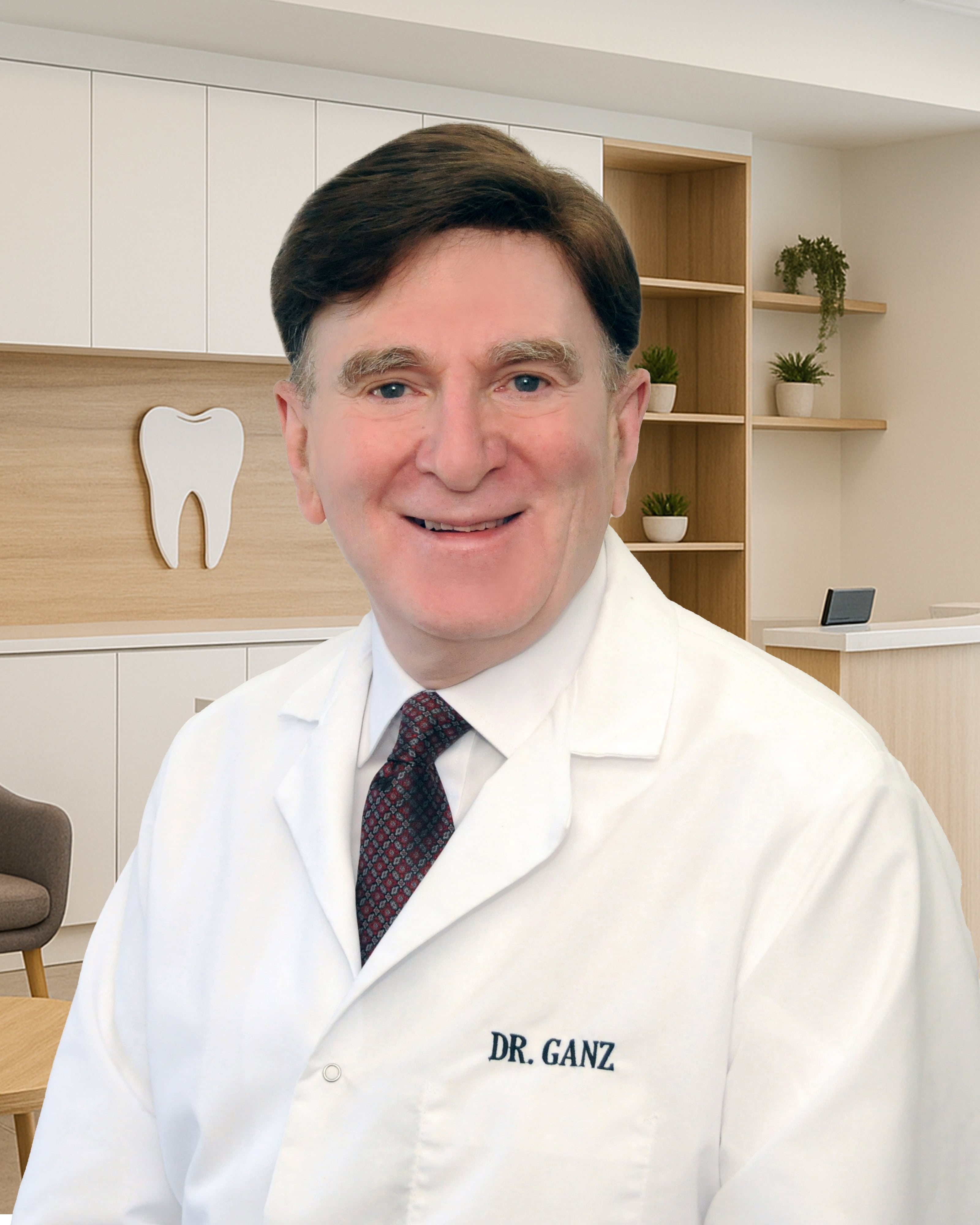
Cary Ganz DDS
Dr. Cary H. Ganz is a dentist, prosthodontist, entrepreneur, lecturer, and author with more than 50 years of experience in clinical dentistry and dental technology. Throughout his career, he has combined hands-on patient care with a deep understanding of how technology can improve dental practice operations, communication, documentation, and patient outcomes.
In addition to his clinical background, Dr. Ganz has held significant leadership roles in the dental technology industry, including Past Owner and Vice President of Clinical Affairs at DEXIS Digital Radiography and Past Vice President of Clinical Affairs at Denticon Practice Management Software. His business experience includes product development, clinical strategy, dental software innovation, practice management solutions, and educating dental professionals on the effective use of technology in modern dentistry.
Today, Dr. Ganz continues to focus on creating practical technology solutions for dental practices, including PractCom, a comprehensive dental practice communication platform designed to improve patient communication, documentation, compliance support, referrals, and overall practice efficiency. His work reflects a career-long commitment to helping dentists deliver better care while making their practices more organized, efficient, and protected.
No responses yet