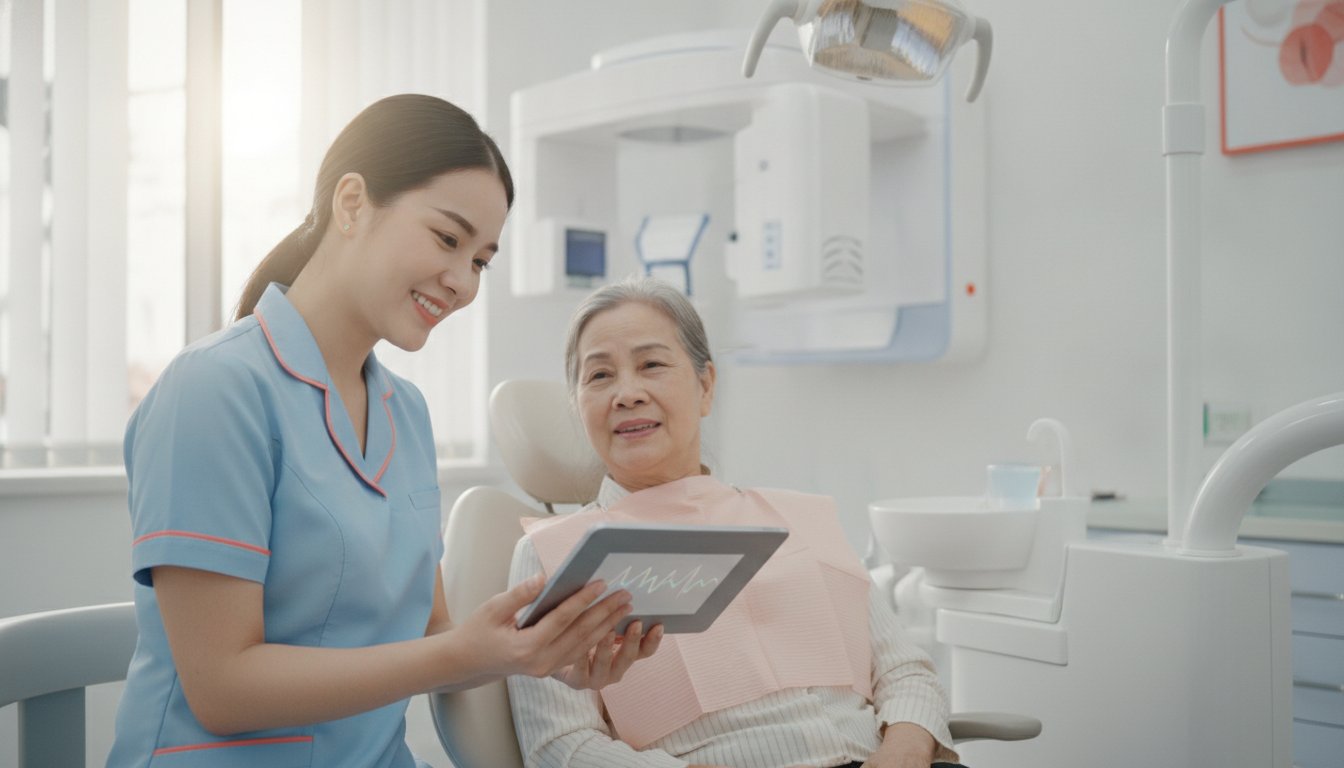
If a patient nods while you explain a complex procedure, do you know for certain they’ve understood the risks? In Vietnamese culture, this gesture often signals respect for your authority rather than a clear grasp of the clinical details. You’re likely familiar with the frustration of post-op complications or the drain of endless follow-up calls that stem from simple misunderstandings. It’s a heavy burden to carry when you’re also worried about the legal validity of informed consent for non-English speakers. Mastering Vietnamese dental patient communication is no longer just a customer service goal; it’s a clinical and regulatory necessity for the modern practice.
We believe that language should never be a barrier to clinical excellence or professional peace of mind. This guide will teach you how to bridge the linguistic gap by leveraging automated clinical documentation and culturally intelligent strategies. We’ll explore how to implement standardized systems that reduce malpractice risks, improve patient satisfaction, and ensure your practice operates with total regulatory confidence. By the end of this article, you’ll have a clear roadmap for transforming your communication from a source of stress into a pillar of your practice’s success.
Key Takeaways
- Identify why a patient’s polite nod can be a red flag for clinical misunderstanding and how to verify true comprehension.
- Master culturally nuanced Vietnamese dental patient communication by involving family decision-makers and using digital portals to encourage silent patients to ask questions.
- Protect your practice from malpractice risks by replacing English-only forms with digital informed consent documents in the patient’s native language.
- Reduce administrative friction and post-op complications by automating the delivery of aftercare instructions via SMS and email.
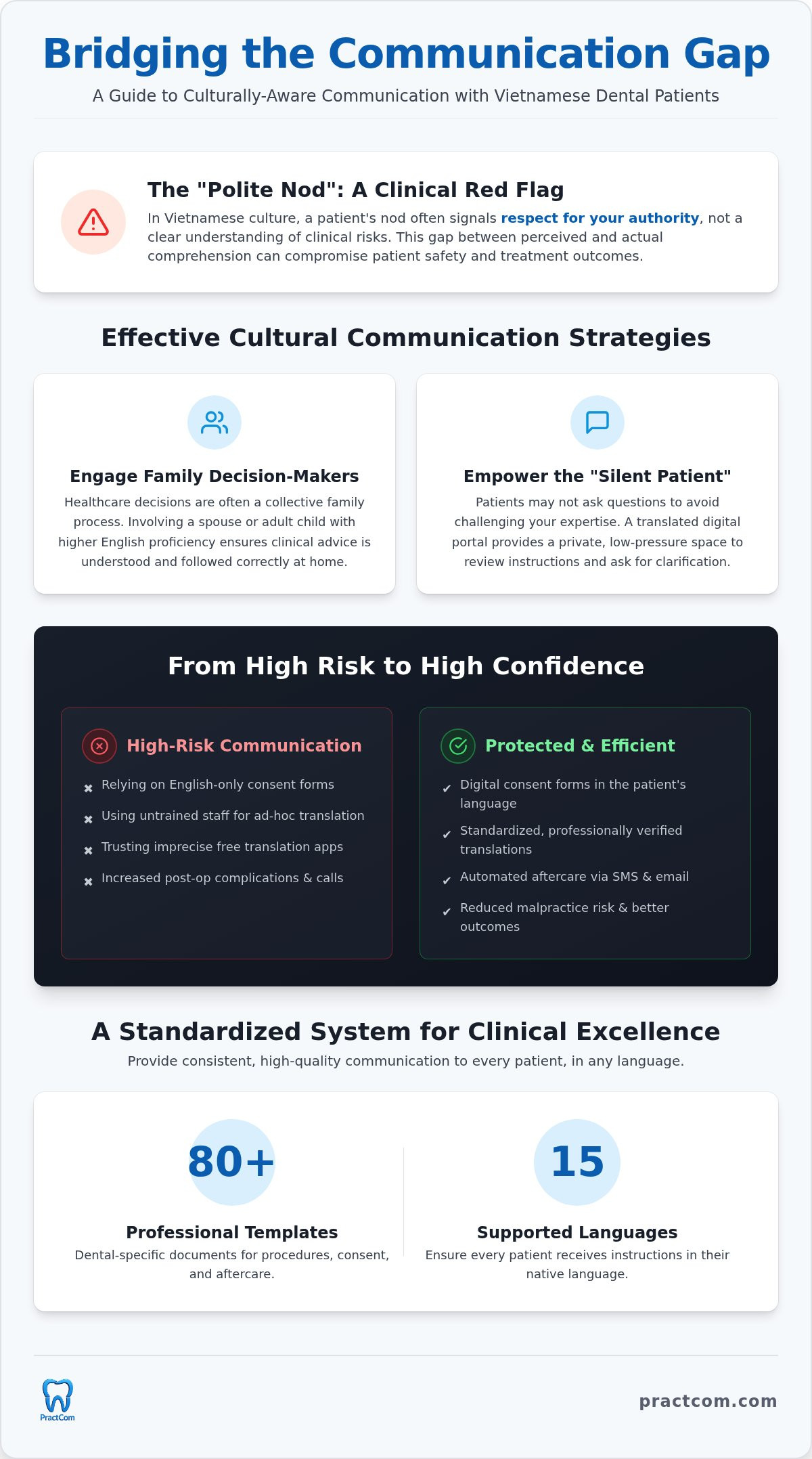
- Leverage a professional library of over 80 dental-specific templates to provide standardized, high-quality communication across 15 different languages.
The Clinical Impact of Vietnamese Dental Patient Communication
In many dental chairs, a patient’s polite nod is often misinterpreted as a green light for treatment. Within the context of Vietnamese dental patient communication, this gesture frequently represents cultural deference to your authority rather than an actual understanding of clinical risks. When a patient says “yes” just to be respectful, they aren’t truly consenting to the nuances of a complex procedure. This gap between perceived and actual comprehension is where clinical errors begin and patient safety is compromised.
Data indicates a direct correlation between native-language instructions and a sharp reduction in post-operative complications. When patients fully grasp their aftercare requirements, emergency phone calls drop and healing outcomes improve. This is a core component of health literacy; the ability of an individual to find, understand, and use information to inform health-related decisions. For a practice, providing this clarity isn’t just a courtesy. It’s a protective measure that ensures treatment plans are followed with precision.
The demographic data supports this focus as a strategic growth driver. With over 2.3 million people of Vietnamese descent in the United States, this community represents a significant and growing portion of the patient pool. Providing psychological safety through native-language communication builds a level of trust that English-only practices simply can’t match. When a patient feels seen and understood in their primary language, their anxiety decreases, leading to higher treatment acceptance rates and long-term loyalty.
Identifying the Language Barrier in Modern Dentistry
There’s a critical distinction between social fluency and clinical comprehension. A patient might navigate a check-in process easily but struggle with terms like “periapical abscess” or “pulpectomy” when translated into Vietnamese. Clinical communication serves as the foundation of the dental patient experience. Without precise terminology, the risk of mismanaged expectations and failed compliance increases, even with patients who appear to speak English well in casual settings.
The Risks of Ad-Hoc Translation
Relying on bilingual staff members for clinical translation often feels convenient, but it creates significant professional liability. Your front-desk team isn’t trained in medical interpretation; a single mistranslated word regarding medication dosage or surgical risks can have serious legal consequences. Similarly, free translation apps often lack the technical precision required for dental surgery aftercare. Standardization is the only reliable solution to human error in a high-pressure clinical environment. By using verified, pre-translated templates, you ensure every patient receives the same high standard of care regardless of which staff member is assisting them.
Overcoming Cultural Nuances in Vietnamese Dental Aftercare
Effective Vietnamese dental patient communication requires more than just translating clinical words; it requires understanding the social hierarchy of the patient’s family. In Vietnamese culture, healthcare decisions are often a collective family process. You’ll frequently find that a patient defers to a spouse or an adult child who possesses higher English proficiency or technical knowledge. Acknowledging this family spokesperson isn’t just polite; it’s a strategic move that ensures your clinical advice actually reaches the home environment where aftercare happens. When you engage the family unit, you aren’t just treating an individual; you’re securing a support system for treatment compliance.
We must also address the “silent patient” phenomenon. Many patients feel that asking questions might imply they’re challenging your expertise or that you didn’t explain the procedure well enough. This is where cultural nuances in communication play a pivotal role. By providing a translated digital portal, you give patients a private, low-pressure space to review instructions and submit questions without the perceived social risk of a face-to-face confrontation. Moving from oral-only instructions to standardized written documents provides the patient with a permanent reference that builds your clinical authority.
Health Literacy and Cultural Competency
Vietnamese dental patient communication is significantly enhanced through visual evidence. Tools like Smile Design bridge the gap between traditional expectations and modern cosmetic results by showing “before and after” changes. When you combine these visuals with standardized, translated templates, you establish a baseline of care that feels both personal and high-tech. This consistency ensures that every patient receives the same rigorous clinical oversight, regardless of their English level. It’s about tailoring your delivery to respect traditional views while maintaining strict modern compliance.
Building Trust Through Professional Documentation
Professionalism is a universal language. When a patient receives a high-quality, digital document in Vietnamese, it signals that your practice respects their community and values their safety. This investment in multi-language support is a powerful driver for word-of-mouth referrals. If you’re coordinating care with specialists, mastering dental referral management software ensures that these cultural considerations follow the patient throughout their entire treatment journey. Providing this level of systematic control builds lasting trust and clinical authority. To see how these tools work in practice, you can explore our multi-language template library.
Digital Informed Consent: Legal Protection in Any Language
In the eyes of the law, informed consent is a process, not just a signature. If a patient cannot demonstrate they fully understood the risks, benefits, and alternatives of a procedure, that signature may be deemed invalid in a malpractice dispute. A robust Vietnamese dental patient communication strategy must extend to the legal documentation that protects your license. Relying on an English-only form for a non-native speaker creates a significant regulatory vulnerability that can be easily exploited if a complication occurs.
Modern risk management requires a higher level of precision. Providing culturally competent care requires a commitment to transparency that transcends language barriers. Digital signatures and time-stamped documentation offer a level of security that paper forms cannot match. These systems provide an immutable audit trail, proving exactly when the patient received the information and when they acknowledged it. Standardizing your Vietnamese dental patient communication through digital consent ensures that every patient receives the same rigorous explanation of their treatment plan.
The Anatomy of a Vietnamese Informed Consent Form
A legally sound digital form must accurately translate essential clinical sections, including specific surgical risks, potential alternatives, and the consequences of non-treatment. Digital delivery allows patients to review these complex details at their own pace in the comfort of their home. This reduces the pressure they might feel in the clinical setting, leading to more genuine comprehension. Ensuring HIPAA compliance during the transmission of these translated documents is a non-negotiable requirement for protecting patient privacy and practice integrity.
Reducing Liability with Automated Documentation
By utilizing a centralized library of digital dental informed consent forms, you eliminate the risk of ad-hoc translations or outdated paper handouts. Automated follow-ups play a critical role here; they can be programmed to confirm patient understanding 24 hours after a consultation. This systematic approach creates a clean audit trail for every patient, regardless of their primary language. It removes the burden of manual tracking from your staff and replaces it with a reliable, tech-driven safety net that guards your professional reputation.
Implementing Automated Vietnamese Post-Op Instructions
Moving from paper handouts to automated delivery systems isn’t just about going green; it’s about clinical reliability. Paper instructions are easily lost, misinterpreted, or discarded, especially when a language barrier exists. By shifting to automated SMS and email delivery, you ensure that Vietnamese dental patient communication remains consistent and accessible long after the patient leaves your chair. This digital transition provides the psychological security that your clinical advice is physically present on the patient’s device, ready for reference during the critical first 48 hours of recovery.
Selecting the right templates is essential for procedural success and risk management. Whether you’re managing simple extractions, complex dental implants, or root canals, having a pre-verified library of instructions in Vietnamese removes the guesswork for your clinical team. This automation provides a significant efficiency gain by drastically reducing the volume of follow-up phone calls. When patients have clear, native-language guidance on their phones, they’re less likely to overwhelm the front desk with basic questions about pain management or diet. A secure patient portal further supports this by offering 24/7 access to clinical guidance, ensuring help is available even when your practice is closed.
Workflow Integration for Busy Practices
Integrating these tools into your daily routine should reduce operational resistance, not add to it. You can set up triggers that deliver specific Vietnamese instructions the moment a procedure code is entered into your system. While digital delivery is the gold standard for persistence, combining it with physical printing for patients who prefer hard copies ensures maximum reach across all age groups. This synchronized approach is a key part of optimizing dental practice workflow, allowing your clinical staff to focus on chairside care rather than administrative repetition.
Measuring the Success of Communication Automation
A standardized system allows you to manage what you can measure. By tracking open rates and engagement for your translated instructions, you gain immediate insight into how well your patients are interacting with their aftercare plans. A practice performance dashboard helps you monitor the direct correlation between automated delivery and a reduction in post-op emergency calls. Gathering direct patient feedback on the clarity of these translated materials allows you to refine your approach, ensuring your Vietnamese dental patient communication remains a pillar of clinical excellence. To see how these automated workflows can stabilize your practice environment, you can explore our automated follow-up features here.
PractCom: The Standard for Multi-Language Dental Communication
PractCom isn’t just a translation tool; it’s a comprehensive platform designed to stabilize the communication workflow in high-pressure clinical settings. With a library of over 80 post-treatment templates available in 15 languages, including Vietnamese, we provide the technical precision required for complex dental procedures. Our “Patient-First” approach is engineered specifically to reduce the administrative friction that often leads to burnout in clinical teams. By automating the most repetitive tasks, we allow your staff to focus on the patient in the chair rather than the paperwork on the desk. This systematic oversight is why PractCom has become the peer-recommended choice for DSOs and growing practices looking to standardize their operations across multiple locations.
The power of our platform lies in how it handles the entire lifecycle of a patient’s journey. From the initial consultation to automated follow-ups and complex referral management, we ensure that language is never a barrier to clinical excellence. In a multi-language environment, the risk of a patient “falling through the cracks” is significantly higher. PractCom acts as a guardian of your practice’s reputation by ensuring that every interaction is documented, time-stamped, and delivered in the patient’s primary language. This level of control replaces operational disorganization with a reliable, tech-savvy safety net.
Beyond Translation: A Complete Communication Ecosystem
A dedicated communication suite offers a level of synergy that generic translation tools simply can’t match. Within the PractCom ecosystem, your digital informed consent forms, post-operative instructions, and referral tracking work in unison to provide a seamless experience. This integrated approach ensures that Vietnamese dental patient communication is handled with the same rigor as any other clinical protocol. Most importantly, our platform is designed to be operated by staff with zero linguistic expertise in Vietnamese. By using pre-verified, professional templates, your team can deliver perfect translations with a single click, eliminating the risk of ad-hoc errors and human memory failures.
Get Started with Vietnamese Patient Support
Transitioning to a more efficient system shouldn’t disrupt your existing day-to-day operations. You can integrate PractCom into your clinical workflow in just a few minutes, providing immediate support for your Vietnamese-speaking patient base. If you have specific questions about how the platform interacts with your current setup, we recommend exploring the PractCom FAQ for detailed implementation guidance. Don’t let language barriers remain a source of clinical risk or administrative stress in your office. The path to standardized excellence is straightforward and accessible. To see the impact on your practice firsthand, start your free trial today and eliminate the resistance of manual documentation forever.
Standardizing Clinical Excellence Across Every Language
Mastering Vietnamese dental patient communication is a clinical requirement that protects both your patients and your professional reputation. By moving away from ad-hoc translations and adopting a standardized digital system, you ensure that every patient receives the same high level of care regardless of their primary language. You’ve seen how culturally nuanced strategies and automated aftercare instructions reduce post-operative complications while simultaneously lowering the administrative burden on your front-desk team. This transition from manual uncertainty to systematic control provides the psychological security every modern practitioner deserves.
PractCom provides the reliable oversight your practice needs to thrive in a linguistically diverse environment. Peer-founded by dental professionals and trusted by practices nationwide, our platform offers a library of 80+ post-treatment templates with support for 15 languages. It isn’t just a tool; it’s a foundation for trust and legal compliance that scales with your practice. Empower your practice with multi-language communication—Start your PractCom free trial today. We’re ready to help you turn communication barriers into a pillar of your clinical success.
Frequently Asked Questions
Is it legal to use digital consent forms for Vietnamese-speaking patients?
Yes, digital consent forms are a legally sound method for ensuring patients understand the risks and benefits of a procedure in their primary language. Under federal regulations like Section 1557 of the Affordable Care Act, providers must take reasonable steps to provide meaningful access for patients with limited English proficiency. PractCom’s digital forms go a step further by providing time-stamped signatures and an immutable audit trail, which offers superior legal protection compared to paper-based or verbal-only consent.
How do automated post-op instructions reduce emergency phone calls?
Automated instructions deliver clear, native-language guidance directly to a patient’s smartphone, which significantly improves health literacy. When a patient can review their aftercare in Vietnamese at home, they feel more confident managing their recovery. This reduces the confusion that typically leads to high-volume phone traffic. By providing immediate answers to common questions about pain management or diet, you eliminate the primary triggers for emergency calls and after-hours inquiries.
Does PractCom integrate with my existing Practice Management Software?
PractCom is a specialized communication and documentation suite designed to complement your existing clinical routine. While we aren’t a full Practice Management Software (PMS), our platform integrates into your workflow to handle the specific complexities of multi-language patient support. This allows you to maintain your current scheduling and billing systems while upgrading your clinical documentation and follow-up capabilities to a professional, standardized level that closes common communication gaps.
Can I print physical copies of the Vietnamese instructions for patients?
Absolutely. While PractCom excels at automated digital delivery via SMS and email, we recognize that many patients still value a hard copy. The platform supports physical document printing for all 80+ templates in our library. This dual-delivery approach ensures that your Vietnamese dental patient communication reaches every demographic in your community, from tech-savvy young adults to older patients who prefer traditional paper instructions for their home recovery.
What procedures are covered in the PractCom Vietnamese template library?
Our library includes over 80 dental-specific templates that cover everything from routine hygiene to advanced oral surgery. You’ll find professionally translated instructions for extractions, dental implants, root canals, and cosmetic procedures. We also provide specialized templates for “Smile Design” visualizations, helping you manage patient expectations in Vietnamese. This comprehensive coverage ensures that your clinical team has the right documentation ready for every procedure code you enter into your system.
How does the referral management system handle multi-language communication?
The referral management system acts as a bridge between your practice and outside specialists, ensuring that the patient’s language preferences are respected throughout the process. When you refer a patient, the system includes the relevant translated consent forms and instructions. This creates a seamless ecosystem where the specialist can provide the same high level of native-language support, reducing the risk of clinical errors during the transition of care.
Is PractCom HIPAA compliant for sending instructions via text and email?
Yes, PractCom is fully HIPAA compliant, ensuring that all patient data remains secure during transmission. Whether you are sending digital informed consent forms or post-op instructions via text or email, our platform uses encrypted channels to protect sensitive health information. This gives you the peace of mind that your practice is meeting modern digital security standards while providing the high-utility communication tools your patients expect for their safety.
How many languages does PractCom support besides Vietnamese?
PractCom supports 15 languages in total, allowing you to bridge the linguistic gap with a wide variety of patient populations. In addition to Vietnamese, our library includes templates and automated follow-ups in Spanish, Mandarin, Russian, and many others. This multi-language capability transforms your practice into a truly inclusive environment where clinical excellence is standardized for every patient, regardless of the language they speak at home or their level of English proficiency.

Article by
Cary Ganz DDS
Dr. Cary H. Ganz is a dentist, prosthodontist, entrepreneur, lecturer, and author with more than 50 years of experience in clinical dentistry and dental technology. Throughout his career, he has combined hands-on patient care with a deep understanding of how technology can improve dental practice operations, communication, documentation, and patient outcomes.
In addition to his clinical background, Dr. Ganz has held significant leadership roles in the dental technology industry, including Past Owner and Vice President of Clinical Affairs at DEXIS Digital Radiography and Past Vice President of Clinical Affairs at Denticon Practice Management Software. His business experience includes product development, clinical strategy, dental software innovation, practice management solutions, and educating dental professionals on the effective use of technology in modern dentistry.
Today, Dr. Ganz continues to focus on creating practical technology solutions for dental practices, including PractCom, a comprehensive dental practice communication platform designed to improve patient communication, documentation, compliance support, referrals, and overall practice efficiency. His work reflects a career-long commitment to helping dentists deliver better care while making their practices more organized, efficient, and protected.
No responses yet