
Imagine a busy Monday morning where a stack of handwritten dental consent forms in Spanish sits on your front desk, waiting to be manually transcribed and scanned. You know that even a minor translation error or a missed signature on these paper sheets creates a significant clinical risk. It’s a common stress point for modern practitioners who want to provide “meaningful access” under Section 1557 of the Affordable Care Act but feel held back by outdated, manual workflows.
You likely agree that your team’s time is better spent on clinical care than on filing cabinets and deciphering messy handwriting. This guide will show you how to eliminate administrative friction and clinical risk by transitioning from static Spanish PDF forms to a digital, automated patient communication system. We’ll explore how to reduce check-in times, ensure 100% HIPAA compliance, and automate the delivery of translated aftercare instructions. By the end of this article, you’ll understand how to build a protective, forward-thinking documentation process that safeguards your practice’s reputation and legal standing.
Key Takeaways
- Recognize why Spanish-language support is a critical requirement for maintaining clinical safety and meeting federal “meaningful access” standards.
- Calculate the true cost of manual paperwork and learn how digital systems eliminate the risks associated with illegible handwriting and transcription errors.
- Protect your practice from legal risks by using professional dental consent forms in Spanish rather than relying on unverified, automated translation tools.
- Streamline your office workflow with a structured transition plan that moves your clinical documentation from static PDFs to a high-efficiency digital environment.
- See how automated delivery of post-treatment instructions in a patient’s native language reduces follow-up calls and improves recovery outcomes.
The Strategic Importance of Spanish Dental Consent Forms in 2026
In 2026, the demographic landscape of the United States makes linguistic diversity a primary driver of dental practice growth. Providing high-quality dental consent forms in Spanish is no longer a niche service; it’s a fundamental business requirement for any office aiming to maintain a competitive edge. When a patient enters your practice, their first interaction with your documentation sets the tone for the entire clinical relationship. If that documentation is only available in English, you immediately create a barrier that can lead to confusion, clinical errors, and a breakdown in the ethical doctrine of informed consent.
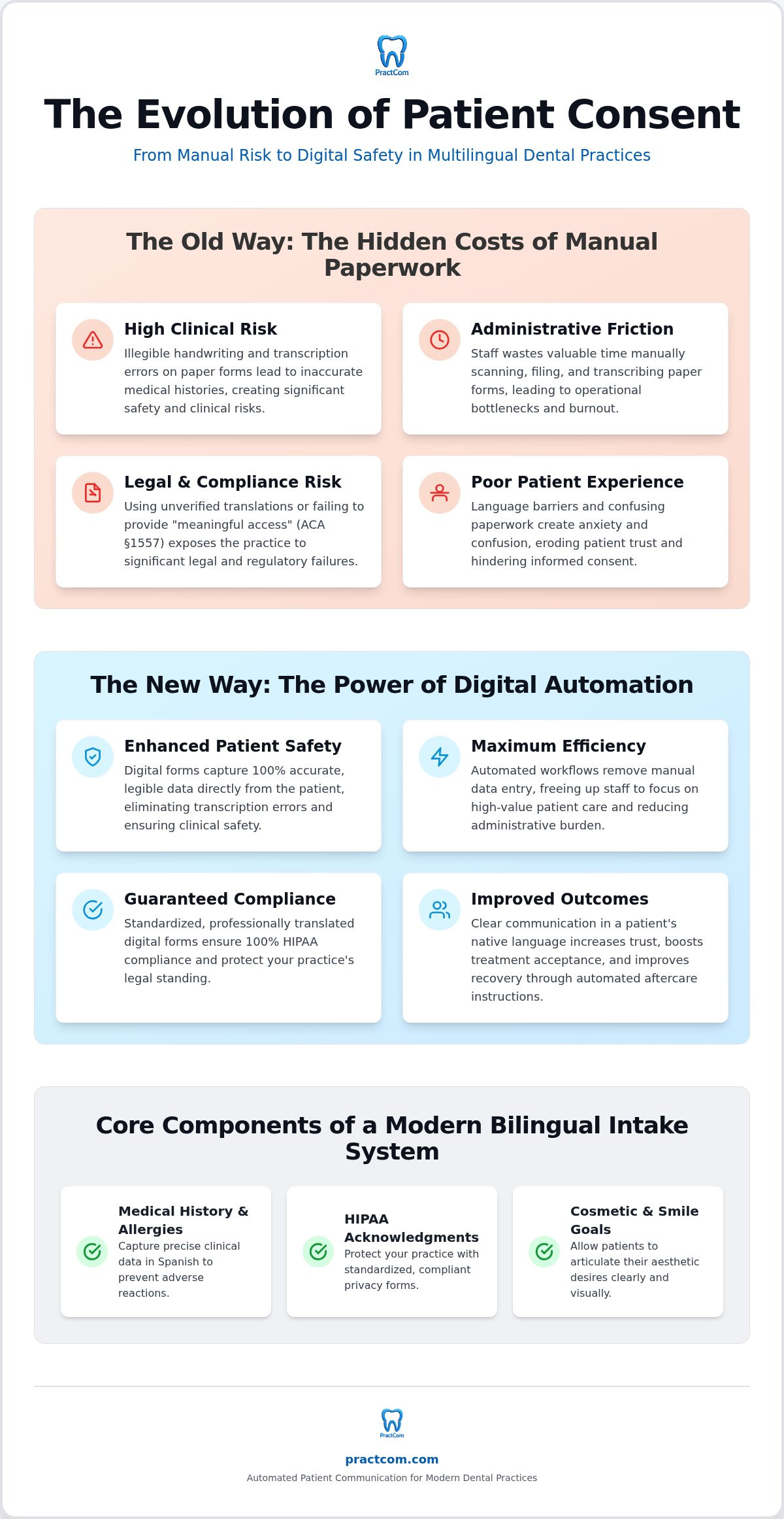
The transition toward a fully bilingual intake process represents a strategic move from operational disorganization to systematic control. By offering documents in a patient’s native language, you provide the psychological security they need to make informed decisions about their oral health. This clarity doesn’t just improve the patient experience; it protects your practice’s legal standing and ensures that medical histories are captured with 100% accuracy.
Meeting the Needs of a Growing US Patient Base
Recent market projections indicate that Spanish-speaking patients represent one of the fastest-growing segments in the national dental market. However, statistics show that Hispanic adults still face significant disparities in untreated tooth decay and periodontal disease compared to other groups. You can bridge this gap by prioritizing health literacy through translated materials. Providing clear, professional communication in a patient’s native language significantly reduces their physiological anxiety during clinical encounters. When patients feel understood, their trust in your clinical expertise increases, which leads directly to higher treatment acceptance rates and more consistent follow-up care.
What a Comprehensive Bilingual Intake Must Include
A modern, high-efficiency office doesn’t rely on piecemeal translations or verbal explanations alone. To ensure total compliance and clinical safety, your bilingual intake system must be exhaustive. A standardized process ensures that every patient receives the same level of care and documentation, regardless of the language they speak. Your digital intake should include:
- Medical History and Allergy Disclosures: Capturing precise data in Spanish prevents adverse reactions and ensures clinical safety.
- HIPAA Acknowledgments: Standardized privacy forms in Spanish protect your practice from regulatory failures.
- Cosmetic Screenings and Smile Goals: Visualizations and screening questions allow patients to articulate their aesthetic desires clearly.
Ensuring every touchpoint is linguistically consistent creates a seamless experience that moves the patient from the waiting room to the chair with confidence. This systematic approach reduces the risk of emergency visits caused by misunderstood instructions and creates a protective environment for your team and your patients.
The Hidden Costs of Static PDF Forms and Manual Paperwork
The reliance on static PDF forms represents a significant operational bottleneck for the modern dental office. While many practitioners view dental consent forms in Spanish as a simple “print-and-fill” requirement, the reality is that paper-based systems impose a heavy administrative tax. This burden slows down your clinic’s rhythm and introduces unnecessary risk into your daily workflow. Transitioning away from manual paperwork isn’t just an upgrade; it’s a protective measure for your practice’s long-term stability.
Administrative Friction and Staff Burnout
Manual data entry is a primary source of operational resistance. When a patient fills out a paper form, your front desk team spends valuable time scanning, filing, and transcribing handwritten notes into your system. These redundant tasks lead to significant time loss and contribute to high staff turnover. If your documentation is disorganized, your clinical team lacks the immediate, accurate data needed for safe treatment. This chaos disrupts the clinical rhythm and places an unfair burden on your administrative allies.
The common suggestion to have patients “print forms at home” is an outdated barrier. Most patients today are mobile-dependent and rarely have access to physical printers. Forcing patients to manage their own paperwork before an appointment creates immediate friction, often leading to incomplete medical histories and delayed check-ins. You can eliminate this resistance by simplifying your patient intake process with a truly digital workflow that meets patients where they are.
Security and Compliance Vulnerabilities
Paper-based consent trails are notoriously fragile during regulatory audits. Illegible handwriting and transcription errors aren’t just administrative nuisances; they are genuine clinical risks that can compromise patient safety. If a medical history or allergy disclosure is misread, the legal consequences for the practice are severe. A single misunderstood word on a handwritten form can invalidate the entire documentation of a procedure.
Compliance with federal language access laws requires more than just having a translated document on hand. It requires a system that ensures the patient actually understands the information provided. Digital signatures offer superior forensic evidence of informed consent compared to a faded ink signature on a scanned sheet. For a deeper look at managing these clinical risks, see our guide on Digital Dental Informed Consent Forms: The 2026 Guide to Clinical Compliance.
Physical storage also presents a vulnerability. Paper HIPAA trails are susceptible to loss, theft, or damage from environmental factors. Moving to a standardized digital system provides the psychological security of knowing your documentation is encrypted, searchable, and fully compliant with modern standards.
Digital Multi-Language Compliance vs. Manual Translation Risks
Relying on unverified translation tools like Google Translate for clinical documentation is a high-risk gamble. While these tools have improved, they often fail to capture the nuance of complex medical terminology, leading to “lost-in-translation” errors that can invalidate a patient’s consent. Using standardized dental consent forms in Spanish ensures that your practice meets the high bar of clinical accuracy required in 2026. A standardized library across 15+ languages provides a stabilizing force, ensuring that every patient, regardless of their native tongue, receives the same level of regulatory protection and administrative warmth.
Accuracy in Informed Consent Documentation
Federal law and the ADA guidelines on consent emphasize that informed consent is a process, not just a signature. If a patient doesn’t fully understand the risks and benefits of a procedure because of a poor translation, the consent is ethically and legally insufficient. You must ensure that Spanish-speaking patients have the exact same level of understanding as your English-speaking base. Standardizing clinical terminology through professional templates prevents ambiguity and protects your professional reputation from the limitations of human memory or machine error.
Optimizing the Referral Network
Communication breakdowns often occur during the handoff between a General Practitioner and a specialist. If a patient’s translated intake data doesn’t follow them, the specialist is forced to repeat the intake process, creating administrative friction and increasing the risk of inconsistent documentation. Understanding how Mastering Dental Referral Management Software in 2026 prevents these breakdowns is essential for modern practices. Standardized digital documentation reduces liability during these handoffs by ensuring a single, accurate source of truth follows the patient throughout their clinical journey.
Continuity of care requires a seamless link between initial intake and post-treatment instructions. When you automate this connection, you ensure that the patient receives consistent guidance in their native language from their first visit to their final recovery. This systematic approach doesn’t just reduce follow-up calls. It builds a foundation of trust that lasts beyond a single procedure, positioning your practice as a reliable professional ally to a diverse patient population. By bridging the gap between clinical necessity and administrative efficiency, you create a comprehensive ecosystem where no part of the communication process is left to chance.
Best Practices for Implementing Spanish Forms in Your Clinical Workflow
Successfully integrating dental consent forms in Spanish into your practice requires more than just a library of translated documents. It demands a systematic approach that eliminates operational resistance and ensures every patient receives a standardized experience. You can’t manage what you haven’t audited, so start by reviewing your current resources. If you’re still using photocopied sheets with outdated clinical terminology, you’re exposing your practice to unnecessary risk. Follow these four essential steps to modernize your workflow:
- Step 1: Conduct a clinical audit. Review every Spanish-language document for accuracy, legal relevance, and readability.
- Step 2: Transition to a dedicated platform. Adopt a system that supports digital signatures to provide the forensic evidence required for compliance.
- Step 3: Train your staff. Ensure your team understands the multi-language protocols so they can assist patients with confidence and administrative warmth.
- Step 4: Automate the delivery. Send intake links via SMS and email well before the patient arrives at your office.
Automating the Pre-Appointment Journey
The return on investment for automating your intake process is immediate and measurable. Sending dental consent forms in Spanish via text message leads to significantly higher completion rates compared to traditional email or paper methods. When patients complete their paperwork at home, you eliminate the “waiting room logjam” that often occurs during peak morning and afternoon hours. Automated follow-ups act as a reliable guardian, reminding patients of missing forms without requiring a manual phone call from your front-desk team. This systematic oversight reduces check-in times and allows your staff to focus on high-value patient interactions.
Enhancing the In-Office Experience
While a mobile-first approach is ideal, you must also accommodate patients who prefer to complete their documentation on-site. Providing tablets for digital intake ensures that even non-digital patients can participate in your streamlined workflow without resorting to paper. This consistency is vital for maintaining your professional reputation. Understanding The Dental Patient Experience helps you build long-term loyalty by showing every patient that their comfort and understanding are your top priorities. A standardized check-in process makes the experience identical for all patients, regardless of their primary language. If you’re ready to eliminate administrative friction, it’s time to modernize your patient communication system and secure your practice’s clinical future.
How PractCom Automates Multi-Language Patient Communication
Transitioning from manual paperwork to a digital ecosystem requires a tool that understands the specific pressures of a high-volume dental office. PractCom functions as the bridge between your existing Practice Management Software (PMS) and high-level patient communication. By leveraging a professional library of over 80 post-treatment and dental consent forms in Spanish, you can replace operational disorganization with systematic control. This library supports 15 languages, ensuring your documentation meets federal standards while providing the administrative warmth your patients expect.
PractCom provides the flexibility your diverse patient base needs through seamless delivery options. You can send documents via text or email for mobile-first patients, or use physical document printing for those who prefer paper. This multi-channel approach ensures that no patient is left behind. Additionally, our smile design visualizations allow you to show before and after cosmetic changes, which significantly improves treatment acceptance among Spanish-speaking patients by making complex clinical goals easy to understand.
A Comprehensive Communication Ecosystem
Efficiency in a modern practice comes from linking every stage of the patient journey. PractCom ensures continuity of care by connecting your initial intake data with Automated Dental Post-Op Instructions. This connection reduces follow-up calls because patients receive clear, native-language guidance for their recovery. For larger organizations, standardizing multi-location protocols is simplified through PractCom for DSOs, which ensures every office in your network maintains 100% compliance. You can track all these interactions through the Practice Performance Dashboard, giving you a bird’s eye view of patient engagement across different demographics.
Getting Started with Digital Automation
The move from a folder of static PDFs to a secure patient portal is designed to be effortless. PractCom acts as a protective guardian of your practice’s legal standing by providing a user-friendly clinical interface that reduces administrative resistance. Your staff won’t have to spend hours scanning or transcribing; instead, they can focus on providing the clinical care your patients deserve. This transition provides the psychological security of knowing your dental consent forms in Spanish are accurate, signed, and safely stored.
Don’t let manual transcription errors or illegible handwriting create unnecessary clinical risk for your team. You can start optimizing your practice with PractCom’s multi-language tools today to build a faster, safer, and more inclusive patient experience.
Secure Your Practice’s Future with Standardized Communication
Transitioning from the operational resistance of paper documentation is a critical step for the modern clinician. By replacing manual transcription with a digital ecosystem, you eliminate the risk of illegible handwriting and ensure total compliance with federal language access laws. Standardizing your dental consent forms in Spanish provides the psychological security your patients need while freeing your staff from redundant administrative tasks. This shift doesn’t just improve efficiency; it creates a protective barrier for your practice’s legal standing.
PractCom functions as a reliable ally for your practice, offering a systematic way to manage complex documentation across 15 languages. With a library of 80+ post-treatment templates and a powerful Smile Design visualization tool, you can bridge the gap between clinical necessity and administrative efficiency. This forward-thinking approach protects your professional reputation and ensures that every patient interaction is built on clear, accurate communication. It’s time to move beyond the limitations of human memory and embrace a standardized system.
Streamline your practice communication with PractCom’s multi-language library to build a more inclusive, high-efficiency office. Your team and your patients deserve the confidence that comes with a modern, error-free communication ecosystem.
Frequently Asked Questions
Do I need a separate Spanish dental patient intake form for every procedure?
Yes, specific procedures require tailored documentation to ensure clinical safety and legal clarity. While a general intake form covers basic medical history and HIPAA disclosures, specialized treatments like extractions or implants need unique dental consent forms in Spanish. Providing procedure-specific forms ensures the patient understands the exact risks and benefits of their treatment. This systematic approach reduces clinical risk and ensures that your informed consent process meets the ethical standards required for modern patient care.
Is it legal to use digital signatures on Spanish dental consent forms in the US?
Digital signatures are legally valid and often provide superior forensic evidence compared to traditional paper sheets. Under the ESIGN Act and UETA, digital signatures carry the same legal weight as ink signatures when properly implemented. Using a secure platform to capture signatures on your dental consent forms in Spanish creates a permanent, time-stamped record. This digital trail provides the psychological security of knowing your documentation is tamper-proof and fully defensible during any regulatory audit.
How do I ensure my Spanish intake forms remain HIPAA compliant?
HIPAA compliance requires that all patient data, regardless of language, is encrypted during transmission and storage. Your digital forms must be hosted on a secure, HITRUST-certified platform that signs a Business Associate Agreement with your practice. Beyond encryption, you must ensure that access to these Spanish-language records is restricted to authorized personnel only. This systematic oversight protects patient privacy and safeguards your practice from the severe financial penalties associated with potential data breaches.
Can I automate the delivery of Spanish forms via SMS or email?
Automation is a standard feature of modern communication suites, allowing you to send intake links instantly. You can schedule these messages to go out as soon as an appointment is booked or as a reminder shortly before the visit. By delivering forms via text or email, you meet patients on their preferred devices and increase completion rates. This pre-emptive strike against administrative friction ensures that all paperwork is completed before the patient ever reaches your waiting room.
What happens if a patient cannot complete the digital form at home?
You should provide an in-office digital alternative, such as a tablet, to maintain a consistent clinical workflow. While most patients prefer the convenience of completing forms on their own smartphones, having an on-site portal ensures that non-digital patients aren’t forced back into a paper-based system. This consistency allows your team to keep all records in a single digital ecosystem. It prevents the operational disorganization that occurs when you mix physical and digital documentation in a high-pressure environment.
How does multi-language support improve patient retention in dental practices?
Providing documentation in a patient’s native language builds immediate trust and administrative warmth. When patients can read their consent forms and post-op instructions in Spanish, they feel more valued and understood. This clarity reduces anxiety and improves clinical outcomes, which leads to higher patient satisfaction. Loyal patients are those who feel their practitioner is a reliable ally who prioritizes their understanding and safety throughout the entire treatment journey, from intake to recovery.
Does PractCom integrate with my existing Practice Management Software (PMS)?
PractCom is designed to function as the perfect companion to your existing PMS by handling high-level patient communication. While we are not a full Practice Management Software, our suite acts as a bridge that fills the gaps in traditional documentation workflows. Our platform allows you to manage digital consent and referrals seamlessly alongside your clinical records. This specialized focus ensures that your patient communication remains brisk, logical, and high-utility without disrupting your core software operations.
Are the Spanish translations in the PractCom library professionally reviewed?
All templates in our library are professionally translated to ensure clinical accuracy and technical precision. We avoid the inherent dangers of automated tools like Google Translate, which often miss critical nuances in medical terminology. Our 80+ templates across 15 languages are built to provide regulatory reassurance and protect your professional reputation. This commitment to quality ensures that your Spanish-speaking patients receive the same level of care and clear information as your English-speaking base.

Article by
Cary Ganz DDS
Dr. Cary H. Ganz is a dentist, prosthodontist, entrepreneur, lecturer, and author with more than 50 years of experience in clinical dentistry and dental technology. Throughout his career, he has combined hands-on patient care with a deep understanding of how technology can improve dental practice operations, communication, documentation, and patient outcomes.
In addition to his clinical background, Dr. Ganz has held significant leadership roles in the dental technology industry, including Past Owner and Vice President of Clinical Affairs at DEXIS Digital Radiography and Past Vice President of Clinical Affairs at Denticon Practice Management Software. His business experience includes product development, clinical strategy, dental software innovation, practice management solutions, and educating dental professionals on the effective use of technology in modern dentistry.
Today, Dr. Ganz continues to focus on creating practical technology solutions for dental practices, including PractCom, a comprehensive dental practice communication platform designed to improve patient communication, documentation, compliance support, referrals, and overall practice efficiency. His work reflects a career-long commitment to helping dentists deliver better care while making their practices more organized, efficient, and protected.
No responses yet