
What if the ultimate success of a complex clinical procedure didn’t depend on your technical precision in the chair, but on a text message sent three hours later? For the 15 million patients receiving endodontic treatment each year, the moments following the procedure are often filled with a fog of lingering anesthesia and mounting anxiety. Navigating root canal post-op instructions can feel overwhelming when a patient is worried about a dislodged temporary filling or an unclear medication schedule. You understand that clinical excellence requires a bridge of clear, consistent communication to ensure the patient feels supported once they leave your office.
In this guide, you’ll master the essential protocols for a pain-free recovery while discovering how digital automation can transform patient compliance and clinical outcomes. We’ll explore the critical steps for protecting the treated tooth and detail how a standardized, multi-language Post-Treatment Instruction Library reduces the administrative burden on your staff. Using automated systems provides patients with psychological security, which leads to higher satisfaction and fewer unscheduled follow-up calls. From managing immediate discomfort to securing the final restoration, you’ll learn to replace operational friction with a systematic approach that protects both your patient’s health and your practice’s reputation.
Key Takeaways
- Master the strategic timing of analgesic protocols to manage post-treatment tenderness before the local anesthesia wears off completely.
- Protect the integrity of your temporary filling by identifying which common foods and habits pose the highest risk of dislodgement during the initial healing phase.
- Implement standardized root canal post-op instructions through a digital delivery system to ensure patients receive consistent, clear guidance in their preferred language.
- Distinguish between normal post-operative sensitivity and emergency red flags, such as visible swelling or severe pain, that necessitate an immediate clinical evaluation.
- Reduce office phone traffic and administrative stress by utilizing an automated Post-Treatment Instruction Library for proactive and systematic patient follow-up.
Immediate Care: The First 24 Hours After Root Canal Therapy
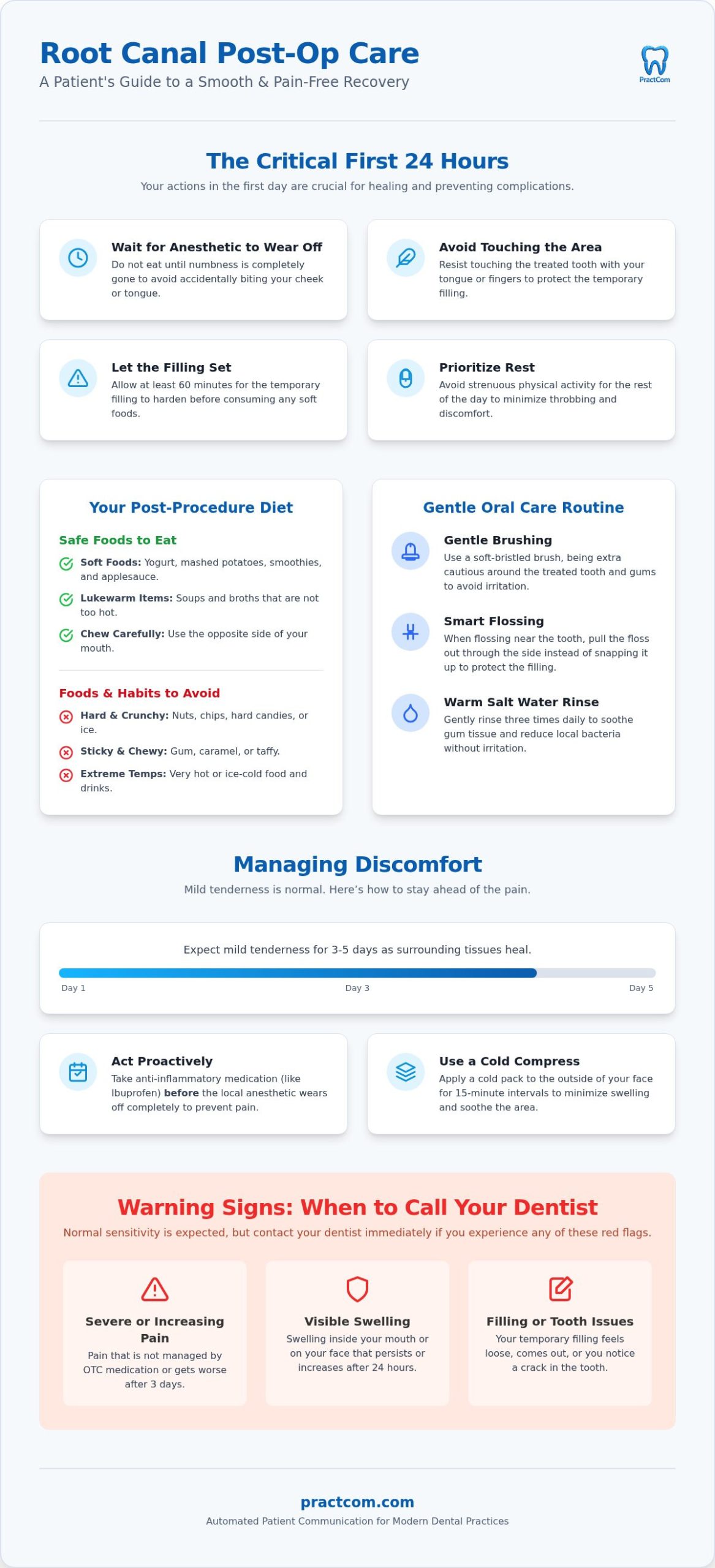
The first 24 hours after your procedure are the most critical for long-term success. While understanding the root canal procedure helps you appreciate the clinical work performed, your immediate behavior at home dictates how well the site heals. Following these root canal post-op instructions prevents unnecessary complications like secondary infections or mechanical damage to the tooth structure. Your primary goal is to protect the treatment site while the body initiates the inflammatory response necessary for healing.
Patients often feel a sense of relief once the procedure is over, but the recovery process requires active participation. Adhering to specific protocols during this window ensures the tooth remains stable and the patient remains comfortable. Practices that provide these instructions through a digital Post-Treatment Instruction Library see higher compliance rates because the information is readily accessible and standardized for every case.
- Wait for the anesthetic: Don’t eat until the local anesthetic has worn off completely. Numbness can lead to accidental cheek or tongue biting; this causes painful soft tissue trauma and unnecessary post-operative swelling.
- Avoid irritation: Resist the urge to touch the treated area with your tongue or fingers. Even minor pressure can irritate the gums or disturb the seal of the temporary filling, compromising the sterile environment created during treatment.
- Let materials set: Allow at least 60 minutes for the temporary filling to harden before consuming any soft foods. This ensures the seal remains intact against oral bacteria and prevents the material from washing away.
- Prioritize rest: Avoid strenuous physical activity for the remainder of the day. Increased heart rate can lead to elevated throbbing and potential bleeding at the injection site, making pain management more difficult.
Dietary Restrictions and Eating Habits
Your diet during the first day should focus on minimizing mechanical stress and thermal irritation. Stick to soft foods like yogurt, mashed potatoes, or lukewarm soup to avoid putting pressure on the tooth. It’s essential to chew on the opposite side of your mouth to protect the temporary filling from dislodging or cracking. Avoid extremely hot or cold beverages, as the treated area may experience temporary temperature sensitivity while the surrounding ligaments remain inflamed from the procedure.
Oral Hygiene Adjustments
Maintaining a clean environment is vital, but you must modify your technique to protect the healing site. Brush your teeth gently, using a soft-bristled brush and being extra cautious around the treated site to avoid aggravating the gums. When flossing, pull the floss out through the side rather than snapping it up; this protects the temporary filling from being pulled out of the access cavity. A warm salt water rinse can be used three times daily to soothe the gum tissue around the injection site and reduce local bacteria levels without mechanical irritation.
Managing Pain, Swelling, and Discomfort
Experiencing some level of discomfort after your procedure is a normal biological response to the clinical intervention. While the nerve inside the tooth has been removed, the surrounding periodontal ligaments often remain inflamed from the mechanical work performed. You should expect mild tenderness for 3-5 days as these tissues recover. Adhering to specific root canal post-op instructions regarding medication timing is the most effective way to prevent this tenderness from escalating into acute pain.
Don’t wait for the pain to arrive before acting. Taking anti-inflammatory medication before the local numbness wears off completely creates a proactive barrier against discomfort. You may also notice jaw stiffness; this is usually a result of keeping your mouth open for the duration of the treatment rather than a complication of the tooth itself. Using a cold compress on the outside of your face during the first few hours can significantly minimize initial swelling and provide immediate relief to the area.
Medication Protocols for Recovery
Most patients find success with standard over-the-counter (OTC) options like Ibuprofen (Advil or Motrin) or Acetaminophen (Tylenol). It’s vital to follow the exact dosage and frequency provided by your dentist to maintain a consistent therapeutic level in your bloodstream. If your provider prescribed antibiotics, you must finish the entire course even if your symptoms disappear within 48 hours. Stopping early can lead to antibiotic resistance or a recurring infection, complicating your root canal aftercare and long-term prognosis.
Non-Medicinal Relief Strategies
Physical interventions complement your medication schedule for a faster, smoother recovery. Apply an ice pack to the affected area for 20 minutes on and 20 minutes off during the first 6-8 hours to constrict blood vessels and limit inflammation. When you go to sleep, elevate your head with an extra pillow to reduce blood pressure in the head and neck, which helps minimize that distracting throbbing sensation. Avoid smoking or alcohol for at least 48 hours because these substances restrict blood flow and significantly delay the natural healing process.
Standardizing these recovery protocols ensures every patient has a predictable experience once they leave the chair. Practices can automate these medication reminders and instructions through a digital platform to ensure no detail is forgotten during the post-operative window.
Protecting the Temporary Filling and Permanent Restoration
The root canal procedure removes the infection, but the tooth remains structurally compromised until the final restoration is placed. Your temporary filling serves a singular, vital purpose: it acts as a chemical and physical barrier against the bacteria in your mouth. However, these materials are relatively soft and lack the durability of a permanent crown. Following specific root canal post-op instructions regarding your diet is the only way to ensure this seal remains intact during the healing phase.
Avoid all hard, crunchy, or sticky foods that could dislodge or crack the filling. This includes ice, nuts, taffy, and hard candies. If the temporary filling fails, the root canal system is immediately exposed to saliva and bacteria, which can lead to reinfection in as little as a few days. You must treat the tooth with extreme care until your follow-up appointment, as the weakened tooth structure is more prone to fracture under heavy chewing pressure.
Why the Temporary Filling is Essential
A temporary filling prevents bacteria from re-entering the sterilized root canal system. It’s common to feel a slight dip in the surface as a thin layer wears away, but a total loss of the material requires an immediate office visit. Understanding the difference between the endodontic phase and the restorative phase is key. The endodontist cleans and seals the internal canals, while the restorative dentist provides the external strength. Official post-operative instructions from endodontists confirm that the internal seal is only as good as the external protection covering it.
Planning the Permanent Restoration
Timing is everything when it comes to long-term success. You should schedule your permanent crown or filling within 2-4 weeks of the root canal. Back teeth, such as molars and premolars, almost always require a crown because they endure the highest chewing forces. If you delay this step, you significantly increase the risk of the tooth fracturing beyond repair or the internal seal becoming compromised.
Coordination between your specialist and your general dentist is vital for a seamless transition. The PractCom referral management system facilitates this specialist-to-GP coordination, making certain that your restorative plan is finalized without administrative delays. This systematic oversight protects your investment in the tooth and ensures your clinical journey concludes with a successful, permanent result.
When to Call Your Dentist: Identifying Red Flags
While the majority of patients experience a predictable recovery, you must be able to recognize when a clinical intervention is necessary. Distinguishing between normal post-operative sensitivity and a genuine emergency is a skill that protects both your health and the practice’s schedule. When root canal post-op instructions are vague, offices often face a surge of “anxiety calls” that disrupt the daily workflow and increase administrative stress. By establishing clear clinical benchmarks, you can move from a state of uncertainty to a place of psychological security.
Clinical red flags require immediate attention to prevent the failure of the endodontic treatment or systemic complications. If you experience severe pain that remains entirely unresponsive to the recommended over-the-counter medications after several hours, contact your dentist. Similarly, visible swelling inside the mouth or on the face that worsens over time is a sign of an active inflammatory response or secondary infection. You should also be vigilant for an uneven bite; if the treated tooth feels “high” or hits before your other teeth, it will cause excessive pressure on the healing ligaments and lead to persistent, avoidable inflammation.
Normal vs. Abnormal Symptoms
To reduce administrative burden and provide patient clarity, it’s helpful to categorize symptoms into a simple self-assessment checklist. Many emergency calls are triggered by normal healing sensations that a patient perceives as a failure of the procedure. Providing a standardized Post-Treatment Instruction Library helps bridge this gap by defining exactly what is expected during the biological healing process. This clarity ensures that office lines remain open for true clinical emergencies rather than routine recovery questions.
- Normal: Mild throbbing, tenderness to touch for 3-5 days, and a slightly “different” sensation when biting or chewing on the treated side.
- Abnormal: High fever, pus drainage from the gums, or a sudden return of the intense pre-treatment pain that led to the root canal.
- Medical Emergency: Any allergic reaction to prescribed medication, such as hives, a widespread rash, or difficulty breathing, requires an immediate call to 911 or your local emergency room.
Emergency Protocol and Contact
Efficiency in an emergency depends on having information at your fingertips. You should keep the office emergency number saved or accessible through your digital patient portal to avoid searching for contact details during a crisis. When you call, be prepared to provide a technical description of the location and nature of the pain. Is it sharp, dull, or triggered only by pressure? This precision allows the clinical team to triage your case effectively and determine if an immediate office visit is required. For common concerns that don’t involve the red flags mentioned above, you can check the PractCom FAQ to find rapid answers to standard recovery questions.
Standardizing these protocols doesn’t just improve patient safety; it creates a more stable environment for the dental team. Practices can reduce operational resistance by implementing automated follow-up systems that proactively check on patient comfort levels and reiterate these red flags before they become a source of anxiety.
The Practice Perspective: Automating Post-Op Communication
The clinical success of a root canal is only half the battle; the other half is fought in the administrative trenches. While you focus on the technical precision of the procedure, your front-office team often manages the fallout of patient confusion. Transitioning from paper slips to digital delivery via SMS and email ensures that root canal post-op instructions are always at the patient’s fingertips. This shift eliminates the “fog of anesthesia” excuse and places the recovery protocol exactly where patients look first: their smartphones.
Manual follow-up calls are a significant drain on your practice’s time and energy. By implementing automated follow-up messages, you can check on patient progress without requiring a single manual dial from your staff. This systematic approach allows your team to focus on high-value clinical tasks while maintaining a high-touch patient experience. Serving a diverse patient base effectively also requires removing language barriers. Offering instructions in 15 languages through a Post-Treatment Instruction Library ensures every patient understands their care plan, regardless of their primary language, which directly improves compliance and clinical outcomes.
Benefits of Digital Instruction Delivery
Digital delivery acts as a guardian for your practice’s reputation and legal standing. Patients are significantly less likely to lose a text or email than a physical piece of paper that often ends up in the trash before they even leave the parking lot. From a risk management perspective, digital logs provide timestamped proof of instruction delivery, which is an essential business requirement in a modern clinical environment. You can explore more about this transition in our guide to automated dental post-op instructions.
Standardizing the Patient Experience
Consistency is the foundation of professional authority. Using a standardized Post-Treatment Instruction Library ensures that every patient receives the same high-quality care information every time, regardless of which assistant or clinician handles the discharge. This level of order reduces the burden on front-desk staff by pre-empting common recovery questions and minimizing the volume of unscheduled “anxiety calls.” If you’re looking for ways to refine your internal processes, read more about Optimizing Dental Practice Workflow. When you’re ready to move from the resistance of manual tasks to the confidence of a standardized system, you can start your free trial today.
Securing Long-Term Success Through Systematic Aftercare
Successful endodontic treatment doesn’t end when the patient leaves the chair; it requires a seamless transition from clinical precision to active recovery. By prioritizing immediate care, managing discomfort proactively, and securing a permanent restoration within 2-4 weeks, you ensure the longevity of the tooth and the patient’s long-term health. For the modern practice, replacing manual follow-ups with a standardized system is the most effective way to provide this level of care without increasing administrative overhead.
Clear, accessible root canal post-op instructions are the foundation of this process. They move the patient from a state of post-treatment anxiety to a place of psychological security. You can streamline your aftercare with PractCom’s Post-Treatment Instruction Library, which features over 80 customizable templates and HIPAA-compliant digital delivery in 15 languages. This systematic approach reduces operational resistance while protecting your professional reputation. With the right tools and protocols, you can transform a complex recovery into a predictable, pain-free experience for every patient.
Frequently Asked Questions
How long does the numbness last after a root canal?
Local anesthesia typically lasts between two and four hours after the procedure concludes. The exact duration depends on the specific anesthetic agent used and your individual metabolic rate. It’s vital that you don’t consume hot liquids or solid foods until the sensation returns completely. Biting your cheek or tongue while numb can cause significant soft tissue trauma, which complicates your initial recovery and adds unnecessary pain to the healing process.
Can I go back to work immediately after the procedure?
Most patients return to work or school immediately following their appointment. If your treatment involved only local anesthesia, you’ll be able to function normally, though you should expect some mild tenderness as the numbness fades. However, if your dentist administered oral or IV sedation, you must take the remainder of the day off to rest. Always prioritize your comfort and avoid high-stress meetings or heavy physical labor during the first few hours of recovery.
What if my temporary filling falls out over the weekend?
You should contact your dental office as soon as possible to have the material replaced. While a lost temporary filling isn’t usually a clinical emergency requiring an after-hours visit, it does leave the sterilized canals vulnerable to bacterial reinfection. If the loss occurs over the weekend, keep the area clean and avoid chewing on that side. Your root canal post-op instructions will typically provide a specific protocol for managing this minor restorative setback efficiently.
Is it normal for the tooth to feel sensitive to cold after a root canal?
It isn’t normal for a tooth to feel cold sensitivity after a completed root canal because the nerve tissue has been removed. If you feel a sharp reaction to cold, it may indicate a missed canal or that the sensitivity is actually originating from an adjacent tooth. You may, however, feel pressure sensitivity or gum tenderness for several days. If cold sensitivity persists, schedule a follow-up appointment to ensure the clinical seal is intact.
How soon can I brush and floss the treated tooth?
You can brush and floss the treated area on the same day as your procedure. Maintaining high oral hygiene standards is essential for preventing localized gum inflammation and secondary infections. Use a soft-bristled brush and gentle circular motions around the treatment site. When flossing, pull the floss through the side of the tooth rather than snapping it upward. This careful technique ensures you don’t accidentally dislodge the temporary filling while keeping the area clean.
Why does my jaw feel sore after the treatment?
Jaw soreness is a common side effect resulting from keeping your mouth open for an extended period during the procedure. This discomfort is typically muscular or related to the temporomandibular joint (TMJ) rather than the tooth itself. Applying a warm compress to the outside of your jaw can help relax the muscles and increase blood flow to the area. This stiffness usually resolves within a few days without requiring additional clinical intervention beyond standard OTC analgesics.
Do I really need a crown if the tooth feels fine now?
You almost always need a permanent crown for back teeth to provide the structural integrity necessary for chewing. Root canal therapy involves removing the internal structure of the tooth, which makes it more brittle and prone to vertical fractures. A crown acts as a protective helmet that distributes force evenly across the tooth. Skipping this step often leads to a non-restorable fracture, which would eventually require the complete extraction of the tooth.
Can I drive myself home after root canal therapy?
You can drive yourself home if your treatment was performed using only local anesthesia. Because the numbing agent doesn’t affect your cognitive function or motor skills, it’s safe to operate a vehicle immediately. If you received any form of sedation, such as nitrous oxide, oral sedatives, or IV anesthesia, you’re legally required to have a responsible adult drive you home. Check your digital root canal post-op instructions to confirm which anesthesia protocol was used.

Article by
Cary Ganz DDS
Dr. Cary H. Ganz is a dentist, prosthodontist, entrepreneur, lecturer, and author with more than 50 years of experience in clinical dentistry and dental technology. Throughout his career, he has combined hands-on patient care with a deep understanding of how technology can improve dental practice operations, communication, documentation, and patient outcomes.
In addition to his clinical background, Dr. Ganz has held significant leadership roles in the dental technology industry, including Past Owner and Vice President of Clinical Affairs at DEXIS Digital Radiography and Past Vice President of Clinical Affairs at Denticon Practice Management Software. His business experience includes product development, clinical strategy, dental software innovation, practice management solutions, and educating dental professionals on the effective use of technology in modern dentistry.
Today, Dr. Ganz continues to focus on creating practical technology solutions for dental practices, including PractCom, a comprehensive dental practice communication platform designed to improve patient communication, documentation, compliance support, referrals, and overall practice efficiency. His work reflects a career-long commitment to helping dentists deliver better care while making their practices more organized, efficient, and protected.
No responses yet