
Can you take your regular medications on the morning of oral surgery? Some prescribed medicines may be taken with a small sip of water, but follow your surgeon’s or anesthesiologist’s instructions, especially if you’re having sedation or general anesthesia. These pre-operative instructions for oral surgery help you prepare without guessing about medication, fasting, or your ride home.
It’s understandable to want a clear plan before your appointment. A few practical steps can make the morning less stressful and help you arrive prepared. You’ll learn how to handle regular medications, arrange transportation after sedation, and choose comfortable clothing. You’ll also see why it’s important to avoid alcohol and smoking before surgery, and what to do if you feel ill or your plans change. Follow your surgical team’s specific directions, since preparation can vary with the procedure and anesthesia.
Key Takeaways
- Plan morning medications around your surgeon’s instructions, especially if you’ll have sedation or general anesthesia.
- Arrange a responsible adult to take you home after sedation and stay with you as directed.
- Choose comfortable, loose-fitting clothes and prepare personal items that may need to be removed before surgery.
- Make a plan to avoid alcohol and smoking before your appointment, and tell the surgical team if you feel unwell.
Arranging transportation after sedation or general anesthesia
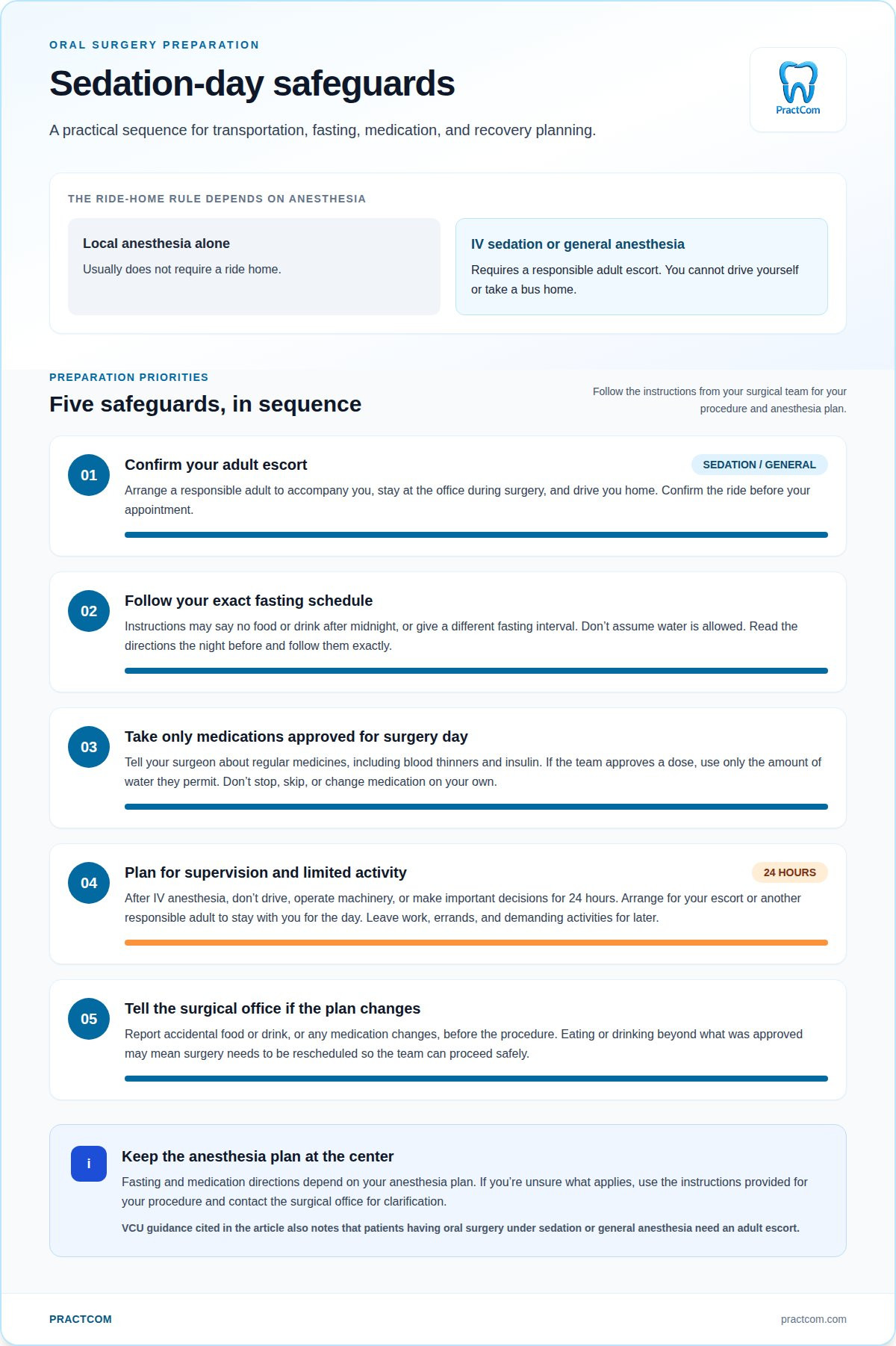
Local anesthesia alone usually doesn’t require a ride home, while IV sedation or general anesthesia does. Fasting and medication directions depend on your anesthesia plan, so follow the instructions provided for your procedure.
- Arrange an adult escort for sedation or general anesthesia. A responsible adult should accompany you, stay at the office during surgery, and drive you home. According to VCU, patients having oral surgery under sedation or general anesthesia need an adult escort and can’t drive themselves or take a bus home. Confirm your ride before your surgery appointment.
- Follow the fasting schedule given for your procedure. Instructions for IV sedation and general anesthesia can specify no food or drink after midnight, or give a different fasting interval. Don’t assume water is allowed. If your appointment is in the morning, read the fasting directions the night before and follow them exactly.
- Take only medications approved for surgery day. Tell your surgeon about regular medicines, including blood thinners and insulin, before the procedure. If the team says to take a dose, use only the permitted small amount of water. Don’t stop, skip, or change a medication on your own.
- Plan for supervision and limited activity afterward. After IV anesthesia, don’t drive, operate machinery, or make important decisions for 24 hours. Arrange for your escort or another responsible adult to stay with you for the day, and leave work, errands, and other demanding activities for later.
- Call the surgical office if preparation goes off plan. Eating or drinking beyond what was approved may mean your surgery needs to be rescheduled. The risk of ignoring fasting or medication directions is that the team may not be able to proceed safely as planned. Report any accidental food, drink, or medication changes before the procedure.
Medication instructions
Give your surgeon a complete medication list before your appointment, including prescriptions, over-the-counter medicines, and supplements. Use the pre-operative instructions for oral surgery as your medication-specific plan, since your health history and anesthesia type can affect which doses to take or adjust.
-
Review medication adjustments and blood thinners
Tell your surgeon about conditions such as diabetes or heart disease, and list every medication you take. Include blood thinners such as Warfarin, Plavix, or Eliquis, insulin, and any medicine started since your consultation. The surgical team may need to adjust some medications to manage bleeding risks. Don’t stop or change a prescribed dose on your own.
Children, pregnant patients, and older adults may need instructions tailored to their health, age, or other medications. Share these details early so the surgeon can provide directions suited to your situation.
-
Confirm which medications to take or stop
Before surgery day, confirm with your surgeon which regular medications to take, hold, or adjust. Instructions can vary by medication and procedure. If a medication is approved for the morning, ask how much water you may use; some instructions allow only a small sip. Don’t rely on general dental advice or assume your usual routine applies.
Keep your pre-operative instructions for oral surgery with your medication list. If your doctor prescribes a new medicine between your consultation and surgery, tell the surgical team before your appointment. This keeps the team’s medication review up to date and helps prevent conflicting directions.
-
Follow pain medication and driving precautions
Ask which prescribed pain medicine to take and when to start it, then follow the directions provided. Don’t add an over-the-counter pain reliever or change a dose without approval, particularly if you take blood thinners or other regular medications.
After intravenous anesthesia, don’t drive for 24 hours, even if you feel alert or have taken no pain medicine. Arrange a ride and avoid tasks requiring quick judgment during that period. Dental practices can also use patient communication tools to share clear instructions with patients.
Clothing and personal items for surgery
Choose clothes that let the surgical team access your arm and monitor you comfortably. Prepare personal items before you leave, since you may need to remove contact lenses, jewelry, or dentures.
-
Choose comfortable clothing and footwear
Wear loose-fitting clothes with sleeves that roll above your elbow. A short-sleeved shirt or blouse gives the team access to your arm if anesthesia monitors are used. Choose low-heeled, supportive shoes that feel steady when walking. Avoid tight sleeves, complicated fastenings, or clothing that would be difficult to change after your procedure.
-
Remove jewelry and other items
Remove jewelry before surgery and leave it at home, including earrings, necklaces, and rings. Take out your contact lenses, or bring a case so you can remove them before the procedure. If you wear dentures, follow the surgical team’s directions about removing them. These steps help keep personal items from getting in the way during care.
- Prepare your face and nails on the morning of surgery. Avoid lipstick, excessive makeup, and nail polish, which can interfere with the team’s view of your natural coloring or nails. If you wear contact lenses, glasses may be a practical option for the trip to the office. Keep a lens case handy if you need to remove your lenses there.
- Set out your clothing and personal items the night before. Check that sleeves roll easily past your elbows and shoes feel secure. Leave jewelry and valuables at home rather than storing them during your appointment. Choosing clothes doesn’t change your fasting plan: follow the separate instructions about whether you may eat or drink before surgery.
Avoiding alcohol and smoking before surgery
Alcohol, tobacco, vaping, and recreational drugs belong on your preparation checklist because they can affect anesthesia and recovery. Plan ahead and follow the timing in your surgical team’s instructions.
-
Avoid tobacco and vaping
Set a stop time for smoking before your procedure and follow the interval in your instructions. Some oral surgery directions say not to smoke for at least 12 hours before surgery; others call for stopping tobacco and vaping earlier. For example, one set of instructions requires avoiding them for at least 7 days. Don’t treat one interval as universal.
Stopping as early as you can gives you more time away from tobacco before surgery and supports your recovery plan. Tell the team if you smoked or vaped close to your appointment, including what you used and when.
-
Avoid alcohol and recreational drugs
Plan to avoid alcohol and recreational drugs before surgery. Some oral surgery instructions specify stopping them at least 72 hours before the procedure, while others use a different interval. Marijuana counts as a recreational drug in these instructions, including smoked, vaped, and edible forms. Follow the timing given for your own surgery rather than combining advice from different offices.
If you used alcohol or a recreational drug during a period when your instructions prohibit it, tell the surgical team before the procedure. Accurate details help the team assess your anesthesia plan. Don’t conceal use or assume that wearing loose clothing or changing your meal schedule addresses it.
- Write your stop times beside your surgery appointment in a calendar. Include cigarettes, vaping products, alcohol, marijuana, and other recreational drugs, then follow your surgical team’s written directions. If the instructions give a specific interval, use it; if your plans change, contact the team before surgery. Careful preparation helps keep the procedure and recovery plan aligned, whether you’re having an extraction or implant surgery.
Dental practices can make these instructions easier to share and follow with organized patient communication tools.
PractCom: Post-Treatment Instruction Library
PractCom’s Post-Treatment Instruction Library helps dental practices organize clear guidance patients can refer to after a procedure. Use it when your team wants consistent, patient-facing instructions to complement the preparation steps in this guide.
Digital Informed Consent Forms support the consent process, while the Patient Portal gives patients a place to access practice communications. Together, these tools can make essential information easier to share and find. They don’t replace individualized pre-operative directions from the surgeon, especially for fasting, medication changes, or anesthesia.
If your practice wants a more organized way to share patient instructions and consent forms, contact PractCom.
Make your next step clear
Turn the guidance you’ve reviewed into a short plan for your appointment. Keep your questions and relevant health details together so you can discuss anything that may affect your care. Your pre-operative instructions for oral surgery are most useful when you understand what applies to your procedure and can act on it confidently.
For dental practices, clear patient communication can support preparation. PractCom offers a Post-Treatment Instruction Library, Digital Informed Consent Forms, and a Referral Management System to help organize key parts of patient communication. These tools support practice workflows, while your surgical team remains the source for your individual care instructions.
When you’re ready to explore how these tools may fit your practice, contact PractCom with your questions. A thoughtful plan is a practical first step toward feeling prepared for your appointment.
Frequently Asked Questions
Can I take my regular medications during the morning of surgery?
Take a morning dose only if your surgeon or anesthesiologist has approved it. Instructions depend on the medication and anesthesia plan, so don’t assume your usual routine applies. Before surgery day, give the team a complete list, including prescriptions, over-the-counter medicines, and supplements. Mention insulin, blood thinners, and any new medicine prescribed after your consultation.
What happens if I accidentally eat or drink before surgery?
Tell the surgical office what you ate or drank and when, before you leave for your appointment. Don’t hide it or try to compensate by skipping medication or changing your arrival time. The team will decide whether the procedure can proceed or needs to be rescheduled. Even water can matter if your instructions required fasting, so report the details accurately.
What should I wear to my surgery appointment?
Wear loose, comfortable clothes with sleeves that roll above your elbow, along with stable, low-heeled shoes. A short-sleeved top can make it easier for the team to place anesthesia monitors. Leave jewelry at home, and remove contact lenses, dentures, lipstick, excessive makeup, and nail polish as directed. If you wear contacts, bring a case for safe storage.
What should I eat and drink before oral surgery?
Follow the eating and drinking instructions for your specific procedure and anesthesia. Patients having only local anesthesia may not need the same fasting restrictions as those receiving sedation. Some instructions recommend a light meal several hours beforehand for local anesthesia, while sedation plans can require fasting. Don’t assume clear liquids or water are allowed unless your surgical team says so.
How long should I fast before oral surgery with sedation or general anesthesia?
Follow the fasting interval in your surgical instructions. Oral surgery directions may require no food or drink after midnight, while other protocols specify a set number of hours. For example, instructions for IV sedation commonly specify six or eight hours, and some permit clear liquids until a stated cutoff. These differences make your written directions more useful than a general rule.
Should I stop smoking, vaping, or using alcohol before oral surgery, and when?
Yes, plan to stop according to the timing in your surgical instructions, which can vary. Some directions say to stop smoking at least 12 hours before surgery; alcohol or recreational drugs may need to stop 72 hours before. Other instructions call for avoiding tobacco, vaping, and alcohol for at least seven days. Tell the team if use occurs during the restricted period.

Article by
Cary Ganz DDS
Dr. Cary H. Ganz is a dentist, prosthodontist, entrepreneur, lecturer, and author with more than 50 years of experience in clinical dentistry and dental technology. Throughout his career, he has combined hands-on patient care with a deep understanding of how technology can improve dental practice operations, communication, documentation, and patient outcomes.
In addition to his clinical background, Dr. Ganz has held significant leadership roles in the dental technology industry, including Past Owner and Vice President of Clinical Affairs at DEXIS Digital Radiography and Past Vice President of Clinical Affairs at Denticon Practice Management Software. His business experience includes product development, clinical strategy, dental software innovation, practice management solutions, and educating dental professionals on the effective use of technology in modern dentistry.
Today, Dr. Ganz continues to focus on creating practical technology solutions for dental practices, including PractCom, a comprehensive dental practice communication platform designed to improve patient communication, documentation, compliance support, referrals, and overall practice efficiency. His work reflects a career-long commitment to helping dentists deliver better care while making their practices more organized, efficient, and protected.
No responses yet