
Braces coming off is a transition, not the end of care. Follow your orthodontist’s orthodontic post-treatment instructions, begin wearing your retainer on the prescribed schedule, and keep brushing and flossing carefully. Mild tooth sensitivity can occur during the first 48 hours after removal, while retainers help hold teeth in their new positions as the surrounding tissues settle.
It’s normal to wonder whether tenderness, a new retainer, or changes in how your teeth feel need special attention. Consistent care can make the transition easier to manage. This guide explains what to expect after braces removal, how to start retention and care for your retainer, and how to ease soreness while maintaining good oral hygiene. You’ll also learn how to handle common questions and why your orthodontist’s personalized directions should guide your routine.
Key Takeaways
- Start retention according to your orthodontist’s schedule, and keep your retainer clean and protected when it’s not in use.
- Use gentle, practical steps to manage tenderness, and know when discomfort calls for follow-up.
- Adjust your food choices while your teeth settle, and maintain a careful brushing and flossing routine.
- Use clear, consistent post-treatment guidance to keep each step of your care on track.
Braces removal and the transition to retention
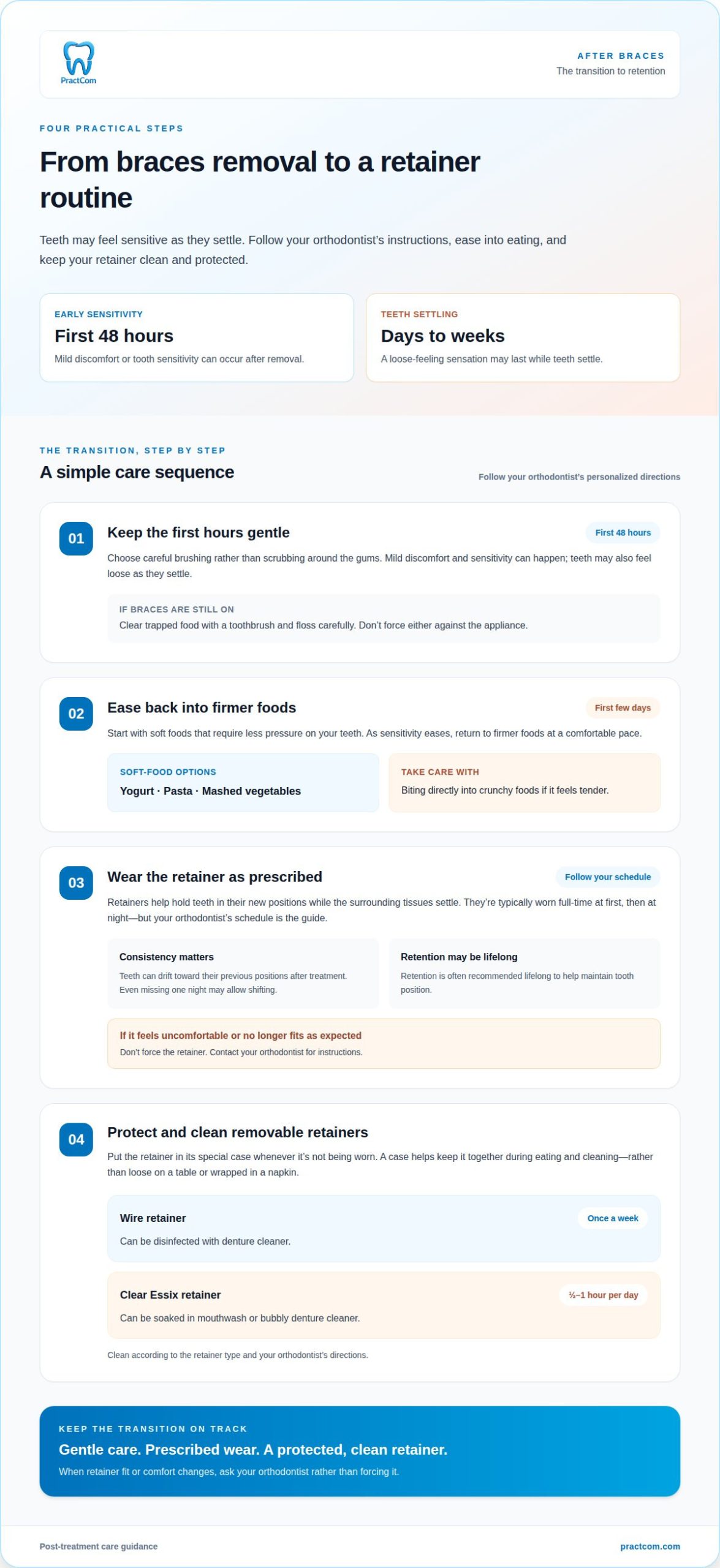
Use these four steps to manage the change from braces to a retainer, including early sensitivity, eating, and appliance care.
-
Handle the First Forty-Eight Hours
Keep the first 48 hours after braces removal gentle. Mild discomfort and tooth sensitivity can occur, so choose careful brushing rather than scrubbing around the gums. Teeth may also feel loose as they settle; that sensation can last from days to weeks. If braces are still on and food is caught between a bracket and tooth, use a toothbrush and floss carefully to clear it without forcing either against the appliance.
-
Choose Foods After Brace Removal
Choose soft foods during the first few days after braces removal. Yogurt, pasta, and mashed vegetables are practical options because they require less pressure on your teeth. As sensitivity eases, return to firmer foods at a comfortable pace, and avoid biting directly into crunchy foods if that feels tender. If food gets trapped around braces before removal, clean the area gently rather than picking at brackets or wires.
-
Wear and Care for Removable Retainers
Follow the retainer-wear schedule provided by your orthodontist; retainers are typically worn full-time at first, then at night. Wear matters because teeth can drift toward their previous positions after treatment, and even missing one night may allow shifting. Retention is often recommended lifelong to help maintain tooth position. If the retainer feels uncomfortable or no longer fits as expected, don’t force it; contact your orthodontist for instructions.
-
Store and Clean Removable Appliances
Put a removable retainer in its special case whenever it’s not being worn. Clean it according to its type and your orthodontist’s directions: a wire retainer can be disinfected with denture cleaner once a week, while a clear Essix retainer can be soaked in mouthwash or bubbly denture cleaner for ½-1 hour per day. A case also keeps the appliance together during eating and cleaning, rather than loose on a table or wrapped in a napkin.
Managing soreness with salt water rinses or pain relievers
- Use a warm salt-water rinse. Mix ½ teaspoon of salt into water, then swish for 30 seconds and spit it out. Repeat the rinse 4-5 times to soothe sore oral tissues. Tenderness in teeth and muscles may last one to two days following orthodontic treatment. If you recommend an over-the-counter pain reliever, direct patients to follow its label and your clinical guidance.
- Set expectations for post-appointment soreness. Explain that braces-related soreness can be normal for 1-2 weeks after an orthodontic appointment. Warm salt water, acetaminophen, or ibuprofen may help relieve discomfort. For tenderness after braces placement, cold-water rinses or topical numbing gel may also help. Remind patients to use any medicine only as directed and to contact the orthodontic office with post-treatment questions.
- Respond to retainer problems promptly. If a removable retainer is lost or broken, call your orthodontic office promptly. A damaged or missing appliance can interrupt your prescribed retention routine. If a retainer feels uncomfortable or does not seat as expected, avoid forcing it into place and ask your orthodontic team for instructions. Use a clear script, such as, “Call us if your retainer is lost, broken, or painful.”
- Check irritation and appliance-related habits. For patients still wearing braces, inspect whether a bracket or wire is rubbing the cheek or lip. Orthodontic wax can cover an irritating spot, while avoiding sticky foods and habits like chewing pens can help protect the appliance. Teams can reinforce these steps with consistent written guidance. A post-treatment instruction library can help dental teams deliver clear care directions.
Following post-treatment instructions
- Make daily cleaning routine-specific. Brush for at least two minutes each morning and evening, using gentle pressure after braces are removed. Floss once a day to clean between your teeth. For a fixed wire retainer, use a bridge threader to reach beneath the wire. A fluoride rinse can also be part of post-treatment oral hygiene. Explain each step with a clear example, such as threading floss under the wire before cleaning between adjacent teeth.
- Follow directions for prescribed appliances. If your orthodontist directs you to wear elastics or activate an expander at home, follow those instructions until your next orthodontic visit. Don’t change the schedule or stop an appliance routine without guidance. Clear orthodontic post-treatment instructions should identify the appliance, the required action, and when to continue it. For example, directions should distinguish wearing elastics from activating an expander.
- Coordinate dental cleaning and examinations. Schedule a professional dental cleaning during the first week after braces are removed. Continue dental examinations every six months unless your orthodontist directs otherwise. Dedicated practices like Damansara Dental Studio highlight the importance of routine dental cleanings and oral health maintenance following brace removal. Orthodontic follow-up visits may occur every few months after removal, supporting continued attention to retention and treatment questions. Keep dental and orthodontic appointments distinct: each visit has its own purpose, and one doesn’t replace the other.
- Give patients a clear route for questions. Encourage patients to contact their orthodontist with questions about their appliance, cleaning routine, or next appointment. Written directions can make the daily sequence easier to follow: brush morning and evening, floss daily, use any prescribed appliance as directed, and keep scheduled examinations. For example, an instruction sheet can separate home care from follow-up timing, helping patients find the relevant step without guessing.
Contact your orthodontist about spots, cavities, or gum problems, and keep your scheduled dental cleaning and examination appointments. For patients exploring further aesthetic enhancements or smile makeovers once alignment is complete, clinics such as Khan Dental offer cosmetic dental solutions to complement your finished orthodontic results.
What should I eat and avoid after orthodontic braces are removed?
- Choose easy-to-chew meals while teeth feel tender. During the first few days after braces removal, softer textures can reduce pressure while eating. For example, serve pasta or mashed vegetables rather than foods that require forceful biting. Let comfort guide your return to firmer textures; don’t rush into a crunchy meal if chewing feels uncomfortable. These practical choices help you manage the transition without treating every food as permanently off limits.
- Change how you prepare firm foods. Harvard orthodontic instructions recommend cutting apples, hard breads, steak, raw vegetables, and bagels into small pieces before eating. This gives patients a practical alternative to biting directly into firm foods. For an apple, cut bite-sized pieces; for steak, slice small portions. Include these examples in written directions so “cut it up” becomes a clear action, not a guess.
- Separate post-removal advice from braces-era restrictions. Very hard or sticky foods, including ice and chewy candies, can damage fixed orthodontic appliances. After braces are removed, explain which precautions applied to brackets and which eating adjustments address current tenderness. This distinction prevents outdated restrictions from being mistaken for permanent rules. If you still wear an orthodontic appliance, tailor food guidance to that appliance and the instructions provided.
- Give patients a usable eating plan. Organize recommendations by action: select softer textures when chewing is uncomfortable, cut firm foods into small pieces, and follow appliance-specific directions. For sweets during braces treatment, Harvard orthodontic instructions advise rinsing with water and brushing immediately after eating or drinking them. Clear examples make guidance easier to apply at meals. Dental teams can set up consistent patient instructions that keep food advice practical and easy to follow.
PractCom: Post-Treatment Instruction Library
PractCom’s Post-Treatment Instruction Library helps dental teams deliver clear guidance for care after braces. It includes over 80 post-treatment templates, which teams can provide by email, text, or print in 15 languages. Consistent, accessible instructions can help patients understand retainer care, cleaning routines, and what to do when an appliance causes discomfort.
Turn to PractCom’s Post-Treatment Instruction Library when your team needs organized patient directions for common post-treatment situations. PractCom also offers a Patient Portal, Digital Informed Consent Forms, and a Referral Management System. These tools support communication workflows without replacing clinical judgment or individualized directions from the orthodontist.
Contact PractCom to discuss how its patient communication tools can support your practice.
Make Consistent Follow-Through Your Next Step
Reliable orthodontic post-treatment instructions give patients a clear reference as they move from active treatment into retention. For dental teams, the next step is making that guidance part of a consistent communication process, so patients understand what to do and where to turn with questions.
PractCom offers a Post-Treatment Instruction Library, Digital Informed Consent Forms, and a Referral Management System. These tools support organized patient communication around treatment and follow-up. The clinical team still provides patient-specific directions; clear systems make those directions easier to share and manage.
Choose one practical improvement to carry forward, such as standardizing how your team shares post-treatment care information. A consistent process can make the next patient handoff easier to manage. Contact PractCom to discuss your needs and explore a communication workflow that fits your practice.
Frequently Asked Questions
What if my braces come off?
If braces or a bracket come loose before planned removal, contact your orthodontist’s office for instructions. Leave a loose bracket or band attached to the wire in place, and use orthodontic wax if it irritates your mouth. Don’t pull or twist the appliance. If your braces were removed as scheduled, follow your retainer directions to help keep your teeth in position.
How long does the pain last after wearing braces?
Soreness after an orthodontic appointment can last 1-2 weeks, while muscle and tooth soreness after treatment may last one to two days. After braces placement, tenderness can last up to a week and often peaks within the first 48 hours. Soft foods, a warm salt-water rinse, or an appropriate over-the-counter pain reliever may help. Follow medication directions.
Why Is the Retention Phase So Important?
Retention helps hold teeth in their new positions while the surrounding bone and gums settle. Teeth naturally tend to drift toward their earlier positions after orthodontic treatment, so completing active treatment doesn’t end the need for care. For example, a retainer gives teeth ongoing support after braces are removed. Wearing it as directed helps maintain your treatment result.
How often should I wear my retainer after braces, and for how long?
Retainers are typically worn full-time at first, followed by nighttime wear, but your orthodontist provides the schedule for your treatment. Keep following that plan as it changes over time. Retainer use is generally recommended lifelong to help maintain tooth position. If you’re unsure whether to wear your appliance during a specific activity, follow the directions provided with your retainer.
What should I do if my retainer is lost, broken, or no longer fits?
Contact your orthodontic office promptly if your retainer is lost or broken. If it no longer fits, don’t force it into place or try to reshape it yourself. Tell the office what changed, such as a crack, a lost appliance, or discomfort when seating it. Clear details help the orthodontic team advise you on the next step in your retention plan.
How do I clean and store a removable orthodontic retainer?
Store a removable retainer in its case whenever you take it out, such as before eating or brushing. Clean it according to its type and your orthodontist’s directions. A wire retainer can be disinfected with denture cleaner once a week; a clear Essix retainer can be soaked in mouthwash or bubbly denture cleaner for ½-1 hour per day. Keep it out of napkins, where it can be misplaced.
Article by
Cary Ganz DDS
Dr. Cary H. Ganz is a dentist, prosthodontist, entrepreneur, lecturer, and author with more than 50 years of experience in clinical dentistry and dental technology. Throughout his career, he has combined hands-on patient care with a deep understanding of how technology can improve dental practice operations, communication, documentation, and patient outcomes.
In addition to his clinical background, Dr. Ganz has held significant leadership roles in the dental technology industry, including Past Owner and Vice President of Clinical Affairs at DEXIS Digital Radiography and Past Vice President of Clinical Affairs at Denticon Practice Management Software. His business experience includes product development, clinical strategy, dental software innovation, practice management solutions, and educating dental professionals on the effective use of technology in modern dentistry.
Today, Dr. Ganz continues to focus on creating practical technology solutions for dental practices, including PractCom, a comprehensive dental practice communication platform designed to improve patient communication, documentation, compliance support, referrals, and overall practice efficiency. His work reflects a career-long commitment to helping dentists deliver better care while making their practices more organized, efficient, and protected.
No responses yet