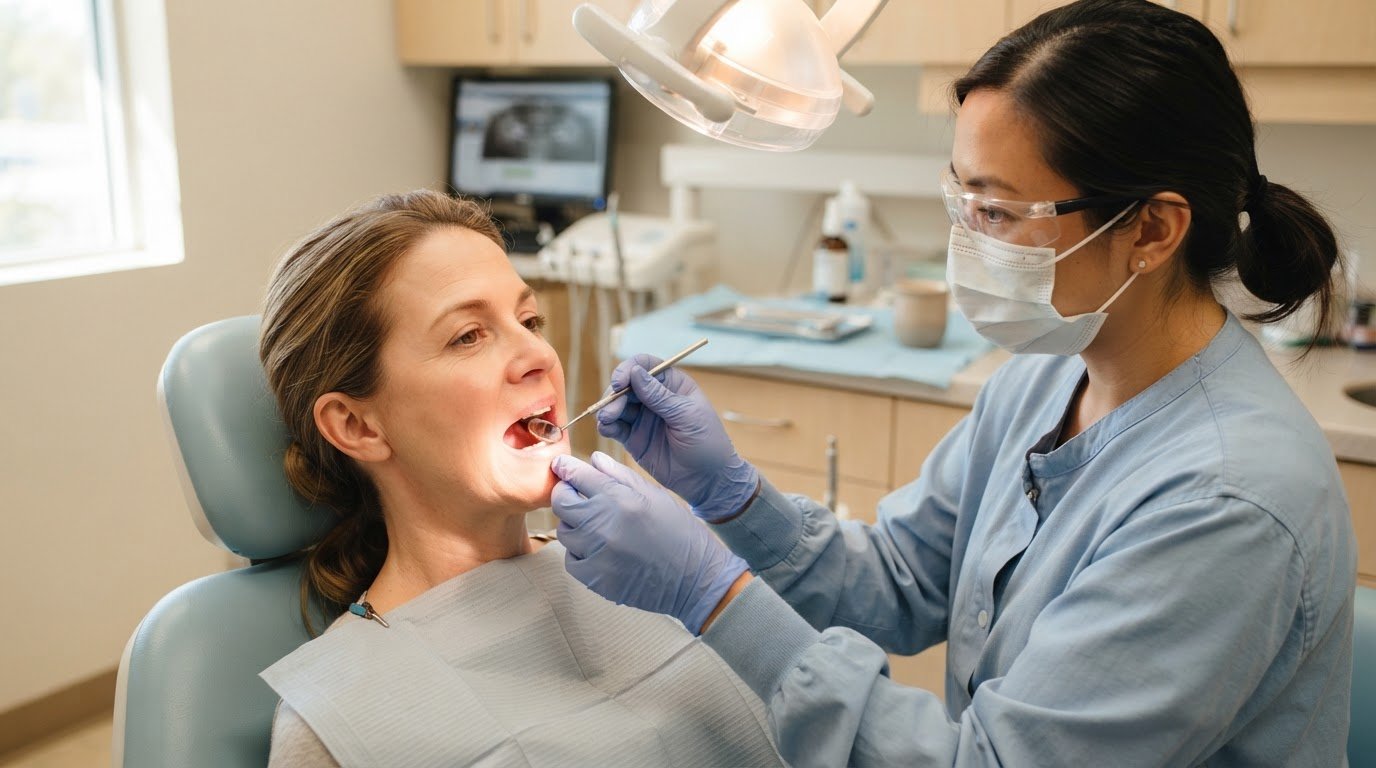
A dental bone graft rebuilds or preserves jawbone to support an implant or help the site heal after tooth loss. It creates a framework for your own bone to grow around the graft material, a process that generally takes several months. Explaining bone grafting to dental patients starts with this key point: the graft prepares or repairs the foundation, not the replacement tooth itself.
If you’ve been told you may need a graft before an implant, it’s natural to wonder why it matters and what recovery involves. A graft may be recommended when there isn’t enough jawbone to support an implant securely, or to help preserve bone after an extraction. Whether it’s needed depends on your oral health and the condition of your jawbone.
This guide explains what dental bone grafts do, why they may be part of implant treatment, and how healing typically progresses. You’ll also learn what can affect recovery and which changes after the procedure need your dental team’s attention, so you can understand the treatment plan and know what to expect.
Key Takeaways
- Learn how graft material can come from the patient, a human donor, an animal source, or synthetic material.
- Understand why a graft may help provide a stable jawbone foundation for a dental implant.
- Separate the early recovery period from the months the graft may need to integrate with natural bone.
- See how grafts can support bone preservation or rebuilding, and how clear post-treatment instructions can help patients understand care.
What is a dental bone graft?
A dental bone graft places material in an area of the jaw to support bone rebuilding or preservation. For clinicians, explaining bone grafting to dental patients starts with the material’s purpose: it provides a framework around which the body’s bone tissue can grow.
Types of Graft Materials
Graft material may be natural bone or synthetic material. Synthetic options are artificial, while natural grafts come from biological sources. Each type provides a structure that supports new bone growth. A practical way of explaining bone grafting to dental patients is to clarify both what the graft is made from and what the procedure is intended to support.
Sources of Graft Material
Material may come from the patient, a human donor, an animal source, or commercially available artificial bone. A patient’s own bone may be taken from another part of the jaw or body. Since these sources differ by origin, ask which type is planned and why it fits your treatment. Knowing the source can help you discuss your preferences before the procedure.
In the United States, the price depends on the case and is provided after a quote request. Factors include the material, the amount of grafting needed, and related treatment.
Potential complications include anesthesia complications, infection, nerve damage, and severe bleeding. Ask which risks apply to your procedure and what changes during recovery need prompt attention.
Dental insurance coverage depends on your plan and the reason for grafting. Ask your insurer how benefits apply, and request an estimate that separates the graft from related treatment.
Before treatment, ask why you need a graft, which material source is planned, and what alternatives suit your case. Clarify how grafting may affect implant timing, which recovery instructions to follow, and which complications to watch for. These questions help you understand the plan and make an informed decision.
Bone grafting before dental implants
A dental implant needs enough jawbone for a stable foundation. Grafting may build or preserve that support before the implant is placed.
Why a Graft May Be Needed
A graft may be needed when the jawbone doesn’t provide enough support for an implant. After tooth loss, bone in that area can shrink because it no longer receives stimulation from the tooth root. A dental consultation considers your oral health, medical history, and jawbone condition to determine whether grafting may create a more suitable foundation for the planned implant.
The Graft’s Role in Implant Treatment
In implant treatment, graft material holds space so the body’s own bone tissue can grow and regenerate. This added support can prepare an area with insufficient bone for a dental implant. Planning may include 3D cone-beam computed tomography to assess jawbone density and volume. That information helps the provider plan graft placement and determine how the implant treatment should proceed.
Whether Every Implant Needs a Graft
No, every dental implant doesn’t require a bone graft. The need depends on whether the jaw has enough bone to provide a stable base, along with the patient’s oral health and bone condition. Minor grafting can sometimes happen during the same surgery as implant placement. A graft may also be placed during tooth extraction to preserve the socket for possible future treatment.
Healing Before Implant Placement
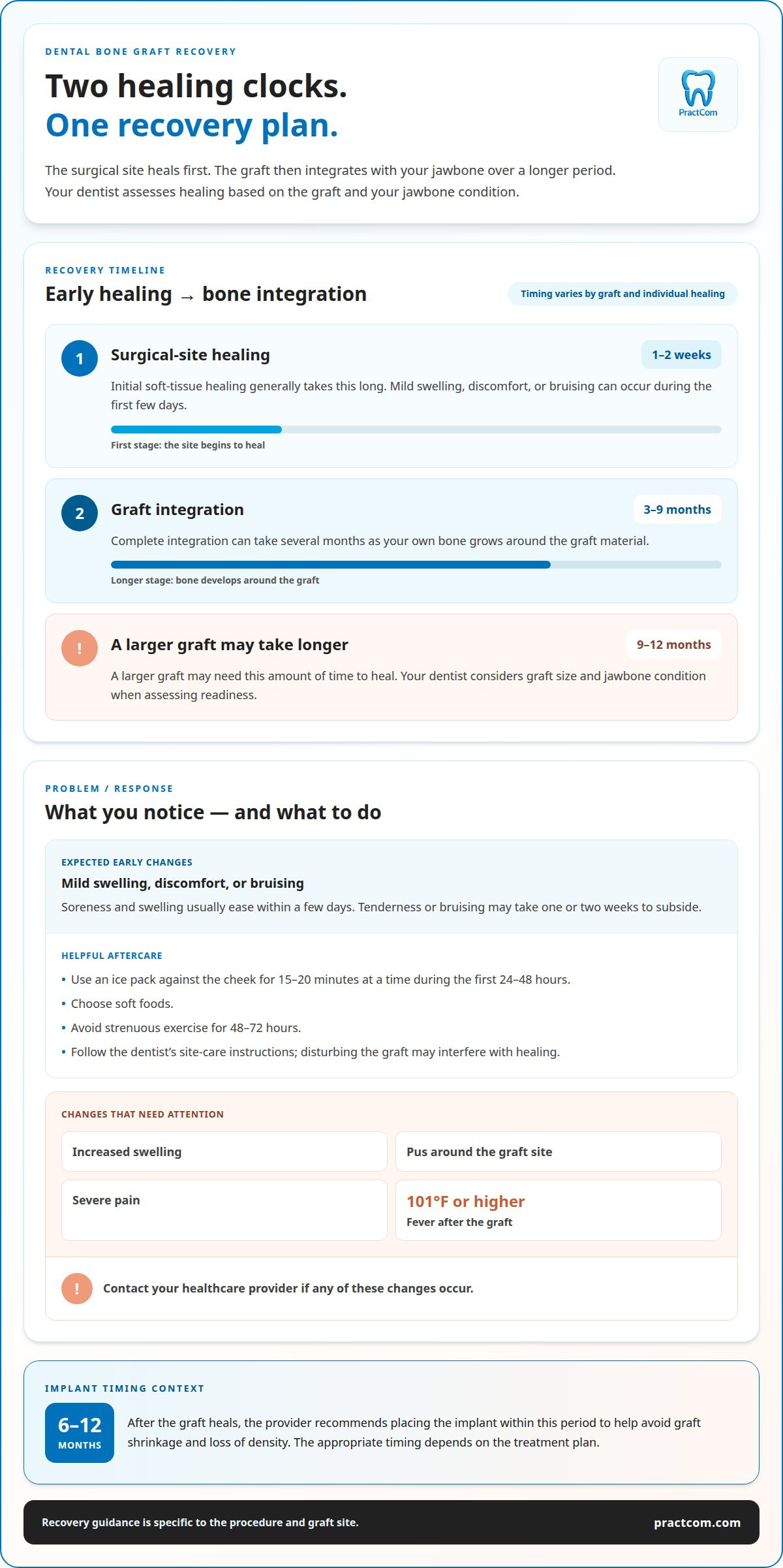
After grafting, the transplanted bone generally takes several months to be ready for an implant. Once the graft heals, the provider recommends placing the implant within six to 12 months to help avoid graft shrinkage and loss of density. Compared with proceeding without a graft, grafting adds a healing stage but can address inadequate bone support. The appropriate approach depends on the jawbone foundation and treatment plan.
For dental teams explaining the recovery period, post-treatment patient instructions can help communicate the care plan clearly.
Healing and recovery timeline
Recovery has two stages: healing of the surgical site and integration of graft material with the jawbone. The site may take weeks to heal, while bone development takes months.
Graft Healing and Integration
Initial soft-tissue healing generally takes 1 to 2 weeks, while complete graft integration can take 3 to 9 months. A larger graft may need 9 to 12 months to heal. The timeline depends on graft type and individual healing, so the dentist considers the graft’s size and the jawbone’s condition when assessing readiness. A protective membrane may cover the surgical area while healing begins.
Recovery and Aftercare
For the first few days after surgery, mild swelling, discomfort, or bruising can occur. Use an ice pack against the cheek for 15 to 20 minutes at a time during the first 24 to 48 hours, and choose soft foods. Avoid strenuous exercise for 48 to 72 hours. Follow the dentist’s site-care instructions, since disturbing the graft may interfere with healing.
Keep track of changes as recovery progresses. Contact your healthcare provider for increased swelling, pus around the graft site, or severe pain. A fever of 101 degrees Fahrenheit or higher after a dental bone graft is also a reason to call. If gum disease or another oral health concern affects healing, the provider can assess it alongside the graft site.
Pain During Recovery
The procedure is generally performed with local anesthesia, and most patients report little to no pain during treatment. After surgery, soreness and swelling usually ease within a few days, though tenderness or bruising may take one or two weeks to subside. The amount of grafted volume and the surgical site can affect recovery, so follow the specific guidance provided for your procedure.
Purpose and uses of dental bone grafts
A dental bone graft has a practical goal: rebuild or preserve jawbone where bone loss affects support. Its purpose depends on the problem being treated, such as preparing an area for an implant or maintaining bone after tooth removal.
After an extraction, the empty tooth socket can be grafted to help preserve bone. The material fills space where natural bone growth can occur, helping maintain the site’s shape as it heals. This is different from replacing a tooth: the graft addresses the underlying bone, while a restoration fills the visible gap.
For implant planning, a graft may strengthen an area where bone volume is inadequate for stable support. The goal is to create a suitable foundation in the part of the jaw where the implant will be placed. The location and pattern of bone loss help determine where to rebuild, rather than treating the missing tooth as only a surface-level problem.
Advanced gum disease can damage the bone that supports teeth. In this situation, grafting may address bone loss as part of a broader treatment plan. The aim is to rebuild affected tissue, while managing the disease remains important for oral health. A graft isn’t a substitute for treating active infection or following your dentist’s care instructions.
An injury can also damage jawbone, creating a different reason for grafting than tooth loss or gum disease. The treatment plan focuses on the damaged area and the support it needs. Ask what specific problem the graft is meant to address, what change is expected at the site, and how progress will be assessed. The answers connect the procedure to its purpose.
For dental practices, clear post-treatment instructions help patients understand the care plan after grafting and follow guidance during recovery.
PractCom: The All-in-One Patient Communication Platform for Dental Practices
PractCom brings patient communication tools together for dental practices explaining procedures such as bone grafting. Its Post-Treatment Instruction Library helps teams share care guidance, while Digital Informed Consent Forms support clear discussions before treatment. The Referral Management System helps organize communication when a patient’s care involves a referral.
These tools are useful when a practice wants patients to receive consistent procedure information and have a clear reference for aftercare. For bone grafting, written recovery instructions can reinforce the treatment discussion without replacing the clinical guidance provided by the dental team.
If you’d like to discuss patient communication for your practice, contact PractCom.
Make the Next Conversation Clear
A treatment plan is easier to follow when patients understand its purpose, the decisions ahead, and where to find guidance afterward. For dental teams, explaining bone grafting to dental patients is part of a broader communication process: use plain language, invite questions, and make the next step clear. This supports informed conversations without replacing the dentist’s clinical judgment or the patient-specific care plan.
Practices can also consider how information moves from consultation to consent, referral, and recovery instructions. Consistency at each step helps patients revisit the information they need and gives the care team a more organized way to communicate.
PractCom offers patient communication tools, including post-treatment instructions, digital informed consent forms, and referral management. If your practice is looking to make patient communication more coordinated, start a conversation with PractCom. Clear, thoughtful communication can help every patient feel better prepared for the next step in care.
Frequently Asked Questions
Is there anything I can do to make this treatment easier on me?
Yes. Before the procedure, get your dentist’s written aftercare instructions and clarify how to take any prescribed medication. Prepare soft foods, keep the instructions easy to find, and plan to avoid disturbing the surgical site. Knowing what you can eat and how to keep the area clean, for example, can make the first days at home easier to manage.
What Does the Procedure Involve?
The dentist numbs the area, makes an incision in the gum, and cleans the site before placing graft material. A protective membrane may cover the graft; then the gum is repositioned and closed with stitches. This protects the material as healing begins. The exact steps depend on the treatment area and the amount of bone being rebuilt.
What Happens After Healing?
As healing progresses, new bone grows around and integrates with the graft material and jawbone. The dentist assesses the site to determine whether it is ready for the next planned treatment, such as implant placement. If the graft was used to preserve a tooth socket, the next step may differ. Follow-up visits help the dental team assess progress and plan care.
Where Does the Graft Material Come From?
Graft material can come from your own bone, a human donor, an animal source, or synthetic material. If your own bone is used, it may be taken from another part of your jaw or body. These sources describe the material’s origin, not a guaranteed outcome. Ask your dentist which source is planned and how it fits the purpose of your treatment.
What is a dental bone graft and why is it needed?
A dental bone graft places material in an area of the jaw to support bone rebuilding or preservation. It may be used when bone loss affects the foundation for an implant, after an extraction, following an injury, or with advanced gum disease. The reason matters because it clarifies what the treatment is intended to address and what the next stage of care may involve.
What types of dental bone graft materials are used?
Dental grafts may use the patient’s own bone, donated human bone, animal-derived material, or synthetic material. Artificial graft material is a synthetic option, while other materials come from biological sources. The source identifies what is placed at the treatment site, but doesn’t determine the treatment plan by itself. Your dentist can explain the selected material and its role in your procedure.

Article by
Cary Ganz DDS
Dr. Cary H. Ganz is a dentist, prosthodontist, entrepreneur, lecturer, and author with more than 50 years of experience in clinical dentistry and dental technology. Throughout his career, he has combined hands-on patient care with a deep understanding of how technology can improve dental practice operations, communication, documentation, and patient outcomes.
In addition to his clinical background, Dr. Ganz has held significant leadership roles in the dental technology industry, including Past Owner and Vice President of Clinical Affairs at DEXIS Digital Radiography and Past Vice President of Clinical Affairs at Denticon Practice Management Software. His business experience includes product development, clinical strategy, dental software innovation, practice management solutions, and educating dental professionals on the effective use of technology in modern dentistry.
Today, Dr. Ganz continues to focus on creating practical technology solutions for dental practices, including PractCom, a comprehensive dental practice communication platform designed to improve patient communication, documentation, compliance support, referrals, and overall practice efficiency. His work reflects a career-long commitment to helping dentists deliver better care while making their practices more organized, efficient, and protected.
No responses yet