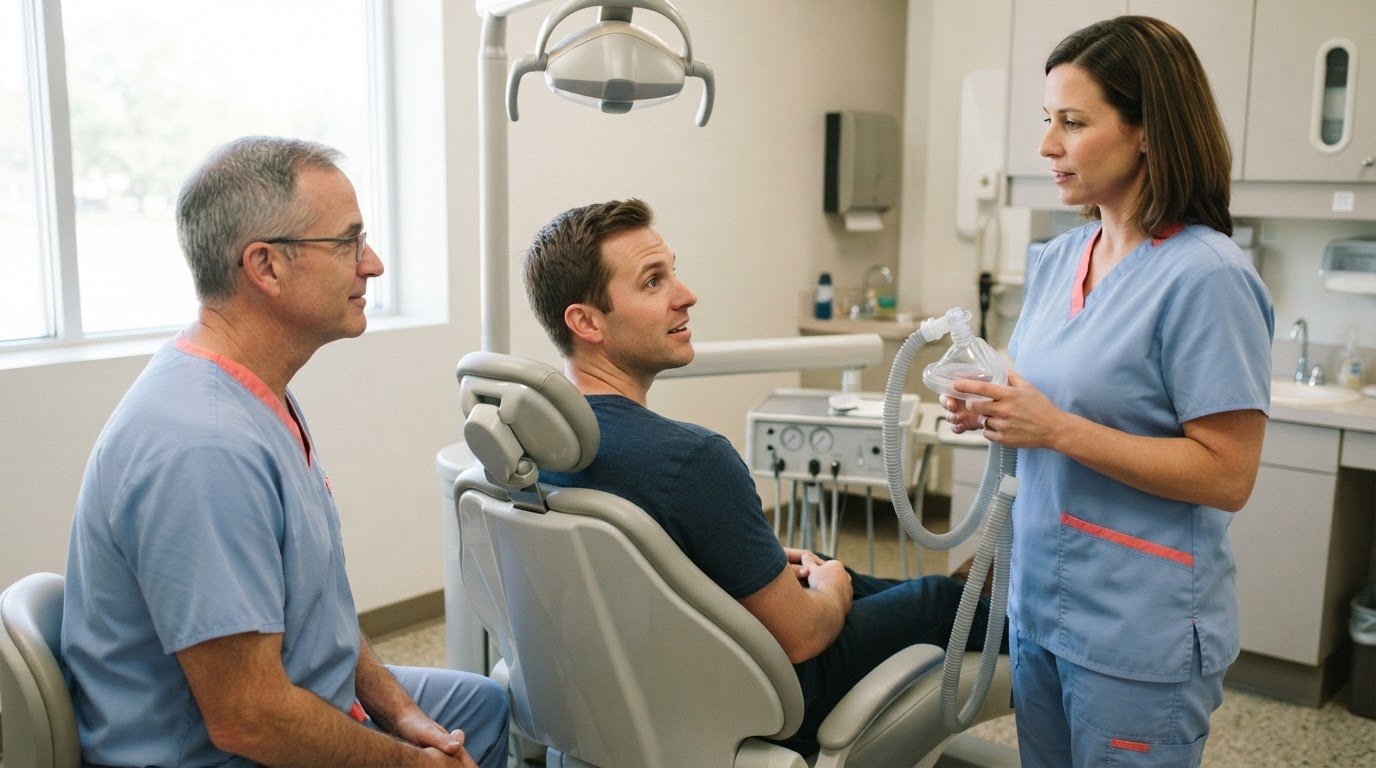
Tooth extraction and general anesthesia are separate parts of treatment, but the paperwork may cover them together or separately. A general anesthesia consent form for dental work should clearly identify the planned procedure and anesthesia. Consent requirements in the United States vary by state and procedure.
It’s reasonable to want clear answers before signing, especially when a form covers both clinical decisions and practical details. Understanding what the consent includes can help you identify what to discuss with the dental team before treatment.
This article explains what to look for in disclosures about extraction, anesthesia risks, alternatives, costs, and recovery. It also clarifies financial and recovery acknowledgements, so you can review the form with a better understanding of what you’re agreeing to.
Key Takeaways
- Understand why extraction and anesthesia may appear on one consent form or in separate documents, and what the paperwork should identify.
- Know which treatment alternatives, including no treatment, to discuss before deciding on general anesthesia.
- Recognize the anesthesia risks the consent should disclose and how they fit into an informed decision.
- See what financial and recovery acknowledgements cover, and why consent authority can vary by state and circumstance.
Alternative treatment options
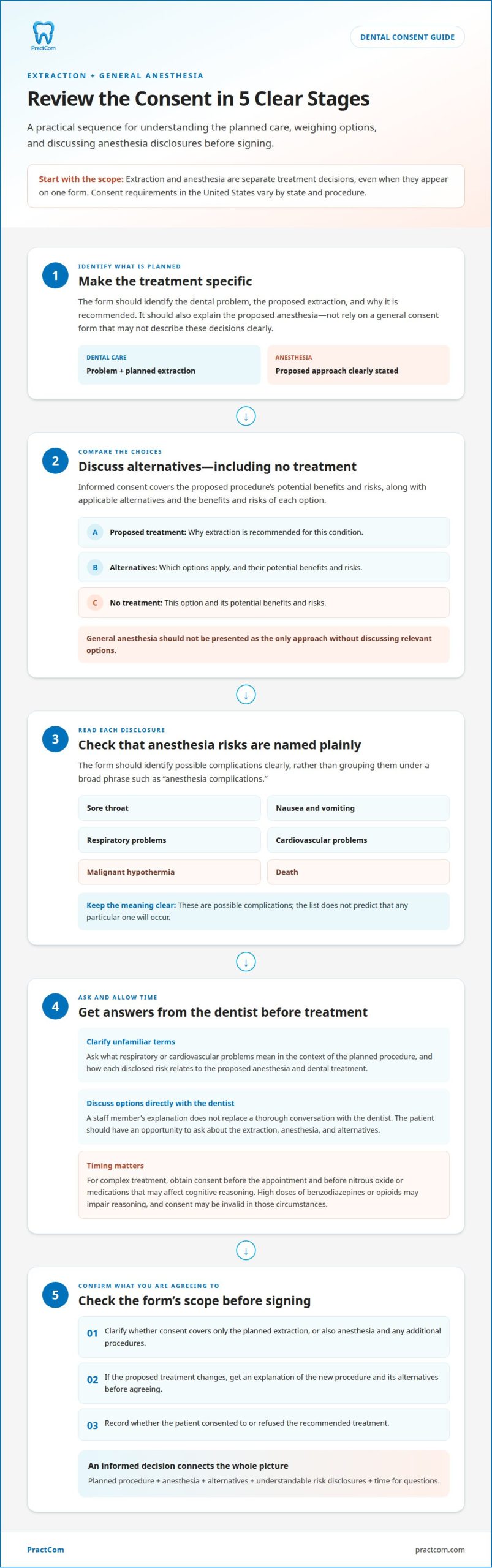
Extraction and general anesthesia are separate treatment decisions, even when discussed together. In the United States, informed-consent requirements vary by state and procedure. Dental consent forms should be specific to the care planned, identifying the extraction and explaining the proposed anesthesia. A general consent form alone may not describe these decisions clearly.
Before treatment, informed consent covers the dental problem, the proposed procedure, and its potential benefits and risks. It also addresses alternatives and the benefits and risks of each option, including no treatment. If extraction is proposed, for example, the discussion should explain why it’s recommended and which alternatives apply to the specific condition. The form shouldn’t present general anesthesia as the only approach without discussing relevant options.
- Proposed treatment: Identify the dental problem, extraction, and reason for recommending it.
- Alternatives: Discuss applicable options and their potential benefits and risks.
- No treatment: Explain this option and its potential benefits and risks.
The dentist should discuss these points directly with the patient. A staff member’s explanation doesn’t replace a thorough conversation with the dentist. The patient should have the opportunity to ask questions about the extraction, anesthesia, and alternatives. For complex treatment, obtain consent before the appointment so the patient has time to consider the risks, benefits, and options.
Extraction and anesthesia may appear on the same form or separate documents, but the decisions should be clear. Before signing, clarify whether consent covers only the planned extraction or also anesthesia and any additional procedures. If the proposed treatment changes, the patient needs an explanation of the new procedure and its alternatives before agreeing. Record whether the patient consented to or refused the recommended treatment.
Disclosure of anesthesia risks
A general anesthesia consent form for dental work should identify possible complications in plain language. Listed risks include sore throat, nausea, vomiting, respiratory problems, cardiovascular problems, malignant hypothermia, and death. These are distinct possible outcomes. The form should name them clearly rather than grouping disclosures under a broad phrase such as “anesthesia complications.”
Review each item with the dental team before signing. Ask what “respiratory problems” and “cardiovascular problems” mean in the context of the planned procedure, and how each disclosed risk relates to the proposed anesthesia and dental treatment. The list describes possible complications; it doesn’t predict that any particular one will occur.
- Sore throat
- Nausea and vomiting
- Respiratory problems
- Cardiovascular problems
- Malignant hypothermia
- Death
The form should present these disclosures while the patient has time to consider them and raise concerns. If a term is unfamiliar, pause and ask for an explanation in everyday language. A signature records consent, but understanding also requires discussing the risks alongside the proposed procedure.
Timing matters for complex dental treatment. Obtain consent before the treatment appointment, leaving time to consider risks, benefits, and alternatives. Avoid making a decision after nitrous oxide or medications that may affect cognitive reasoning. High doses of benzodiazepines or opioids may impair reasoning, and consent may be invalid in those circumstances. Discuss the form before such medication is given.
Review the general anesthesia consent form for dental work by matching each risk disclosure with a practical question: What does this term mean? How does it relate to the planned anesthesia? What alternatives should be considered? The dentist should answer questions about treatment options. If a listed risk remains unclear, ask for an explanation before signing. This helps the patient understand the disclosures and make an informed decision about dental treatment under general anesthesia.
Financial and recovery acknowledgements
A dental anesthesia consent form may address financial responsibility if medical treatment becomes necessary during the procedure. For a child, the parent or guardian is responsible for those medical-treatment costs. Read this acknowledgement separately from consent to the extraction or anesthesia: it explains who pays if additional medical care is needed.
Payment language can also describe what happens to unpaid balances. One practice states that accounts more than 90 days past due will be submitted to collections. That is a practice-specific term, not a general cost for dental anesthesia. Review the form’s financial wording so you understand which responsibility applies and when.
Before general anesthesia, follow the dental team’s written fasting and medication instructions. Tell the team about the medicines you take, and follow its directions about which to take or pause. Don’t change a medication schedule on your own.
The form should identify the planned dental procedure and anesthesia, then explain the transition into recovery. It should also outline the expected recovery timeline, discharge instructions, and any activity guidance. The recovery timeline should reflect the patient’s planned care, not assume one fixed duration for every procedure.
Use the acknowledgement to clarify practical steps before signing:
- Financial responsibility: Identify who is responsible if medical treatment becomes necessary during the procedure.
- Fasting and medication: Follow the provided instructions and disclose current medicines to the care team.
- Recovery: Understand the expected timeline, discharge guidance, and activity instructions.
- Unpaid balances: Review any stated collection terms, including the 90-day period where applicable.
These details should make financial and recovery expectations clear before treatment. If a form mentions additional medical treatment, clarify what the acknowledgement covers. If it describes recovery without a timeline or discharge steps, ask the dentist to explain those points before signing. A clear record helps patients and guardians understand both the consent and the practical acknowledgements related to dental anesthesia.
Who is legally authorized to provide consent for dental anesthesia in the United States?
In the United States, consent requirements for dental procedures vary by state and procedure. The patient’s age, ability to make the decision, and circumstances of treatment all matter. When the patient can make their own treatment decisions, the dentist should discuss the proposed care directly with them. A signature alone doesn’t replace that conversation.
For a minor, parental or guardian consent is generally central to treatment planning. If a child attends without a parent or guardian, obtaining the parent’s consent before the appointment is a sound practice. The dental office should also confirm how to reach the parent during the appointment in case the proposed care changes.
Custody arrangements can affect who may make medical decisions for a child. A dental practice may request the court order that identifies which parent has that authority. The order helps establish who can consent; family relationship alone may not settle the question when custody terms govern medical decisions.
- Adult patient: Discuss the planned dental treatment and anesthesia directly with the patient.
- Minor patient: Establish who has authority to consent and arrange parent or guardian involvement.
- Custody restrictions: Use the relevant court order to identify decision-making authority.
- Emergency: In many states, treatment may proceed without parental consent when delay could endanger a child’s health.
Emergency situations require separate consideration. In many U.S. states, a healthcare provider may proceed without parental consent if delaying treatment could endanger a child’s health. This isn’t a blanket rule for routine dental anesthesia; the emergency circumstances and state requirements matter.
For a minor attending alone, establish consent authority before the appointment and keep a reliable way to contact the authorized parent or guardian. For any patient, the dentist-patient discussion should allow questions about treatment options. These steps help ensure consent reflects the decision-maker’s authority and the specific dental procedure.
Consent requirements vary by state and procedure, including who may consent and whether emergency treatment can proceed without parental consent when delay could endanger a child’s health.
PractCom: Digital Informed Consent Forms
PractCom’s Digital Informed Consent Forms help dental practices organize consent documentation alongside the clinical conversation. They support a clear process for presenting procedure-specific information, recording decisions, and keeping consent materials accessible to patients.
They’re a practical option for practices moving consent documentation into a digital patient communication workflow. PractCom also offers a Patient Portal and a Post-Treatment Instruction Library, connecting consent materials with patient access and aftercare information.
Digital forms support documentation, but they don’t replace the dentist’s discussion of treatment, risks, and alternatives. Explore PractCom’s Digital Informed Consent Forms for your practice.
Make consent part of a clearer patient workflow
Use the consent process to strengthen communication before and after treatment. An organized workflow connects the patient’s decision with the information they need next, while keeping documentation aligned with the care being discussed.
A general anesthesia consent form for dental work is one part of the process, not a substitute for a direct conversation. PractCom offers Digital Informed Consent Forms, a Post-Treatment Instruction Library, and a Referral Management System to support related patient communication. These tools help bring consent, follow-up information, and referrals into a more coordinated workflow.
If you’re considering a more consistent approach to consent documentation, contact PractCom about consent form support. A practical next step can make patient communication easier to manage while keeping the focus on clear, informed decisions.
Frequently Asked Questions
Do I need a separate consent for extraction and anesthesia?
Not always. Extraction and anesthesia may appear on one form or separate forms. A general anesthesia consent form for dental work should make clear that both the dental procedure and anesthesia are covered. If the form names an extraction but doesn’t clearly address anesthesia, ask how consent for anesthesia is recorded before agreeing to treatment.
Is a general consent for dental treatment enough for anesthesia?
General consent alone may not explain a specific anesthesia plan. A general anesthesia consent form for dental work should distinguish the planned dental treatment from anesthesia and describe what each signature authorizes. This matters if a general form covers routine care but doesn’t name the anesthesia approach. Ask the dentist to clarify broad wording before signing.
What information is typically included in a dental general anesthesia consent form?
The form typically identifies the dental problem, proposed treatment, expected benefits, and relevant risks. It should also describe alternatives, including no treatment, and the potential benefits and risks of those choices. Some forms explain whether alternate or additional procedures may be performed if needed during surgery. Read that authorization carefully if it seems broader than the planned treatment.
What are the risks and possible complications of general anesthesia for dental work?
Possible complications listed on dental anesthesia forms include sore throat, nausea, vomiting, respiratory or cardiovascular problems, malignant hypothermia, and death. The form should explain these in understandable language. Ask the dentist to clarify any unfamiliar term and its relevance to the planned care. The list describes possible risks, not a prediction that a complication will occur.
Are separate consent forms required for dental treatment and anesthesia?
There isn’t one answer for every patient: U.S. consent requirements vary by state and procedure. Practices may use separate forms or one combined document. Either way, a general anesthesia consent form for dental work should clearly identify the dental procedure and anesthesia, rather than relying on a broad signature for routine care. The dentist-patient discussion remains essential to informed consent.

Article by
Cary Ganz DDS
Dr. Cary H. Ganz is a dentist, prosthodontist, entrepreneur, lecturer, and author with more than 50 years of experience in clinical dentistry and dental technology. Throughout his career, he has combined hands-on patient care with a deep understanding of how technology can improve dental practice operations, communication, documentation, and patient outcomes.
In addition to his clinical background, Dr. Ganz has held significant leadership roles in the dental technology industry, including Past Owner and Vice President of Clinical Affairs at DEXIS Digital Radiography and Past Vice President of Clinical Affairs at Denticon Practice Management Software. His business experience includes product development, clinical strategy, dental software innovation, practice management solutions, and educating dental professionals on the effective use of technology in modern dentistry.
Today, Dr. Ganz continues to focus on creating practical technology solutions for dental practices, including PractCom, a comprehensive dental practice communication platform designed to improve patient communication, documentation, compliance support, referrals, and overall practice efficiency. His work reflects a career-long commitment to helping dentists deliver better care while making their practices more organized, efficient, and protected.
No responses yet