
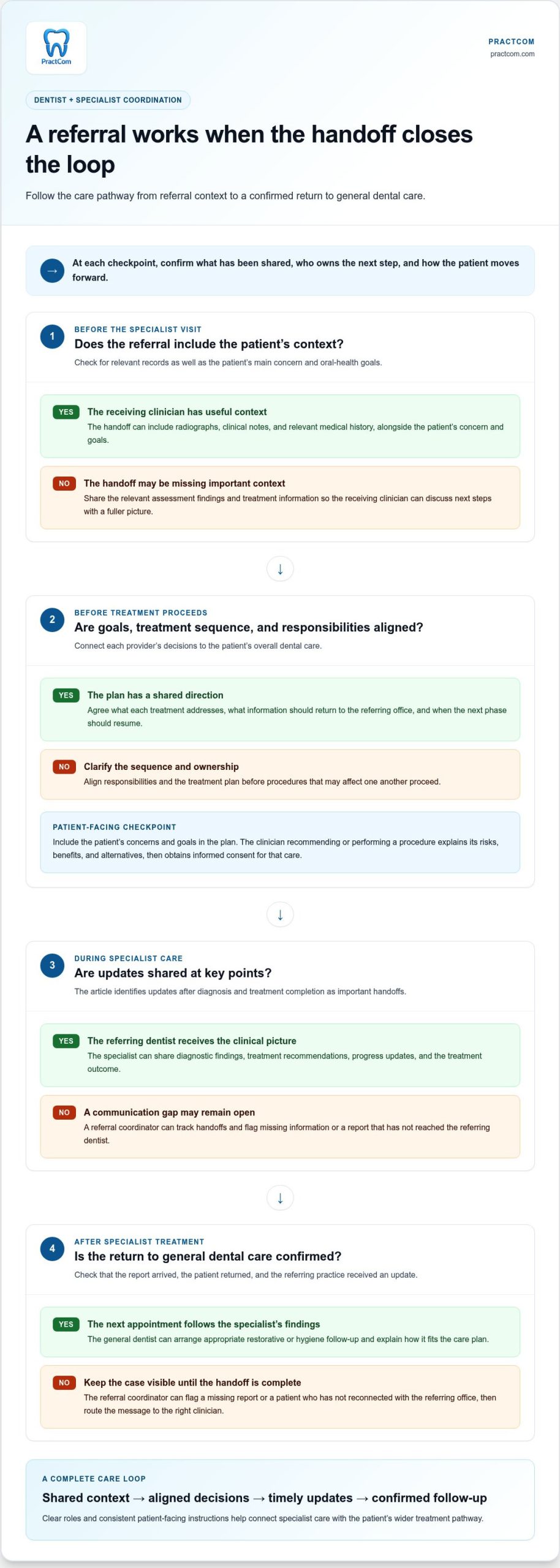
A referral isn’t the finish line; it’s where shared clinical understanding matters most. Managing co-care between a dentist and specialist works best when both clinicians align on assessment findings, treatment goals, responsibilities, and follow-up while documenting their own clinical decisions. This helps patients hear a consistent plan while keeping responsibility for each part of care clear.
Complex cases can become harder to manage when radiographs, notes, recommendations, or patient concerns don’t accompany the referral. Clear communication helps the dental team build a fuller picture and gives patients a clearer path through treatment.
This article explains how to coordinate diagnoses, exchange treatment information, and align periodontal care with restorative or cosmetic treatment. It also covers referral workflows, outcome measures, and signs of a healthy dentist-specialist relationship, helping you strengthen continuity from the first consultation through follow-up.
Key Takeaways
- Make shared diagnosis clearer by comparing clinical findings and agreeing how each provider’s expertise informs the treatment plan.
- Support smoother transitions by sending the referring dentist a specialist’s findings, treatment outcome, and recommended next steps.
- Review referral workflows to spot communication gaps, clarify ownership, and track whether patients complete the care pathway.
- Coordinate gum-health priorities with restorative or cosmetic treatment so care plans account for periodontal needs.
- Use consistent patient-facing instructions and communication tools to help patients understand what happens next.
Patient-centred care and consistent treatment information
Patient-centred collaboration combines the general dentist’s overall view with a specialist’s focused expertise. The clinician recommending or performing a procedure explains its risks, benefits, and alternatives, then obtains informed consent for that care.
Shared Treatment Planning
Shared treatment planning brings the patient’s concerns, oral-health goals, and clinical findings into one coordinated plan. This matters because recommendations should reflect the patient’s priorities, not just the sequence of clinical procedures.
For example, a patient with tooth pain who hopes to keep the tooth can discuss those priorities with both the general dentist and endodontist. The clinicians can clarify how root canal treatment fits the dentist’s restorative plan. The patient can then compare options, ask questions, and make an informed decision based on consistent information from both offices.
Sharing Records and Treatment Information
Sharing records means transferring relevant assessment findings and treatment information among the providers involved in a patient’s care. A complete handoff gives the receiving clinician useful context before discussing next steps.
For an endodontic referral, the general dentist can send radiographs, clinical notes, and relevant medical history. The specialist can return diagnostic findings, treatment recommendations, and progress updates. Digital imaging, electronic health records, or an agreed secure communication channel can support the exchange. The receiving team should also know the patient’s main concern and oral-health goals, so the discussion addresses more than an image or diagnosis.
Patient Benefits and Continuity
Collaborative care helps patients understand how separate appointments fit into one treatment pathway. This is especially important when a specialist’s procedure is followed by restorative care or ongoing hygiene visits.
For example, after endodontic treatment, the specialist’s report can explain findings and recommended next steps to the general dentist. The dentist can arrange appropriate restorative follow-up and explain what the patient should expect. Consistent instructions reduce conflicting messages, while a clear contact point helps patients know which office to approach about each part of their care.
Set expectations before completing the referral. Tell the patient why another clinician is involved, which records will be shared, and what the next appointment is intended to address. If a hygienist notices gum changes during a cleaning, they can summarize the observation for the dentist while the patient is present. The patient can add context, such as discomfort while brushing, before the dentist evaluates the concern.
Clear roles also help the care team give consistent guidance. The dentist can explain the overall plan, while the specialist discusses the details and risks of the procedure they recommend. Hygienists can reinforce prevention advice, such as brushing and flossing around dental work. When every conversation connects to the same documented goals, patients are less likely to receive instructions that seem contradictory.
Measuring Success: What Does a Healthy Dentist and Specialist Relationship Look Like?
A healthy relationship aligns clinical decisions with clear ownership, timely updates, and a defined return to general dental care. For example, after root canal therapy, the endodontist reports findings and recommendations to the referring dentist.
Dentists and specialists should agree on the treatment sequence, share relevant records, and provide updates at key points, such as after diagnosis and treatment completion. A referral coordinator can track these handoffs and flag missing information.
Each practice should explain which services it bills for, which claims it submits, and what patient responsibility may apply. Coverage and payment depend on the patient’s plan terms and the care provided.
Coordinating Treatment Plans
Coordinated treatment planning connects each provider’s clinical decisions to the patient’s overall dental care. This matters because procedures performed in sequence can affect one another.
For root canal therapy followed by a crown, the endodontist should understand the general dentist’s restorative goals, while the dentist considers the endodontic findings and recommendations. They can agree on what each treatment addresses, what information should go back to the referring office, and when restorative care should resume. For complex implant, orthodontic, or periodontal cases, the same shared plan helps dental professionals coordinate their work and avoid conflicting procedures.
Managing Patient Transitions
A patient transition is the planned handoff from specialist treatment back to the general dentist. It matters because the next appointment should reflect the specialist’s findings and the patient’s current care needs.
After treatment, the specialist can send a report describing findings, outcomes, and recommended next steps. The general dentist can use it to schedule the next restorative or hygiene appointment and explain how it fits the care plan. A referral coordinator can track whether the report arrived, whether the patient returned, and whether the referring practice received an update.
Assign a referral coordinator to monitor open cases, maintain contact details, and route messages to the right clinician. For example, the coordinator can flag a case if the specialist’s report hasn’t reached the general dentist or the patient hasn’t reconnected with the referring office. This role supports reliable communication without replacing either clinician’s judgment.
Measure the relationship through case completion rates, post-treatment satisfaction, and the share of referred patients who complete a dental referral. Review these measures during monthly or case-based inter-office check-ins. If referrals remain incomplete, identify where the handoff stalled: scheduling, missing records, unclear responsibilities, or a patient who needs another explanation.
To make referral tracking more systematic, consider a referral coordination workflow that keeps case status and follow-up communication organized.
Reviewing outcomes and improving referral workflows
Patients can consider the needed specialty expertise, continuity with their dentist, and the proposed care pathway when choosing between an in-house specialist and an outside referral. Co-management workflows can differ by state and specialty, so practices should align role assignments and documentation with applicable requirements and clinical protocols.
Referral Networks and Continuity
A specialist referral network connects a general dental practice with specialists who can support particular patient needs. A referral should extend care, not leave the patient disconnected from their primary dental team.
For example, a dentist referring a patient for oral surgery can explain the reason for referral and specify the follow-up expected from the general practice. The specialist can return findings and recommendations, helping both offices maintain a shared understanding of the case. The patient then knows how specialist treatment relates to ongoing dental care.
Referral Challenges and Protocols
Referral protocols define how dental professionals handle common handoff problems, such as unclear roles, missing updates, or scheduling gaps. Unspoken expectations can stall a case even when both offices intend to coordinate.
A written protocol can specify who sends records, who contacts the patient, and who follows up after treatment. For instance, a referral coordinator can flag an unanswered referral or missing specialist report for review. Teams can discuss recurring delays during case reviews and improve the process instead of relying on memory.
Information Shared During Referrals
Referral information gives the receiving specialist the clinical context needed to assess the patient and understand the referring dentist’s concern. Sharing relevant details supports an informed consultation and reduces avoidable follow-up.
A referral to an endodontist should include clinical notes, radiographs, and relevant medical history. The dentist can also describe symptoms, prior treatment, and the specific question requiring specialist input. The specialist’s response should document findings, treatment provided, and recommendations for continued care, giving the referring team a useful record of the outcome.
Referral Guidelines and Performance Measures
Referral guidelines set consistent expectations for when to refer, what information to send, and how to close the communication loop. Shared criteria make referral decisions easier to review across clinicians and cases.
Practices can evaluate workflows using case completion rates, post-treatment satisfaction, and the share of referred patients who complete a dental referral. A referral coordinator can record each case’s status, while clinicians review unresolved cases during monthly or case-based check-ins. If completion falls short, the team can identify whether scheduling, unclear instructions, or missing records created a barrier.
Review outcomes as a workflow, not just a clinical endpoint. For example, compare the referral reason with the specialist’s findings, confirm that recommendations reached the referring dentist, and note whether the patient returned for planned care. A recurring mismatch may point to vague referral criteria; a missing update may indicate a communication gap. Recording these patterns gives the team specific issues to address at its next case review.
Keep the patient informed about the referral’s purpose, the next appointment, and which office will provide follow-up. A coordinator can use a shared tracking process to record when records are sent, the specialist visit takes place, and the final report returns. These checkpoints help practices identify stalled transitions and keep responsibility visible without confusing administrative tracking with clinical decision-making.
Periodontal care alongside restorative or cosmetic treatment
Gum health can affect the planning and timing of restorative or cosmetic dental care. The dentist and periodontist should align their assessments before treatment begins.
The dentist evaluates oral health, makes diagnoses, and coordinates the overall plan; the specialist addresses periodontal concerns within their expertise. They should discuss treatment goals, responsibilities, and follow-up so the patient understands who handles each part.
Multidisciplinary Treatment Planning
Multidisciplinary planning brings the dentist’s restorative goals together with the periodontist’s assessment of gum health. The sequence of care matters because it can affect how well treatment fits the patient’s oral-health needs.
For example, before cosmetic changes or a restoration, the dentist and periodontist can review gum inflammation, recession, and the planned tooth contours. They can decide which concerns need attention first and how maintenance appointments fit the broader plan. A shared sequence helps the patient understand why periodontal care may come before restorative work.
Dividing Treatment Responsibilities
Dividing responsibilities means assigning each clinical task to the provider whose expertise fits it. This matters because the patient needs a clear point of care at every stage.
The periodontist can assess and treat gum disease, while the general dentist evaluates the patient’s overall oral health and coordinates restorative or cosmetic care. A hygienist’s observations, such as bleeding or recession, can inform the dentist’s assessment, but the dentist makes the diagnosis. The providers should document their respective roles and agree on who communicates each update.
Use the patient’s gum findings to guide the treatment sequence. If a patient is considering cosmetic changes while showing recession, the dentist can explain how gum health relates to the proposed result. The periodontist can evaluate the concern and share relevant findings with the dentist. Intraoral scans may help clinicians monitor recession and compare changes over time, especially when maintenance visits take place at different offices.
Appointments should connect, not compete. The dentist and periodontist can agree on when the patient returns for periodontal maintenance and when restorative work proceeds. If gum findings change, the treating clinician should share that update before the next planned procedure. This gives the team a basis for adjusting the sequence and explaining the reason to the patient.
Patient expectations matter, too. Before treatment, explain which provider handles gum care, which manages the restoration, and how the offices will share updates. For instance, a patient receiving a crown after periodontal treatment should understand what each appointment addresses. Clear responsibilities help the patient follow the plan and raise concerns without receiving conflicting directions.
Review the plan when the clinical picture changes. A periodontist’s findings may affect the timing or design of restorative work, while the dentist’s restorative goals may shape the specialist’s recommendations. When providers coordinate and document these decisions, the patient can weigh options with a consistent understanding of the care pathway and expected next appointments.
Shared diagnosis by general dentists and specialists
Shared diagnosis means general dentists and specialists compare clinical assessments before aligning a patient’s treatment plan. It combines expertise without requiring identical conclusions or asking providers to assume one another’s responsibilities. Managing co-care between dentist and specialist starts with a clear clinical question and a shared understanding of each provider’s role.
Start with the patient’s concern, then identify what each provider has assessed. A general dentist may evaluate overall oral health and identify a need for further evaluation. An endodontist focuses on tooth pain and root canal treatment. Their distinct perspectives can clarify the clinical question and the next appropriate step.
Consider a patient whose tooth pain persists after initial care. The general dentist can send the endodontist relevant radiographs, clinical notes, and the patient’s reported symptoms. The endodontist evaluates the case and communicates findings and recommendations. The general dentist can then consider those findings alongside restorative goals before discussing a coordinated plan with the patient.
Shared diagnosis is a communication process, not simply sending images or asking for a second opinion. Providers need to understand what the other clinician is assessing and which decision depends on that assessment. A referral should make its purpose clear, such as evaluating persistent pain or informing restorative planning. The specialist’s response should address that purpose directly, so the referring dentist can use the information in subsequent care. This is a practical foundation for managing co-care between dentist and specialist.
To make the clinical exchange useful, clarify these points in the case discussion:
- Patient concern: Describe the symptoms or change that prompted evaluation.
- Assessment: Share relevant findings, images, and previous treatment information.
- Clinical question: State what the referring provider needs the specialist to evaluate.
- Next decision: Identify how findings may affect treatment sequencing or restorative planning.
These details also help patients understand why providers may discuss different options. For example, a general dentist may explain how a proposed restoration fits overall care, while an endodontist explains findings related to tooth pain and root canal treatment. The patient can ask each provider about the part of the plan within that provider’s expertise. Clear explanations support informed discussions without treating one clinician’s assessment as a substitute for another’s.
Document the reasoning behind the shared plan, including the findings reviewed, each provider’s recommendations, and who will communicate the next update. If assessments differ, record the specific point of difference and discuss what additional information could help resolve it. This keeps the clinical record clear and gives the patient a coherent explanation of available options, planned procedures, and scheduling.
For more consistent patient-facing guidance after clinical decisions are made, organize post-treatment instructions as part of the care handoff.
PractCom: Post-Treatment Instruction Library
PractCom’s Post-Treatment Instruction Library helps dental practices provide patients with clear guidance after procedures. Its library includes over 80 post-treatment templates, with documents available in 15 languages through email, text, or print. This can support consistent instructions when a patient moves between general and specialist care.
For practices coordinating referrals, PractCom’s Referral Management System and Patient Portal support communication throughout the patient’s care journey. Digital Informed Consent Forms help practices present treatment information for patient review. These tools support communication workflows; clinical decisions remain with the treating providers.
Consider these resources when your team wants a more organized way to share patient instructions and referral information. Contact PractCom or visit practcom.com to learn more.
Make the Next Handoff Easier to Navigate
Strong co-care is built on the small decisions made between appointments: who updates the patient, how a change in the plan is communicated, and where the next step is recorded. Choose a handoff in your current workflow that often depends on memory, then make its owner and communication path clear. That practical adjustment can make managing co-care between dentist and specialist a consistent part of everyday practice.
As your team reviews its process, consider where patient communication tools could support clearer transitions. PractCom’s resources help dental practices coordinate information across care. The right workflow should complement clinicians’ judgment and make it easier for patients to understand what happens next.
Explore PractCom for your practice and consider how a more organized communication process could fit your co-care approach. A clear next step gives your team a stronger foundation for collaborative patient care.
Frequently Asked Questions
What does co-management between a general dentist and dental specialist involve?
Co-management means the general dentist and specialist each contribute to care while coordinating decisions that affect the same patient. For example, an oral surgeon may assess a surgical concern while the general dentist considers how that treatment fits ongoing dental care. Patients should understand each provider’s role, who to contact about specific concerns, and how the providers will communicate changes that could affect planned care.
Which dental cases should be co-managed with a specialist?
Co-management is useful when a case needs expertise beyond the general dentist’s planned care or when procedures affect one another. Examples include persistent tooth pain requiring endodontic evaluation, implant treatment involving an oral surgeon and restorative dentist, and gum disease alongside cosmetic work. Orthodontic treatment may also require coordination if restorative or periodontal needs affect the sequence. The key is how the clinical needs interact.
What information should a dentist include in a specialist referral?
A useful referral gives the specialist enough context to understand why the patient needs evaluation and what decision the referring dentist needs help with. Include the patient’s main concern, relevant symptoms, prior treatment, pertinent medical history, available radiographs, and clinical findings. State the referral question plainly, such as whether persistent pain needs endodontic evaluation. A clear purpose helps the specialist focus the consultation and return information relevant to the next care decision.
What are the risks of poor communication between a dentist and specialist?
Poor communication can leave patients unclear about the treatment sequence, delay follow-up, or leave providers working from incomplete information. For instance, if the specialist’s recommendation doesn’t reach the general dentist, restorative care may not reflect the latest findings. Conflicting explanations can also make it harder for patients to decide what to do next. Practices can reduce these risks by assigning responsibility for messages and tracking unresolved referrals.
What HIPAA rules apply when dentists share patient records with specialists?
Dental practices must handle patient-related information in line with applicable privacy laws, including HIPAA. For a referral, use the practice’s approved secure communication method, verify the recipient, and share records relevant to the clinical purpose. Establish a consistent process for sending radiographs and notes, then document the handoff according to practice procedures. These steps support careful information handling without treating a referral as permission to share unrelated patient details.
What should patients do if their dentist and specialist recommend different treatments?
Ask each provider to explain the findings behind their recommendation, its intended benefit, and how the option affects the overall care plan. Then tell both clinicians what matters most to you, such as preserving a tooth or coordinating treatment around existing dental work. Ask them to discuss any differences directly and clarify the next decision together. If their recommendations remain unclear, pause before choosing and request a shared explanation in plain language.
Article by
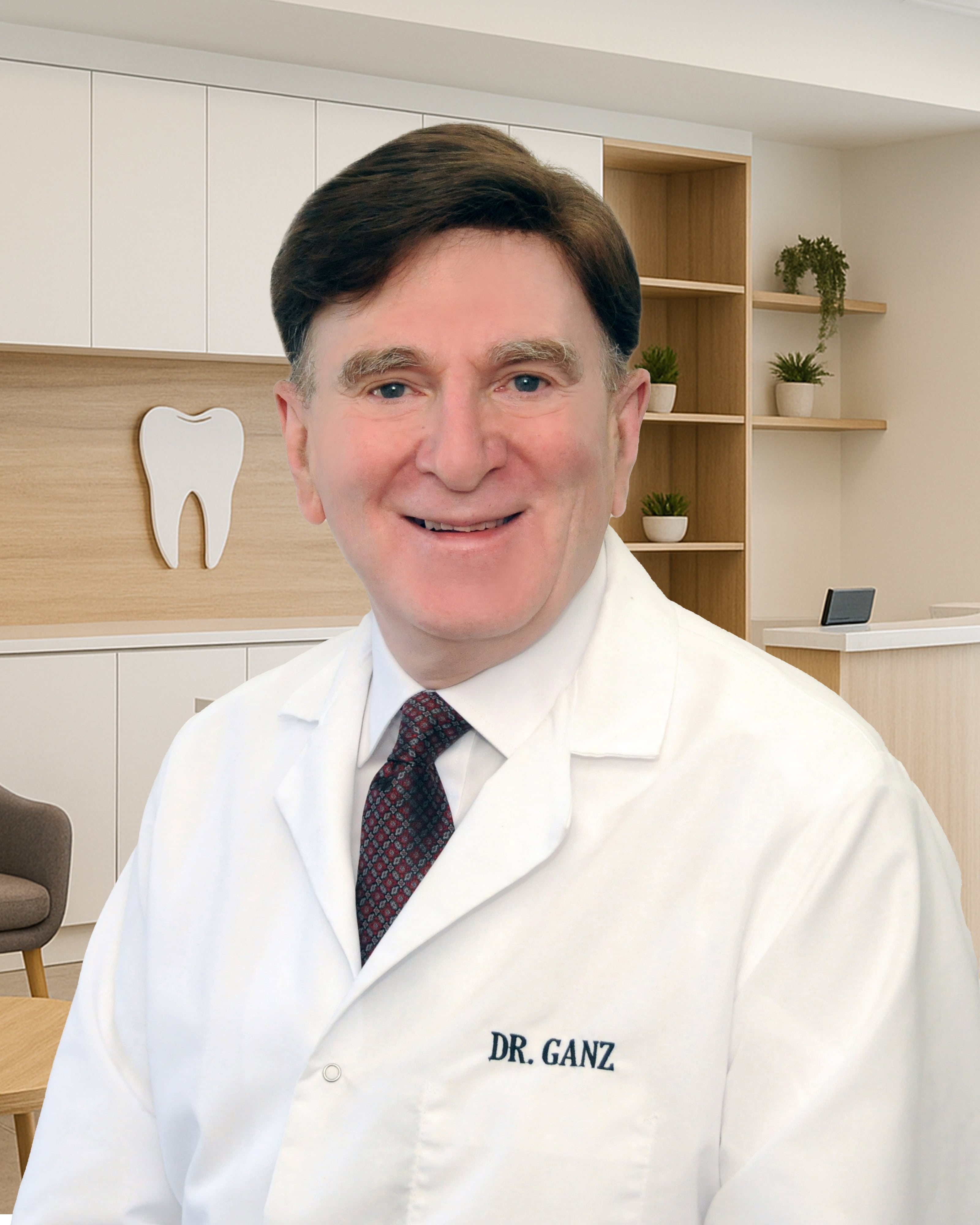
Cary Ganz DDS
Dr. Cary H. Ganz is a dentist, prosthodontist, entrepreneur, lecturer, and author with more than 50 years of experience in clinical dentistry and dental technology. Throughout his career, he has combined hands-on patient care with a deep understanding of how technology can improve dental practice operations, communication, documentation, and patient outcomes.
In addition to his clinical background, Dr. Ganz has held significant leadership roles in the dental technology industry, including Past Owner and Vice President of Clinical Affairs at DEXIS Digital Radiography and Past Vice President of Clinical Affairs at Denticon Practice Management Software. His business experience includes product development, clinical strategy, dental software innovation, practice management solutions, and educating dental professionals on the effective use of technology in modern dentistry.
Today, Dr. Ganz continues to focus on creating practical technology solutions for dental practices, including PractCom, a comprehensive dental practice communication platform designed to improve patient communication, documentation, compliance support, referrals, and overall practice efficiency. His work reflects a career-long commitment to helping dentists deliver better care while making their practices more organized, efficient, and protected.
No responses yet