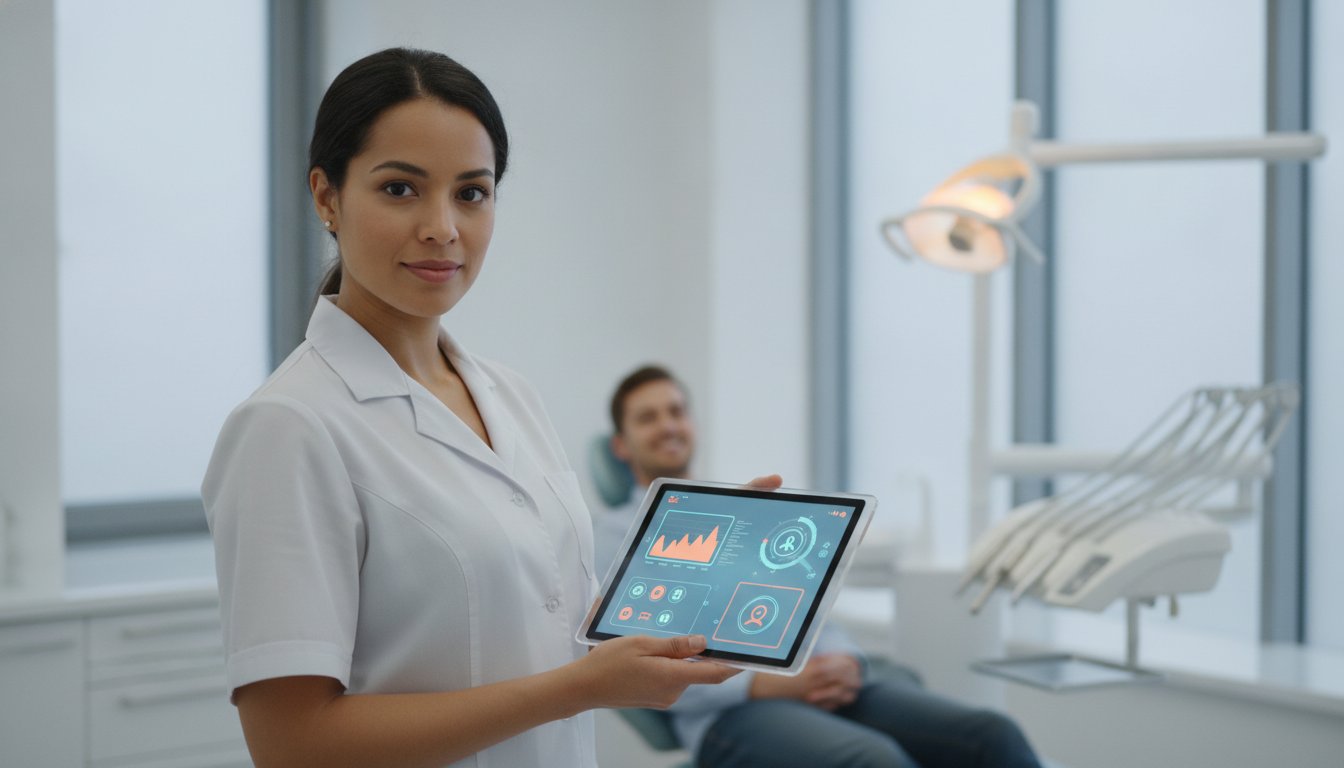
What if the constant stream of post-operative phone calls and emergency inquiries isn’t just a byproduct of a busy practice, but a sign of a communication gap that’s costing you hours of productivity? You’ve likely felt the weight of administrative burnout as your team manually tracks referrals and chases down patient follow-ups. Understanding the specific dental patient portal benefits available in 2026 is no longer just about convenience; it’s about creating a clinical safety net that protects your time and your patients’ health.
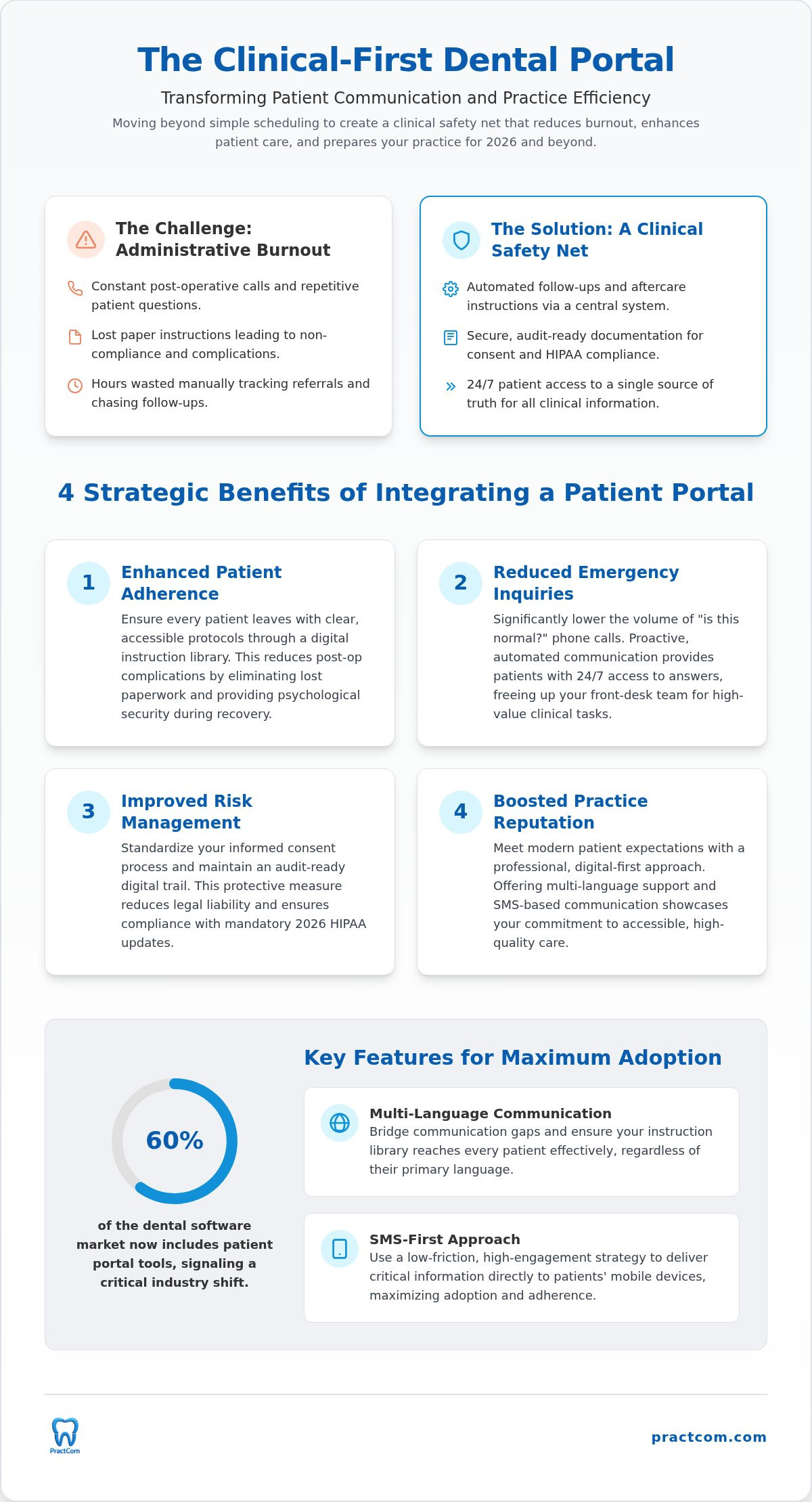
We understand that moving from manual tasks to standardized systems can feel daunting, especially with recent 2026 HIPAA updates requiring mandatory changes to Notice of Privacy Practices. You want to provide exceptional care without being tethered to a desk by paper-based aftercare instructions that patients often lose. This guide will show you how a dedicated portal streamlines clinical workflows and reduces liability through automated, multi-language communication. We’ll examine how these tools, which now account for nearly 60 percent of the dental software market, enhance practice reputation and ensure your documentation remains audit-ready. By the end, you’ll see why a modern portal is an ethical and professional necessity for the modern clinician.
Key Takeaways
- Contrast standard scheduling portals with clinical-first gateways that prioritize secure informed consent and documentation.
- Identify the core dental patient portal benefits that drive clinical adherence and significantly lower the frequency of unnecessary post-operative inquiries.
- Implement automated follow-ups as a protective measure to reduce legal liability and stabilize your practice’s administrative workflow.
- Use a multi-language, SMS-first approach to bridge communication gaps and ensure your instruction library reaches every patient effectively.
- Integrate a specialized communication suite as a low-friction layer that complements your current systems without requiring a full software overhaul.
Beyond the Login: What is a Clinical-First Dental Patient Portal?
A Patient portal is often perceived as a simple scheduling utility; however, in a clinical setting, its true value lies in its role as a secure, HIPAA-compliant gateway for essential documentation. While standard portals focus on the logistics of booking, a clinical-first portal prioritizes the delivery of informed consent forms and educational resources. Understanding the full scope of dental patient portal benefits requires looking past front-desk convenience to focus on the clinical safety net it provides. This distinction is vital for practices aiming to reduce the administrative noise that often drowns out patient care.
The shift in 2026 has moved toward self-service patient education. Patients no longer want to wait for a return phone call to understand their post-op instructions. They expect immediate, digital access to the information they need to recover safely. It’s about control. By centralizing this data, you eliminate the friction caused by misplaced paperwork and provide your patients with the psychological security of having a reliable reference point at their fingertips.
The Evolution of Patient Communication in 2026
Communication has evolved from passive storage to active engagement. With the mandatory 2026 HIPAA updates regarding Notice of Privacy Practices, your documentation must be more precise and accessible than ever. Digital-first communication is no longer a luxury; it’s a patient expectation that reflects your practice’s modern standards. The clinical portal functions as a proactive aftercare management tool that bridges the gap between the chair and the home.
Addressing the Administrative Burden
Administrative burnout often stems from the “lost paper” syndrome, where patients misplace physical instructions and resort to calling the office with repetitive questions. Centralized digital documentation restores front-desk productivity by providing a single source of truth. You don’t have to engage in endless rounds of manual phone tag for routine follow-ups when the system handles the heavy lifting. It saves time. This systematic control reduces operational resistance and allows your team to focus on high-value clinical tasks rather than chasing signatures or repeating aftercare advice. You can learn more about how this specialized communication layer stabilizes your workflow by reviewing why PractCom is a necessary addition to your clinical toolkit.
4 Strategic Benefits of Integrating a Patient Portal
Integrating a portal isn’t just a technical upgrade; it’s a strategic move to stabilize your practice operations. As clinical peers, we understand that moving beyond basic scheduling is what truly unlocks dental patient portal benefits that bridge the gap between clinical intent and patient action. This transition replaces operational disorganization with systematic control through:
- Enhanced patient adherence to post-operative protocols.
- A measurable reduction in unnecessary emergency inquiries.
- Standardized informed consent for improved risk management.
- Professional, multi-language support that builds practice reputation.
Clinical Adherence and Better Outcomes
Patient non-compliance is often a failure of communication rather than intent. By utilizing a Post-Treatment Instruction Library, you ensure that every patient leaves with clear, accessible protocols. These digital instructions don’t get lost in a car seat or discarded in a waiting room. They provide the psychological security patients need during recovery, which directly correlates with a reduction in post-operative complications. It’s about precision. When patients have 24/7 access to their specific aftercare steps, the volume of “is this normal?” phone calls drops significantly.
Visual engagement further reinforces this adherence. Tools like smile design within the portal allow patients to see prospective cosmetic changes, building value and commitment to the treatment plan. This active participation aligns with the strategies outlined in the Patient Engagement Playbook, which emphasizes the importance of making health information both mobile-friendly and easily digestible for better engagement.
Risk Management and Regulatory Reassurance
Documentation is your primary defense against litigation. Realizing the full scope of dental patient portal benefits requires transitioning to Digital Dental Informed Consent Forms, which create an immutable digital trail that paper files simply cannot match. You eliminate the risks associated with human memory failures or illegible signatures. This standardization ensures that every regulatory requirement is met before the procedure begins, providing you with essential legal protection and peace of mind.
Reputation is built on the details. Offering these documents in 15 languages demonstrates a commitment to inclusivity that resonates with a diverse patient base. It removes the language barrier. By utilizing 10DLC compliant SMS to deliver these resources, you meet patients exactly where they are, reducing clinical friction and positioning your practice as a modern, protective ally. If you’re ready to see how these systems perform in a live environment, you can explore our clinical communication tools today.
Reducing Liability and Emergency Calls Through Automation
The financial cost of “unnecessary” post-operative visits and emergency phone calls is a silent drain on practice profitability. When patients feel anxious or uncertain about their recovery, they default to calling your front desk, often disrupting clinical workflows and increasing administrative stress. One of the most significant dental patient portal benefits is the ability to deploy a pre-emptive strike against this anxiety through automated follow-ups. By providing a structured, digital safety net, you move from a reactive stance to a position of systematic control. This proactive approach aligns with the potential benefits of a patient portal, which include heightened efficiency and improved HIPAA compliance through secure, documented communication.
Standardized, peer-reviewed instructions act as a guardian of your professional reputation. Relying on a patient’s memory or a loose piece of paper is a liability in a modern clinical environment. Instead, a documented clinical process provides the psychological security patients crave while ensuring your practice meets the rigorous documentation standards required in 2026. This isn’t just about convenience; it’s about establishing an ethical and professional necessity that protects both the patient and the practitioner.
Automating the Post-Op Journey
Timing is everything in clinical recovery. An automated system triggers detailed instructions via SMS and email immediately after treatment is completed, ensuring the information is available before the anesthetic wears off. To maintain high delivery rates, utilizing 10DLC registered SMS channels is essential, as it prevents your critical clinical messages from being flagged as spam. Standardized instructions reduce the variance in patient understanding that naturally occurs when directions are only delivered verbally during a stressful discharge. This consistency ensures that every patient receives the same high level of care, regardless of how busy the office is that day.
Standardization vs. Human Error
Manual instructions are prone to inconsistency. Whether it’s a forgotten detail or a misplaced brochure, human error creates gaps in care that lead to complications. A clinical-first portal replaces this variability with a library of over 80 post-treatment templates that can be delivered in 15 languages. This level of precision is difficult to achieve through manual methods. Furthermore, a practice performance dashboard allows you to track patient engagement, showing you exactly when a patient has accessed their instructions. This data provides a clear audit trail for legal protection. If you’re evaluating how your current manual processes stack up against a standardized system, reviewing a comparison of communication tools can help highlight where your practice might be vulnerable to administrative failures.
Maximizing Adoption: Multi-Language and SMS Strategies
A portal only provides value if your patients actually use it. Adoption is the critical bridge between implementing new technology and realizing actual clinical improvements. When you prioritize accessibility, the dental patient portal benefits extend far beyond your office walls, reaching patients in their homes and on their terms. This strategy moves your practice from a state of operational resistance to one of systematic control. By simplifying the entry point, you ensure that your clinical instructions are not just sent, but are actually understood and followed.
The Power of Multi-Language Clinical Support
Clinical safety should never depend on a patient’s fluency in English. In a diverse national environment, providing instructions and consent forms in 15 different languages is an ethical and professional necessity. It ensures that ESL patients clearly understand critical protocols, such as requirements to premedicate before a procedure or specific dietary restrictions after surgery. This level of precision significantly improves patient adherence and reduces the likelihood of complications caused by simple linguistic misunderstandings. By offering native-language support, you provide the administrative warmth and psychological security that fosters a stronger patient-provider bond. It builds trust through clarity.
Driving Engagement via Mobile Accessibility
Emails are easily ignored; however, text-based portal links command immediate attention. This mobile-first approach ensures your instruction library is accessible with a single tap, meeting patients where they already spend their time. Learn why Practices choose PractCom for secure, HIPAA-compliant communication that respects patient privacy while maximizing engagement. High engagement is a cornerstone of dental patient portal benefits, as it ensures your clinical advice is actually read.
Simplicity is key for non-tech-savvy users. The interface must be intuitive to prevent administrative friction. For those who still prefer traditional methods, the ability to combine digital delivery with physical document printing offers a hybrid care model that leaves no one behind. This flexibility protects your reputation and ensures documentation compliance across all patient demographics. To see how these strategies can stabilize your practice and protect your legal standing, explore our patient communication solutions today.
Implementing the PractCom Portal for Clinical Excellence
PractCom is designed as a specialized communication layer rather than a full Practice Management Software (PMS) replacement. This distinction is critical for practitioners who are satisfied with their current administrative systems but recognize the need for a more robust clinical safety net. By focusing on the specific dental patient portal benefits related to informed consent and post-treatment protocols, we offer a lower-friction addition to your practice. Implementation is straightforward. You can move from initial setup to automated follow-ups without the operational upheaval typically associated with new software deployments. This systematic oversight allows you to focus on clinical excellence while the platform manages the logistical details of patient adherence.
Beyond internal communication, the platform includes a referral management system designed to grow and stabilize your specialist networks. This ensures that the same high standard of documentation follows the patient throughout their entire treatment journey. Modernizing your dental practice workflow involves more than just going paperless; it requires a strategic alignment of your communication tools with your clinical goals. This alignment reduces the administrative noise that often leads to burnout and errors.
A Peer-to-Peer Professional Ally
We built this platform with a clinical peer perspective because we understand the physical and logistical realities of the profession. It isn’t just a tool; it’s a guardian of your reputation and legal standing. The PractCom performance dashboard provides actionable clinical oversight by tracking how patients interact with your instruction library. You can see exactly which patients have reviewed their materials; this allows for a pre-emptive strike against potential complications. This level of transparency reduces operational resistance and gives you the confidence of a standardized system that doesn’t rely on human memory alone.
Getting Started with a Clinical Portal
The first step toward modernization is evaluating your current gaps in instruction delivery and consent documentation. Identify where paper-based systems are failing your team or where language barriers are creating risks. Transitioning to a digital-first clinical ecosystem is a pragmatic choice that pays dividends in both time and psychological security. You don’t have to overhaul your entire office to see immediate results in clinical compliance and practice reputation. If you’re ready to move from operational disorganization to systematic control, you can start your free trial with PractCom today. It’s a professional necessity for the high-pressure environment of 2026.
Securing Your Clinical Future with Systematic Communication
Modern dentistry requires a shift from operational disorganization to systematic control. By embracing a clinical-first approach, you move away from the limitations of human memory and the risks of lost paperwork. One of the primary dental patient portal benefits is the psychological security it provides both your team and your patients. You’ve seen how automated follow-ups and standardized instructions act as a pre-emptive strike against anxiety and post-operative complications.
Our platform is built by dental professionals who understand the pressures of your daily workflow. With a library of over 80 post-treatment templates and support for 15 languages, we provide the tools you need to stabilize your practice and protect your reputation. This isn’t just about software; it’s about establishing an ethical and professional necessity in an increasingly complex regulatory landscape. It ensures your practice remains compliant while delivering a superior patient experience.
Ready to eliminate administrative friction? Streamline your practice with PractCom’s Patient Portal and experience the confidence of a standardized communication ecosystem. Your journey toward clinical excellence starts with a single, secure step.
Frequently Asked Questions
What are the primary clinical benefits of a dental patient portal?
The primary clinical benefits include enhanced patient adherence to treatment protocols and a measurable reduction in post-operative complications. By providing clear, digital instructions, you ensure patients have a reliable reference during their recovery. This standardization eliminates the variance in care that often occurs with verbal delivery. One of the major dental patient portal benefits is the ability to track engagement through a dashboard, allowing for proactive intervention if a patient hasn’t reviewed their aftercare steps.
How does a patient portal help with dental legal compliance?
A portal aids legal compliance by creating an immutable digital audit trail of all informed consent forms and post-treatment instructions. This is especially critical following the mandatory February 2026 HIPAA updates regarding Notice of Privacy Practices. By standardizing communication, you remove the risks associated with human memory or lost physical files. Secure, encrypted delivery ensures that your practice meets the highest standards for protecting electronic protected health information during every patient interaction.
Can a patient portal reduce the number of post-operative emergency calls?
Yes, a portal can significantly reduce post-operative emergency calls by providing immediate access to detailed recovery protocols. Many calls stem from patient anxiety about normal symptoms like swelling or minor bleeding. When patients receive automated instructions via SMS or email, they feel more secure and informed. This proactive communication serves as a preemptive strike against the administrative noise that often disrupts your clinical workflow, saving your team hours of phone time each week.
Is a patient portal the same as Practice Management Software (PMS)?
No, a dedicated patient portal like PractCom is not a full Practice Management Software (PMS). While a PMS handles scheduling and billing, a clinical-first portal acts as a specialized communication layer focusing on documentation and patient education. This lower-friction approach allows you to modernize your workflow without the upheaval of changing your entire administrative system. It complements your current PMS by adding robust tools for informed consent and automated follow-ups that generic software often lacks.
How does multi-language support in a portal improve patient safety?
Multi-language support improves safety by ensuring that non-English speaking patients fully understand critical instructions, such as premedication requirements or surgical aftercare. PractCom supports 15 languages, which is an ethical necessity in a diverse clinical environment. When instructions are delivered in a patient’s native language, the risk of medication errors or protocol violations decreases. This level of precision protects your practice’s reputation and ensures that every patient receives the same high standard of clinical care.
What should I look for in a HIPAA-compliant dental patient portal?
You should prioritize portals that offer end-to-end encryption for data at rest and in transit, along with multi-factor authentication. 10DLC compliance for SMS is also vital to ensure your messages aren’t blocked by carriers. Look for a system that provides a library of peer-reviewed templates and a clear audit trail of patient engagement. A clinical-first design by dental professionals ensures the tool meets the specific logistical and regulatory demands of a modern dental practice.
Will my older patients actually use a digital patient portal?
Older patients are increasingly tech-savvy, especially when using mobile-first solutions that don’t require complex app downloads. Sending portal links via SMS has a high click-through rate across all demographics. For patients who still prefer traditional methods, PractCom allows for physical document printing. This hybrid care model ensures that your documentation remains standardized and accessible, regardless of a patient’s comfort level with technology. It’s about providing flexibility without compromising your administrative control or clinical standards.
How does a portal integrate with automated patient follow-ups?
The portal integrates with automated follow-ups by triggering specific instruction sets immediately after treatment is marked complete. These follow-ups are delivered via text or email, ensuring the patient has access to their aftercare plan before the anesthetic wears off. This systematic oversight reduces operational resistance by removing the need for manual staff follow-ups. By automating this process, you ensure a consistent patient experience and build a stronger clinical safety net for your practice.

Article by
Cary Ganz DDS
Dr. Cary H. Ganz is a dentist, prosthodontist, entrepreneur, lecturer, and author with more than 50 years of experience in clinical dentistry and dental technology. Throughout his career, he has combined hands-on patient care with a deep understanding of how technology can improve dental practice operations, communication, documentation, and patient outcomes.
In addition to his clinical background, Dr. Ganz has held significant leadership roles in the dental technology industry, including Past Owner and Vice President of Clinical Affairs at DEXIS Digital Radiography and Past Vice President of Clinical Affairs at Denticon Practice Management Software. His business experience includes product development, clinical strategy, dental software innovation, practice management solutions, and educating dental professionals on the effective use of technology in modern dentistry.
Today, Dr. Ganz continues to focus on creating practical technology solutions for dental practices, including PractCom, a comprehensive dental practice communication platform designed to improve patient communication, documentation, compliance support, referrals, and overall practice efficiency. His work reflects a career-long commitment to helping dentists deliver better care while making their practices more organized, efficient, and protected.
No responses yet