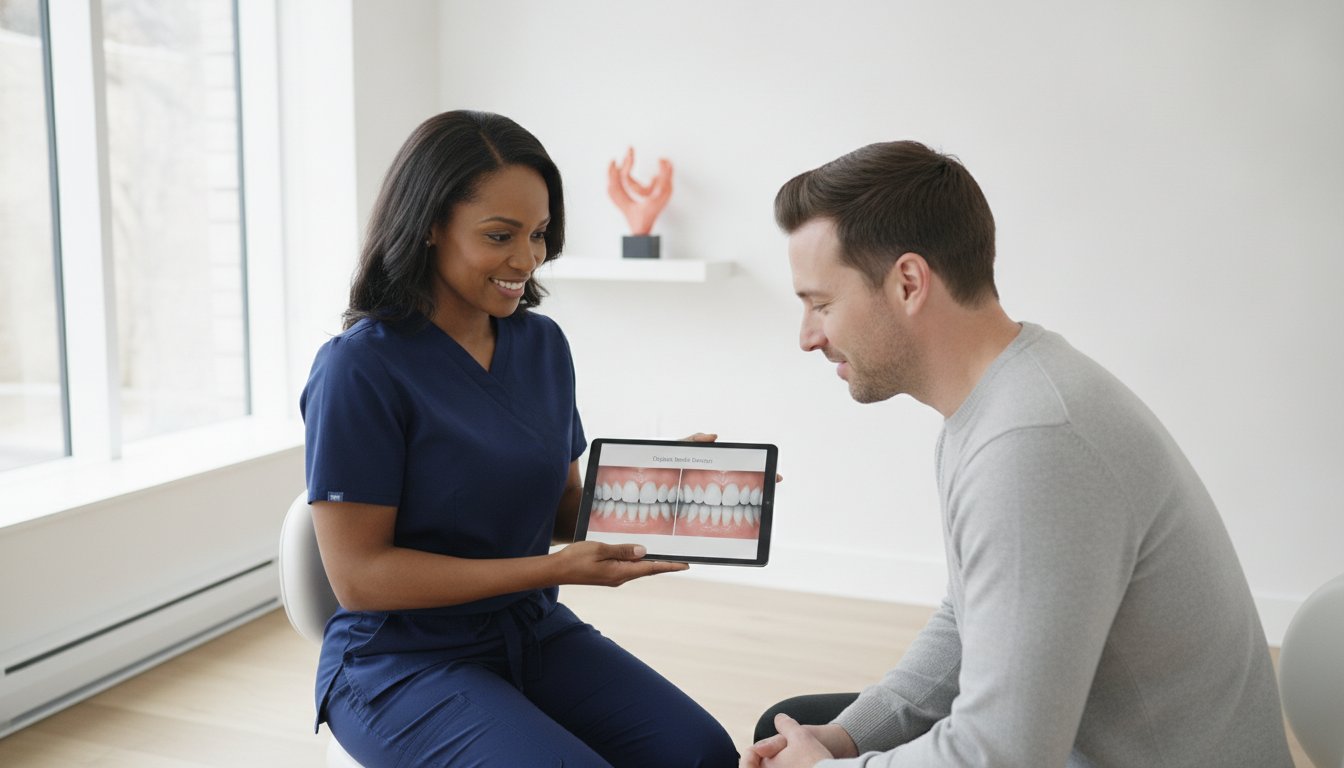
A flawless clinical outcome doesn’t guarantee a satisfied patient, but a failure in communication almost always guarantees a complaint. You’ve likely experienced the frustration of a high-value case stalling because of a patient’s unspoken financial anxiety or the stress of managing subjective beauty standards that shift mid-treatment. Mastering cosmetic dentistry patient communication is no longer just a soft skill; it’s a professional necessity for protecting your reputation and ensuring clinical success in 2026.
We recognize the operational pressure you face when trying to balance technical precision with the need for constant patient reassurance. This guide provides a structured roadmap to bridge the gap between your clinical excellence and the patient’s final perception. You’ll discover how to implement modern visualization tools and automated systems that standardize your documentation and provide regulatory peace of mind. We will explore practical methods to reduce administrative friction and chair-side explanation time. This approach allows you to focus on the art of dentistry while your communication systems handle the heavy lifting of patient education, informed consent, and post-operative care.
Key Takeaways
- Learn to identify the emotional drivers behind smile makeovers to align your clinical execution with subjective patient expectations.
- Utilize digital smile design as a visual contract to bridge the visualization gap and increase high-value case acceptance rates.
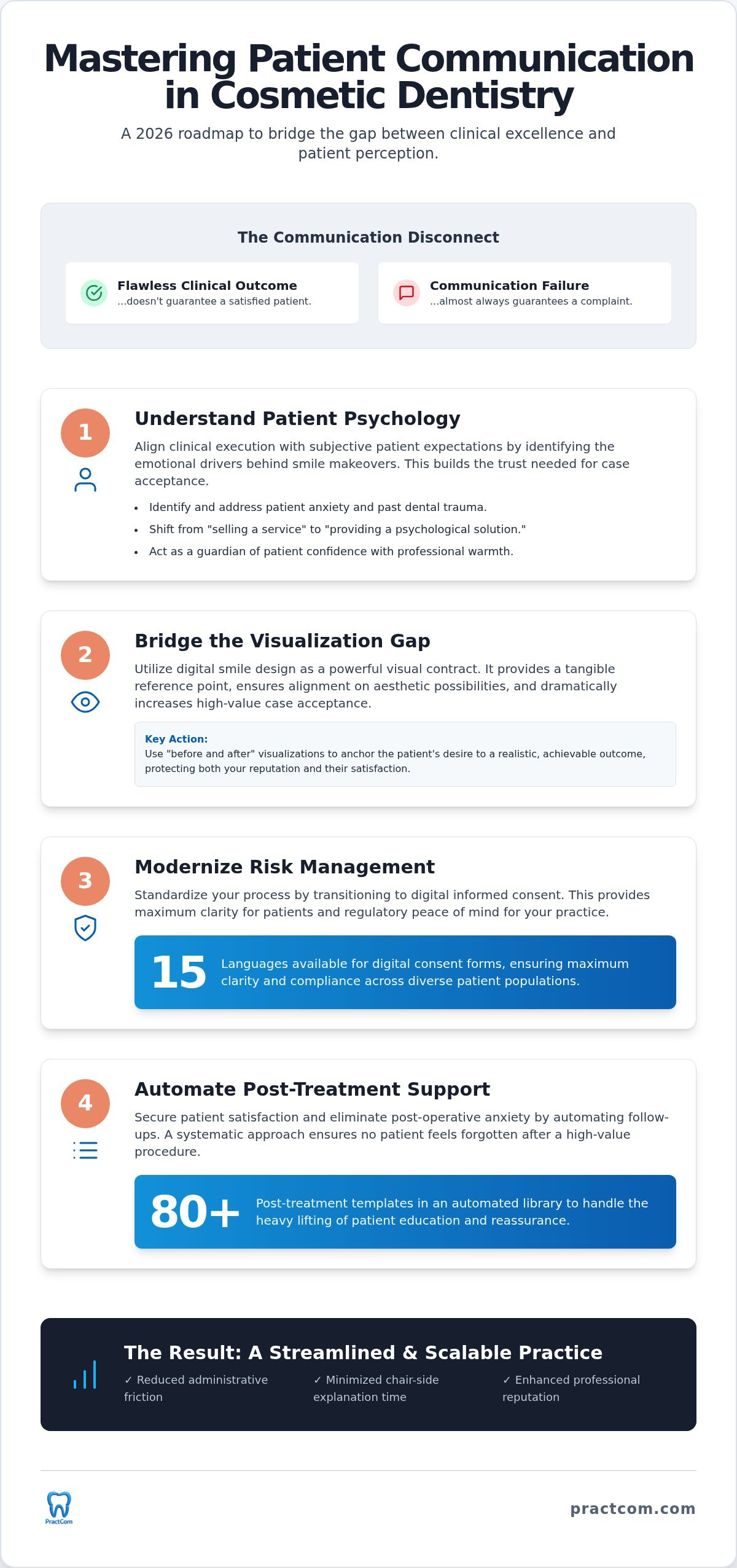
- Modernize your risk management by transitioning to digital informed consent forms available in 15 languages for maximum clarity and compliance.
- Master cosmetic dentistry patient communication by automating follow-ups with a library of 80+ post-treatment templates to eliminate post-operative anxiety.
- Streamline your practice operations with performance dashboards that reduce administrative friction and minimize chair-side explanation time.
The Psychology of Cosmetic Dentistry Patient Communication
General restorative dentistry focuses on objective clinical markers like bite function or the absence of decay. However, cosmetic dentistry patient communication operates on a different plane entirely. It’s the intersection of clinical reality and subjective self-image. Your patients aren’t just buying porcelain; they’re investing in a version of themselves they’ve perhaps never seen. This creates a unique set of emotional drivers, from the desire for professional advancement to the simple need to smile without covering their mouth.
The stakes are high because these are elective, high-cost procedures. This often leads to the “anxiety of the unknown,” where patients fear the result won’t match the financial and emotional investment. To build trust, you must adopt an empathetic, peer-to-peer voice. You’re acting as a guardian of their confidence while maintaining the technical precision your license demands. This empathetic approach helps alleviate the operational stress of managing high-expectation cases.
Understanding Emotional Barriers and Ashame
Identifying patients who are hesitant due to previous dental trauma is critical for case acceptance. Many cosmetic patients carry deep-seated shame about their current oral state, which can manifest as defensiveness or indecision. You’ll find that shifting your approach from “selling a service” to “providing a psychological solution” changes the dynamic in the chair. Professional warmth and administrative empathy act as a stabilizing force. When patients feel psychologically secure, they’re more likely to move past their resistance to manual tasks like scheduling and financial planning. This shift transforms you from a service provider into a reliable professional ally.
Aligning Subjective Expectations with Clinical Reality
In the visual-first culture of 2026, verbal descriptions of a “brighter smile” or “straighter teeth” often fail. Patients have seen filtered images and AI-generated perfections, making it harder to define success in purely clinical terms. You must define success in the patient’s language while setting firm boundaries to prevent future dissatisfaction. This ensures that the clinical outcome matches the patient’s internal vision.
To bridge this visualization gap, practitioners increasingly rely on digital dentistry technologies to show tangible possibilities. This creates a “contract of expectation” that protects both your reputation and the patient’s satisfaction. Consider these factors when aligning expectations:
- Translate clinical shade guides into real-world lighting scenarios to manage color expectations.
- Use “before and after” visualizations to anchor the patient’s desire to a realistic outcome.
- Clearly document the limitations of biological structures to ensure informed consent.
By standardizing these communication points, you reduce operational resistance and ensure that clinical excellence is matched by patient perception. This systematic approach is why many practices choose to review their workflow at practcom.com/why-practcom/ to see how dedicated tools can alleviate administrative stress. Clear communication isn’t just about being friendly; it’s an ethical and professional necessity that protects your practice’s legal standing.
Bridging the Visualization Gap with Smile Design Tools
In the high-stakes environment of elective aesthetic procedures, the gap between what a patient imagines and what a clinician can deliver is often wide. Closing this gap is the primary goal of cosmetic dentistry patient communication in 2026. You’re no longer just explaining a procedure; you’re managing a dream. Without a visual anchor, you risk buyer’s remorse or mid-treatment dissatisfaction that can derail a case and damage your reputation. Visual alignment isn’t a luxury; it’s a protective measure for your practice.
Digital smile design functions as a contract of expectation. It provides a tangible reference point that both you and the patient can agree upon before the first prep. This alignment is a critical component of the informed consent process, as it ensures the patient understands the clinical limitations and the aesthetic possibilities. By integrating these visualizations into your initial consultation, you provide the psychological security patients need to move forward with confidence and clarity.
The Power of the Before-and-After Narrative
High-resolution imagery does more than just show potential outcomes; it builds an emotional bridge. When a patient sees their own face with a restored smile, the clinical anxiety often subsides. Practitioners report that visual mock-ups significantly increase acceptance rates for veneers and implants because they remove the anxiety of the unknown. You can further enhance this experience by providing a personalized patient portal where they can view their future smile at home. This constant visual reinforcement keeps the patient’s emotional drivers active while they consider the financial and clinical commitment.
Standardizing the Visual Consultation
The days of waiting for physical diagnostic wax-ups to show a patient their potential result are fading. Efficiency is the currency of a modern practice. Rapid digital mock-ups allow you to demonstrate changes in real-time, reducing the need for multiple consultative appointments. This is where Why PractCom becomes an essential business requirement. Our smile design tool simplifies the clinician’s explanation by providing clear, side-by-side comparisons of cosmetic changes.
This systematic approach eliminates the operational resistance often found in manual visualization methods. It allows you to spend less time on abstract explanations and more time on clinical execution. To see how this fits into a broader communication ecosystem, you might explore how smile design integrates into your workflow. By standardizing the visual consultation, you protect your time and ensure that every patient leaves with a clear, documented understanding of their treatment path.
Standardizing Informed Consent for High-Value Procedures
Cosmetic procedures like full-mouth reconstructions or porcelain veneers carry significant financial and legal weight. Traditional paper forms are a liability because they lack a verifiable audit trail and often fail to demonstrate that the patient truly grasped the Risks, Benefits, and Alternatives (RBA). In 2026, cosmetic dentistry patient communication requires a more robust, digital approach. Digital consent forms provide regulatory reassurance by ensuring every patient receives a standardized, clear explanation of their procedure, which protects your practice from future disputes. This systematic oversight is an ethical necessity in a high-pressure clinical environment.
Digital signatures offer more than just convenience; they provide a secure, time-stamped record of agreement. This level of control is essential when dealing with elective treatments where the outcome is partly aesthetic and subjective. By automating the delivery of these forms, you eliminate the operational resistance of manual filing and the risk of human memory lapses during a busy day. It positions your practice as a modern, tech-savvy ally that values accuracy above all else.
Eliminating the Language Barrier in Consent
“Nodding compliance” is a silent threat to your practice. It occurs when a patient agrees to a procedure without fully understanding the technical nuances due to a language barrier. Providing digital informed consent forms in 15 languages via SMS or email ensures that every patient can review the details in their native tongue. This isn’t just about administrative warmth; it’s a critical risk management strategy. When a patient understands the procedure in their primary language, the likelihood of post-operative dissatisfaction or legal challenges drops significantly. This multi-language support functions as a guardian of your reputation in a diverse demographic.
Digital Consent as a Patient Education Tool
Consent shouldn’t be a last-minute hurdle at the front desk. Using digital forms allows patients to walk through the procedure at their own pace, often from the comfort of their home. Sending these forms prior to the appointment reduces chair-side explanation time and allows the patient to formulate better questions. This proactive approach transforms consent from a legal formality into a valuable education tool. For a deeper dive into modernizing your documentation, see our Digital Dental Informed Consent Forms: The 2026 Guide to Clinical Compliance. This systematic workflow ensures that your team stays focused on clinical excellence while the platform handles the complexities of regulatory documentation.
- Reduces administrative friction during the check-in process.
- Ensures 100% compliance with RBA explanation standards.
- Provides a digital paper trail that is easily accessible during audits.
Securing Satisfaction with Automated Post-Treatment Support
High-value cosmetic work often triggers a psychological phenomenon known as “Veneer Anxiety.” This usually peaks within the first 24 to 48 hours after a procedure. During this critical window, patients are hyper-aware of every sensation and aesthetic detail. If your cosmetic dentistry patient communication stops at the office door, you leave the patient alone with their anxieties. Proactive aftercare isn’t just a courtesy; it’s a stabilization strategy that prevents minor concerns from escalating into emergency phone calls or negative reviews. Effective cosmetic dentistry patient communication must extend into the home to be truly successful in 2026.
You can eliminate the operational resistance of manual check-ins by utilizing a library of 80+ post-treatment templates. These resources ensure that every patient receives precise, clinically-sound instructions via SMS or email immediately following their appointment. This systematic approach guarantees that no detail is lost to human memory, providing the psychological security patients crave after a significant elective investment. It functions as a pre-emptive strike against administrative failure and patient dissatisfaction.
The ROI of Automated Follow-Ups
Implementing structured follow-ups creates a measurable return on investment by significantly reducing the administrative burden on your front-desk staff. Instead of fielding repetitive questions about diet or discomfort, your team can focus on high-value tasks while the system handles routine education. This automation also increases the patient’s perceived value of the work. When a patient feels supported throughout the entire healing process, their trust in your clinical expertise deepens. These automated touchpoints also provide a natural opportunity to prompt satisfied patients for referrals and online reviews, turning a successful clinical outcome into a practice-building asset.
Standardizing Aftercare Across the Clinical Team
Consistency in instructions is vital for clinical success and regulatory compliance. Digital templates eliminate the risk of conflicting verbal advice from different staff members, ensuring a unified professional voice. By providing both printable and digital versions, you ensure maximum accessibility for every patient demographic. This level of organization acts as a guardian of your reputation. For a comprehensive look at optimizing this phase of care, read our guide on Automated Dental Post-Op Instructions: The 2026 Guide to Frictionless Aftercare.
Maintaining a high standard of care in 2026 means anticipating patient needs before they become problems. To streamline your post-op workflow and protect your clinical results, you can access our full library of automated follow-up tools today. This proactive stance ensures that the technical excellence you achieved chair-side is reflected in the patient’s long-term satisfaction and your practice’s legal standing.
Scaling Your Cosmetic Practice with Systematic Workflows
Transitioning from manual administrative tasks to a systematic communication ecosystem is the only way to scale a high-end cosmetic practice without sacrificing quality. While most practices rely on generic messaging features within their practice management software, these tools often lack the technical precision required for complex cosmetic dentistry patient communication. A dedicated communication suite provides the stabilizing force needed to manage high-pressure clinical environments by ensuring every touchpoint is standardized and legally sound. It moves your practice from a state of operational disorganization to one of systematic control, allowing you to focus on clinical excellence.
The shift to a digital workflow isn’t just about modernizing your office; it’s an ethical and professional necessity. By using practice performance dashboards, you can track communication effectiveness with granular detail. This data-driven oversight allows you to identify exactly where patients are stalling in the treatment pipeline or which post-op instructions are most frequently viewed. This level of organization acts as a guardian of your reputation and ensures that no part of the professional communication process is left to chance.
Managing Complex Specialist Referrals
High-value cosmetic cases often require a multi-disciplinary approach involving orthodontists, periodontists, or prosthodontists. Traditional referral methods are prone to human error; lost slips and fragmented communication often lead to clinical delays and patient frustration. By integrating a digital referral management system, you can track the patient journey from the general practitioner to the specialist with absolute accuracy. This protects the final cosmetic outcome by ensuring all team members are aligned on the aesthetic goal. For larger organizations looking to standardize these workflows across multiple locations, exploring PractCom for DSOs offers a scalable solution for maintaining reputation and clinical compliance.
The Future of Patient Portals in 2026
Patients investing in their smiles expect a premium experience that matches their financial commitment. A centralized patient portal provides 24/7 access to their smile designs, digital consent forms, and post-treatment instructions. This eliminates “information friction,” which is the frustration patients feel when they can’t find answers to their questions between appointments. By providing a secure, accessible space for all documentation, you alleviate patient anxiety and significantly reduce the volume of administrative questions directed at your front desk. You can start a free trial today to see how a dedicated portal functions as a problem-solver for your daily operational demands. This systematic approach ensures your practice remains grounded in the logistical realities of the profession while delivering a modern, tech-savvy patient experience.
- Eliminates the risk of lost physical referral documents.
- Provides patients with instant access to their clinical images.
- Reduces administrative friction by centralizing all communication.
- Standardizes the patient experience across multi-disciplinary teams.
Elevating Your Practice with Systematic Communication
Clinical excellence is only half of the equation; the other half is how you manage the patient’s emotional and administrative journey. By moving away from manual, fragmented processes, you protect your reputation and ensure every case ends with a satisfied patient. We’ve explored how integrated smile design creates visual “yes” moments and how digital consent forms in 15 languages provide essential regulatory reassurance. Standardizing your cosmetic dentistry patient communication reduces operational resistance and allows your clinical team to focus on what they do best. This approach transforms your practice into a stabilizing force for patients navigating high-stakes elective procedures.
Implementing a library of 80+ pre-built templates ensures your post-operative care is consistent and clinically sound. This systematic approach isn’t just a convenience; it’s a professional necessity for any practice looking to scale in 2026. You don’t have to manage these high-pressure workflows alone. Start your 14-day free trial and transform your patient communication today. By choosing a dedicated communication ecosystem, you’re investing in the long-term psychological security of your patients and the legal standing of your practice. Your team deserves the confidence that comes with a standardized, protective system.
Frequently Asked Questions
How can I improve patient acceptance for high-cost cosmetic dentistry?
Align expectations early by using visual tools and transparent communication. When you show patients a digital mock-up of their future smile, you remove the anxiety of the unknown that often stalls high-value cases. Providing clear, digital documentation regarding the investment and clinical steps builds the psychological security necessary for a confident decision. This systematic approach ensures patients feel supported rather than sold to.
What are the most common communication mistakes in cosmetic dentistry?
Relying on vague verbal descriptions and failing to document subjective aesthetic goals are the most frequent errors. When clinicians use terms like “natural” or “bright” without visual anchors, patients often develop misaligned expectations. Another mistake is ignoring the critical 48-hour post-op window. Failing to provide proactive reassurance during this time can lead to unnecessary anxiety and dissatisfaction with the final result.
Is digital informed consent legally binding for cosmetic procedures in 2026?
Digital informed consent forms are legally binding provided they meet established regulatory standards for electronic signatures and audit trails. These digital records offer superior protection compared to paper forms because they provide a verifiable, time-stamped history of the patient’s agreement. This is a vital component of cosmetic dentistry patient communication for modern risk management and clinical compliance.
How do I handle a cosmetic patient with unrealistic expectations?
Use objective visualization tools to set firm clinical boundaries before any treatment begins. If a patient’s desired outcome isn’t biologically possible, you must use digital smile design to show what’s achievable. Documenting these limitations in the patient’s native language ensures they’ve acknowledged the clinical reality. This protects your reputation from future disputes and ensures the patient remains grounded in what’s possible.
Can automated post-op instructions really reduce phone calls to my office?
Automated instructions significantly reduce administrative friction by delivering precise answers to common questions before the patient feels the need to call. By sending a structured follow-up via SMS or email, you address routine concerns about sensitivity or diet automatically. This proactive approach saves your front-desk staff hours of repetitive phone time and ensures patients always have access to accurate clinical guidance.
Why is multi-language support important for cosmetic dental practices?
Providing documentation in 15 languages eliminates “nodding compliance,” where patients agree to procedures they don’t fully understand. In a diverse demographic, true informed consent is only possible when the patient can review risks and benefits in their primary language. This level of administrative warmth builds deep trust and acts as a guardian against legal misunderstandings while improving the overall patient experience.
How does a smile design tool help in patient communication?
A smile design tool acts as a visual contract that bridges the gap between clinical possibility and patient desire. It allows you to demonstrate cosmetic changes in real-time, which is far more persuasive than abstract verbal explanations. This tool is essential for cosmetic dentistry patient communication because it anchors the patient’s expectations to a realistic, documented outcome that both parties have reviewed.
What is the difference between a PMS and a dedicated communication platform like PractCom?
While a Practice Management Software (PMS) handles scheduling and billing, a dedicated platform focuses exclusively on the clinical communication ecosystem. PractCom offers specialized tools like an 80+ template post-treatment library and 15-language support that generic systems lack. It integrates into your existing workflow to reduce operational resistance without attempting to replace your core administrative software, acting as a specialized ally for clinical excellence.

Article by
Cary Ganz DDS
Dr. Cary H. Ganz is a dentist, prosthodontist, entrepreneur, lecturer, and author with more than 50 years of experience in clinical dentistry and dental technology. Throughout his career, he has combined hands-on patient care with a deep understanding of how technology can improve dental practice operations, communication, documentation, and patient outcomes.
In addition to his clinical background, Dr. Ganz has held significant leadership roles in the dental technology industry, including Past Owner and Vice President of Clinical Affairs at DEXIS Digital Radiography and Past Vice President of Clinical Affairs at Denticon Practice Management Software. His business experience includes product development, clinical strategy, dental software innovation, practice management solutions, and educating dental professionals on the effective use of technology in modern dentistry.
Today, Dr. Ganz continues to focus on creating practical technology solutions for dental practices, including PractCom, a comprehensive dental practice communication platform designed to improve patient communication, documentation, compliance support, referrals, and overall practice efficiency. His work reflects a career-long commitment to helping dentists deliver better care while making their practices more organized, efficient, and protected.
No responses yet