
Did you know that artificial intelligence can now detect cavities and bone loss with greater accuracy than the human eye alone? AI dental diagnosis is revolutionizing how we identify and treat oral health issues, making visits faster, safer, and more precise than ever before.
What Is AI Dental Diagnosis?
Artificial intelligence in dentistry refers to computer systems that analyze X-rays, scans, and images to identify problems like cavities, gum disease, fractures, and even early signs of oral cancer. These systems are trained on millions of dental images, learning to spot patterns that might be missed during a busy day at the office.
Think of it as a second set of expert eyes reviewing every image. The dentist still makes all final decisions and treatment recommendations, but AI acts as a highly trained assistant that never gets tired or distracted. This partnership between human expertise and machine precision is what makes modern AI dental diagnosis so powerful.
How AI Improves Diagnostic Accuracy
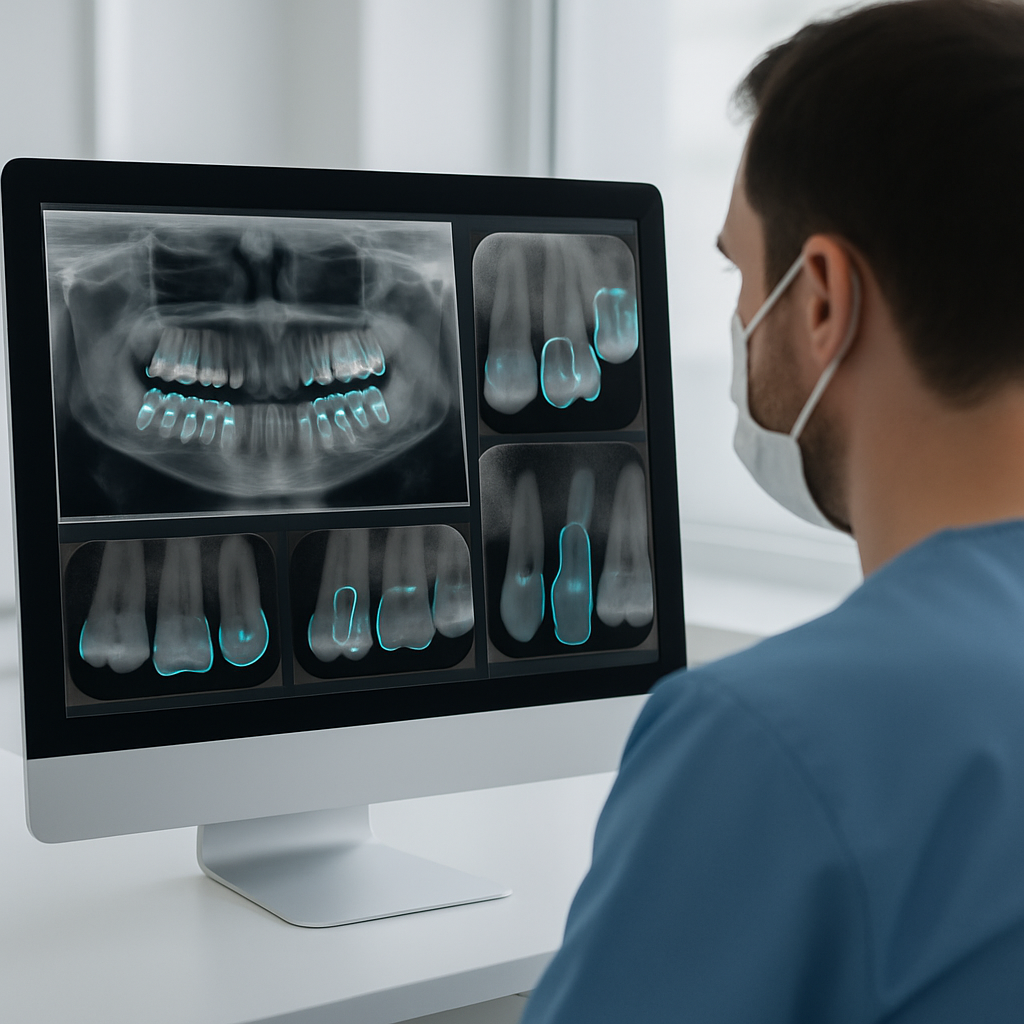
Traditional dental diagnosis relies on visual examination and the dentist’s trained eye reviewing X-rays. While dentists are highly skilled, subtle changes can be easy to overlook, especially in their earliest stages. AI systems excel at detecting these small variations.
Here’s what AI can identify more consistently:
- Interproximal cavities between teeth that appear as faint shadows on bitewing X-rays
- Bone loss patterns indicating early periodontal disease before symptoms appear
- Periapical lesions at tooth roots that may signal infection
- Restoration defects like failing fillings or crown margins
- Tooth fractures that are barely visible on traditional images
Studies published in dental journals show that AI can match or exceed human diagnostic accuracy in many scenarios, particularly when detecting early-stage decay. The technology doesn’t replace the dentist’s judgment—it enhances it by flagging areas that deserve a closer look.
Faster Treatment Planning in Our Local Area
For patients at the practice, AI dental diagnosis means shorter appointments and more confident treatment plans. Instead of spending extra time scrutinizing every millimeter of an X-ray, your dentist can review AI-flagged areas immediately and discuss findings with you while you’re still in the chair.
This speed matters especially when multiple issues need attention. The AI can prioritize which problems require immediate treatment and which can be monitored over time. You’ll spend less time wondering “did they catch everything?” and more time understanding exactly what’s happening in your mouth and why specific treatments are recommended.
Early Detection Saves Money and Discomfort
Catching dental problems early has always been the goal of preventive care, and AI makes this easier than ever. A cavity detected at the enamel stage might need only a small filling, while one that reaches the pulp could require a root canal. The difference in cost, time, and discomfort is significant.
AI systems are particularly good at spotting these early warning signs during routine checkups. According to the National Institute of Dental and Craniofacial Research, dental caries remain one of the most common chronic conditions, but early intervention dramatically improves outcomes.
When your dental team catches issues at their earliest stages, you’ll likely experience:
- Simpler, less invasive procedures
- Lower overall treatment costs
- Fewer emergency visits for pain or infections
- Better long-term oral health outcomes
Patient Safety and Reduced Radiation
Modern AI diagnostic tools can extract more information from each image, which means fewer X-rays may be needed over time. While dental X-rays already use very low radiation doses—comparable to a few hours of natural background radiation—any reduction is welcome.
The technology also helps ensure consistency. Every image is analyzed with the same thorough approach, regardless of how busy the schedule is that day. This standardization means you receive the same high level of diagnostic care at every visit.
What to Expect During Your Visit
When you come in for your checkup, the experience feels familiar. We’ll still take the same types of X-rays and perform the same visual examination. The difference happens behind the scenes: as your images are captured, AI software analyzes them in real-time, highlighting any areas of concern for your dentist to review.
Your dentist will then examine these flagged areas more closely and explain their findings to you in plain language. You might even see the AI-marked images on the screen, making it easier to understand exactly where a problem exists and why treatment is recommended. This transparency builds trust and helps you make informed decisions about your care.
The integration of AI dental diagnosis at the practice represents our commitment to providing the most advanced, accurate care available. Technology enhances our ability to serve you, but the personal relationship between you and your dental team remains at the heart of everything we do.
Ready to experience the benefits of AI-enhanced diagnosis? Call the practice today to schedule your next checkup and see how modern technology is making dental care more precise and effective than ever.
Comments are closed