What if your practice’s biggest liability isn’t the procedure itself, but the silence that follows once the patient leaves your chair? You’ve likely felt the stress of a Monday morning dominated by emergency calls and “redo” requests that could’ve been prevented with better communication. In 2026, relying on manual phone calls or simply hoping for patient compliance is no longer a viable strategy. Implementing a robust dental patient follow up system is now a regulatory and ethical necessity to ensure your standard of care remains high long after the local anesthetic wears off.
It’s frustrating to watch your front office staff struggle with administrative burnout while they try to manage post-op instructions and bridge language barriers. We understand that you want to protect your reputation and your legal standing without adding more manual tasks to your day. This guide will teach you how to implement a follow-up system that ensures patient safety, reduces emergency interruptions, and automates clinical compliance. We’ll show you how to move from operational disorganization to systematic control using multilingual automation and bulletproof digital documentation.
Key Takeaways
- Learn why a modern dental patient follow up system must prioritize clinical safety over simple marketing reminders to reduce emergency calls and re-do appointments.
- Discover how utilizing a library of over 80 post-treatment templates in 15 languages ensures patient compliance and mitigates risk across diverse patient bases.
- Understand the critical functional gap between your Practice Management Software (PMS) and a dedicated clinical follow-up protocol designed for patient education.
- Follow a structured five-step implementation plan to transition your practice from manual tracking to an automated, paperless documentation ecosystem.
Beyond the Recare Call: Defining the Modern Dental Patient Follow-Up System
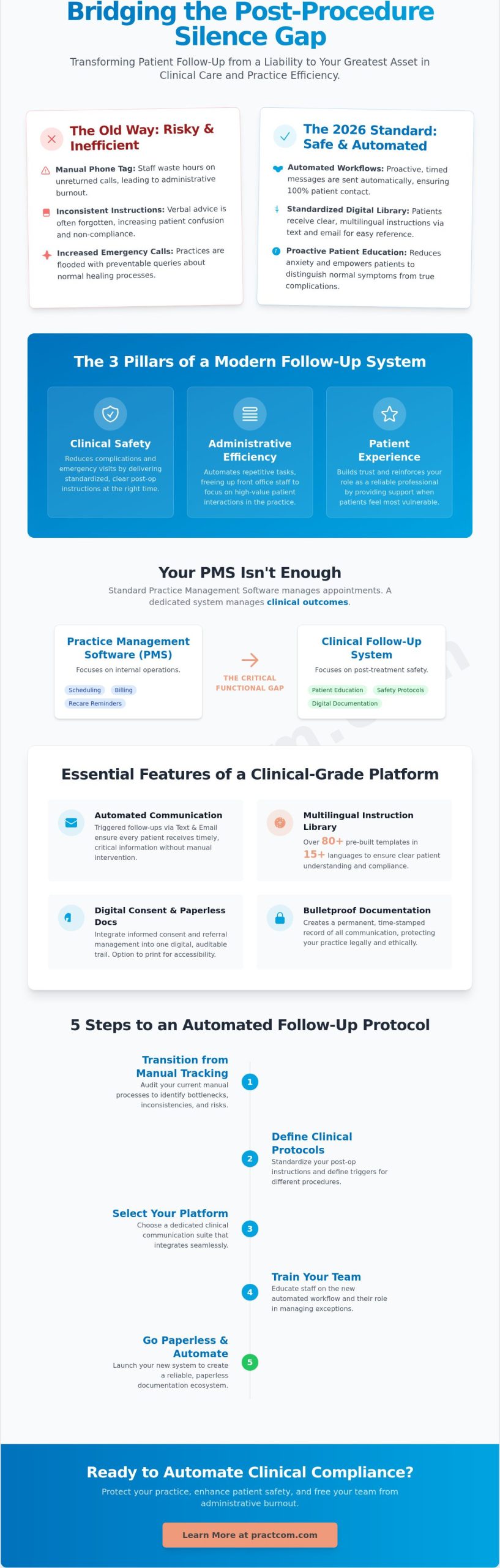
The traditional “recare call” is often treated as a marketing tactic to fill the schedule, but a modern dental patient follow up system is a fundamental clinical necessity. In 2026, practitioners must look beyond simple revenue recovery to focus on the high-risk period immediately following a procedure. This system rests on three specific pillars: clinical safety, administrative efficiency, and the patient experience. While simple SMS reminders might help with scheduling, they fail to provide the interactive clinical guidance patients need when they are at home and feeling vulnerable. By bridging the gap between the chairside exit and the first 48 hours at home, you provide a stabilizing force that protects both the patient and your practice reputation.
Effective practice management involves more than just billing and scheduling; it requires a systematic approach to the entire patient life cycle. The psychological impact of proactive follow-up cannot be overstated. When a patient receives clear, timed resources precisely when they are starting to feel post-operative discomfort, it reinforces your role as a reliable professional ally. This reduces patient anxiety and builds a level of trust that manual, haphazard phone calls simply cannot match. You aren’t just sending a message; you are delivering a pre-emptive strike against patient non-compliance and confusion.
The Clinical Safety Net: Why Follow-Ups Matter for Outcomes
Standardized post-operative education is the most effective way to reduce emergency visits. When patients receive clear instructions in their preferred language, they are less likely to call the office in a panic over normal healing processes like minor swelling or expected sensitivity. Conversely, these systems allow for the early detection of genuine post-surgical complications because patients know exactly what “abnormal” symptoms look like. A dental patient follow up system is a specialized clinical documentation layer that extends the standard of care from the office into the patient’s home. By providing this safety net, you ensure that your clinical success isn’t undermined by poor aftercare compliance.
Moving from Manual to Automated Workflows
Manual follow-up calls carry a hidden cost that many practice owners overlook. Your staff spends hours playing phone tag, which leads to administrative burnout and missed opportunities for more meaningful patient interactions. Falling through the cracks is the primary risk for growing practices because human memory is an unreliable filing system. You can transition from reactive “firefighting” to proactive patient management by automating these touchpoints. This shift ensures every patient receives the same high-level care, regardless of how busy the front office becomes. Adopting a specialized communication suite like PractCom allows your team to focus on the patients in the building while the system manages the safety of those at home.
Essential Features of a Clinical-Grade Follow-Up Platform
A professional dental patient follow up system is more than a simple notification service; it’s a comprehensive clinical safety net. To meet 2026 standards, your platform must integrate several high-utility features that work together to protect your reputation and your patients. This includes automated triggers via text and email, but also the ability to generate physical prints for patients who prefer tangible documents. By incorporating digital informed consent and referral management tools, you close the documentation loop and ensure that every specialist involved in a case is aligned with the follow-up protocol. This systematic oversight prevents clinical details from being lost during transitions of care.
Standardized Post-Treatment Instruction Libraries
Relying on verbal instructions alone is a significant clinical risk that many practices take every day. Research suggests that patients often forget a large portion of what they are told in the chair due to stress or the lingering effects of sedation. Providing a written, standardized library ensures that every patient receives identical, high-quality aftercare information regardless of which assistant is in the room. With over 80 pre-built templates covering every major procedure, you can eliminate the variability of human memory. You can explore how these automated dental post-op instructions provide a legal shield for your practice while improving patient outcomes.
The Power of Multilingual Communication
In 2026, clinical excellence requires inclusivity. Approximately 20% of households in the United States speak a language other than English at home. If your follow-up instructions are only available in English, you are creating a compliance barrier for a significant portion of your patient base. Providing instructions in 15 different languages isn’t just a courtesy; it’s a necessity for ensuring health literacy and patient safety. When patients can read their aftercare steps in their native tongue, staff frustration drops because there are fewer confused phone calls. This level of systematic control transforms your practice from a standard clinic into a protective, forward-thinking institution. If you’re ready to see these features in action, you can experience our clinical communication suite firsthand.
Automated Follow-Ups vs. Standard PMS Reminders: Addressing the Objection
Many practitioners believe their Practice Management Software (PMS) already handles communication. While a PMS is excellent for billing and scheduling, it often falls short in clinical education. A dedicated dental patient follow up system is not just an appointment reminder; it’s a clinical follow-up protocol designed to safeguard the patient’s recovery. Standard PMS tools are built for administrative tasks, whereas specialized platforms like PractCom sit on top of your existing software to enhance clinical workflows without disrupting your established business processes. This distinction is vital for moving from reactive “firefighting” to proactive patient management.
Some worry that automation feels impersonal. However, a generic phone call from a rushed receptionist often feels less caring than receiving a timely, procedure-specific guide in your native language. When you provide patients with relevant, high-quality information exactly when they need it, you demonstrate a level of professional oversight that manual systems can’t replicate. It moves the conversation from an administrative check-in to a protective clinical intervention. You’re not just sending a message; you’re providing a stabilizing force that guides the patient through their post-operative journey.
Why Clinical Depth Trumps Basic SMS
Standard SMS reminders are usually limited to roughly 160 characters. This is barely enough to confirm a time and date, let alone explain complex aftercare for surgeries like dental implants or bone grafts. Rich-media portals and detailed PDFs provide the comprehensive support patients need to avoid complications and manage discomfort effectively. Integrating these high-utility tools is a key part of optimizing dental practice workflow. It replaces vague verbal instructions with detailed digital resources that patients can reference 24/7, ensuring they never feel abandoned after leaving your chair.
Reducing Liability with Digital Consent Integration
There’s a powerful synergy between digital dental informed consent forms and the data gathered during follow-ups. By linking these processes, you create a comprehensive paper trail that protects your reputation and legal standing in the event of a dispute. Automated systems provide timestamped proof of instruction delivery, ensuring you have a bulletproof record of your clinical compliance. This systematic control alleviates the anxiety of practitioners regarding documentation and creates a standardized environment where no part of the professional communication process is left to chance. You’re moving from a position of vulnerability to one of regulatory reassurance.
How to Implement an Automated Follow-Up Protocol in 5 Steps
Implementing a dental patient follow up system doesn’t require a total overhaul of your existing administrative workflows. Instead, it involves layering a specialized clinical communication suite on top of your current processes to ensure no patient is left without guidance. You can achieve this systematic control by following five logical steps designed to reduce operational resistance and improve patient outcomes. This structured approach moves your practice from haphazard manual tracking to a state of regulatory reassurance and clinical consistency.
- Step 1: Audit your current scripts. Review your existing verbal protocols and written aftercare instructions for clarity and consistency. If three different assistants are giving three different versions of post-op advice, your practice is at risk.
- Step 2: Select a specialized suite. Choose a platform that supports your specific patient demographics, including multilingual capabilities and multiple delivery channels like text and email.
- Step 3: Map your procedure codes. Link your most common CDT codes to specific automated instruction triggers to ensure the right information reaches the right patient at the right time.
- Step 4: Train the clinical team. Ensure your assistants and hygienists are prepared to mention the digital follow-up during the chairside wrap-up, as this sets the expectation for compliance.
- Step 5: Monitor the dashboard. Use your practice performance data to identify gaps in patient engagement or areas where follow-up calls are still high.
Mapping Procedures to Instructions
A high-utility follow-up protocol requires precise categorization. You should group your procedures into logical buckets such as Extractions, Implants, and Endodontics to ensure targeted messaging. For surgical cases, it’s vital to trigger “premedicate” instructions 24 to 48 hours before the appointment to prevent last-minute cancellations or safety issues. Utilizing a structured dental patient experience framework helps you maintain a professional yet empathetic tone that builds trust throughout this digital journey. This level of detail ensures that your communication is always relevant to the patient’s specific clinical status.
Staff Training and Patient Buy-In
The success of your system depends on how well your team pitches the Patient Portal as a 24/7 resource. When patients understand they have instant access to clinical guidance, they feel more secure and are less likely to call the office with routine questions. This reduces front-desk friction, which allows your staff to focus on the patients physically present in the building. For less tech-savvy individuals, you should always have physical document printing available as a backup. By offering both digital and physical options, you ensure total accessibility across your entire patient base. If you’re ready to modernize your aftercare, you can start your 15-day free trial of PractCom today.
Scaling Your Practice with PractCom’s Communication Suite
PractCom functions as a guardian of your reputation and a reliable professional ally in a high-pressure clinical environment. It’s more than a simple communication tool; it’s an ethical and professional necessity for the modern clinician who values accuracy and patient safety. By moving to a 100% paperless documentation and follow-up ecosystem, you eliminate the risks associated with lost paperwork and manual tracking errors. For DSOs and multi-location practices, this platform ensures a standardized dental patient follow up system is active across every office, regardless of geographical distance. This level of systematic control allows you to scale your operations without sacrificing the quality of your clinical communication or the safety of your patients. Getting started is designed to be as frictionless as the system itself, with a focus on rapid deployment so your team can feel the relief of automated oversight immediately. This platform was built by dental professionals who understand that you don’t have time for complex software overhauls or steep learning curves.
Performance Tracking and Analytics
Use the Practice Performance Dashboard to gain granular insights into your practice’s aftercare health and operational efficiency. You can see exactly which patients have viewed their post-treatment instructions and identify those who are “at-risk” because they haven’t engaged with their follow-up portal. This preemptive strike against patient non-compliance protects your legal standing and your clinical outcomes by allowing you to intervene before a minor confusion becomes a major complication. Additionally, tracking referral success rates allows you to strengthen your specialist network by ensuring the follow-up loop is closed for every shared case. It transforms your daily data from simple numbers into actionable clinical intelligence that supports long-term growth and stability.
Next Steps: Your Frictionless Practice
Achieving a frictionless practice requires reducing operational resistance through extreme ease of use and automated workflows. The long-term ROI of a dedicated dental patient follow up system manifests in improved patient compliance and significantly reduced chair time for preventable re-dos. By automating the clinical compliance layer, you free your team to focus on high-value procedures rather than administrative firefighting. This system anticipates common administrative failures before they occur, offering a protective shield against the disorganization that often plagues growing practices. It bridges the gap between complex professional procedures and general patient understanding, ensuring your reputation remains bulletproof in an increasingly competitive market. You aren’t just buying software; you are investing in psychological security for your staff and physical safety for your patients. You can see why PractCom is the choice for clinical communication and how it serves as the stabilizing force your modern practice needs.
Securing Your Practice’s Future Through Clinical Communication
Adopting a modern dental patient follow up system is about more than just efficiency; it’s about providing a standardized level of care that protects your patients and your reputation. By moving from manual tracking to an automated, clinical-grade platform, you ensure that every patient receives high-quality guidance regardless of staff workload. You’ve learned how to bridge the gap between treatment and recovery using over 80 clinical instruction templates and support for 15 languages, all designed by dental professionals for clinical accuracy. This systematic control alleviates the anxiety of practitioners regarding documentation while streamlining the front-office workflow. It’s time to move from the resistance of manual tasks to the confidence of a standardized ecosystem. Start your free trial of the PractCom communication suite today and experience the psychological security of a truly frictionless practice. We look forward to helping you stabilize your clinical environment and scale with confidence.
Frequently Asked Questions
How does a dental patient follow-up system improve clinical outcomes?
A dental patient follow up system improves outcomes by standardizing post-operative education to ensure patients follow aftercare protocols correctly. By providing clear, written instructions, you reduce the risk of infection and complications caused by patient confusion. This proactive approach allows for early detection of issues, which prevents minor symptoms from escalating into emergency visits or costly redo appointments.
Can I customize the follow-up templates for my specific practice needs?
Yes, you can modify existing templates to align with your specific clinical preferences and verbal protocols. While platforms like PractCom provide a library of over 80 pre-built clinical instructions, you have the flexibility to adjust the language to match your unique chairside style. This ensures that the digital guidance your patients receive is a direct, authoritative extension of your professional voice.
Is automated patient follow-up software HIPAA compliant?
Professional-grade follow-up systems are built with strict HIPAA compliance to protect patient privacy and practice security. These platforms use encrypted delivery methods for text and email to ensure that protected health information remains secure during transmission. Relying on non-compliant messaging apps carries significant legal risks, so using a dedicated communication suite is a regulatory and ethical necessity.
How much time can my staff save by automating dental follow-ups?
Your staff can save several hours each week by eliminating manual follow-up calls and the subsequent “phone tag” with patients. Automating your dental patient follow up system allows your front office to focus on the patients physically present in the building rather than managing a backlog of administrative check-ins. This reduction in operational resistance helps prevent staff burnout and improves overall practice efficiency.
What happens if a patient doesn’t have a smartphone or email?
You can utilize physical document printing features to provide the same high-quality instructions to patients who prefer tangible copies. While most patients in 2026 expect digital-first communication, having a backup system for physical prints ensures that no one is left without a safety net. For practices that need high-quality printed materials, Linemark provides professional communication solutions that ensure your physical documents meet the same high standard as your digital care. This dual-channel approach guarantees that your clinical compliance remains consistent across all patient demographics and age groups.
Does a follow-up system integrate with my existing Practice Management Software?
Specialized communication suites are designed to layer on top of your existing Practice Management Software (PMS) to enhance clinical workflows. While your PMS handles billing and scheduling, the follow-up system manages the educational and documentation side of the patient journey. This integration ensures a seamless transition of care from the office to the home without requiring a full software overhaul.
How many languages should my follow-up system support?
A modern follow-up system should support at least 15 languages to accommodate the diverse needs of your patient base. Approximately 20% of U.S. households speak a language other than English at home, so providing multilingual instructions is essential for health literacy. When patients can read aftercare steps in their native tongue, compliance rates increase and staff frustration over language barriers decreases significantly.
Can automated follow-ups help reduce negative online reviews?
Proactive follow-ups reduce negative reviews by addressing patient concerns before they turn into public complaints. When patients feel supported and informed throughout their recovery, their overall satisfaction levels rise. By preventing complications and providing a clear path for communication, you create a positive patient experience that is more likely to result in favorable online feedback and higher trust.
Article by
Cary Ganz DDS
Dr. Cary H. Ganz is a dentist, prosthodontist, entrepreneur, lecturer, and author with more than 50 years of experience in clinical dentistry and dental technology. Throughout his career, he has combined hands-on patient care with a deep understanding of how technology can improve dental practice operations, communication, documentation, and patient outcomes.
In addition to his clinical background, Dr. Ganz has held significant leadership roles in the dental technology industry, including Past Owner and Vice President of Clinical Affairs at DEXIS Digital Radiography and Past Vice President of Clinical Affairs at Denticon Practice Management Software. His business experience includes product development, clinical strategy, dental software innovation, practice management solutions, and educating dental professionals on the effective use of technology in modern dentistry.
Today, Dr. Ganz continues to focus on creating practical technology solutions for dental practices, including PractCom, a comprehensive dental practice communication platform designed to improve patient communication, documentation, compliance support, referrals, and overall practice efficiency. His work reflects a career-long commitment to helping dentists deliver better care while making their practices more organized, efficient, and protected.
No responses yet