
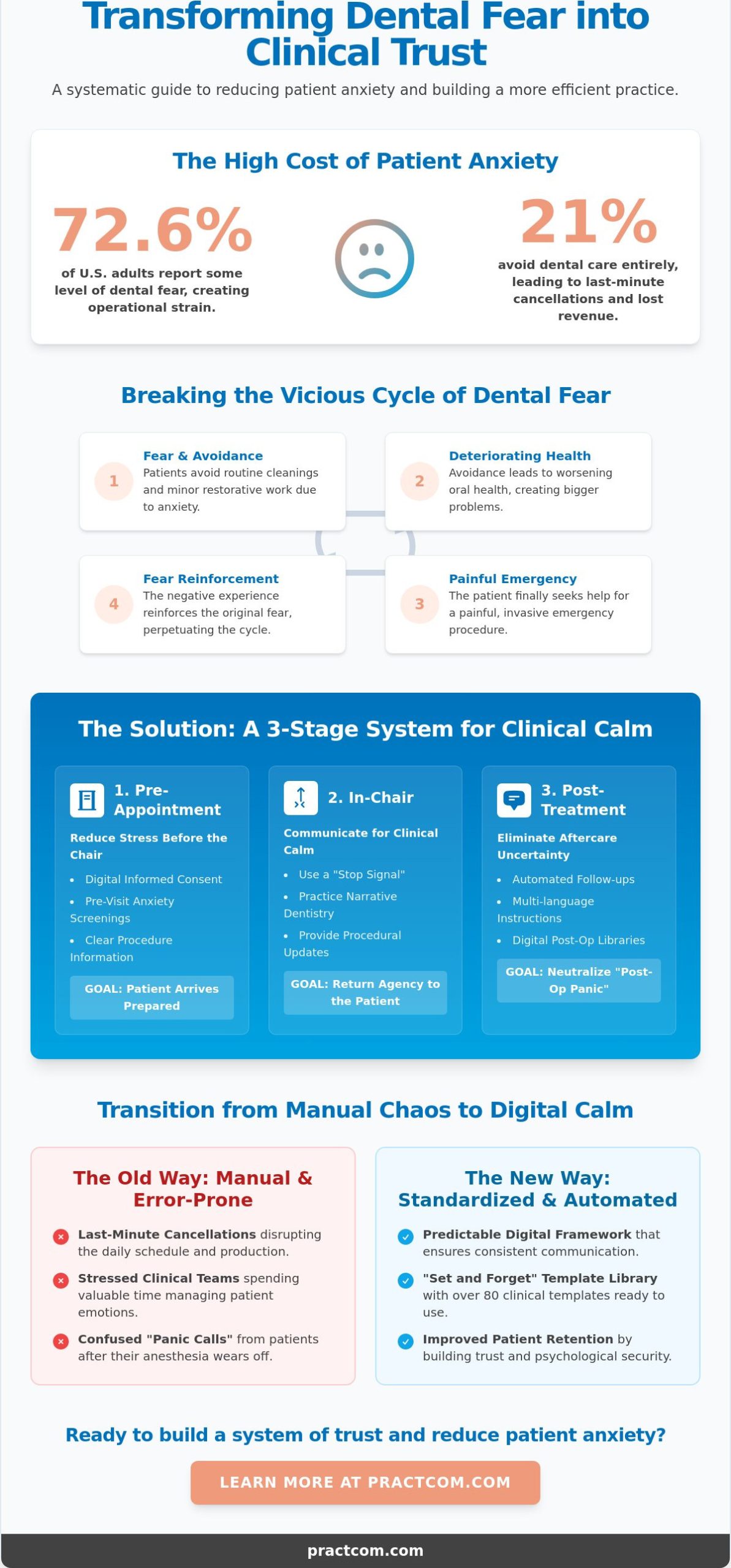
Did you know that 72.6% of U.S. adults report some level of dental fear, with over 21% avoiding care entirely because of it? You’ve likely felt the operational strain this creates: the empty chair from a last-minute cancellation, a stressed clinical team, and those “panic calls” from patients who didn’t process their post-treatment instructions. It’s a heavy burden for any practice to carry. We understand that your time is valuable and that managing these emotional variables can feel like a secondary, uncompensated job. However, reducing patient anxiety in dental clinics is less about individual chairside manner and more about implementing standardized clinical protocols.
This clinical guide will teach you how to transform patient fear into clinical trust through systematic communication. By moving from manual tasks to a more predictable digital framework, you can protect your practice reputation and improve patient retention. We’ll explore how tools like digital informed consent, automated follow-ups, and clear post-treatment libraries create a stabilizing force in high-pressure settings. You’ll finish this article with a clear roadmap to a calmer, more efficient clinical environment where no part of the professional communication process is left to chance.
Key Takeaways
- Understand the spectrum of dental fear and how identifying the “Fear of the Unknown” allows you to address patient cortisol spikes before they impact your workflow.
- Implement digital informed consent and anxiety screenings during intake to ensure patients arrive prepared, significantly reducing patient anxiety in dental clinics.
- Master chairside protocols like the “Stop Signal” and narrative dentistry to maintain clinical calm and return a sense of agency to the patient.
- Neutralize the “Post-Op Panic” window by providing automated, multi-language instructions that prevent confused emergency calls after anesthesia wears off.
- Transition from manual, error-prone communication to a standardized system using a “set and forget” library of over 80 clinical templates.
The Psychology of Dental Anxiety: Why Your Patients Are Afraid
Understanding the root causes of patient distress is the first step toward reducing patient anxiety in dental clinics. For most practitioners, an anxious patient isn’t just a clinical challenge; they represent a significant operational bottleneck. This distress exists on a broad spectrum, ranging from mild situational unease to a debilitating clinical phobia that prevents any form of voluntary care. While some patients might simply dislike the sound of a high-speed handpiece, others experience a full systemic fight-or-flight response before they even step into your waiting room. This psychological resistance is the primary driver behind the high cancellation rates that disrupt your daily production.
The primary driver of these physiological reactions is often the “Fear of the Unknown.” When a patient lacks a clear understanding of their procedure, their brain treats the ambiguity as a threat, triggering a spike in cortisol and adrenaline. Research into the psychology of dental anxiety suggests that this biological response is frequently tied to a perceived loss of autonomy. In a clinical setting, the supine position combined with the proximity of instruments to the airway can make patients feel physically vulnerable. This perceived loss of control is a psychological trigger that turns routine maintenance into an ordeal of endurance, making it difficult for your staff to perform their duties efficiently.
Anxiety vs. Dental Phobia: Knowing the Difference
It’s vital to distinguish between general anxiety and clinical phobia to manage your chair time effectively. Anxiety is a state of apprehension where the patient feels uneasy but can still cooperate with the clinical team. In contrast, dental phobia is an irrational and overwhelming fear that often results in total avoidance of care. While you can manage mild anxiety through better communication and standardized protocols, a phobic patient may require more specialized interventions. Recognizing where a patient falls on this spectrum during the intake process allows your team to tailor their approach, ensuring that your clinical resources are used where they are most effective.
The Vicious Cycle of Emergency-Only Dentistry
Anxiety creates a self-fulfilling prophecy known as the “vicious cycle of dental fear.” Because the patient is afraid, they avoid routine cleanings and minor restorative work. This avoidance leads to deteriorating oral health, eventually resulting in a painful emergency like an abscess or a fractured tooth. When the patient finally seeks help, the procedure is often more invasive and uncomfortable than a preventive visit would have been. This painful experience reinforces their original fear, making them even less likely to return for follow-up care. It’s a cycle that costs the practice money and costs the patient their health.
Breaking this cycle requires a fundamental shift in The Dental Patient Experience. By standardizing how you provide information, you can reduce the “shock” of emergency procedures. When patients feel informed and in control, their baseline stress levels drop. Reducing patient anxiety in dental clinics isn’t just a matter of bedside manner; it’s about providing the psychological security that allows patients to transition from emergency-only visits to a stable, preventive care routine.
Pre-Appointment Strategies: Reducing Stress Before the Chair
Managing the patient experience begins long before the chair is reclined. Standardizing your intake process to include formal anxiety screenings is a vital part of reducing patient anxiety in dental clinics. This proactive approach ensures you aren’t surprised by a panic response mid-procedure, which protects your clinical schedule from unexpected delays. According to the 2025 Delta Dental “State of America’s Oral Health” report, 21% of adults have avoided dental care specifically because of anxiety. A systematic review of dental anxiety management confirms that early identification and structured communication are foundational to improving clinical outcomes. By capturing anxiety levels during intake, you can allocate more time for complex cases and ensure your staff is briefed on the patient’s specific triggers.
Eliminating financial uncertainty is another critical step in reducing patient anxiety in dental clinics. Clear, itemized transparency regarding costs removes “bill shock” anxiety, which is a frequent cause of last-minute cancellations. You can combine this with automated appointment reminders that do more than just list a time. These messages should include “what to expect” details, such as:
- Where to park and which entrance to use
- What the first ten minutes of the visit will look like
- The names of the clinical staff who will be assisting
This level of detail reduces the cognitive load on the patient, making the appointment feel like a guided experience rather than an intimidating mystery.
The Role of Digital Informed Consent in Patient Comfort
Shift your focus to how documentation is handled. Traditional paper consent forms are often presented on a clipboard in a crowded waiting room, creating a high-pressure environment that discourages thorough reading. Utilizing digital dental informed consent forms allows patients to process complex clinical information in the safety of their own homes. This shift uses simplified, non-clinical language to bridge the gap between professional procedures and patient understanding, ensuring true informed consent. Digital signatures also speed up your administrative flow by eliminating manual data entry, building a foundation of trust before the patient even arrives.
Setting Environmental and Sensory Expectations
Sensory expectations should be managed using the “Tell-Show-Do” method even before the patient enters the operatory. By describing specific sounds or sensations of a cleaning, you demystify the process for the patient. Waiting room aesthetics also play a role; a cluttered front desk or the smell of eugenol can elevate pre-visit heart rates. If a patient requires specific instructions, such as when to premedicate or fast, delivering these via automated text ensures safety and reduces early-visit jitters. This systematic oversight replaces the fallibility of human memory with a reliable, tech-enabled process. If you want to see how these protocols look in practice, you can see how our communication tools can begin standardizing your own patient journey.
In-Chair Communication: Techniques for Clinical Calm
Once the patient is in the operatory, the focus shifts to maintaining the psychological security established during the intake process. A primary tool for reducing patient anxiety in dental clinics is the “Stop Signal” protocol. By agreeing on a simple hand gesture before treatment begins, you return a sense of autonomy to the patient. This small agreement acts as a safety valve, ensuring they never feel trapped or unheard. It’s a clinical necessity that transforms a passive subject into an active participant, lowering their baseline stress levels immediately and improving the efficiency of the procedure.
Narrative dentistry further supports this calm environment. By explaining the “why” behind every instrument sound or vibration, you demystify the procedure in real time. For example, explaining that a specific high-pitched sound is merely a water-cooled tip prevents the patient’s brain from interpreting the noise as a signal of impending pain. Modern clinics are also increasingly adopting distraction techniques, such as noise-canceling headphones or weighted blankets, to create a sensory buffer against clinical triggers. These amenities are functional tools that keep the patient still and cooperative, which protects your clinical schedule from the delays caused by patient distress.
Verbal De-escalation and Positive Reinforcement
Words have a physiological impact on a nervous patient. You should train your clinical team to avoid “trigger words” like pain, needle, or drill, replacing them with neutral descriptors like discomfort, sleepy juice, or polishing tool. This linguistic shift prevents the brain from entering a preemptive state of alarm. Pair this with frequent, specific praise for patient cooperation. Telling a patient, “You’re doing a great job keeping your jaw steady,” provides the positive reinforcement needed to maintain their composure. If you notice a patient’s heart rate rising, the “4-7-8” breathing technique serves as an effective chairside intervention to reset their nervous system quickly.
Visualizing Success: The Psychological Power of Smile Design
Visual clarity is a powerful antidote to the fear of the unknown. By utilizing smile design tools that show before-and-after cosmetic changes, you shift the patient’s focus from the immediate procedure to the final outcome. These digital visualizations allow you to create a collaborative treatment plan where the patient can see exactly what they are working toward. This transparency is vital for reducing patient anxiety in dental clinics during cosmetic procedures because it provides a tangible, positive goal. When a patient can visualize their future smile, the temporary discomfort of the chair becomes a manageable step in a shared journey. This collaborative approach is a hallmark of a modern practice that values both clinical accuracy and patient comfort.
Post-Treatment Protocols: Eliminating Aftercare Uncertainty
The clinical experience doesn’t end when the patient leaves the chair. In fact, a critical phase for reducing patient anxiety in dental clinics occurs during the “Post-Op Panic” window. This is the 4-6 hour period after anesthesia wears off and the patient is back in their own environment. When the numbness fades and discomfort begins, patients often struggle to recall the verbal instructions given while they were groggy in the operatory. Without a clear reference, a small amount of expected swelling or minor bleeding can trigger a frantic emergency call to your office, disrupting your clinical flow and increasing staff stress. Clarity prevents panic.
Standardizing your recovery process with automated dental post-op instructions is a proactive remedy for this uncertainty. These digital documents act as a “digital hand-hold,” providing patients with immediate, accessible answers at the exact moment they need them. By automating this process, you ensure that every patient receives the same high standard of care information, which protects your practice from the inconsistencies of human memory. It’s a systematic approach that shifts the burden of communication from your busy staff to a reliable, tech-enabled system.
Standardizing Aftercare to Prevent Emergency Phone Calls
There’s a significant difference between giving verbal instructions and providing accessible digital templates. While a patient might nod in agreement during the appointment, their ability to retain complex medical advice is compromised by situational stress. Clear, written instructions regarding common post-operative symptoms like swelling or sensitivity are essential for maintaining patient calm. When a patient knows exactly what is normal, they’re less likely to panic. You can find more on integrating these systems into your daily routine by optimizing dental practice workflow for maximum clinical efficiency. This standardization doesn’t just help the patient; it creates a calmer, more predictable environment for your entire team.
Multi-Language Support: Reducing Anxiety for Non-Native Speakers
The psychological stress of recovery is amplified when medical instructions are delivered in a patient’s second language. Misunderstanding a dosage or a care step can lead to significant anxiety and poor clinical outcomes. Providing post-treatment documents in 15 different languages is a powerful way to build immediate clinical authority and trust. This level of inclusivity is a key differentiator for modern DSOs and private practices alike. It demonstrates that you value the patient’s safety and comfort regardless of their background. If you’re ready to modernize your aftercare process, you can start your free trial of our all-in-one communication platform today. Reducing patient anxiety in dental clinics is ultimately about providing clarity when the patient feels most vulnerable.
Building a System of Trust: How PractCom Facilitates Anxiety Reduction
Reducing patient anxiety in dental clinics is ultimately an operational challenge that requires a systematic response. While chairside manner is important, it cannot replace the psychological security that comes from a predictable, professional communication loop. PractCom serves as a stabilizing force in high-pressure clinical settings by automating the most sensitive touchpoints of the patient journey. By replacing manual, fragmented tasks with a centralized platform, you ensure that no patient feels abandoned or confused after they leave your chair. This transition from operational disorganization to systematic control is the most effective way to build long-term clinical trust.
The platform provides a comprehensive library of over 80 post-treatment templates, ensuring you have standardized instructions for every procedure from routine prophylaxis to complex implant surgery. These aren’t just documents; they are a pre-emptive strike against the “Post-Op Panic” discussed earlier. Because these follow-ups are “set and forget,” your staff no longer has to remember to send manual reminders or care tips. The system handles the heavy lifting, allowing your team to focus on the patient in front of them while the Practice Performance Dashboard tracks patient compliance and engagement in the background. A centralized patient portal further anchors this experience, giving patients a secure place to review their history and upcoming care plans at their own pace.
Standardization as a Professional Necessity
Manual instruction-giving is inherently prone to human error. In a busy clinic, it’s easy for a staff member to omit a care step or for a patient to misplace a paper handout. These gaps in communication are primary drivers of patient distress. Implementing a standardized system ensures that every patient receives technical precision and administrative warmth every time they visit. This consistency protects your reputation and fulfills your regulatory requirements for informed consent. You can start a free trial today to see how these clinical templates can immediately reduce operational resistance in your practice.
The ROI of a Calmer Patient Base
There is a clear financial justification for prioritizing patient comfort. A calmer patient base is a more profitable one, as reduced anxiety directly correlates with higher case acceptance and significantly lower cancellation rates. When patients feel supported by a professional, tech-savvy system, they’re more likely to commit to comprehensive treatment plans rather than emergency-only care. This improved experience also translates into better online reviews and a higher volume of word-of-mouth referrals. By investing in a systematic approach to reducing patient anxiety in dental clinics, you aren’t just buying software; you’re securing the future of your practice. If you’re ready to transform your patient communication, visit the PractCom landing page to learn more about our all-in-one platform.
Standardizing Your Path to Clinical Trust
Transforming your practice into a low-anxiety environment requires moving beyond individual chairside effort toward a reliable, automated system. We’ve explored how identifying the fear of the unknown and implementing digital informed consent can preemptively lower patient cortisol levels. By standardizing your communication, you replace the unpredictability of human memory with a stabilizing clinical force. This approach doesn’t just improve the patient experience; it protects your schedule from last-minute cancellations and reduces the operational strain on your team.
Reducing patient anxiety in dental clinics is a professional necessity that yields a high return on investment through better retention and fewer emergency calls. You can achieve this level of systematic control today. Start reducing patient anxiety today with PractCom’s communication suite to access our library of 80+ post-treatment templates and support for 15 languages. Our automated follow-ups are designed to act as a digital hand-hold for your patients, significantly reducing post-operative phone traffic. You’ve already done the hard work of providing excellent clinical care. Now, it’s time to ensure your communication is just as precise and dependable.
Frequently Asked Questions
What are the most common triggers of patient anxiety in a dental clinic?
Fear of experiencing pain or discomfort is the most frequently cited trigger for dental anxiety. Sensory inputs, such as the sound of a high-speed handpiece or the smell of clinical chemicals, can also initiate a fight-or-flight response. According to a 2025 study in JADA, these triggers affect over 72% of U.S. adults, often stemming from a perceived loss of control while in the supine position.
How can I identify a high-anxiety patient before they sit in the chair?
The most effective way to identify these patients is by including standardized anxiety screenings in your digital intake process. By capturing this data before the appointment, your team can proactively adjust the clinical schedule to allow for more communication. This systematic oversight ensures that you aren’t surprised by a panic response mid-procedure, which protects both your staff and your production goals.
Does digital informed consent really help with patient fear?
Digital informed consent is a powerful tool for reducing patient anxiety in dental clinics because it allows patients to process procedural information in a low-pressure environment. When patients review risks and benefits at home, they avoid the cognitive overload associated with signing documents in a busy waiting room. This transparency builds trust and ensures the patient feels like a collaborative partner in their own care.
What is the ‘Tell-Show-Do’ technique in dentistry?
The ‘Tell-Show-Do’ technique involves explaining a procedure in simplified language, demonstrating the instruments on a model, and then performing the task. This method is particularly effective for children and anxious adults because it removes the “Fear of the Unknown.” By demystifying the clinical process, you return a sense of agency to the patient, which significantly lowers their baseline stress levels during treatment.
How do automated post-op instructions reduce emergency phone calls?
Automated instructions provide a “digital hand-hold” during the critical four to six hour window after anesthesia wears off. By delivering clear, text-based care guides directly to the patient’s phone, you provide immediate answers to common questions about swelling or sensitivity. This proactive communication prevents “panic calls” to your front desk, allowing your staff to focus on the patients currently in the office.
Can multi-language documentation improve patient trust and compliance?
Providing clinical documents in a patient’s native language is a professional necessity that eliminates the psychological stress of a language barrier. When instructions are delivered in one of 15 supported languages, patients are significantly more likely to follow post-treatment protocols accurately. This inclusivity demonstrates administrative warmth and builds immediate clinical authority, which is a key differentiator for modern dental service organizations.
Is sedation dentistry the only way to manage severe dental phobia?
Sedation is effective for severe cases, but reducing patient anxiety in dental clinics often starts with systematic communication and sensory control. Many patients who previously required sedation can be managed through a combination of digital transparency, noise-canceling technology, and agreed-upon stop signals. These non-pharmacological interventions provide a sense of psychological security that helps patients transition from emergency-only care to routine preventive visits.
How does a calm clinical environment impact dental staff well-being?
A calm environment directly reduces the emotional labor and stress levels of your clinical team. When patients are informed and cooperative, your staff can focus on technical precision rather than managing patient distress. This shift leads to a more efficient workflow, higher job satisfaction, and a significant reduction in the burnout often associated with treating high-anxiety populations in a high-pressure setting.

Article by
Cary Ganz DDS
Dr. Cary H. Ganz is a dentist, prosthodontist, entrepreneur, lecturer, and author with more than 50 years of experience in clinical dentistry and dental technology. Throughout his career, he has combined hands-on patient care with a deep understanding of how technology can improve dental practice operations, communication, documentation, and patient outcomes.
In addition to his clinical background, Dr. Ganz has held significant leadership roles in the dental technology industry, including Past Owner and Vice President of Clinical Affairs at DEXIS Digital Radiography and Past Vice President of Clinical Affairs at Denticon Practice Management Software. His business experience includes product development, clinical strategy, dental software innovation, practice management solutions, and educating dental professionals on the effective use of technology in modern dentistry.
Today, Dr. Ganz continues to focus on creating practical technology solutions for dental practices, including PractCom, a comprehensive dental practice communication platform designed to improve patient communication, documentation, compliance support, referrals, and overall practice efficiency. His work reflects a career-long commitment to helping dentists deliver better care while making their practices more organized, efficient, and protected.
No responses yet