
Did you know that while dental implants boast a 98% success rate in 2026, the first 72 hours of your recovery often dictate the long-term health of your smile? It’s completely natural to feel a sense of anxiety after your procedure, especially when you’re trying to distinguish between normal healing and a potential emergency. You want to protect your investment. However, conflicting advice about diet and activity can make you feel like you’re guessing at your own health. Following precise post-operative care instructions for dental implants is the only way to move from post-surgical stress to the confidence of a stable, functional result.
We understand that the clinical environment can feel overwhelming, so we’ve standardized the recovery process into a manageable system. This guide promises to help you master the critical steps of pain management and diet while ensuring your bone integrates perfectly with your new implant. You’ll find a clear, easy-to-follow checklist for your first week that removes the guesswork from your daily routine. We’ll cover exactly what to eat, how to manage swelling, and which signs require a call to your surgeon, giving you total control over your healing journey.
Key Takeaways
- Secure your implant’s long-term stability by mastering the “No-S” rule during the critical 48-hour healing window.
- Follow our detailed post-operative care instructions for dental implants to establish a proactive medication and icing schedule before your anesthesia wears off.
- Protect the osseointegration process by navigating a two-week soft food diet while safely cleaning adjacent teeth.
- Distinguish between normal healing and clinical red flags, including the specific fever threshold that warrants an immediate call to your surgeon.
- Use digital patient portals to access your recovery checklist in multiple languages, ensuring you always have clear guidance at your fingertips.
The Critical First 48 Hours: Protecting the Blood Clot
The first 48 hours after your surgery represent the most volatile phase of your recovery. We define the “Healing Window” as the period where initial fibrin stabilization occurs; this is the biological foundation for everything that follows. During this time, your body is working to secure the surgical site and begin the complex process of osseointegration. If you’re looking for a comprehensive overview of dental implants, you’ll see that the success of the mechanical post depends entirely on how well the surrounding tissue heals in these early stages. Standard post-operative care instructions for dental implants focus heavily on this window because a disrupted clot can lead to complications or significantly delayed healing. Accessing digital post-treatment instructions ensures you have these vital steps available on your mobile device exactly when you need them.
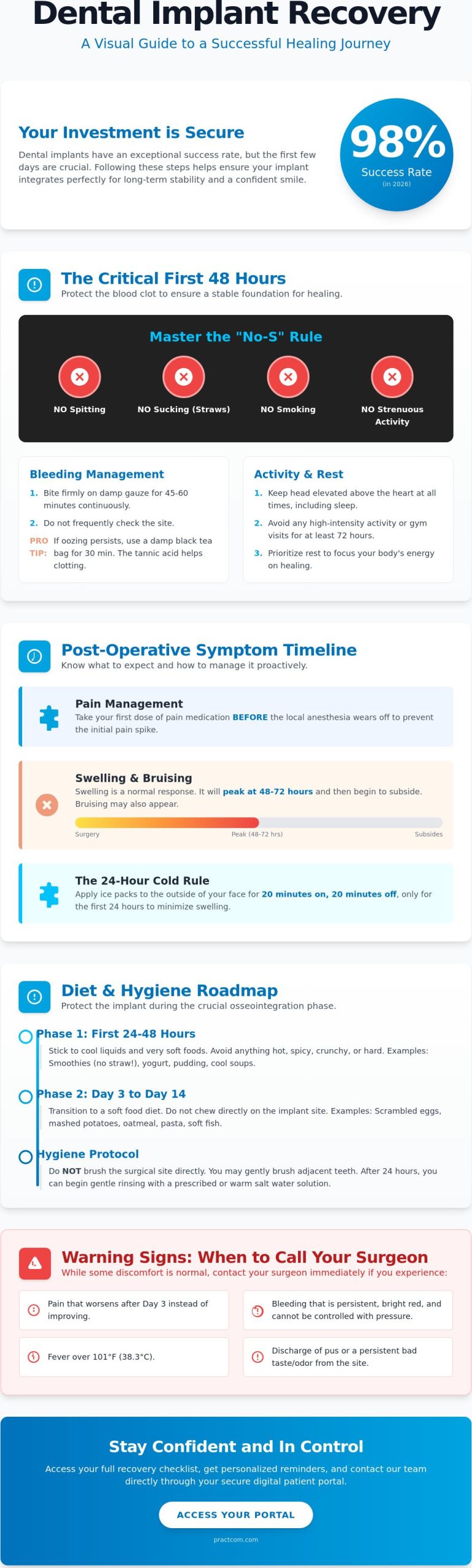
The blood clot isn’t just a byproduct of surgery; it functions as a critical biological scaffold for new bone growth. It protects the underlying bone and nerve endings while providing a matrix for healing cells to migrate into the site. To protect this fragile structure, your post-operative care instructions for dental implants will emphasize the “No-S” Rule: no spitting, no sucking through straws, no smoking, and no strenuous activity. These actions create negative pressure or chemical interference that can dislodge the clot. Smoking is particularly damaging, as it introduces heat and toxins that constrict blood flow, starving the new implant of the oxygen and nutrients it needs to survive.
Immediate Bleeding Management
Managing initial oozing requires a balance of firm pressure and patience. Use the damp gauze provided by your surgeon and bite down firmly for at least 45 to 60 minutes. Don’t check the site every few minutes. Constant disruption prevents the fibrin from setting and keeps the wound open. If oozing persists after several gauze changes, try the “Tea Bag Trick.” A damp black tea bag contains tannic acid, which helps constrict blood vessels and encourages clotting when applied with direct pressure. Stop using gauze once the bleeding has slowed to a faint pink discharge to avoid drying out the surgical site.
Activity and Elevation Protocols
Your circulatory system plays a direct role in your comfort and recovery speed. Keep your head elevated above your heart at all times, even while sleeping, to reduce throbbing and minimize swelling. This positioning prevents blood from pooling at the surgical site, which can lead to increased pain and pressure. Avoid blood pressure spikes by skipping the gym for at least 72 hours. High-intensity movement can cause the surgical site to throb or even restart bleeding. Prioritizing rest maintains site stability and ensures your body’s energy is focused entirely on cellular repair and tissue integration.
Managing Post-Operative Symptoms: Pain, Swelling, and Bruising
Managing discomfort requires a proactive, systematic approach rather than a reactive one. Don’t wait for the local anesthesia to wear off before taking your first dose of pain medication. By establishing a blood level of analgesics early, you prevent the initial pain spike that occurs when the nerves wake up. This strategy is a cornerstone of professional post-operative care instructions for dental implants. It reduces the overall physiological stress on your body and allows you to rest more effectively during the first critical night.
The first 24 hours are the most critical for controlling inflammation. We recommend the “24-Hour Cold Rule,” which involves applying ice packs to the outside of your face in 20-minute intervals. This cold therapy constricts blood vessels and interrupts the inflammatory cascade before it gains momentum. The FDA provides essential guidance on patient safety and aftercare to help patients understand how these simple physical interventions prevent larger complications. By strictly adhering to this icing schedule, you can significantly reduce the volume of facial swelling you experience later in the week.
You should expect swelling to peak between 48 and 72 hours after surgery. This is a normal biological response, not a sign of infection. Similarly, bruising may appear as yellow, green, or blue discoloration near the surgical site or even down the neck. This skin discoloration is simply the body processing blood that escaped into the tissues during surgery. Understanding these timelines alleviates the anxiety of the unknown and helps you maintain a calm, focused recovery environment.
Medication Safety and Compliance
Finish every pill in your antibiotic prescription, even if you feel fine. Stopping early can lead to antibiotic resistance or secondary infections that could jeopardize the implant. For pain, many surgeons recommend a combination of Ibuprofen and Acetaminophen; these two medications work through different pathways to provide superior relief. Avoid operating heavy machinery or driving if you feel a “sedation hangover” from any stronger prescribed medications. Standardized digital instructions help you track these timings without stress. Access your digital aftercare portal to view your specific medication schedule or check our patient recovery FAQ for common concerns.
The Transition to Warm Compresses
After the initial 36 to 48 hours, switch from ice to heat. Warm compresses improve local circulation, which speeds up tissue repair by delivering fresh oxygen and nutrients to the site. Ensure the compress is warm, not hot, to avoid skin irritation or burns. Following these updated post-operative care instructions for dental implants ensures you transition from managing inflammation to supporting active healing. This simple shift in protocol can dramatically reduce muscle stiffness and accelerate the absorption of any remaining bruising.
Diet and Hygiene: The Road to Osseointegration
Successful recovery hinges on your ability to protect the surgical site from physical trauma while maintaining a sterile oral environment. Osseointegration is the structural connection between living bone and the titanium implant. This biological bond is incredibly strong once established, but it’s exceptionally fragile during the initial weeks. Following your post-operative care instructions for dental implants ensures you don’t introduce “micro-movements” that can disrupt this bond. When an implant moves even a fraction of a millimeter, your body may create scar tissue instead of bone, leading to eventual failure. Reviewing oral health information from the ADA can provide additional context on why this stability is non-negotiable for long-term health.
Maintaining a neutral oral pH is another critical factor in preventing infection. We recommend gentle salt water rinses beginning 24 hours after surgery. Use approximately half a teaspoon of salt dissolved in eight ounces of warm water. Instead of vigorous swishing, simply let the solution soak over the surgical site and lean over the sink to let it fall out. This method cleanses the area without the risk of dislodging the protective blood clot we discussed in section one. If you have questions about specific hygiene tools or timelines, our patient recovery FAQ provides detailed answers for common post-surgical scenarios.
Recommended Foods for the First Week
Your body needs high-quality nutrients to fuel cellular repair, but you must avoid foods that require significant chewing force. Focus on high-protein soft options like Greek yogurt, lukewarm pureed soups, and scrambled eggs. Protein shakes are excellent for maintaining caloric intake without risking mechanical stress on the implant site. You must strictly avoid seeds, nuts, popcorn, and spicy irritants for the first 14 days. These small particles can easily become trapped under the gum line or within the incision, causing localized inflammation or infection. Stay hydrated with plain water, but remember the “No-S” rule: never use a straw.
Oral Hygiene Milestones
- Day 1: Avoid all rinsing, spitting, or brushing near the surgical site. Let the area remain completely undisturbed to allow the fibrin scaffold to stabilize.
- Day 2 to 7: Begin gentle salt water baths four to five times daily, especially after eating. You may brush your other teeth, but keep the bristles far away from the implant site.
- Day 14 and Beyond: Your surgeon will typically clear you to return to standard brushing protocols. Use a soft-bristled brush and avoid abrasive whitening toothpastes until the soft tissue has fully matured around the abutment.
Warning Signs: When to Contact Your Dental Surgeon
We understand the psychological hesitation that often follows a surgical procedure. You might find yourself asking, “Is this normal, or am I overreacting?” Many patients avoid calling their clinical team because they don’t want to bother the staff with what might be standard healing. However, your post-operative care instructions for dental implants are designed to safeguard your health, and early communication is a professional necessity. It’s much easier to address a minor concern during a quick phone call than it is to manage a full-scale infection or implant failure later. Proactive communication isn’t a burden; it’s a critical component of your recovery ecosystem.
Differentiating between normal healing and a clinical red flag requires systematic observation. While swelling and mild discomfort are expected, a fever threshold of 101°F or higher is a clear signal of a systemic response that requires immediate attention. Similarly, while local anesthesia typically wears off within four to six hours, persistent numbness that lasts more than 24 hours could indicate nerve irritation. Identifying these issues early ensures your surgeon can intervene before the biological window for osseointegration closes. Reviewing your patient recovery FAQ can help you quickly categorize your symptoms from the comfort of your home.
Immediate Emergencies vs. Next-Day Concerns
Certain symptoms demand an immediate strike against potential complications. If you experience uncontrolled bleeding that soaks through fresh gauze in under 10 minutes, call your surgeon immediately. Severe pain that remains unchanged 60 minutes after taking your prescribed medication is another critical indicator. Finally, watch for sudden, asymmetrical swelling that impacts your ability to breathe or swallow; this is an emergency that requires instant clinical oversight. For non-urgent questions about loose sutures or mild nausea, follow the standard post-operative care instructions for dental implants provided in your patient portal.
Long-Term Success Indicators
Your two-week follow-up appointment is a vital milestone where your surgeon evaluates tissue closure, suture health, and the initial stability of the site. Signs of healthy integration include pink, firm soft tissue and a total absence of pus or discharge. Remember that for the first month, leaving the site alone is your most effective strategy. Avoid poking the area with your tongue or fingers, as this introduces bacteria and unnecessary mechanical stress. Standardizing your approach to these early weeks ensures your implant has the quiet environment it needs to fuse with the bone.
To ensure you never miss a critical healing milestone or symptom check, register for automated patient follow-ups and receive timely recovery reminders directly on your mobile device.
Standardizing Aftercare: The Digital Advantage for Patients
The transition from the dental chair to the home environment is where most recovery complications begin. While your surgeon provides the technical foundation for success, your ability to follow every detail of the protocol determines the final outcome. Digital post-operative care instructions for dental implants have revolutionized this phase by removing the limitations of human memory. Having 24/7 access to your recovery plan via a secure portal means you never have to guess about a symptom at 2:00 AM. This immediate accessibility reduces patient anxiety and ensures that the biological requirements for healing are met without delay.
Safety shouldn’t be limited by a language barrier. Statistics show that 1 in 5 US households speak a language other than English at home, making multi-language support a clinical necessity rather than a luxury. PractCom acts as the essential bridge between clinical excellence and patient compliance by offering documents in 15 different languages. This ensures that every patient, regardless of their primary language, understands the nuances of their care. When instructions are clear and culturally accessible, the risk of accidental non-compliance drops significantly, protecting both the patient’s health and the practice’s reputation.
The Problem with Paper Instructions
Traditional paper handouts are notoriously unreliable in a post-surgical setting. Patients often lose these sheets before they even reach home, or the documents become unreadable due to poor photocopying. Digital templates provide superior visual clarity and structured formatting that paper simply can’t match. If you’re a practitioner looking to modernize your delivery, you can find answers to common implementation questions in the PractCom FAQ. Moving away from physical documents eliminates the “lost instruction” crisis and ensures the patient always has a clean, high-definition guide on their mobile device.
Improving Outcomes through Automated Communication
Automated follow-ups meet you where you already spend your time: on your phone. Instead of overwhelming you with a massive packet of information on Day 1, automated systems send the right info at the right time. For example, receiving an SMS reminder about peak swelling on Day 3 or a prompt to switch to warm compresses on Day 4 prevents “instruction fatigue.” This rhythmic delivery of data keeps you engaged with your recovery milestones without feeling burdened by the process. Understanding why PractCom is the standard for modern dental communication helps patients see how technology supports their journey toward a pain-free, permanent smile. By standardizing these touchpoints, we ensure that no part of your post-operative care instructions for dental implants is left to chance.
Securing Your Long-Term Smile Success
Mastering your recovery means moving beyond guesswork and embracing a standardized, biological approach to healing. We’ve explored how protecting the initial blood clot and strictly following a two-week soft food diet sets the stage for perfect osseointegration. By understanding the difference between normal swelling and clinical red flags, you gain the psychological security needed for a stress-free journey. Consistency in your daily routine is the ultimate guardian of your surgical investment.
Accessing professional post-operative care instructions for dental implants shouldn’t be a struggle between lost paper sheets and confusing advice. Modern dental practices now utilize digital systems to ensure safety and compliance for every patient. Start your free trial of PractCom and automate your post-op instructions today to access over 80 post-treatment templates and automated SMS follow-ups. With instructions available in 15 languages, we help you eliminate operational resistance and guarantee that critical information reaches you exactly when it’s needed most. Your commitment to these professional protocols today ensures a functional, beautiful smile that lasts a lifetime.
Frequently Asked Questions
Is it normal to have a fever after dental implant surgery?
A low-grade fever below 100°F is a common physiological response as your immune system begins the healing process. However, if your temperature reaches 101°F or higher, it indicates a systemic response that requires immediate clinical attention. This threshold is a key part of the post-operative care instructions for dental implants provided in your digital portal. Monitor your temperature closely during the first 48 hours to distinguish between normal inflammation and a potential infection.
How long does the pain last after a dental implant procedure?
Most patients experience the highest level of discomfort during the first 48 to 72 hours post-surgery. After this peak, pain should steadily decrease each day and typically becomes minimal by the end of the first week. If you notice pain levels increasing after the third day or if the discomfort doesn’t respond to your prescribed medication, contact your surgeon. Consistent management during the early window ensures a more predictable and comfortable recovery journey.
When can I start eating solid food again after an implant?
You can typically return to solid foods approximately two weeks after your procedure, once the soft tissue has sufficiently healed. During the initial 14-day soft food challenge, you must avoid any items that require significant biting force to prevent micro-movements of the implant. Transitioning too early can disrupt the osseointegration process. Always follow the specific dietary milestones outlined in your automated patient follow-ups to ensure you’re supporting the biological bond between bone and titanium.
What happens if my sutures (stitches) come out early?
If your sutures loosen or fall out after the first three to four days, it’s generally not an emergency as the initial tissue closure has likely stabilized. However, if they come out within the first 48 hours or if you notice the surgical site gapping open, you should notify your clinical team. Avoid pulling on any loose threads with your tongue or fingers. Maintaining site stability is vital for protecting the underlying blood clot during the early healing window.
Can I brush the dental implant site the day after surgery?
You shouldn’t brush the surgical site itself for at least 24 hours to avoid mechanical trauma to the healing tissue. While you can carefully brush your other teeth, keep the bristles far away from the implant to prevent dislodging the blood clot. Following these post-operative care instructions for dental implants helps maintain a sterile environment without physical disruption. After the first day, you can begin the gentle salt water rinses we discussed in the hygiene section.
How do I know if my dental implant is failing during the first week?
True failure in the first week is rare, but signs of concern include significant mobility of the implant post, persistent pus or discharge, and severe pain that worsens over time. While some swelling and bruising are normal, a sudden increase in these symptoms after day four warrants an evaluation. Your surgeon uses the two-week follow-up to confirm healthy integration. If you feel the implant shifting when you swallow or speak, contact your office immediately for a clinical assessment.
Is it safe to drink coffee or tea after the procedure?
You can enjoy coffee or tea starting the day after surgery, provided the liquids are lukewarm rather than hot. High temperatures can increase blood flow to the site and potentially restart bleeding or cause discomfort. It’s also essential to remember the “No-S” rule: never use a straw to drink these beverages. Sucking creates negative pressure that can pull the blood clot out of the socket, leading to a painful complication similar to dry socket.
How many days should I take off work for dental implant recovery?
Most patients return to work within one to three days, depending on the complexity of the surgery and the physical demands of their job. If your procedure involved bone grafting or multiple implants, you might benefit from a full 72-hour rest period to manage peak swelling. If your work involves heavy lifting or high-intensity activity, plan for additional time off to avoid blood pressure spikes. Resting properly during the first 48 hours is a professional investment in your long-term success.

Article by
Cary Ganz DDS
Dr. Cary H. Ganz is a dentist, prosthodontist, entrepreneur, lecturer, and author with more than 50 years of experience in clinical dentistry and dental technology. Throughout his career, he has combined hands-on patient care with a deep understanding of how technology can improve dental practice operations, communication, documentation, and patient outcomes.
In addition to his clinical background, Dr. Ganz has held significant leadership roles in the dental technology industry, including Past Owner and Vice President of Clinical Affairs at DEXIS Digital Radiography and Past Vice President of Clinical Affairs at Denticon Practice Management Software. His business experience includes product development, clinical strategy, dental software innovation, practice management solutions, and educating dental professionals on the effective use of technology in modern dentistry.
Today, Dr. Ganz continues to focus on creating practical technology solutions for dental practices, including PractCom, a comprehensive dental practice communication platform designed to improve patient communication, documentation, compliance support, referrals, and overall practice efficiency. His work reflects a career-long commitment to helping dentists deliver better care while making their practices more organized, efficient, and protected.
No responses yet